A Marxist View of the 20th Century.
Here we publish A Marxist View of the 20th Century, first shown at In Defence of Marxism in 2001.
Narrated by Alan Woods, with Lal Khan, Ted Grant and Noam Chomsky.

Marxist theory is our sharpest weapon in the class struggle. Here, you can find our most recent theoretical and historical articles. For news and analysis, click here.
You can also visit our education hub to find a selection of articles, books, talks and reading guides.

Here we publish A Marxist View of the 20th Century, first shown at In Defence of Marxism in 2001.
Narrated by Alan Woods, with Lal Khan, Ted Grant and Noam Chomsky.

Today, 25th February 2008 would have been Phil Mitchinson’s 40th
Birthday. Phil who was an outstanding Marxist and a leader of the International
Marxist Tendency died tragically in November 2006. To commemorate this
anniversay we reprint a letter by Leon Trotsky to Jack London’s daughter which
gives Trotsky’s views of London’s book The Iron Heel, one of Phil’s favourite books.
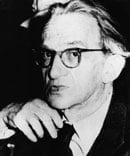
Lukacs was an important influence on what is called ‘western Marxism’.
This was seen as a ‘humanist’ alternative to the dominant stalinist
orthodoxy of the inter-War period and later. One of Lukacs’ most
significant arguments was that (contrary to Engels) there can be no
dialectics of nature. Dan Morley examines the debate and goes into the
contradictory relationship between Lukacs’ interpretation of Marxism and
Stalinism.
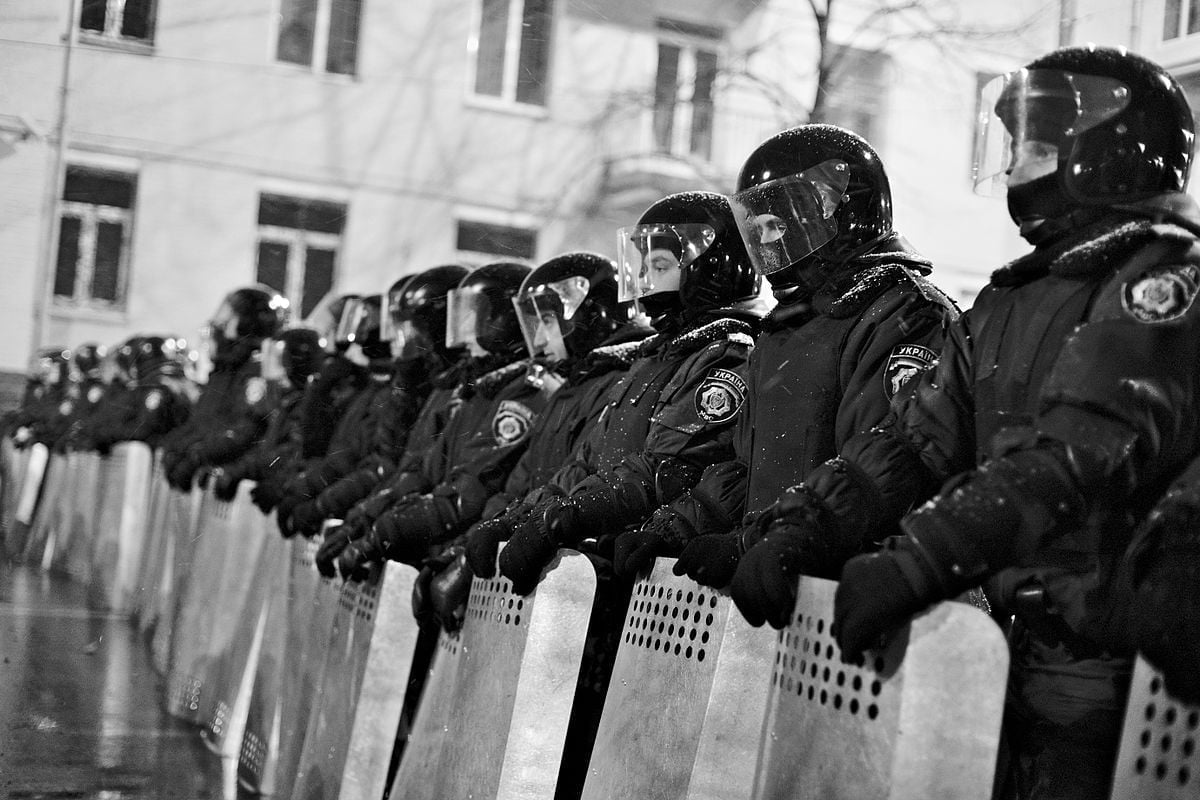
The state is not at all neutral. We must understand the state’s real basis by treating it historically – taking in its origins, rise, and eventual fall.
Tomorrow marks the 70th anniversary of the murder
of Trotsky’s eldest son – Leon Sedov -by agents of the Stalinist secret police,
the GPU. He was thirty-two years of age. This crime constituted part of the
systematic hounding and murder of Trotsky’s key supporters and family, whose
only ‘crime’ was to defend genuine Marxism against Stalin and the crimes of the
Russian bureaucracy.
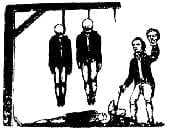
Pentrich in Derbyshire is a quiet place these days. But in 1817 it was the centre of a plot to
overthrow the Government of the day. Britain had been at war with Revolutionary and Napoleonic
France almost continuously until 1815. When war ended, the
economy slumped. It was the poor who had borne the brunt
of the fighting. Now they were required to bear the economic and
social fallout from the subsequent peace.
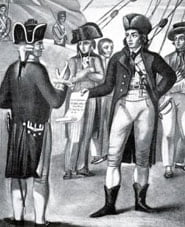
In April and May of 1797 the British ruling
class was horrified when two naval mutinies broke out; the first was at
Spithead, close to Portsmouth; the second at the Nore which marks the seaward
approach to the Thames Estuary.
The State
can ultimately be reduced to bodies of armed men. These bodies of armed men are
used by the ruling class either to maintain its power against what it sees as
internal enemies, to defend itself against foreign aggression, or in support of
its own aggressive action against foreign nations. Since its power lies in its
ability to threaten or actually to use force, the ruling class regards anything
that jeopardises the effectiveness of the State apparatus with the utmost
seriousness. This explains why mutinies in the armed forces are of such concern
to them.

Andrew Glyn died from a brain tumour on 22 December 2007. He was 64 years old. A fellow of Corpus Christi College
in Oxford since
1969, he was a leading socialist economist for all that time.
Andrew left a wealth
of important writing that analysed the development of post-war capitalism. His best-known works were British capitalism, workers and the profits
squeeze with Bob Sutcliffe in 1972; Capitalism
since 1945 with Phil Armstrong and the late John Harrison in 1984 and most
recently, Capitalism Unleashed
(2006), reviewed earlier.
Socialist Appeal’s ongoing campaign to spread the christmas spirit today publishes Lenin, who wrote in 1905 that: "Those who toil are taught by religion to be submissive and patient while here on
earth, and to take comfort in the hope of a heavenly reward. But those who live
by the labour of others are taught by religion to practise charity while on
earth, thus offering them a very cheap way of justifying their entire existence
as exploiters and selling them at a moderate price tickets to well-being in
heaven."
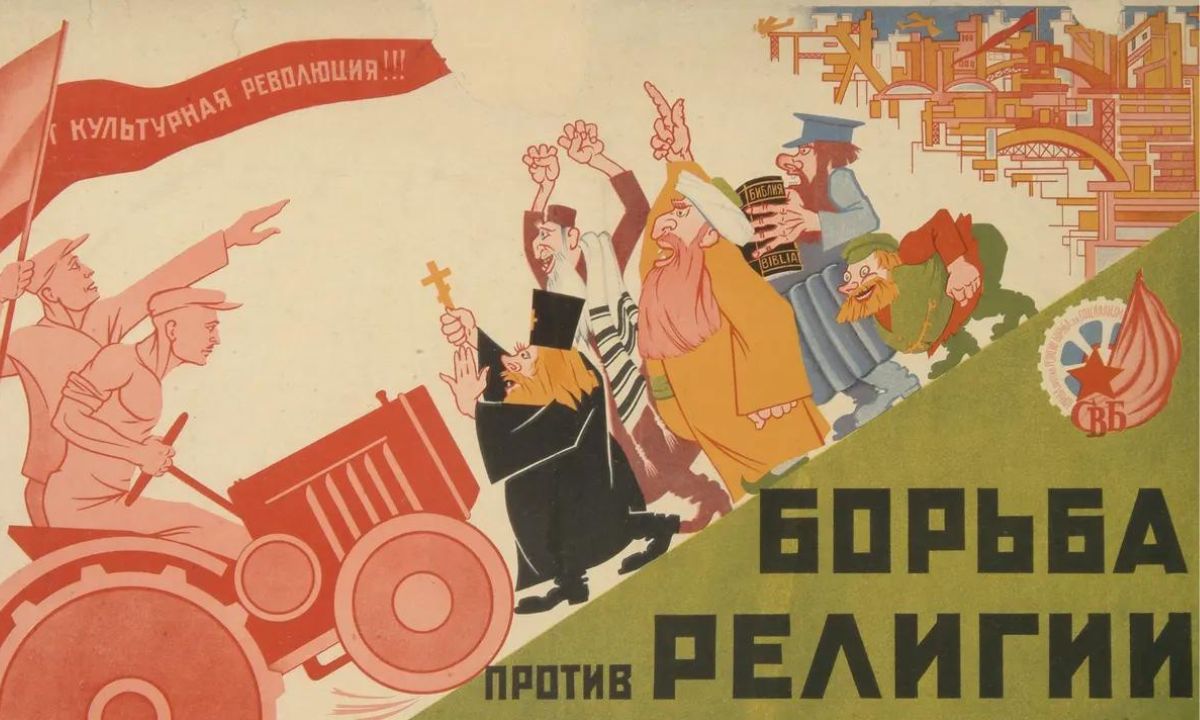
This article analyses the relationship between the Soviet state and the Russian Orthodox Church. There was a clear dividing line between Lenin’s approach to this question and the zig-zag policy later adopted by Stalin. First published in Workers International News, October 1945.

In the build up to Christmas, Socialist Appeal is contributing to the festive spirit by issuing some articles by Marxists on the origins and significance of Christianity, which in its early period was a revolutionary movement of the oppressed. This article deals with the person of Christ and the historical evidence for his existence, which is taken from the first chapter of the ‘Foundations of Christianity’ by Karl Kautsky.

The present Pope, Ratzinger or Benedict XVI as he has chosen to
call himself, far from being a "transitional" Pope is not only following in the
footsteps of John Paul II, he is putting his foot on the accelerator of
Christian fundamentalism. While talking of reconciliation he promotes conflict,
backs reactionary politicians of the Bush type and condemns anyone who wants to
really change the material conditions of millions of poor and working class
people.