Piketty, Marx, and the Spectre of Inequality
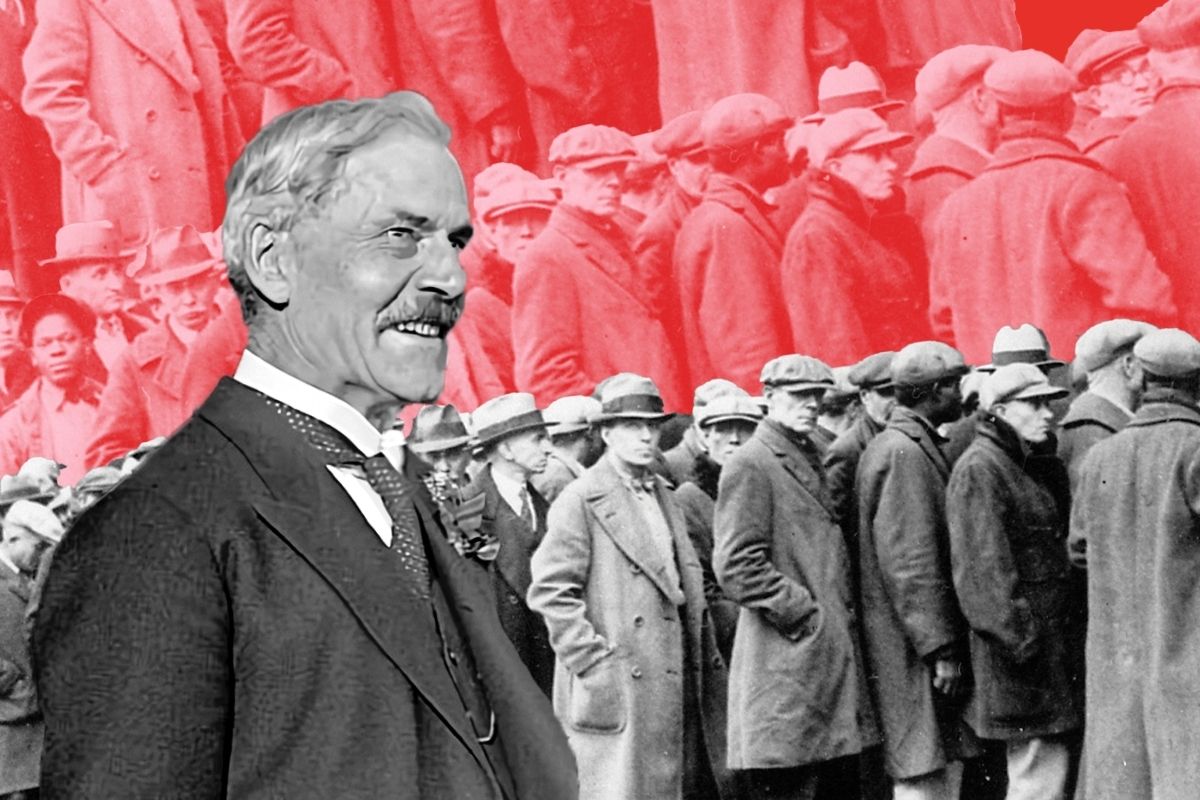
Adam Booth contrasts the economic theories of Thomas Piketty with those of Karl Marx.
Marxist theory is our sharpest weapon in the class struggle. Here, you can find our most recent theoretical and historical articles. For news and analysis, click here.
You can also visit our education hub to find a selection of articles, books, talks and reading guides.
Adam Booth contrasts the economic theories of Thomas Piketty with those of Karl Marx.
In the final part of his series on the crisis of cosmology, Adam Booth looks at the more recent attempts to take the field of theoretical physics forward and explains the role that Marxism and the philosophy of dialectical materialism can play in guiding scientific research.
Continuing his series on the crisis of cosmology, Adam Booth analyses the philosophical problems at the heart of quantum mechanics and explains the problems facings scientists who are attempting to reconcile this theory with Einstein’s theory of General Relativity to create a “Theory of Everything”.
For many years now, storm clouds have been amassing on the horizon in the field of theoretical physics, with an accumulation of evidence and inconsistencies that bring the current cosmological models into question. In this article, Adam Booth explores and analyses the crisis in modern science from a Marxist perspective.
30 years ago, miners across Britain were facing a bleak Christmas after months of being on strike. The Thatcher government tried to starve the miners back to work. But working class communities came together – with solidarity across the labour movement – to ensure that the Tories could not be the Grinch that ruined Christmas.
Following Rememberance Day this year, 11th November, we publish this letter from Owen Walsh of the Leeds Marxists, who outlines his objections to the Poppy Appeal and the way in which the First World War is remembered by the bourgeois media and politicians. As well as remembering those who died, we must remember who sent them to their death: the capitalist and imperialist governments across the world.
Lal Khan, a leading member of the Pakistani Marxists The Struggle, looks back a week of anniversaries – at events that changed the course of history for the world and Pakistan, from the Russian Revolution of 1917, to the 1968 Pakistan Revolution, and the fall of the Berlin Wall in 1989 and the subsequent collapse of Stalinism.
Twenty-five years ago as the Berlin Wall came tumbling down the bourgeoisie in the west was euphoric, rejoicing at the “fall of communism”. Twenty-five years later, things look very different as capitalism faces its most severe crisis since 1929. To mark the 25th anniversary since the fall of the Berlin Wall, we publish here an article written by Alan Woods in 2009, who analyses the events surrounding this turning point in history.
Adam Booth provides an analysis of 1917, outlining the key processes during the Revolution, and drawing out the main lessons for Marxists today.
We continue here our series on Marx’s Capital, looking at the question of accumulation. Capital is dynamic. “Money never sleeps”. For capital to act as capital, it must continuously be in motion – continually seeking to create value from value. It is this overall dynamic of capital towards which Marx now turns his attention in chapters 23-25.
In this recent talk to the UCLU Marxist Society, Alan Woods explains the main concepts behind the ideas of Marxism, including dialectical materialism – the philosophy of Marxism – and Marx’s economic analysis.
Rosa Luxemburg was one of the most important figures in the history of the international workers’ movement.Reform or Revolution was one of the most important of her early writings. Written in 1899, it provides a devastating demolition of the theoretical and practical basis of reformism. It was completely valid at the time when it was written and it remains completely valid today.