
Marxist theory
Marxist theory is our sharpest weapon in the class struggle. Here, you can find our most recent theoretical articles. For historical articles, click here
You can also visit our education hub to find a selection of articles, books, talks and reading guides.

Religion and Secularism
As the twenty-first century progresses, there has been an increasing
interest and not a small amount of debate on the role of religion in
society and particularly on advances in secularisation. Richard Dawkins’
book , ‘The God Delusion,’ was a best-seller in the UK and novels like
‘The Good Man Jesus and The Scoundrel Christ’ by Richard Pullman have
touched raw nerves in Church hierarchies. Against what they see as a
growing tide of secularism, spokespersons for the Church have denounced
the ‘intolerance’ of atheism and have fought a vigorous rearguard action
to defend the special position of faith, woven as it is into the fabric
of everyday life.
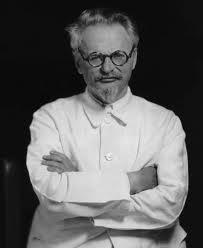
Seventy years after the assassination of Trotsky, yet another attempt
Seventy years since the assassination of Leon
Trotsky bourgeois writers and historians are attempting to bury the man
again. They are constantly demonizing him and his ideas. That is because
they understand that his ideas are not dead, but very alive and have
never been so relevant as they are today, in this period of crisis of
capitalism.
Leon Trotsky: seventy years on
On August 21, 1940 the great
revolutionary fighter, theoretician, and martyr, Leon Trotsky, died of
the wounds inflicted in a brutal attack by a Stalinist agent. To mark
the 70th anniversary of his assassination we want to bring to
the attention of our readers some of the material we published on the
www.marxist.com about the life, work and ideas of Trotsky.

Remembering Pat Wall, Friend, Fighter and Marxist (1933 – 1990)
Today 6th August is the 20th anniversary of the death of Marxist MP and class fighter Pat Wall. In his memory we publish a tribute to him by Rob Sewell.

Marxism and the state
Standing between the working class and the socialist transformation of society is a colossal state machine. In order to carry out this transformation, we must have a clear understanding of what the state is, and what must replace it.
Marxism and the state
Standing between the working class and the socialist transformation of society is a colossal state machine. In order to carry out this transformation, we must have a clear understanding of what the state is, and what must replace it.

Ted Grant (1913 – 2006)
Today, July 20th, is the fourth anniversary of the death of Ted Grant, Marxist, Revolutionary, defender of the banner of Trotskyism. In the next few days we will be publishing the first volume of the collected writings of Ted Grant cover the period from 1938 to 1942.
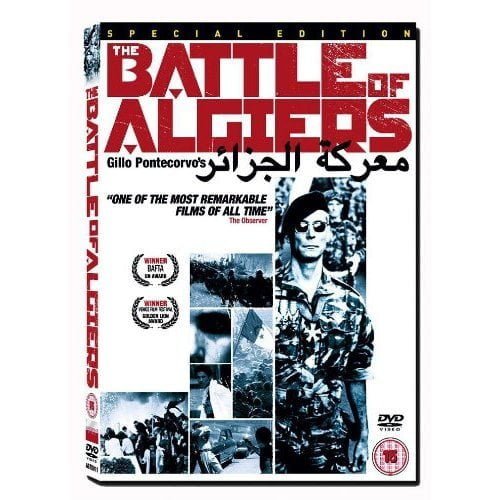
DVD REVIEW: Battle of Algiers (1966)
In the first of a regular
column where we look at DVDs which may be of interest to socialists, we pick up
on a DVD reissue of the classic film, Battle of Algiers.

On Authority
Anarchism is a confused political creed. In fact some anarchists
take pride in the fact that it is difficult to pin their ideas down
almost as a point of principle. But their watchword has always been a
struggle against ‘authority.’ Some may find this slogan attractive,
but Engels’ brilliant essay shows that some class always wields
authority in society – the question is which one.

Copyright – keeping ideas under lock and key
Copyright is in crisis. Photocopying, scanning, audio and video
recording, computers and now the internet have all made it increasingly
difficult for the owners of copyright to enforce their rights. There
has been a renewed effort, such as the Digital Economy Bill, to restore
the balance of power in favour of big business, but levies and legal
penalties only serve to patch holes in an already leaky system. The
flaw lies not in the technology, or in piracy or file-sharing, as
corporations would have us believe, but in the very notion of copyright.
Music industry: an era of crisis or opportunity?
The House of
Lords has just approved the Digital Economy Bill. It has caused ripples
across
the technology world, most notably because of its proposals regarding
the
suspension of repeat file sharers’ internet connections, and gives the
courts
power to issue injunctions against websites accused of hosting
copyright-infringing material. Internet freedom campaigners have reacted
with
dismay.