Nov 30: Workers take control of Birmingham
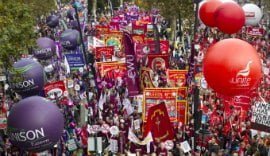
There were unprecedented scenes in Birmingham on N30 after the
Tory-Lib-Dem coalition that runs Birmingham City Council tried to ban
the planned TUC protest march.
The latest news and analysis from The Communist, alongside reports of our activity. For Marxist theory and history, click here.
There were unprecedented scenes in Birmingham on N30 after the
Tory-Lib-Dem coalition that runs Birmingham City Council tried to ban
the planned TUC protest march.
While between 2 and 3 million struck in Britain, in the North of Ireland about
200,000 people took part in the Public Sector strike action on 30th
November. Schools and civil service offices were shut, as were job
centres and council services. Rail and bus services were non-existent.
Union members held marches, pickets, and rallies throughout the country
over the issue of pensions. The main rally took place in Belfast city
centre, where around 15,000 gathered and several thousands spread
over Craigavon, Omagh, Armagh, Ballymena, Derry and other towns.
A solid number of
students including the QM Marxists joined staff from the UCU
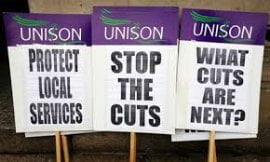
and Unison in solidarity with their struggle against pension
reforms. From as early as 7am, students gathered at the main
gate to help set up picket lines. All entrances to campus
were covered. Students played a significant role in boosting
the strength of the pickets, and helped effectively close
off several of the main entrances.
On
the day it turned out to be the biggest trade union demonstration in
Coventry since the 1970s. They came in their hundreds from all parts of
the city and from all public sector trade unions as well as from trade
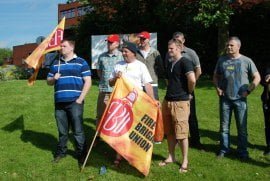
unions that were not on strike that day – the FBU was well represented.
By the time of the rally at the end of the march through Coventry city
centre some 2,500 trade unionists and their families were crammed into
the area known as Speakers Corner opposite the Council building.
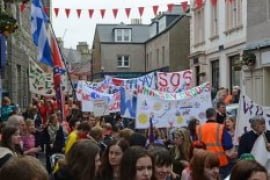
At least 20,000 – perhaps as many as 30,000 – marched through Glasgow in support of the strikes.
Tourists
looking down from the Castle saw history being
made
below them as Johnston Terrace was jammed with
clerks, cooks and cleaners,
teachers, librarians, radiographers, nurses,
lectures, bin men and women,
jannies, curators, students, thousands more of
good humoured but determined
public sector workers and their bairns
determined not to be “robbed of their
pension”, as I was told by a First Davison
Association (top management
union) picket at the court.
More than two million public sector workers took strike action yesterday. That amounted to a virtual general strike of the public sector. In terms of numbers, the action was bigger than the “Winter of Discontent” in 1979 – bigger even than the 1926 General Strike. Even The Financial Times, the organ of Big Business, surprisingly described Wednesday’s strike as “undoubtedly historic”.
On the eve of the 30th November I, like many other public sector
workers in Worcester, was making sandwiches, filling flasks full of
coffee and digging out themal T shirts ready for cold picket lines.The
pickets were set up before sunrise at the hospitals in Worcestershire.
One of the biggest protest marches held on Nov 30 was in London with thousands of workers and students joining feeder demonstrations from various parts of the capital. These merged with the main protest through Central London from Midday – official estimates put the number on the march at over 20,000.
Here is a brief report from a London picket line – one of many which were held yesterday as part of the Nov 30 strike and protest.
800 public sector workers marched through Barnsley yesterday – and an estimated 4,000 did the same in Sheffield.