Notes of a traveller in France: “here we go, here we go”
Comrades on holiday in France get a taste of the protests taking place there!

Comrades on holiday in France get a taste of the protests taking place there!
On Friday, October 22, finally the
French government managed to get the pensions reform passed through the
Senate. The increasingly unpopular government of Sarkozy, faced with an
unprecedented movement of strikes, demonstrations, road blockades, mass
pickets and general assemblies, hoped that this, together with the
beginning of the All Saints school holidays, would bring the mass
movement to a halt. This does not seem to be happening, however.

After October 12th, the movement against
the attack on pensions has reached a critical threshold. The great days
of action are no longer the centre of gravity, although they are still
massive and increasingly militant, as shown by October 19th. Now, the
central axis of the struggle has shifted onto open-ended strikes and
pickets blockading different sectors of the economy.
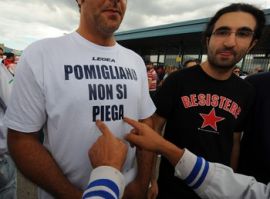
The FIAT plant at Pomigliano d’Arco
(Naples) has become the centre of attention for all militant trade
unionists in Italy. The bosses are trying to implement new draconian
work conditions and in the process have used all kinds of bullying
methods. But they can push too far and the workers are reaching the
limit and preparing to fight back.
The downgrading of Greece’s credit
ratings by Standard & Poor’s
has sent shockwaves around the world’s financial markets, with stock
exchanges seeing significant falls over the last few days. The fear is
that Greece
could default and drag the rest of the eurozone into a severe crisis,
putting immense pressure on the euro. The problem the bourgeois face is
the Greek working class, which is not taking this lying down.
Last week, on March 11, Greece was
shaken by an even bigger general strike than on February 24. As the
government announced its third austerity package the mood of Greek
workers has become one of growing anger and militancy. All the
conditions are there for a massive escalation of the conflict.
Last week, on March 11, Greece was
shaken by an even bigger general strike than on February 24. As the
government announced its third austerity package the mood of Greek
workers has become one of growing anger and militancy. All the
conditions are there for a massive escalation of the conflict.
The crisis of capitalism is creating an unstable social and
political situation in Germany. Tensions are emerging within the
coalition government, elected only last year. Most interestingly, this
is having a radicalising effect inside DIE LINKE, which is being pulled
both left and right, with some of the leaders attracted by coalition
politics while the more radical ranks react against and seek an
alternative to the left.
Greece, like all the other capitalist
countries afflicted by the recession, is running a big deficit on its
government budget. Tax revenues have
collapsed and more benefits are having to be paid out to the unemployed.
Deficits for the European Union countries as a whole tripled from 2.3% to 6.9%
from 2008 to 2009 because of the slump.
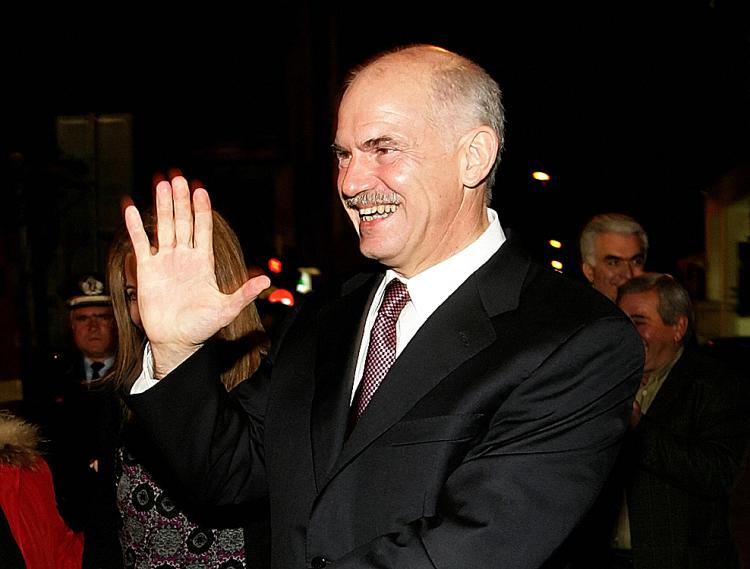
The recent elections in Greece saw a
massive shift to the left in Greek society, with a total of 56% of the
electorate voting for the left parties. The PASOK alone received almost
44%. This is a vote that rejects the austerity measures of the outgoing
conservative ND government. The problem is that the PASOK leaders are
promising more of the same. For the workers this vote was a victory –
but they did not vote for more cuts. This now opens up the prospect of
renewed
class struggle in the coming period.
Under capitalism there is a steady unremitting pressure on workers’ living standards from the capitalist class, particularly as they compete with one another, and with bosses all around the world, to cut costs – especially labour costs. This need for employers to attack the wages and conditions of European workers has been intensified by the onset of crisis. There are huge discrepancies between national rates of pay within the European Union. Naturally bosses would like to exploit these differences. And the European Court of Justice is trying hard to help them.