Europe
Spain: The rebellion of the youth
First it was
Tunis, then Cairo, then Wisconsin, and now Spain. The crisis of
capitalism has set in motion a tsunami that is impossible to control.
All the representatives of the old order have combined to halt it:
politicians and police, judges and trade union bureaucrats, the hired
press and the television, priests and “intellectuals”. But the tsunami
of revolt rolls on from one country to another, from one continent to
another.
Irish capitalism at an impasse: Coalition no solution for working people
If anyone was under any illusion that the mere detail of a
general election would have made any difference to the prospects for the
Irish economy and for unemployment in the state then by now their
illusions will have been severely tested.
Northern Ireland: 2011 Assembly elections – No solution for Catholic or Protestant workers
Last
Thursday’s elections in the North saw a further swing towards both the
DUP and Sinn Féin. This reflects a drawn out process that has gradually
eroded the support for the Ulster Unionist Party and the SDLP since the
signing of the Good Friday Agreement in 1998.
Ireland: Easter 2011 – The need for working class independence. A warning from history
As we approach the 95th
anniversary of the Easter Rising many Irish socialists and republicans
will go out as they do every year to marches to celebrate the
anniversary of the episode which asserted Ireland’s right to national
self-determination. It was, however, also a revolution which saw the
working class prove itself in the words of Connolly as “the incorruptible inheritors of the fight for freedom in Ireland.”
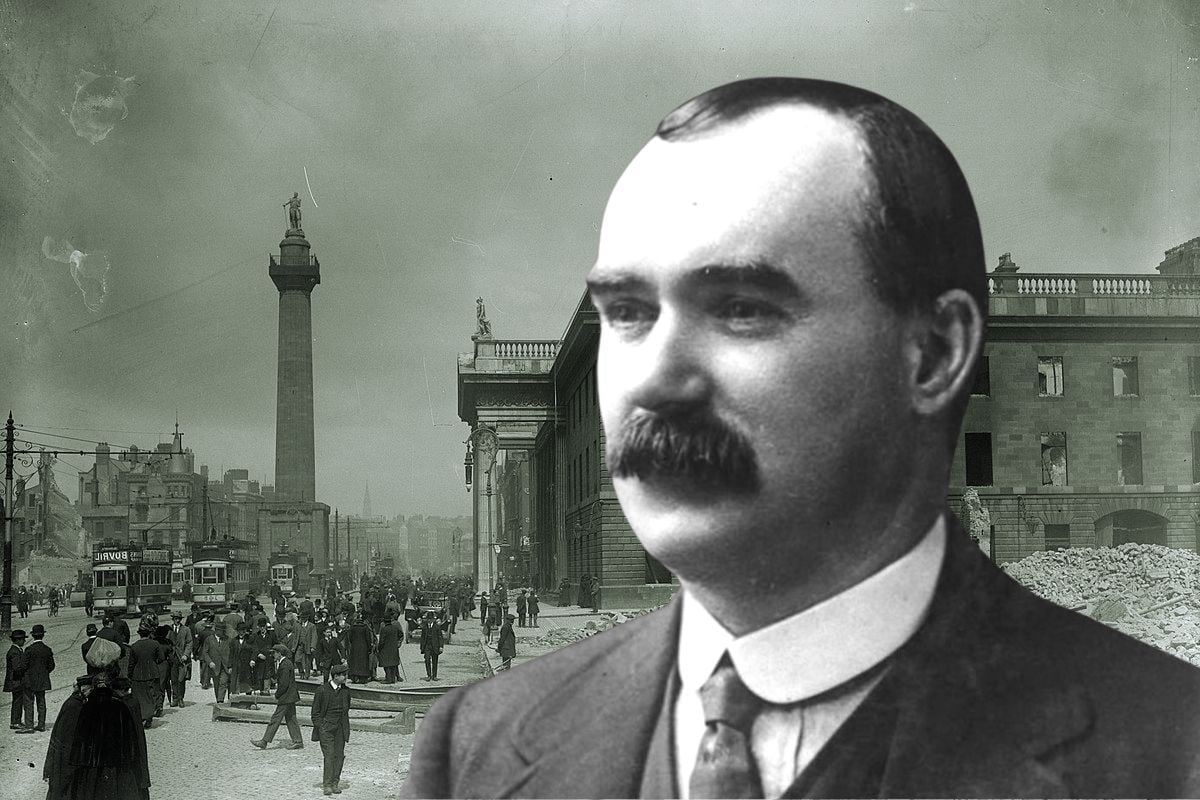
James Connolly and the Easter Rising
As we mark the 95th anniversary of the easter Rising in Dublin, Ireland,
we republish an article written 10 years ago by Alan Woods and Ted
Grant.
Connolly and the 1916 Easter Uprising
In this article, written on the 50th anniversary of the Easter Uprising, Ted Grant writes that it is impossible to understand this heroic event without understanding the ideas of its leader, James Connolly – who considered himself a Marxist and based himself on the ideas of Internationalism and the class struggle.
Bailing out the Irish Banks… again
The announcement that the Irish banking sector needs another
€24 billion, that’s €24,000,000,000 in real numbers or another €5,500
for every Irish man, woman and child, is another sign of the capitalist
crisis in the state. Standard and Poor’s one of the main international
credit agencies has now downgraded Ireland by a further point.
Belfast protest against cuts
In Belfast on March 26th, a twin demo to the London protest took place. Here is a report.
Greece: The crisis of capitalism and the impact on education
We are in a period of deep capitalist crisis, where many rights
acquired through tough struggle in the past years are under threat in
all areas of society. One of them is the free, state-run school. The new
“reforms” being introduced in Greece are putting the rights of teachers
and students in the firing line too.
No coalition with Fine Gael, Fight austerity. Fight for Socialist policies
IRELAND: Friday’s election saw Labour gain the most
votes and seats in its history. But Fine Gael came out as the largest
party. Eamon Gilmore and Enda Kenny have established negotiating teams
to prepare the way for a coalition government. While Labour’s leaders
have given the negotiations the go ahead any final decision must be made
by the party conference which meets on Sunday. Fightback is wholly
opposed to such a deal.
Irish election results
SAT UPDATE: The
picture emerging in the results from yesterday’s Irish General Election
is becoming clearer as the evening goes on. The outcome represents an
historic defeat for Fianna Fáil, the main bourgeois party
in the state. FF have been in power for 61 of the last 79 years. They
have been the largest single party in Dáil Éireann
since 1932 until… today. Although only around a third of seats have
been announced it is clear that FF are destined to come in third place
not far ahead of SF. Fine Gael will become the biggest party for the
first time although they will still fall short of an overall majority.
Labour however has made the biggest strides forward with around 20% of
first preference votes. This is double what the party achieved in 2007.