James Connolly and the Easter Rising
As we mark the 95th anniversary of the easter Rising in Dublin, Ireland,
we republish an article written 10 years ago by Alan Woods and Ted
Grant.

As we mark the 95th anniversary of the easter Rising in Dublin, Ireland,
we republish an article written 10 years ago by Alan Woods and Ted
Grant.
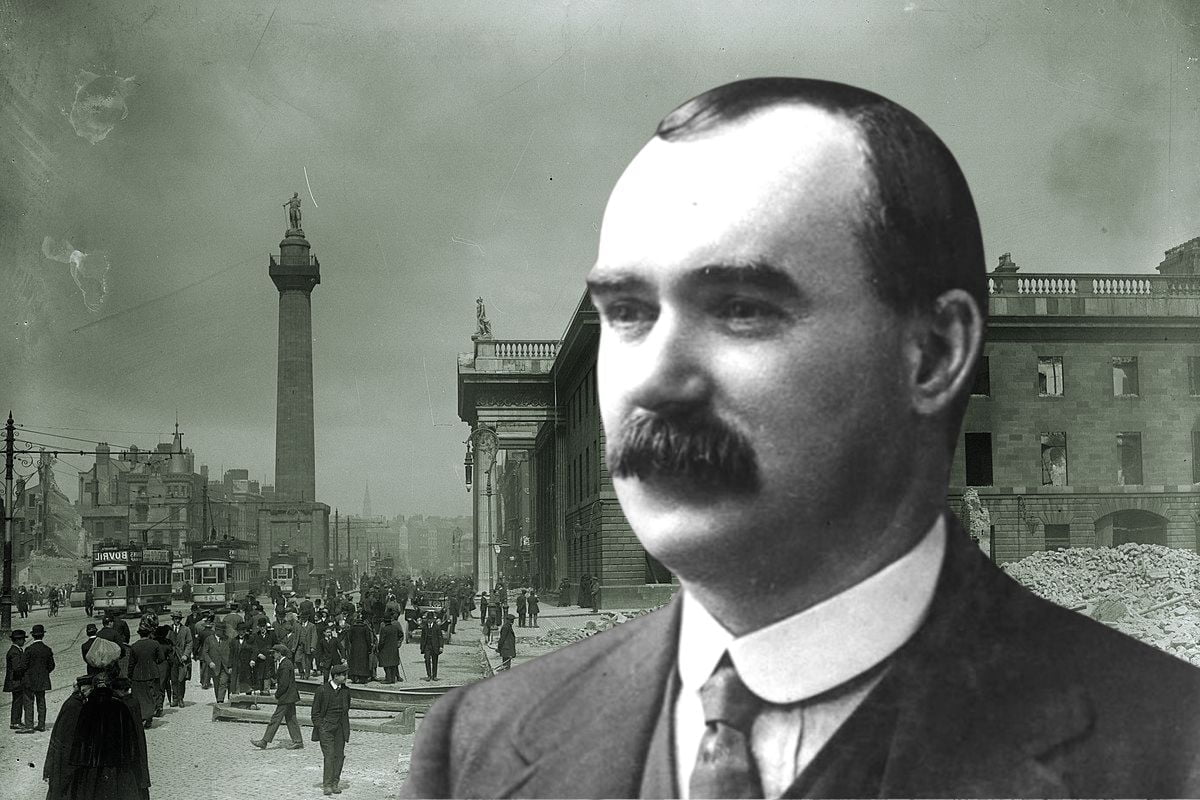
In this article, written on the 50th anniversary of the Easter Uprising, Ted Grant writes that it is impossible to understand this heroic event without understanding the ideas of its leader, James Connolly – who considered himself a Marxist and based himself on the ideas of Internationalism and the class struggle.
The announcement that the Irish banking sector needs another
€24 billion, that’s €24,000,000,000 in real numbers or another €5,500
for every Irish man, woman and child, is another sign of the capitalist
crisis in the state. Standard and Poor’s one of the main international
credit agencies has now downgraded Ireland by a further point.
In Belfast on March 26th, a twin demo to the London protest took place. Here is a report.
We are in a period of deep capitalist crisis, where many rights
acquired through tough struggle in the past years are under threat in
all areas of society. One of them is the free, state-run school. The new
“reforms” being introduced in Greece are putting the rights of teachers
and students in the firing line too.
IRELAND: Friday’s election saw Labour gain the most
votes and seats in its history. But Fine Gael came out as the largest
party. Eamon Gilmore and Enda Kenny have established negotiating teams
to prepare the way for a coalition government. While Labour’s leaders
have given the negotiations the go ahead any final decision must be made
by the party conference which meets on Sunday. Fightback is wholly
opposed to such a deal.
SAT UPDATE: The
picture emerging in the results from yesterday’s Irish General Election
is becoming clearer as the evening goes on. The outcome represents an
historic defeat for Fianna Fáil, the main bourgeois party
in the state. FF have been in power for 61 of the last 79 years. They
have been the largest single party in Dáil Éireann
since 1932 until… today. Although only around a third of seats have
been announced it is clear that FF are destined to come in third place
not far ahead of SF. Fine Gael will become the biggest party for the
first time although they will still fall short of an overall majority.
Labour however has made the biggest strides forward with around 20% of
first preference votes. This is double what the party achieved in 2007.
IRELAND: While the political arithmetic of the next Dáil won’t be clear until after February the 25th,
the battle lines in the state have been drawn for some time. The Irish
bourgeois are well aware that Fianna Fáil are a dead duck. Now Enda
Kenny has decided to concentrate his fire on the Labour Party. There is
one reason alone for this. The bourgeois want full control of the levers
of power and to all intents and purposes they want a continuation of
Cowen and Lenihan’s austerity programme, regardless of whoever leads the
government.
As the Irish General Election approaches, the Labour Party
leadership continues getting rid of the most radical aspects of its
election programme. And, Labour Party members only get to know about
these changes through the media. The Irish Times revealed the
last of such policy modifications on Monday, 31 Jan.
The posters are going up on the lamp posts
and the tourists and the European lorry drivers are starting to drive
round in circles looking for road signs obliterated by the airbrushed
smiles of party hopefuls. But this is no ordinary election. The election
on February 25th will represent a snapshot of the political fallout
from the economic collapse and the farcical slide into chaos of the
Fianna Fáil/Green Party coalition. Farcical that is, except
for the calamity that the government’s policies have created for the
working class people of Ireland.
According to the Bundesbank, German
GDP grew by 3.6% in 2010. This comes after the steep 4.7% drop in 2009,
when the recession hit Germany hard. Unemployment has gone down from the
10.5% peak of 2005 to 7%. It now stands at just under three million.
Volkswagen is taking on 3,000 workers, BMW and Daimler 400 each.
Lufthansa has announced plans to take on an extra 4,000 staff this year.
The same picture can be seen in chemicals, electronics and other
industries. When the rest of Europe is facing lay-offs and sluggish
growth, what is different about Germany?
The news has just broken that Brian Cowen has resigned as Fianna Fáil
leader, but insists that he intends to fight the General Election as
Taoiseach. FF is split from top to bottom and those among the leadership
who aren’t intending to resign with a fat pension in a few weeks time
are maneouvering for position.