Ted Grant: The Permanent Revolutionary
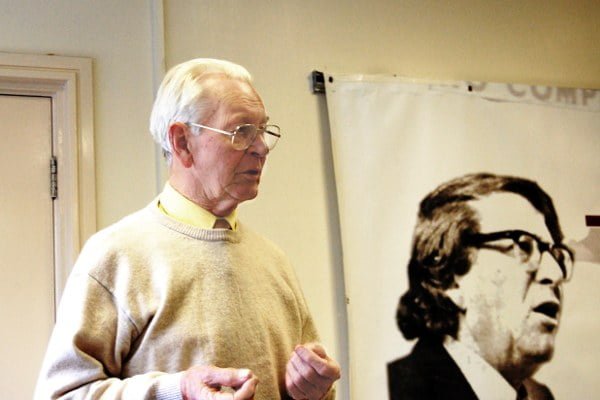
We present here a video recording of the book launch of Ted Grant: The Permanent Revolutionary, in which Alan Woods gives an account of Ted’s struggle for and his contribution to the ideas of Marxism.
Marxists must study the history of the class struggle, so that we can apply the lessons in the struggle for communism today. Here, you can find our most recent historical articles. For theoretical articles, click here.
You can also visit our education hub to find a selection of articles, books, talks and reading guides.
We present here a video recording of the book launch of Ted Grant: The Permanent Revolutionary, in which Alan Woods gives an account of Ted’s struggle for and his contribution to the ideas of Marxism.
As part of the Ted Grant centenary celebrations, we publish here a video of Ted’s speech at the 1984 Militant rally, in which he explains the contradictions of the capitalism, and the failures of the Thatcher government, as well as the Keynesian and reformist leaders of the labour movement.
On Thursday 11 April, a packed Socialist Appeal meeting at University College London saw miners’ leaders and trade unionists recall the brutality of Thatcher and the bitter lessons etched into their consciousness.
Saturday 2nd February marked the 70th anniversary of the end of the Battle of Stalingrad, with the surrender of German troops, a key turning point in the Second World War and a shattering blow to Hitler. Alan Woods analyses this historic event and the way in which it shows the superiority of the planned economy.
This month is the 95th anniversary of the Russian Revolution of 1917. During this month we will be publishing a number of articles to mark this historic event. The article by Ted Grant posted here was first published in 1975 to mark the 58th anniversary. Extended extracts have been reproduced in this month’s edition of Socialist Appeal, mainly dealing with the events of 1917. However the full article is worthy of study and it is that version will be made available here.
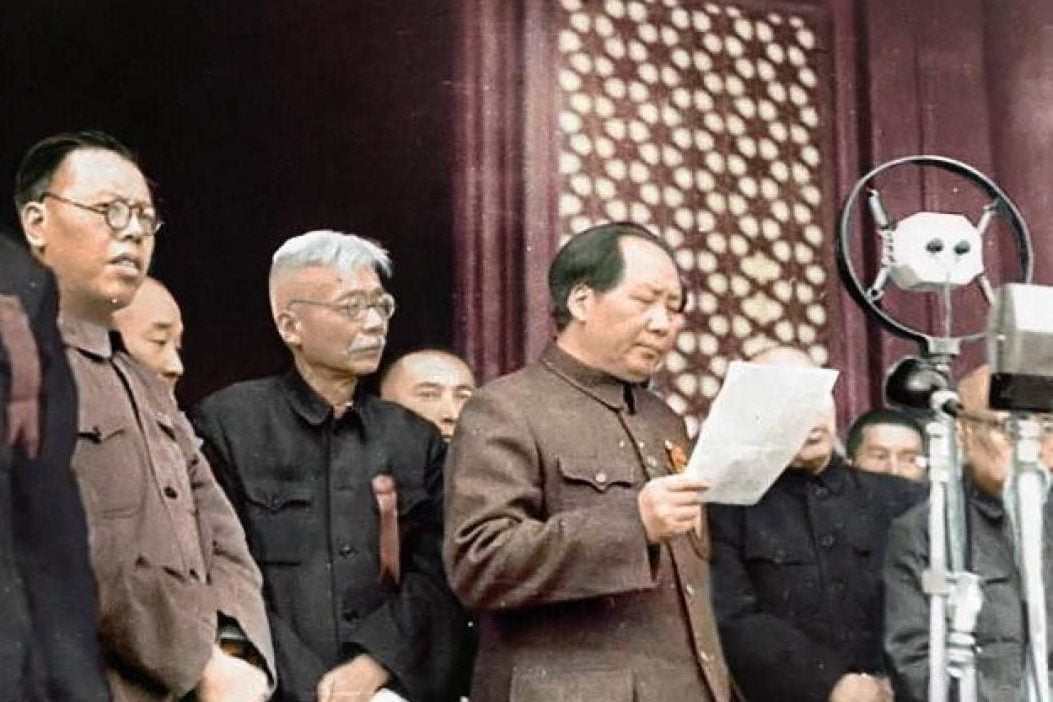
As the Chinese Communist Party gathers for its 18th Congress, we look back at the 1925-27 revolution, which was a heroic attempt of the Chinese workers to follow in the footsteps of the October 1917 Russian Revolution. However, due to its unprepared and irresolute leadership, it went down to a tragic defeat. Failed revolutions are always the greatest of tragedies. However, the only way of really honouring the many victims of the counter-revolution that ensued is to study the revolution and learn from its mistakes.
The Moscow Trials, which lasted from 1936 to 1938 will go down as the greatest frame-up in history. Their aim was to liquidate the entire
remaining Bolshevik old guard and act as the means by which Stalin
could consolidate his power as head of the bureaucratic caste that ruled the Soviet Union. Seventy-five years on, Jim Brookshaw – a former member of the British Communist Party – looks back at what happened and asks: why?
The July days in Russia in 1917 were crucial. Without the Bolshevik
Party the outcome could have been a devastating defeat. The reaction
could have gained more ground. Thanks to the Bolsheviks the events after
the July days illustrated the weakness of the reaction and the role of
the reformists and prepared the ground for the events up to October
This article by Trotsky was written in the immediate aftermath of
the July Days, following the (temporary) defeat of the spontaneous
demonstrations of the Petrograd workers. 95 Years on the revolutionary
movements in the Arab world over the past 18 months and the turmoil in
Spain and pre-revolutionary situation in Greece demonstrate that the
events of 1917 are worthy of study for more than academic interest.
Forty years ago, in 1972, Britain faced a sharp and qualative change and
teetered on the verge of a general strike for the first time in nearly
50 years. A wave of factory occupations and sit-ins had swept the
country. More than 23 million days were lost in strike action,
excluding 4 million lost through political strikes. Only once, in the
revolutionary year of 1919, was the number of days lost greater.
The Great Unrest is the term used by historians to describe
the period a 100 years ago when
Britain saw many industrial conflicts such as the Cambrian Combine Strike, the
Tonypandy Riots and many other struggles.
In Wales there was also a major dispute in the Cynon Valley and riots in
Llanelli during the Railwaymen’s strike. Strikes occurred in Clydeside, London,
Liverpool, Hull and many other towns and cities throughout the land. Important ideas were developed
and discussed during this period which had a profound affect on the Labour and
trade union movement.
Darrall Cozens, a member of the UCU and Coventry NW Labour
Party, considers what we need to learn from these events.
The 4th October marks the 75th anniversary of the Battle of Cable Street, a momentous event in which the working people of London united to deliver a decisive blow against the menace of British fascism. In this article, Andy Southwark commemorates the brave stand of those workers who fought the Mosleyite thugs, while drawing important lessons for today’s struggles against the English Defence League and BNP.