1917: From July to October
As part of the build-up to the 93rd anniversary of the Russian
Revolution of November 1917, we reproduce here chapter 26 of Leon
Trotsky’s My Life, headed From July to October.
Marxists must study the history of the class struggle, so that we can apply the lessons in the struggle for communism today. Here, you can find our most recent historical articles. For theoretical articles, click here.
You can also visit our education hub to find a selection of articles, books, talks and reading guides.
As part of the build-up to the 93rd anniversary of the Russian
Revolution of November 1917, we reproduce here chapter 26 of Leon
Trotsky’s My Life, headed From July to October.
Seventy years ago this week, the mass bombing of London and other keys cities by the Nazi Luftwaffe begun. The Blitz, as it was to become known as, cost the lives of thousands of workers as the nightly bombing raids from Germany laid waste to both houses and industry.
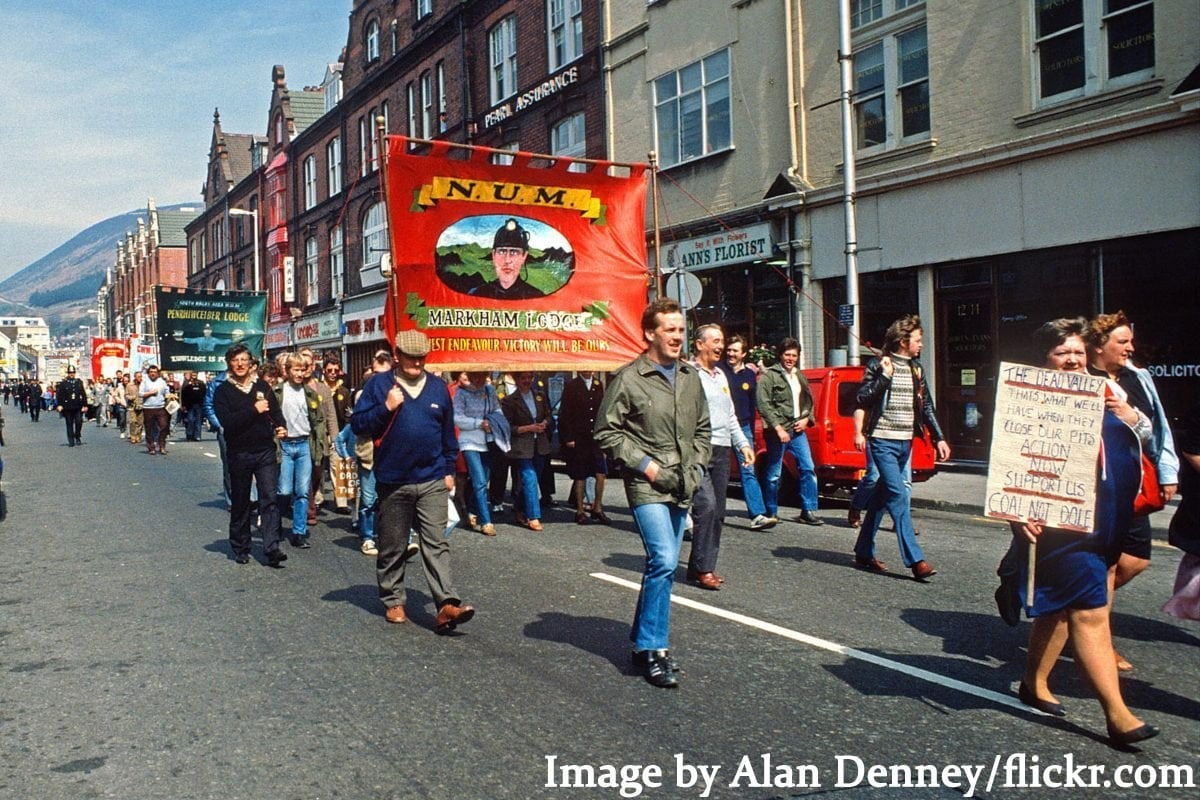
The Tory government headed by Margaret Thatcher was elected in May
1979, faced by the most serious crisis British capitalism had seen
since the Second World War – untill now. Thatcher was determined to
confront the working class and put the burden of the crisis on their
shoulders. That is exactly what the Tories want to do now.
In this second part of Jeppe
Druedahl’s contribution to the
discussion on China, he explains how initially the Chinese bureaucracy,
after the death of Mao, introduced market methods as a means of
stimulating production within a planned economy. However, over time the
capitalist methods began to dominate and the relation between the plan
and the market were overturned. Quantity was transformed into quality,
and capitalism has come to dominate.
Does the development of China on a
capitalist basis deny the theory of permanent revolution? Does it mean
that capitalism on a world scale has a new lease of life? What was China
under Mao? In this first part of a two part article, which we publish
as a contribution to the discussion, Jeppe Druedahl looks at these and
other questions and draws lessons from the development of the Soviet
Union after the revolution and under the Stalinist bureaucracy.
This year marks the hundredth
anniversary of one of the great events in modern history. On November
20th of 1910 Francisco I. Madero denounced the electoral fraud
perpetrated by President Díaz and called for a national insurrection.
This marked the beginning of the Mexican Revolution. Today, the
conditions have matured for another revolution, this time with a mighty
proletariat at its head.
Ted Heath’s plans went very "agley" in the early 1970s, and he had a Tory
parliamentary majority that Cameron can only dream of. The volatility
of the world in 2010 means that this new Tory/Lib Dem government will be a
government of crisis. Certainly the story of Ted Heath’s demise has a
lot of lessons for trade unionists and socialists today.
After the Second World War the advanced capitalist world went through a prolonged period of boom, rising working class living standards and relative class peace. By 1970 it was clear that the boom was coming to an end. The ruling class saw the need to confront the working class and drive down living standards in order to restore their profits. Their chosen instrument in Britain was the Tory government under Heath, elected in 1970.
Seventy years on, World War II is remembered. What is forgotten was the largest mutiny amongst the British armed forces that heralded its end.
Ninety years ago, on the morning of 13th March 1920, a brigade of
soldiers marched into Berlin and declared the German government of the
Social Democrats to be overthrown. Not a shot was fired by any side and
the response of the leaders of the government was simply to flee. The
very forces which the Social Democrats had place so much trust in had
turned against them. The Kapp Putsch, as it has become known as, was
challenged instead by the workers.
Ninety years ago, on the morning of 13th March 1920, a brigade of
soldiers marched into Berlin and declared the German government of the
Social Democrats to be overthrown. Not a shot was fired by any side and
the response of the leaders of the government was simply to flee. The
very forces which the Social Democrats had place so much trust in had
turned against them. The Kapp Putsch, as it has become known as, was
challenged instead by the workers.