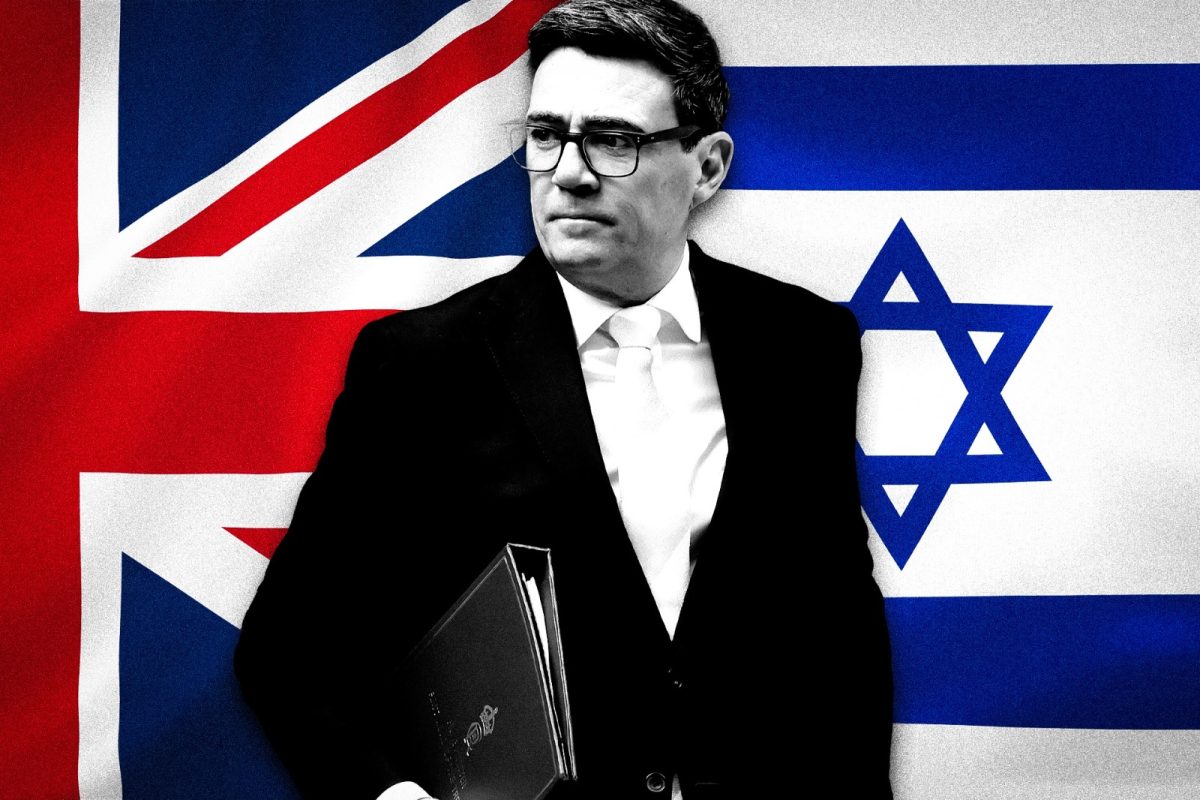
On 8 September, new Foreign Secretary Ed Miliband stated that – in the next six to nine months! – the UK will introduce an import ban on goods produced in illegal Israeli settlements in the occupied West Bank.
The government has presented these measures as Britain standing “for fairness against injustice”, in Burnham’s own words – but the reality is that these cynical politicians stand for nothing.
As we will explain, this is nothing more than a symbolic gesture.
Independent foreign policy?

The fact that this gesture has been made at all is the result of a geopolitical shift – it exposes the rift in the fragile web of western imperialism.
Over the last three years, the Israeli government has been pushing further away from what is in the best interests of western imperialism as a whole.
This is epitomised by the Iran War – which Israel dragged the US into – which has had a huge impact on the world economy and has been extremely unpopular from the beginning, even within the US.
World leaders, particularly in Europe, have been desperate to distance themselves from this catastrophic mess, and prove they can pursue a foreign policy independent from the US.
Obviously, they enjoy no such independence, and continue to cling to the coattails of US imperialism even when repeatedly shunned and insulted by Donald Trump.
However, in these conditions, space has opened up to give the appearance of pursuing an independent foreign policy, and the UK government is opportunistically jumping on the moment.
Under pressure
Another important factor in all this is the impact of the Palestine movement, which has pushed public opinion and been a consistent thorn in the side of the British establishment.
Since coming into office in July this year, Andy Burnham has been under pressure to win back much of the left-wing and Muslim vote that Labour lost under Keir Starmer’s leadership.
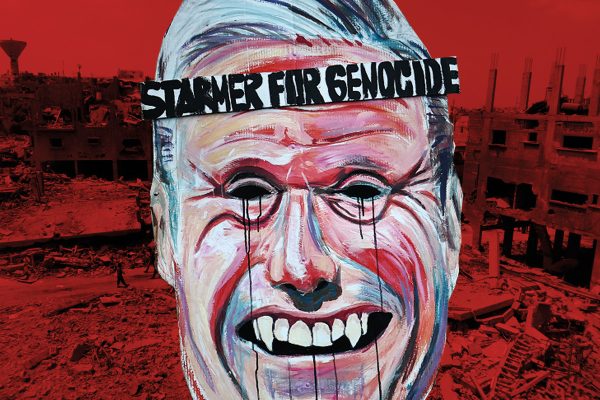
Almost three quarters of Labour voters who have now switched to the Greens, Plaid Cymru, the SNP, or the Lib Dems since 2024 said their opinion of the Labour Party would improve if the next leader adopted more measures in support of Palestine.
Starmer, feeling this pressure himself, started to go in this direction, offering a partial arms embargo and a flimsy recognition of a Palestinian state.
But it was too late. Starmer’s legacy on Palestine will always be his commitment that Israel has the right to cut off Palestinians’ power and water.
To put across a new image, the Labour government needed a new figurehead. Enter the ‘King of the North’.
But as we have explained elsewhere, Burnham’s Labour doesn’t stand for anything fundamentally different. This is evident in the fact that Burnham’s cabinet is stuffed with supporters of Labour Friends of Israel, including his chief of staff.
“Important and valued trade”
In his statement, Miliband said that Britain would continue to support “important and valued trade” with Israel and stressed that “the sanctions regime will target illegal settlements and settlement expansion, not Israel.”
However, goods originating from the occupied West Bank only account for a tiny proportion of the total goods and services that flow from Israel to the UK.
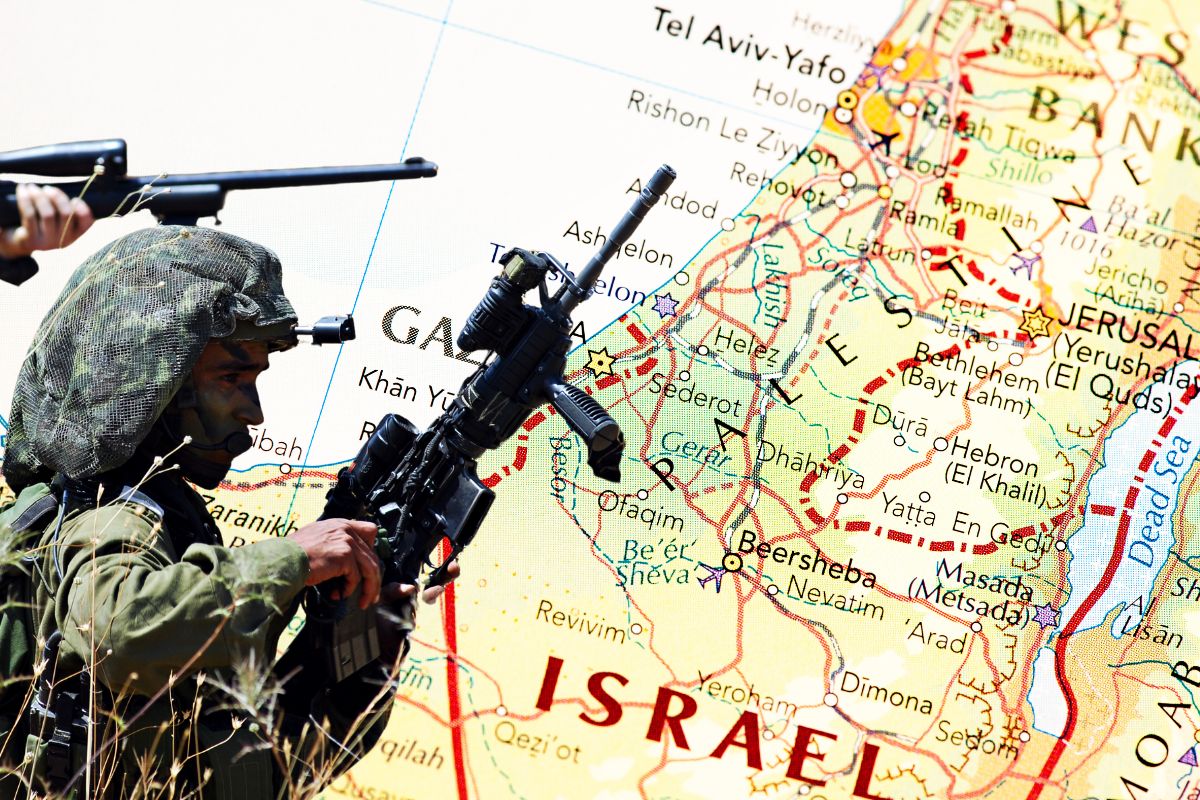
In 2025, total trade between the UK and Israel amounted to £6 billion. Al Jazeera estimates that the actual amount of trade between the UK and illegal settlements is likely to be worth under £6 million – less than 0.1 percent of the trade between the UK and Israel.
The British government has already acknowledged that it is “difficult to obtain accurate figures for UK trade” with Israeli settlements. Goods originating from the occupied West Bank are hidden in supply chains and already mislabelled as ‘made in Israel’ to bypass international trade rules. There is little the government could do to prevent this.
More significantly, illegal settlements in the West Bank cannot be separated from the Israeli state and the Israeli economy.
In the West Bank today, it is the Israeli state itself that is seizing land, displacing people, greenlighting the building of new settlements, and arming settlers. The far-right Israeli finance minister Bezalel Smotrich openly said that the Israeli E1 project in the West Bank would “bury the idea of a Palestinian state”.
Performative and tokenistic
According to The Times, Prime Minister Burnham spoke to President Trump on the phone the day before the announcement to smooth relations with Washington.
The same article reveals that British diplomats privately told US counterparts that the sanctions were largely symbolic and would have little effect on wider UK-Israel trade relations.
There it is. These measures are entirely performative and tokenistic.
On top of this, what was entirely absent from the government’s announcements was anything about the genocide in Gaza. In parliament, Miliband said that there is “increasing evidence that war crimes appear to have been committed, and we support legal processes to determine this.”
This is pathetic. In the last three years, at least 100,000 Palestinians have been killed. Yet Miliband can’t bring himself to call out the genocide, or commit to any meaningful action against it.
And this government wants us to think it stands on the side of “fairness against injustice”!
Burnham, Miliband, and co. have been clear: they still support Israel. This support means they will continue to sell arms to aid the war machine, and remain complicit in the countless horrific war crimes that have been committed against the Palestinian people.
This latest empty gesture demonstrates more than ever that the leadership of the Palestine movement must move beyond lobbying politicians and attempting to appeal to their better nature.
What is required is an organised, mass working-class response – like the movement which erupted last year in Italy, with millions of workers and youth taking to the streets in a general strike to ‘block everything’ for Palestine. It is no coincidence that shortly after that, Trump pressured Netanyahu to sign a ceasefire – the US ruling class was fearful that if they did nothing, strikes could spread.
Burnham’s token sanctions on Israel change nothing. The fight isn’t over. To succeed, the struggle for Palestinian freedom must be fought by workers of all countries, linked with the fight against imperialism and capitalism.