
“A finger must be kept on the pulse of the British economy and politics and, while not omitting overall perspectives for a moment, one must attentively follow all the partial fluctuations, the flows and ebbs, and determine their place in the process of capitalist decline. Only upon the basis of such a general orientation can the revolutionary party conduct its policy, the flexibility of which is expressed by the fact that while it does take partial fluctuations into account, it in no way loses sight of the basic line of development.” (Trotsky, Problems of the British Labour Movement, vol.2, p.157)
Perspectives are not a blueprint, fixed for all time. They are a guide to action that must be updated and clarified as events unfold. They are an outline of the likely course of future developments, based on a sober analysis of the present. We must look at things dialectically to understand the contradictory processes taking place, and how these are likely to manifest themselves. Quantity changes into quality; and quality changes into quantity.
World perspectives
We cannot understand the perspectives for Britain without first understanding the dramatic, unprecedented, epoch-making events and processes that are unfolding on a world scale. The world market holds every country in its iron grip. This document should therefore be read in conjunction with our world perspectives documents and the up-to-date analysis carried on our international website. [See also: Organisational Resolution 2026]
What is striking is the speed of events. The world situation is becoming more precarious and crisis-ridden by the day. The abrupt change in world relations over the past few years has added to the economic, political, social, and environmental instability that reigns everywhere. The stability of the past has completely vanished.
The capitalist system has reached its limits. The productive forces – industry, technique and science – are being stultified and hemmed in by the nation state and the private ownership of the means of production. These have become colossal barriers to human progress, opening up an epoch of social revolution.
The United States under Trump has added further instability to world capitalism with its America First policy. It has turned the old world order upside down. The ‘rules-based order’ that underpinned capitalism for the last eighty years has been systematically destroyed. Above all, the rise of China threatens American interests, which is being forcefully countered by a reordering of US priorities.
As was reflected in the National Security Strategy (NSS), there has been a fundamental break in US foreign policy. Trump’s strategic turn reflects a recognition of the limits of US power and the inability for the US to play the role of the world’s policeman. This, in turn, has led Washington to attempt to retrench from areas it does not consider of strategic importance, and reassert its domination over the western hemisphere so as to be able to deal with their main rival: China.
Whatever Trump’s intentions, the Middle East is a key strategic region of the world from which US imperialism cannot run away. The NSS document talks about not allowing a rival power to control it, but that means backing Israel, which has its own aims in the region. The latest war on Iran is a demonstration of the limits of the power of US imperialism and the unintended consequences of Washington’s arrogance.

In relation to Europe, the NSS document warns of “civilisational erasure” across the continent, and asserts: “It is far from obvious whether certain European countries will have economies and militaries strong enough to remain reliable allies.”
Trump’s attempts to extricate the US from the Ukraine war, along with his moves to seize control of Greenland and its resources, have shattered the illusion of a ‘collective West’. This has led to paralysis and panic amongst the European ruling classes. Faced with a loss of US security and military guarantees on the one hand, and a resurgent Russia on the other, the diminished role of the European powers is becoming clear for all to see. Trump’s overtures towards Russia will continue to undermine attempts at European ‘unity’, given the divergent interests within Europe.
Trump is not simply sidelining the current crop of European leaders. His administration has actively sought to embolden right-wing Eurosceptic parties, such as Germany’s AfD, in order to weaken and destabilise the European Union. European heads of state are no longer treated as allies but as open economic rivals. Political fragmentation is set to accelerate as Europe undergoes a calamitous decline. As Henry Kissinger once warned: “It may be dangerous to be America’s enemy, but to be America’s friend is fatal.”
Facing defeat in Ukraine, the Europeans are ramping up their hysteria against Russia, with the aim of sabotaging any peace deal and keeping the US involved in this proxy war. They also want to strengthen themselves militarily so as to defend their imperialist interests in the face of a Russian victory in Ukraine.
For leaders like Starmer, Macron, and Merz, this jingoism and sabre-rattling also serves as a useful political distraction from the political crises they face at home. But in order to maintain their seat at the imperialists’ table, and appease Trump, the European leaders have to rearm and ramp up militarism. This means ratcheting up defence spending, while slashing spending on social services. The welfare state, built as a social safety net in the postwar years, is no longer tenable within the confines of capitalism. We are told that guns must come before butter. The European working class will not take this assault lying down, however. Class battles are being prepared on an unprecedented scale across Europe.
On top of this unparalleled situation is the danger of a deep economic slump. During the 2008 crisis, governments were forced to bail out the capitalist system with borrowed money. The debts accrued now hang like millstones around the necks of the capitalist economies today. With little-to-no growth, the only way for them to reduce this burden is to make the working class pay.
Facing a new downturn, the strategists of world capitalism find that they have already used up their economic ammunition. They cannot simply rely on endless borrowing any more, with debt repayments already biting into government budgets, and the bond markets turning on countries that cannot balance their books. With historic levels of debt across the global economy, a slump could easily tip the system into a 1930s-style depression.
As the Financial Times recently explained: “It follows that harsh bond market discipline, not political will, holds the key to debt consolidation. That points, in due course, to financial crises and political instability. The Swedish economist Anders Aslund feels the current situation is redolent of 1929. Even if you think his view extreme, it is hard to disagree with him that this cannot end well.”
British capitalism
The long decline of British capitalism – once the world’s foremost industrial power – has been going on for more than a century. Shielded by the captive markets of its vast Empire, Britain’s industries gradually fell behind its rivals. At a certain point, the gulf became unbridgeable: modernisation would have required massive amounts of capital, vast coordination, and social dislocation. However, Britain’s decline was largely obscured by the global upswing following the Second World War.
Faced with the dilapidation of its industry, and unable to play catch-up, the British capitalists increasingly abandoned manufacturing – previously the foundation of Britain’s might and stability. Instead, they sought easy profits through financial services, stock-market gambling, property booms, and asset-stripping nationalised industries. This ‘casino capitalism’ effectively became state policy with Margaret Thatcher’s ‘Big Bang’ of deregulation in the 1980s. The central mission of Thatcherism was to oversee Britain’s transition to the parasitic, rentier economy that we see today.
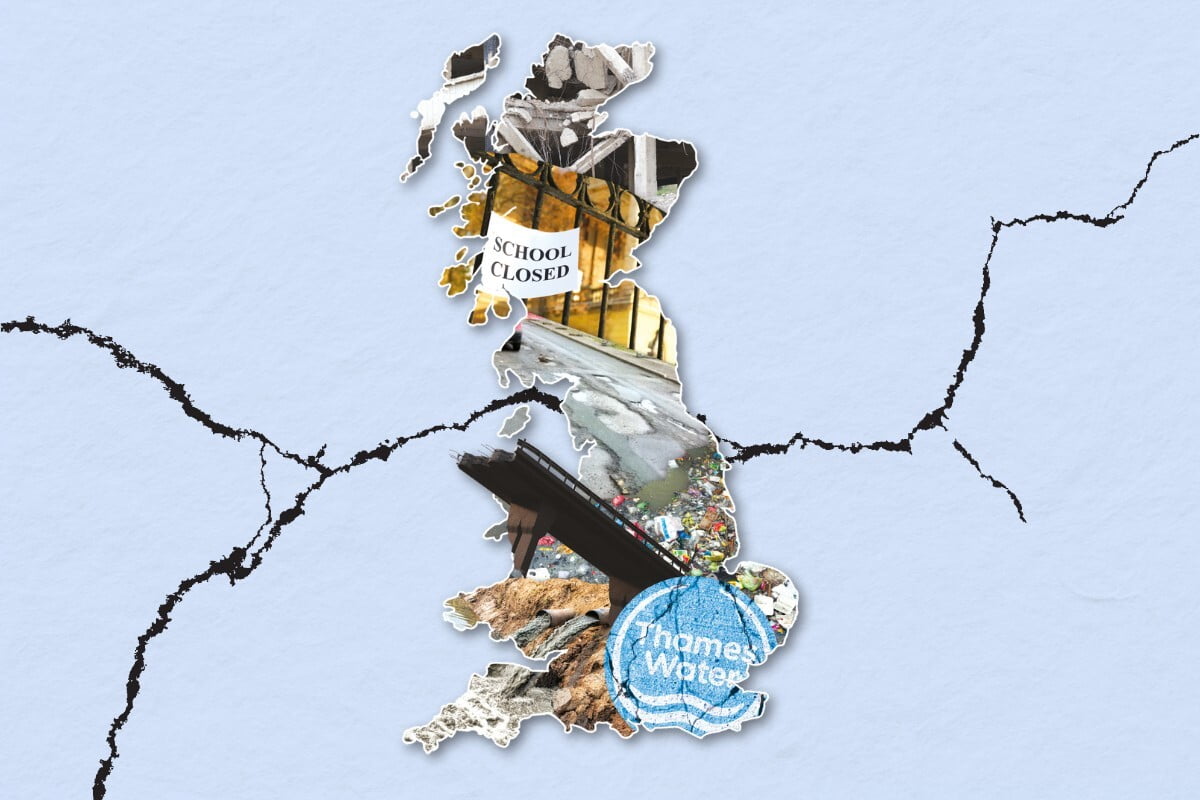
This has weakened the fundamentals of the British economy, making it more susceptible to shocks and increasing inequality. The British ruling clique of bankers and capitalists has given up on long-term economic strategies in favour of narrow, short-term parasitism.
Today, the carcass of the British economy is being picked over by hedge funds, private equity firms, and asset-strippers, both British and especially foreign. Overseas bidders agreed $142bn in takeovers of British companies in 2025. That marks a 74 percent uptick from the previous year. The surge of foreign takeovers for UK companies contrasts with domestic dealmaking, which plunged 54 percent to about $44bn, the lowest level since 2016.
While such speculation is rife, economic growth has collapsed. The economy has effectively been in a slump since 2008. Productivity and productive investment have stagnated. The final quarter of 2025 saw Britain attract the lowest investment amongst G7 countries. Britain’s productivity growth consistently lags behind its competitors.
Related to this, British capitalists are being squeezed out of markets by their rivals. This has now reached a critical stage. British trade collapsed in 2019. Annual growth in trade over the period of 1980-2008 was 5 percent. However, in the decade 2008-18 it grew by 2.5 percent a year. Between 2019-24, it grew by a miserable 0.3 percent. This accurately measures the ignominious decline of British capitalism.
This has been exacerbated by Brexit, which has placed barriers on trade with the EU – the UK’s biggest trade partner – at the time when world trade is becoming constricted, and competition between the powers more fierce.
Today, there is talk of 1.5 percent economic growth per year until 2030. Even this is over-optimistic, given the precarious prospects for the world economy, and difficulties of attracting investment.
The strategists of capital are hoping for a miracle – perhaps in the form of AI – that they hope will increase productivity and boost growth. But all the powers are betting on the same thing, and Britain is far behind its competitors, with far fewer resources than China or the USA when it comes to investing in forefront technologies and industries.
To the extent that it is adopted throughout the British economy, AI will render previously secure sectors redundant. Techno-optimists say AI investment will pay for itself by cutting labour costs, replacing up to 40 percent of tasks now done by humans in the not very distant future, and pushing jobless rates as high as 20 percent. The latest reports say that AI could destroy three million jobs in Britain, including many highly-skilled jobs, in the next decade. Without a planned economy, labour-saving technology creates only chaos and misery for the working class – an absurd paradox of the capitalist system.
The other big bet of the British capitalist class is green tech. But here again it trails behind its rivals. China’s investment in its green tech sector is more than that of the USA and EU combined. The US, France, and Germany all have larger R&D budgets for green investments than Britain. Even Stockholm attracts more climate tech funding for startups than London. Britain spends less on green energy and transport than Germany, France, Italy, and Spain.
The chronic difficulties facing the British economy have pushed up national debt to £2.9tn – nearly 100 percent of GDP. High interest rates means the cost of servicing the debt has risen to around £100bn per year, higher than Britain’s rivals.
This devastating picture is a reflection of the special crisis of British capitalism, which is completely ignored by the left reformists, who think that attacks on the working class are merely an ideological choice.
Social consequences
The position of British capitalism has gone from bad to worse. This is the fundamental reason for declining living standards and the widespread anger in society. Everywhere there are signs of economic and social malaise. Schools and roads are crumbling; the NHS is collapsing; homelessness is on the rise; city centres are hollowed out; and the gulf between rich and poor is obscene. Everyday living is getting harder. 2025 was Britain’s hottest year on record, but housing, workplaces, and the NHS are not equipped to cope. Living costs are relentlessly pushed up by food prices, rents, bills, and council tax, while services are cut to the bone. Millions live in or are close to poverty, including one in three children. Many cannot afford to heat their homes. Flood defences and river dredging are consistently neglected. Large numbers of councils are on the verge of bankruptcy, threatening the provision of basic services.
The crisis of capitalism reflects itself acutely in Britain in a sense of social decay. The very fabric of society seems to be falling apart. This fuels concerns not only about migration, but also about crime, which demagogues like Farage cynically tap into, exaggerate, and link to one another, as part of their rhetoric about ‘broken Britain’. Starmer’s Labour and the Tories are no different, also banging the drum about ‘law and order’. The crisis within the British state – including overflowing prisons, backlogged courts, and a demoralised, scandal-ridden police force – only adds to the general sense of chaos and disorder, however.
For a section of the establishment, migration has become the preferred scapegoat for all these social problems – including the shortage of jobs and housing – that the crisis of British capitalism has created. Not only Nigel Farage, Tommy Robinson, and the right-wing press, but also the Tories and Starmer’s Labour: all of them bang the drum about immigration and ‘small boats’, in order to cut across the class questions, divide the working class, and distract from the real enemy – the billionaires, bosses, and bankers.

Divisive and reactionary rhetoric around migration finds fertile ground amongst a layer of the working class, due to the housing crisis, the decrepit state of public services, and the proliferation of low-paid, insecure work – and, above all, due to the lack of any genuine answer to these problems from the left.
The culture war over migration has become a Frankenstein’s monster for the establishment, however. Economically, restrictions on immigration are a headache for British bosses, who rely on a steady stream of migrant labour to hold down wages and boost profits. Politically, meanwhile, the focus on migration has played into the hands of right-wing populists like Farage, who the capitalists do not fully trust to represent their interests. And socially, it has given rise to far-right riots and racist attacks that only intensify the instability in British society.
Robert Shrimsley wrote in the Financial Times an article entitled “Labour is slow-marching working people to populism”. It summed up the dilemma for the ruling class:
“If Brexit ought to have taught the UK one thing, it was that once people no longer feel the system is working for them they will be open to radical – even self-harming – alternatives. Nine years on from that referendum, ever larger numbers feel they live in a country that is letting them down. And this feeling is especially acute among younger workers, the later millennials and early Gen-Zers turning in rising numbers to populist parties both left and right.” (FT, 4/12/25) This is a dire warning to the ruling class.
Years of falling living standards and austerity have built up resentment towards the status quo. The general feeling is that things are only going to get worse. The pillars of the establishment – the police, judiciary, politicians, and the monarchy – are all viewed with contempt. The BBC, the mouthpieces of the British establishment, is increasingly distrusted, and is experiencing splits at the top.
The revelations in the Epstein files are pouring fuel onto the fire of class anger and anti-establishment sentiment. ‘Prince’ Andrew’s association to Jeffrey Epstein has exposed the whole British establishment: the police, the military, the media, the political parties, and, of course, the monarchy itself – public approval for which has plummeted below 50 percent for the first time since records began.
Scandals like this, in conditions like today’s, have the potential to produce social explosions. All it would take is a single political or labour movement leader – or some other accidental figure, like a celebrity – to boldly attack the establishment, and this could bring forth a mass movement against the government and the entire Epstein class. The fact that the left and trade union leaders have remained silent on this matter is a damning indictment of their political weaknesses.
Due to the depth of the crisis, capitalism is revealing that bourgeois democracy is simply the dictatorship of the rich. With every government budget comes talk of appeasing Britain’s creditors and the need to restore the ‘confidence’ of the markets. This is increasingly proving to the working class that it is not politicians who decide the economic fate of the country, but an unelected, unaccountable cabal of financiers. This fuels a feeling amongst ordinary people that it makes little difference as to who is voted into power.
Regardless of what is promised in election campaigns and manifestos, it is the bankers and billionaires that dictate government policy (i.e. cuts and austerity). As the New Statesman wrote after Rachel Reeves’ last budget: “Governments are now at the mercy of unseen investors.”
As Shrimsley warns: “Capitalist liberal democracy relies on a belief that the interests of ordinary voters are sufficiently aligned with the interests of the more successful. The shares of the pie, of course, are unequal but the have-nots must see a path to becoming haves; the have-somes to having more. The chance of a home, a job that more than covers the bills, prospects for their children and so on: this is the stake in the system that creates that alignment of interests and embeds political stability. The central crisis of western politics since the financial crisis has been the erosion of this promise. For what happens to liberal democracy and the capitalist model when rising numbers question if they will ever have that stake?
“We can see an answer in the levels of support for insurgent parties peddling nonsense economics. Nigel Farage’s Reform UK has led in the opinion polls for most of the year. Meanwhile, the charismatic new leader of the Greens has taken his party to second place among 25- to 49-year-olds, advocating defiance of the markets with an inflationary borrowing spree and taxing the richest out of the country.”
Starmer’s government
The Starmer government is one of crisis. It came to power with a massive parliamentary majority, but in reality it had only received the lowest vote share of any party forming a majority government in post-war British history. After 14 years of Tory attacks there was a yearning for change. But there has been no change. In fact, things are deteriorating. There is a widespread feeling of betrayal and disgust. At the time of writing, Starmer’s personal favourability rating is at minus 51 percent, while Reeves’ standing is at minus 57 percent. She is the most unpopular chancellor since records began. Starmer is widely regarded as out of touch with ordinary people: more comfortable abroad or hosting meetings of his ‘coalition of the willing’, rather than dealing with domestic problems. As a result, Labour languishes at less than 20 percent in the opinion polls, and has been pushed behind the Greens according to some surveys.
This government of crisis is not a reflection of the personal weakness of Starmer and Reeves, but of the objectively impossible position that their government – and any government that bases itself on capitalism – finds itself in.
Under pressure from the ruling class, the Labour leaders have talked of the need to make ‘tough choices’ in the ‘national interest’. But the pressure of backbench MPs, who face the wrath of the electorate, has resulted in repeated U-turns over winter fuel payments, disability benefits, the two-child benefit cap, and more.
Starmer’s weakness comes from being stuck between the twin titanic pressures of capitalism in crisis and the backlash of the working class. The result is paralysis and zig-zags, delaying tactics, yet more borrowing, and short-term political decision-making, all in the vain hope that future growth might bail them out. This neither solves the problems of the working class, nor carries out the policies demanded by the ruling class.

The result is that the government is hated from all sides. The ruling class is frustrated with Starmer’s dithering and is demanding that he act decisively to cut public spending. The leaders of the labour movement are increasingly disillusioned with the government, including its reneging on day-one workplace protections. And fed-up voters are abandoning the Labour Party in every direction.
The bottom line is that without economic growth, which will not be forthcoming, draconian cuts are inevitable. The pressure of the market will make sure of that. The longer they are postponed, the deeper they will be. If postponed towards the end of this parliament, as planned, the bloodier will be Labour’s defeat when election day comes around.
There is panic in the Parliamentary Labour Party. Many Labour MPs are sitting on slim majorities and face being wiped out at the next general election. To save their skins, many want to get rid of Starmer, who personifies the crisis. There are plots, rumours of coups, and briefings against the Labour leader by ‘colleagues’. Starmer’s days are numbered. He could be pushed out at any time between now and the next general election. The backstabbing and parliamentary rebellions will only increase as the government drifts towards inevitable disaster at the next election, and as Downing Street is compelled to implement harsher, deeper cuts.
Starmer is in an extremely precarious position following the back-to-back blows of the Mandelson affair and Labour’s humiliating Gorton & Denton by-election defeat. The revelations of Mandelson’s association with Epstein – which Starmer was fully aware of as he promoted him to one of the highest positions in the land – stirred up a mutinous mood amongst Labour MPs. Scottish Labour leader Anas Sarwar called for Starmer to resign, expecting others to follow suit. But no coup attempt came. When push came to shove, the Parliamentary Labour Party flinched. MPs looked into the abyss and stepped back in fright.
Even after Labour’s Gorton & Denton defeat, their criticisms of Starmer were muted. If anything, they seem to have temporarily resigned themselves to their forlorn leader, fearing the political and economic pandemonium that would be unleashed if Starmer was pushed out of Number 10. And the same is true of the left and trade union leaders, who have scandalously sat on the sidelines throughout these developments: afraid of mobilising workers against Starmer’s government; hoping instead to manoeuvre in a supposed ‘left’ replacement as leader, such as Angela Rayner or Andy Burnham.
Eventually, however, the pressures on the Labour leaders will become unbearable, and a move by either the ruling class or careerist Labour MPs – or both – will see Starmer shunted out of office. At that point, all hell could break loose, both in Westminster and on the markets.
The local, Welsh, and Scottish elections in May will be a disaster for Labour. It will likely lose control of the Senedd, the Welsh devolved parliament, for the first time. That could provide the catalyst for a coup against Starmer – as could any number of shocks or scandals. The point is that the current occupants of Downing Street are living on borrowed time.
Challengers are already lining up to replace Starmer, including Rayner, Burnham, and Streeting. The ruling class are considering their options, with the Financial Times publishing an article entitled “What would an Angela Rayner government look like?”.
But this is not the preferred option of the bourgeoisie. They crave stability. “Changing prime ministers every one or two years is not good… it feels horribly familiar,” noted one business leader. Yet this is precisely the dilemma facing the ruling class: there can be no stability, and therefore they no longer have a reliable representative who is able to carry out their agenda.
Even if Starmer is removed, whoever replaces him in Number 10 will not fundamentally alter the situation for either this Labour government or for British capitalism.
At the same time, given the ruling class’ lack of political alternatives, and Labour MPs’ desire to keep their jobs, an early election seems unlikely.
The defenestration of Starmer, however, would not be a run-of-the-mill event; a mere changing of the guard. Rather, it would open up a new chaotic chapter in British politics.
We cannot predict the precise order and pace of events. But we must be alert to the potential for things to rapidly unravel and escalate, and must not be caught by surprise if things quickly accelerate. The pandemonium in France, where budgetary logjam and parliamentary paralysis have led to a quick succession of impotent prime ministers, is a mirror to Britain’s not-too-distant future.
Starmer’s foreign policy
As a representative of British capitalism, Starmer is trying to navigate the volatile seas of world relations at the helm of an economically diminished and militarily under-equipped ship.
The capitalist press have showered Starmer with praise for his foreign policy in relation to Ukraine. “Britain’s leader has found purpose abroad” ran a headline by The Economist. Back in March 2025, the Financial Times wrote of a “war bounce” in Starmer’s personal approval ratings, as he made it his mission to garner support for the Ukrainian war effort and string together a ‘coalition of the willing’. But this was all wishful thinking on the part of the bourgeois.
All attempts for Starmer to position himself as the Statesman of Europe – from his ‘gratitude diplomacy’ with Trump, to his fighting talk of putting ‘boots on the ground’ in Ukraine – are laughable and have backfired spectacularly. Every time Starmer, Macron, Merz, and co. come together to beg the US not to pull out of a war that has already been lost, they are dismissed and reprimanded. All further efforts by Starmer to lead a coordinated European response have led nowhere.

Britain’s over-zealousness in keeping the carnage in Ukraine going expresses the extreme vulnerability of Britain as the old world order breaks apart. Starmer is a pathetic figure. He embodies the psychology of the British ruling class, who have been conditioned for decades to behave as the US’s faithful accomplice. Through the ‘special relationship’, Britain was able to play an outsized role in world politics. But now, Starmer is being forced to reckon with Britain’s diminished role as a minnow amongst much stronger powers.
For economic, military, and political reasons, Starmer and British capitalism are bound to the interests of US imperialism. Starmer is publicly and humiliatingly reduced to being an obedient poodle of the US, terrified of upsetting his imperial master in Washington.
But the dire state of British capitalism makes it desperate for investment from any and all sources, and for trade links with all the major powers. It has no strategic interests of its own beyond funnelling as much money as possible through the City of London. So at the same time as preserving the relationship with the US, Starmer is desperately trying to keep Britain open for business elsewhere. This includes an attempt to ‘reset’ relations with Europe, and to maintain trade and investment links with China.
A foreign policy based on facing in all directions, at a time when the world is fracturing into rival blocs, is fraught with danger for the British ruling class. As the tensions between the imperialist powers intensify, the British ruling class and its representatives will find themselves having to conduct an ever-more delicate and intricate balancing act.
In turn, the working class will find itself suffering the consequences of Britain’s weak position on the world stage – with industries like steel gutted by global competition and international asset-strippers; public services like healthcare opened up to multinational profiteers; and social spending slashed to pay for militarism.
There is another dimension to Starmer’s balancing act. Mass anger at the crimes of western imperialism has drawn millions into politics, particularly through the Palestine movement. As a result, Starmer is increasingly caught between two mutually opposed pressures: the fury of working-class communities towards war and genocide waged in their name, and a deep-seated distrust of foreign intervention; and the expectation from Washington that the UK government aligns unconditionally with US imperialism.
The US-Israeli bombing of Iran has brought this contradiction sharply into view. Starmer could not condemn Trump’s actions without jeopardising the ‘special relationship’. Yet he could not openly endorse them without risking the wrath of public opinion and electoral wipeout. He was therefore paralysed – squirming as he watched the UK’s longstanding ally shred apart the so-called ‘rules-based’ order. All he can do is duck and cover behind vague calls for diplomacy and for international law to be respected.
It is not ‘international law’ that restrains Starmer, but class anger. The heavy price he pays for subservience to US imperialism is a Labour government despised as the party of war and genocide. The impact of imperialist intervention on consciousness in Britain places a hard limit on how far Starmer and the establishment can go in acting as an obedient lapdog to US imperialism. This, in turn, frustrates Trump, who has made a point of publicly humiliating the UK Prime Minister. Starmer’s weakness ultimately reflects the fact that Britain cannot chart its own course on the world stage. In the end, his mealy-mouthed statements please nobody, and contribute to a greater radicalisation of the working class and youth.
The rise of Reform
While support for Labour has collapsed, so has support for the Tories. The Caerphilly by-election for the Senedd in October 2025, for example, saw Labour reduced to 11 percent and the Tories to 2 percent – their lowest vote in over 200 years. These two parties have been the basis for the stability of British capitalism for over a century. But in this instance, they scraped only 13 percent of the vote between them.
Plaid won that by-election, seizing what has historically always been a safe Labour seat. Reform also gained, with 34 percent of the vote, up from 2 percent at the previous election.
These are unprecedented developments. They point to a massive fragmentation of Britain’s political landscape. This represents the end of an era: the end of Westminster’s two-party system, which has dominated British politics for the last century. After decades of attacks and austerity, with no end in sight, millions have turned their backs on both Labour and the Tories. The centre ground has collapsed, with voters polarising towards ‘insurgent’ parties like Nigel Farage’s Reform UK and Zack Polanski’s Greens.
The Greens’ victory in the Gorton & Denton by-election has the potential to dramatically accelerate the polarisation and realignment of British politics. The Green Party will now be seen by workers and youth as a viable electoral option, and the best-placed outfit to challenge both Starmer’s Labour and Farage’s Reform. In turn, the argument that workers should hold their nose and vote for Labour as the ‘lesser evil’, in order to keep out Reform, will now carry little-to-no weight. Having suffered from tactical voting in the past, then, the Greens now stand to benefit from it. This could propel the support for the Greens even higher, putting them on course for a swathe of electoral victories, locally and nationally, and leading to a further collapse in the support for the ‘centre ground’.
North of the border, the situation is also defined by instability and discontent. After a decade-and-a-half in power, the anti-establishment credentials have come off the SNP. With independence at a dead-end, Scotland’s governing party are carrying out the same policies of ‘managed decline’ as in Westminster.
Some will hold their nose and vote SNP in the May election, while many more will stay home and not vote at all. Layers who previously looked towards the SNP to solve austerity and the national question are now disillusioned with them and wide open to radical ideas.
Labour remains deeply unpopular. Reform meanwhile has gone from being non-existent in Scotland (gaining less than 0.2 percent of the vote in 2021) to sitting at around 20 percent in the polls. While their support is cut across to a certain extent by the existence of the national question, their rapid growth shows that the same process of polarisation happening across the UK is also happening in Scotland.
In Wales, it is likely that Plaid Cymru will do well at the elections in May and that Labour will lose control of the Senedd. Nationalists such as the SNP and their supporters have hailed this as a victory for nationalism and the end of the union, but this is not the full story. This process, in Wales in particular, does not simply represent a positive surge towards separatism. The rise of Plaid is primarily a rejection of Labour and the establishment, rather than a vote of support for Welsh separation.
In Scotland, support for independence does remain high; however, faith in the SNP to carry it through is low. In the North of Ireland, Sinn Fein won the most recent Stormont elections largely on the back of a crisis in Unionism, which can no longer afford to buy off the Protestant working class.
All of these cases, with their own characteristics, reflect the crisis of British capitalism and the vacuum on the left. Just as deindustrialised towns in the North of England were won over to Boris Johnson, and now Reform or the Greens, the same areas in the Celtic countries are refusing to vote for the status quo of the British establishment. This has found its expression in high support for nationalist parties, but these in turn will be tested by events and eventually found wanting.
The result is that we are entering into a new period for British politics: one of heightened instability and volatility. This, in turn, will feed back upon the economy, making it increasingly difficult for the ruling class to find the reliable, stable government that they need to carry out the measures that are required to get British capitalism out of its quagmire.
Voters are abandoning the traditional establishment parties, in favour of ‘populists’ on the right and left. Farage rests on this growing anti-establishment mood, using demagogy over immigration and ‘law and order’. Reform was ahead in the opinion polls for most of 2025. At the time of writing, it leads Labour by about ten percentage points. It is now the largest party in membership terms, while Labour’s has been halved to below 250,000 members.
Reform has also overtaken the Tories, who are languishing in the polls. At present, it seems likely that Farage will win the next general election, although much can happen before then. This could even yield a majority Reform government. Given the volatility in British politics, and the instability produced by Britain’s electoral system, a party can gain a large majority with only around 30 percent of the vote, as the 2024 general election proved. This is more so the case when there are four or five parties in contention, rather than just two main ones. Alternatively, Farage could try to do a deal with the Tories to gain power.
Farage is a right-wing populist and a reactionary. A Reform government would go on the offensive against the working class with deputy leader Richard Tice promising a “bonfire” of regulations and rights, including the Employment Rights and Renters Rights Acts. Reform has also threatened the legal status of hundreds of thousands of people who have indefinite leave to remain.
But this would not be a fascist government. It is ridiculous to suggest that Reform is going to physically smash the organisations of the working class, which is the real purpose of fascism.
In fact, at this point the social base for such reaction is extremely weak. The class balance of forces is heavily in favour of the working class. Reform’s voters themselves hold a contradictory spectrum of anti-establishment ideas, many of which would traditionally be associated more with left-wing politics than with the right.
Of course there are fascist elements around Tommy Robinson, but they are relatively small, and are explicitly rejected by Farage. Far from a mass fascist movement, many people attending Robinson’s ‘Unite The Kingdom’ protest in September 2025 were frustrated workers alienated by the Starmer government – and by the so-called ‘left’, who do nothing but wail about ‘fascism’ and call for love and unity.
Far from representing a fascist threat, a Farage government would be relatively weak, even more so than equivalent right-populist governments elsewhere. Unlike Trump, for example, Farage would have no room for manoeuvre, given the weakness of British capitalism. The bond markets, the Bank of England, the civil service, and the legal framework would also have a disciplining effect, as Liz Truss discovered in 2022. Farage is already moderating his language as he approaches power, to appeal to the ruling class by talking of fiscal restraint and balanced books.
The current Reform-led local councils illustrate the problem in miniature. They are raising taxes, cutting services, overspending, and losing councillors through infighting. Right-wing populism promises everything to everyone to get power, but is then mired in the contradictions of capitalism.
A government led by Farage would face the same choice as any other: attract capital through privatisation and deregulation, attacks on wages and conditions, and cuts to social spending; or face capital flight and crisis. Either path would rapidly destroy his support.
The so-called ‘lefts’ lack this understanding or analysis of Reform. The prospect of a Farage government has sent them into a frenzy. “Reform must be stopped at all costs!” they exclaim, as they attempt to build a popular front of all parties against Reform. Starmer and Labour have also lent in this direction, raising the spectre of a Farage government and opportunistically denouncing Reform’s racism – even as Labour ministers seek to outflank Reform when it comes to the question of migration. But this will only play into Farage’s hands, strengthening his anti-establishment credentials.
The sects and reformists justify this by labelling Reform as ‘far-right’. But there is no fundamental difference between the populist right and the traditional, conservative right, as can be seen by Meloni in Italy or Le Pen in France. Branding Reform as ‘far right’ only serves to lull workers and youth towards the politics of lesser-evilism.
As they get closer to power, more and more Tories are defecting to Reform, welcomed with open arms and a grin by Nigel Farage. This can only help him in his mission to court big business and show the ruling class he can manage capitalism, but it undermines his anti-establishment image and causes discontent in the party’s ranks.
Reform cannot be countered by liberal demonstrations, campaigns, or moral appeals. The only answer to these reactionary demagogues is a bold, concrete, revolutionary programme that can solve the housing crisis, rebuild crumbling hospitals and schools, and increase our living standards.
Left reformism
The political vacuum in Britain has not only been filled by Farage’s Reform, but also by the Greens, under their new leader Zack Polanski.
Polanski has shifted the Greens to the left with his rhetoric. Although not a socialist, his attacks on the billionaires and landlords have given the party a radical aura, especially among the youth. His utterances have all the characteristics of left reformism. As a result, the membership of the Greens has gone from 60,000 to over 180,000 in the four months after his election as leader. They have risen in the polls, and are perhaps level with – or even ahead of – Labour. 40 percent of people under the age of 24 say they will vote Green at the next election, and the Greens are the first party among those under 49.
Similarly, the launch of Your Party (YP) in the summer of 2025 attracted interest from around 800,000 people. This reflected the potential on the left. However, within months, the leaders had squandered this. The split between Corbyn and Sultana degenerated into an all out war, with attacks, allegations of misappropriation of funds, and threats of legal action. All this demoralised those who were looking to them for a lead. By the time of the founding conference, the membership was only 55,000. And the numbers who actively participated in this conference were even smaller – representing a fraction of the initial response that the launch of YP received. Many deserted to the Greens.
The conference revealed a lack of vision, a lacklustre approach to fielding candidates in the May elections, and continued factional squabbling. For many, the Greens will increasingly look like the main left alternative.
The old Corbynite left, or so-called ‘left’ to be more accurate, in Britain has been in a parlous state since the collapse of Corbynism. They have had no clear perspective or strategy, but dragged their feet at every turn, including with the launch of YP. This weakness is also a reflection of their reformist politics, which attempts to operate within the confines of capitalism. Rather than advocating the overthrow of capitalism, they limit their demands to a wealth tax and renationalisation of the utilities, no better than Corbyn’s election manifestos of 2017 and 2019.

In the run up to the YP founding conference, Zarah Sultana went beyond this and came out with some bold statements about “nationalising the entire economy” and workers’ control.
This idea of nationalising “everything” played into the hands of such renegades as Tariq Ali, Owen Jones, and Novara Media, as well as Corbyn himself, who accused her of being “utopian”. We should defend Sultana against these sneering cynics and, in a positive way, use the fact she has raised the need to ‘nationalise the economy’ to patiently explain our programme. This also allows us to clarify the shortcomings, inconsistencies, and weaknesses of left reformism.
We advocate the nationalisation, without compensation, of the decisive sectors of the economy – the major banks and the one hundred largest monopolies. These should be placed under workers’ control and management, which will then allow the working class to draw up a rational socialist plan of production.
Sultana’s ideas, while a step forward, are wrapped up alongside the usual ideas of a wealth tax, workers’ cooperatives, and other reformist demands. She has talked of a 30-40 year project to implement the left’s programme. Given the depth of the crisis, this is a weak and uninspiring perspective, which reflects her pessimism flowing from her reformist outlook.
Sultana’s statements are an eclectic mixture of buzzwords and soundbites, such as “abolishing capitalism”, which in her case have little thought or proper understanding behind them. Such superficial radicalism, which Zack Polanski is also guilty of, is fine for coming up with agitational social media slogans. But its shortcomings are quickly revealed under closer scrutiny. Sultana has found this out for herself directly: struggling to defend her policies – including her demand to withdraw from NATO or her calls for nationalisation – when interrogated by establishment journalists.
Given our numerical weakness and the massive vacuum that exists, left reformism will inevitably grow, regardless of the political weaknesses of the lefts. These figures are no doubt politically weak now, but, under the impact of events and the pressure from below, they can become extremely radical in words and attract a large following.
We must not be blinded by superficially radical-sounding rhetoric. In reality, these lefts have no faith in the working class to actually change society. They cling to the illusion that capitalism can be somehow reformed, which leads them to compromise and capitulate. It is not for nothing that Trotsky explained that betrayal is inherent in reformism.
The growing success of the Greens will likely draw even larger layers into the party’s orbit, with radicalised students and young workers joining the Green Party, canvassing and campaigning for the Greens in elections, and attending the party’s rallies and meetings. The most politically advanced youth, however, do not have many illusions in the Greens. Their support for the Greens is not deep-rooted. As far as they back Polanski and his party, it is as an electoral option. The best layers are very open to our criticisms of the Green Party’s reformism; to hearing our revolutionary communist perspective; and do not see any contradiction between voting for the Greens, for now, whilst also joining and building our revolutionary party.
The example from Scotland is instructive. While in government, the SNP received support from the Scottish Greens, which has now tarnished the Greens’ anti-establishment image in Scotland, in contrast to how Polanski and the Greens are seen in England and Wales. Only through repairing their relationship with Polanski’s party and riding their coattails have the Scottish Greens regained some popularity in the polls, but they have not managed to gather much enthusiasm on the ground. Clearly, with no serious answer to the crisis of capitalism, left reformists can only hide behind their rhetoric for so long before being exposed by their own actions.
Having said that, we must always take a friendly attitude to those with illusions in reformism, by patiently explaining our views, using facts, figures and arguments. We are in favour of reforms and will fight for them, even the smallest advances. But under this crisis-ridden system, all reforms are, at best, short-lived. The capitalist system can no longer afford them. In general, this epoch is one of counter-reforms. Only by a fundamental change in society can reforms be guaranteed and greatly enhanced. It is through fighting for reforms in its day-to-day struggles that the working class will see the need for revolutionary change.
Trade unions
The continued squeeze on the working class is putting pressure on the trade union leaders to act. There have been a number of localised strikes in different sectors over the past period – for example, the strike of the Birmingham bin workers, and the agency workers employed to break the strike, over pay, conditions, blacklisting, and bullying. The workers are determined and the dispute is set to escalate, continuing beyond the May elections. However, to ensure its success, it needs to spread.
Strikes over pay have also affected BAE Systems in Lancashire, as well as three thousand aerospace workers. Resident doctors have taken action over pay and conditions, and are balloting again, in the face of government opposition. University teaching and support staff have also taken action over pay, jobs, and conditions, as have those at further education colleges. With the rising cost of living, and councils facing bankruptcy, more workers will strike in the next period.
There is colossal anger in workplaces over wages, which are not keeping pace with the cost of living. This was evident in the militant strike wave of 2022-23, which saw the largest number of strike days since 1989.
However, the union leaders are an enormous barrier to the struggles of the working class. These bureaucrats are a profoundly conservative force, attempting to avoid struggle at all costs by smothering the fighting spirit of the workers. Even the ‘left’ trade union leaders have failed to put up a serious fight. The closures of the blast furnaces in Port Talbot, the oil refinery in Grangemouth, or Vauxhall’s car plant in Luton: these result in tens of thousands of jobs going. But militant policies, such as factory occupations or defiance of anti-trade union laws, have been absent.
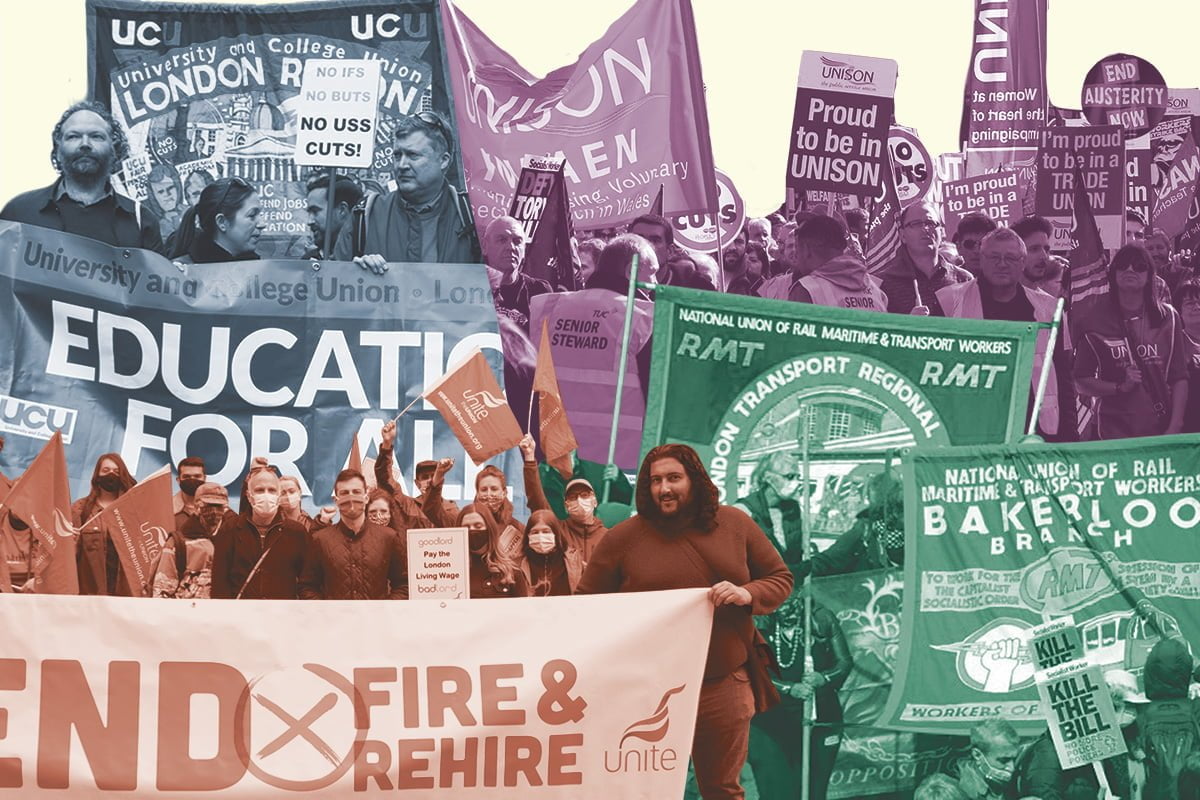
The growing discontent in the working class has been reflected in some changes in the union leadership. Sharon Graham was elected as head of Unite in 2021, as a more militant rank-and-file candidate.
More recently, at the end of 2025, Andrea Egan, the left candidate, was elected general secretary of Unison, Britain’s largest union. This was a major defeat for the union’s right wing, as well as for the Labour right wing, who are symbiotically linked to one another. However, the left in Unison is far from dominant. It has lost its majority on the NEC, and is obsessed with backroom manoeuvres and identity politics instead of basing itself on the ranks. Egan’s victory shows the potential, but the right wing is preparing to strike back. A lot depends on if and how the left can shape up.
If it does, Egan could hypothetically link up with Graham in Unite to take a militant stance on public sector pay and fighting the cuts. That would bring them directly into conflict with the Labour government, over which Unison and Unite have significant leverage.
Until now, the general approach of the union leaders – left and right – has been to ‘wait for Labour’ and ‘give the government a chance’. But workers’ patience has worn out. And with Starmer’s government increasingly struggling, failing to deliver for workers, and backtracking on its tokenistic promises around workers’ rights, new industrial struggles could be on the cards.
The ruling class has nervously realised the potential danger in which the government could be placed by the labour movement. As the Financial Times noted, “Egan’s victory means two of the three biggest unions are now run by openly hostile leftwingers critical of Starmer’s administration.”
Instinctively cautious, but coming under pressure from the rank and file, these union leaders can be pushed into semi-opposition to the Starmer government. They will write articles, make speeches, and support conference motions that are increasingly critical of Labour. Disaffiliation from Labour will become a live question. The threat of localised action tipping into a coordinated campaign will be posed.
In the past, the TUC was central to the debates taking place in the labour movement. Today, it is conspicuous by its absence. Its leaders, who the vast majority of workers would not even be able to name, are out of touch with the real mood in Britain’s workplaces and working-class communities. Paul Nowak, the general secretary, even went as far as to praise the Reeves’ latest Budget as delivering “urgent relief for millions” and beginning to “rebuild our public services”, when two-thirds of people say the country is heading in the wrong direction.
The TUC has further cocooned itself by farming out campaigning responsibilities to broad ad hoc campaigns such as Stand Up To Racism, Stop the War, the People’s Assembly, etc. This provides sectarians such as the SWP and the CPB with funds and an air of legitimacy, while allowing the TUC bureaucrats to put their official stamp on things whilst doing nothing in practice. This alphabet soup of left reformism and sectarianism is ineffective and off-putting to most workers.
The trade union leadership squandered a historic opportunity to link the struggle against austerity and cuts at home to the fight against Britain’s complicity in Israel’s genocide abroad. Millions of workers participated in the Palestine movement. But the trade union tops did not lift a finger to channel this burning frustration and anger into militant, class-based action – refusing to mobilise their members for mass demonstrations or strikes. This was particularly scandalous in the case of Unite: a major industrial union led by a supposedly militant left-winger, with thousands of members in the arms industry.
The potential existed for strike action in the arms manufacturing plants and the docks, as well as for workplace shutdowns and workers’ boycotts. But in the absence of any lead from the trade unions, the mass movement for Palestine exhausted itself through A-to-B marches which, in and of themselves, are a dead end.
Youth
The winning of the working class for the conquest of power is a long way off for us. We have only small forces. We cannot shout louder than our own voice, and can only reach a relatively small layer, mainly of youth. We need a sense of proportion, as well as a sense of perspective. This means we have to concentrate our forces on where we can achieve the maximum results.
That is why we focus our attention on the radicalised youth. All the opinion polls point to the fact that a significant section of youth is wide open to radical and even revolutionary ideas. Channel Four polling revealed that 47 percent of youth under 27 think that “the entire way our society is organised must be radically changed through revolution”. It is from this layer, in the main, that the party will be built at this stage. We should focus our full strength at this point of attack.
18 year-olds today have experienced nothing but crumbling public services, the slashing of family benefits, and the shutting down of youth centres. The prospects are bleak: either head to a university and experience first hand the crisis in higher education (course closures; cuts to staff; etc.), or join the queue in a failing job market. This has created an ‘austerity generation’, and a layer of radicalised youth.
Events internationally are perhaps the biggest source of radicalisation for young people. Palestine; the climate crisis; the Gen Z revolutions; Trump’s use of state terror in the USA: all of these, and more, are giving rise to a profound shift in consciousness amongst the youth, in Britain and internationally.
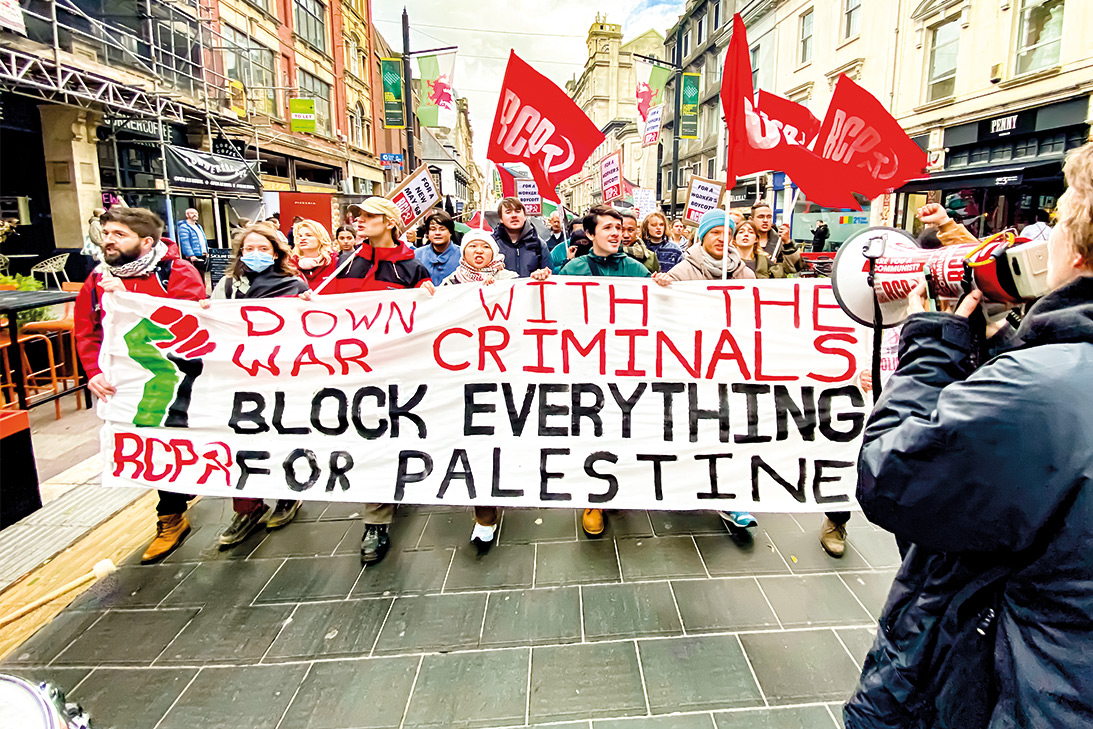
2025 saw huge political movements across the world. The ‘Gen Z revolutions’ set country after country alight, with the masses entering onto the scene of history. Starting in Indonesia and Nepal, we saw mass movements spread to East Timor, the Philippines, Madagascar, Morocco, and elsewhere. A defining feature of all these mass movements was their youthful character. The youth were in revolt against the gaping gulf between rich and poor, and against the entire political establishment.
The politicisation of the youth on international matters and imperialism has above all been expressed by the movement for Palestine. Since 7 October 2023, Palestine has remained the defining issue for a generation. Gaza became a lightning rod for accumulated anger, and has coloured the way other international issues are viewed, like Sudan, Congo, Venezuela, and more.
Britain’s largest festival, Glastonbury, which in 2017 became renowned for chants in support of Jeremy Corbyn, was dominated last year by pro-Palestine chants and flags. The explosive support for musicians like Kneecap and Bob Vylan, who used their platform to condemn Britain’s role in the genocide, is a reflection of the mood of anger amongst young people, as well as a demonstration of the political vacuum on the left in Britain. Young people are desperate for anyone to do something.
The ‘block everything’ movement in Europe showed the radicalisation over Palestine internationally. This slogan, first used by the French anti-austerity movement, was taken up by the Italian masses in their general strike for Palestine. General strikes soon followed in Belgium, Portugal, and Greece. We began to witness a coalescence of movements across Europe, showing that workers and youth can and will connect the dots. High school students participated in walkouts, and young people were seen storming buildings.
Britain’s support for US imperialism and its allies, in both word and deed, acts as a constant source of revulsion amongst the youth. Starmer’s defence of the Gaza genocide has destroyed any illusions that this former human rights lawyer cares about ‘international law’. This has had profound political implications, which were revealed in the 2024 general election: the erosion of support for Labour amongst layers of its traditional voters. Starmer is reviled amongst the youth as a war criminal who toes Washington’s line and grovels towards Trump.
In a poll from February 2025, only 11 percent of Gen-Z adults (aged 18-27) said that they would fight for Britain, while 41 percent stated there were no circumstances under which they would do so – even if the country were about to be invaded. This makes the government’s attempts to bolster the military politically difficult, never mind the economic obstacles. The Ministry of Defence is even having to introduce a scheme to pay young people to join the military as a gap year.
The Palestine movement remains the largest – albeit temporarily dormant – political issue in Britain, and could easily re-ignite. Starmer’s proscription of Palestine Action, rather than subdue the movement, has prompted a new wave of activity, with thousands willing to get arrested in protest against the government and the genocide. This is an issue that has penetrated deep into the consciousness of young people, in particular.
The anger and radicalisation around Palestine has not gone away, but is likely to be channeled into other causes and issues in the next period – most notably opposition to racism, the far right, and Reform.
Both Labour and the Tories are presenting a hard line on the question of immigration in an effort to outflank Reform. This, alongside the racist propaganda of the capitalist media, has contributed to a rise in anti-migrant rhetoric that has emboldened racist and genuinely far-right elements in society. 2024 saw a summer of far-right riots, with asylum-seeker hotels attacked. 2025 saw Tommy Robinson mobilise over 100,000 on the streets of London to ‘Unite the Kingdom’.
As we have explained, a large layer of those in attendance of Robinson’s demo were disgruntled workers, taken in by a veneer of anti-establishment rhetoric. Nonetheless, a hardcore section of his supporters, who regularly organise protests outside asylum-seeker hotels, feel boosted by the large numbers who have attended Robinson’s demonstrations, and by the flags going up on lampposts around the country. Though the actual numbers of the far right are small, therefore, they have been temporarily emboldened and their visibility has been amplified.
This contributes to the rise of racist attacks and abuse in society. The youth in particular are disgusted by this, and see little difference between Robinson’s hardcore supporters and disgruntled workers, who are clumped together by some on the left under the umbrella label of ‘far right’ or ‘fascist’. Our task is to recruit young people who are being radicalised over racism; to organise and educate them in our revolutionary programme and perspectives; and to provide them with a real solution to the scourge of racism: a solution based on radical class-based policies and militant class-struggle methods – something that the reformists and sects are organically unable to offer.
The crisis of capitalism has created an enormously flammable situation worldwide, ready to be set ablaze by any incidental spark, whether that be scandals, corruption, oppression, or genocide. Similar material conditions produce similar material results. The opportunities opening up for us to grow have never been better, and will only continue to increase.
A growing layer is drawing revolutionary conclusions on the back of these experiences and events. Communism is becoming more attractive. We must energetically connect with these young layers.
The British revolution
As the crisis deepens, political polarisation will intensify. The Starmer government will solve nothing. The next government, likely led by Farage, will exacerbate the problems further with its reactionary agenda and its attempts to govern in a time of deepening capitalist crisis.
The youth in particular will be radicalised under such a government. Things will become extremely polarised. This will prepare an almighty swing to the left in society, as consciousness catches up with the objective situation. At a certain point, a Reform government will go the same way as Johnson, Truss, and Sunak, only faster. It will collapse in recriminations. This will exacerbate the situation and open up a protracted pre-revolutionary period. The Tories, Labour, and then Reform, would have been tried and found wanting. A new, even more convulsive, chapter will open up.
A new major slump, on top of all this heightening instability, would have massive consequences. It should be stressed, however, that we do not need a major slump to build the party into a sizable force. Consciousness is already being transformed by the huge shocks and earthquakes taking place across the globe, and by the one-thousand-and-one injustices, attacks, and scandals that ordinary people experience in their daily lives under capitalism.
Previously, Britain was a very conservative country, where illusions in capitalism were strong. But the ever-deepening crisis has melted all that was solid into air. The pillars of the old order are crumbling. The middle-class has been hollowed out and significant layers of it proletarianised. Political parties, leaders, ideas, and tactics are being put to the test, one after another, only to be found wanting and then discarded.
The fall of capitalism is not automatic. History is littered with failed revolutions. The British revolution depends upon the building of a mass revolutionary party. This cannot be improvised – it must be prepared beforehand.
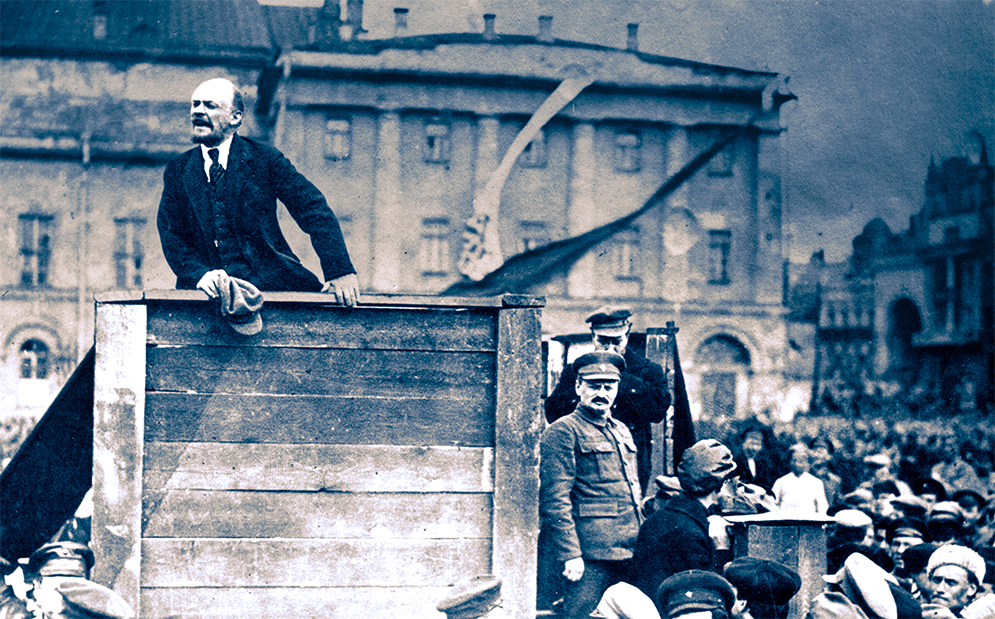
The Bolshevik Party provides us with many lessons. It went through nearly two decades of preparation under Lenin before the events of 1917. It was a rich school of revolutionary tactics and strategy.
By February 1917, the Bolsheviks had eight thousand cadres. Through the white-heat of the revolution and counter-revolution, over a period of nine months, they built a party of around four hundred thousand. With correct tactics, they were able to lead millions to the conquest of power.
The First World War sped up events. Our development, by contrast, will be much more protracted. This gives us time to build our forces, which we must not squander.
Before we can win the working class, we must win the vanguard of the vanguard. With a party of ten thousand cadres we can begin to influence important, young, fresh layers of the working class. We will be able to effectively intervene in the class struggle as never before. If we do our work properly, it would then be possible, on the basis of events, to build a party of fifty thousand. This, in turn, would open up a road to broad layers of the working class.
In July 1936, at the beginning of the Spanish civil war, the POUM, a centrist organisation (revolutionary in words, but reformist in deeds), grew from a few thousand members to forty thousand in the space of weeks. This was in the throes of revolution but it shows what is possible. With a correct Marxist leadership, they could have led the Spanish revolution to a successful conclusion and changed the course of world history. Unfortunately, their centrism led them into a blind alley.
More recently, in 1968-1973, when Italy was experiencing revolutionary upheavals, several ultra-left sects, like the Lotta Continua and the Potere Operaio, built up memberships of around fifty thousand. They reached this despite starting from very small groups of a few dozen. They ran daily newspapers and drew millions of workers into struggle. Unfortunately, they squandered this potential with adventurism and sectarianism. Nevertheless, it shows the growth that is possible.
Fortunately, the sects in Britain are largely irrelevant. Their false perspective that fascism is around the corner is used to justify their political opportunism and lesser-evilism. Despite their attempts to claim leadership over political campaigns such as fighting racism, they are treated suspiciously by the radicalised youth. In most cases, they simply dissolve themselves ‘into the movement’ and are indistinguishable from the reformists.
In the past, Stalinism was a major obstacle to genuine Marxism. In the 1960s and 1970s, the CP had around thirty thousand members, although this was largely on paper. Given its history, it had an important base in industry. That no longer exists. The CPB today is a very small group of older people, resting on the Morning Star, a mouthpiece of the ‘left’ trade union bureaucracy. These organisations pose no objective barrier to the building of the RCP.
Of course, we must not get carried away. We have a long way to go. It will not be easy. It will require fortitude and stamina.
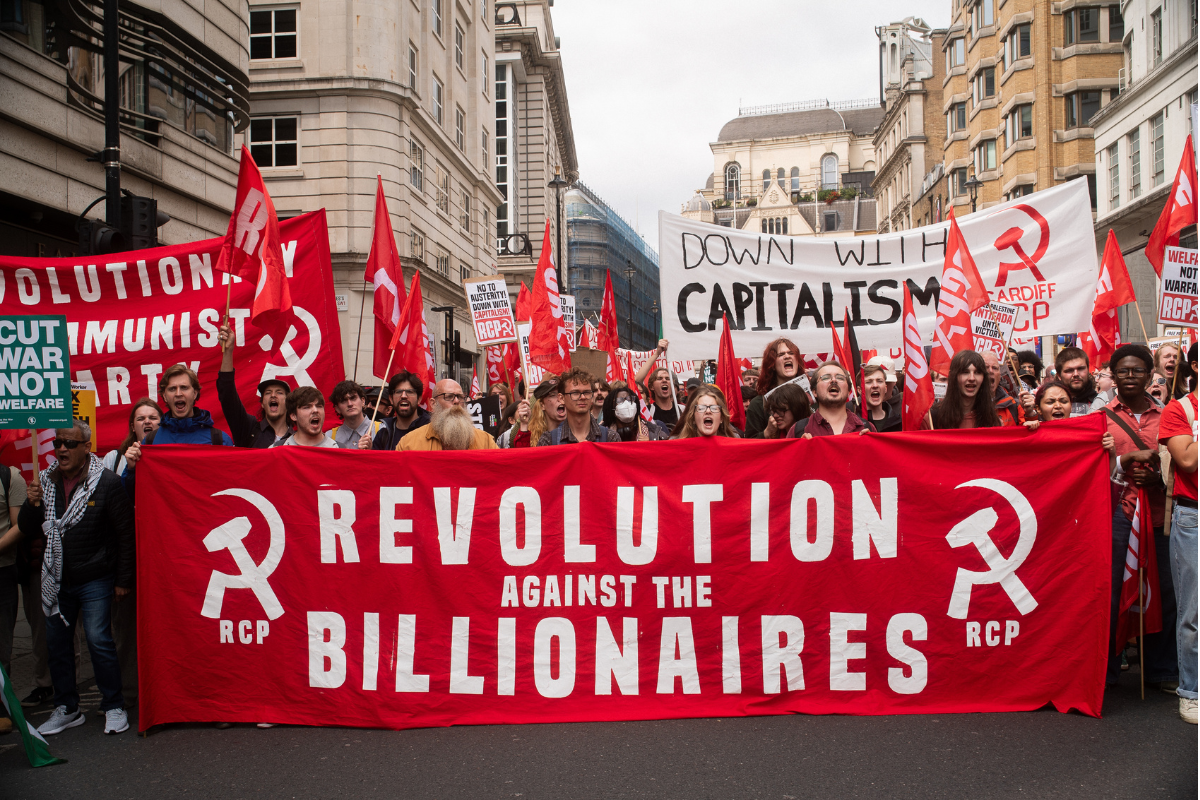
We have just over 1300 members, a very modest figure. We are systematically developing them into cadres. Our immediate task is to grow to two thousand members. From there, our task is to reach five thousand and then ten thousand. We must go from quality to quantity, and then again to quality. If we train our forces as cadres, we can emerge as a decisive force on the left in Britain – the backbone of a future mass revolutionary party.
Our success is, and will continue to be, based upon our systematic orientation to the youth, and, above all, the steeling of our comrades in Marxist theory.
Today, we must take full advantage of the situation. History is flowing in our direction. For every recruit we make and educate, we can win a hundred more tomorrow.
As our cadres develop, they must gain further education and experience in mass movements. We must learn to present our ideas skillfully. The golden rule is to intervene in the class struggle, not to lecture from on high. We must engage with and support workers in struggle. To do so, we need to speak in the language of the working class; to listen and learn. Where relevant, we should use transitional demands as a bridge between today’s changing consciousness and the need to change society. Above all, we need to raise the political and theoretical level of the entire membership, to the level demanded by the historical tasks ahead of us. This requires dedication, and an understanding of those tasks. Trotsky explained that the revolutionary party finds an inexhaustible power in the knowledge that it carries out inexorable historical necessity.
We are inspired by the Bolsheviks, and we know that history will repeat itself, but on a higher level. We must be ready, politically and organisationally, for the mighty events that impend. An important part of this is a grasp of perspectives, both in Britain and internationally. Trotsky explained there will be no shortage of revolutionary situations facing a young revolutionary party. We must base ourselves on this perspective.
Our National Congress is taking place exactly on the centenary of the British General Strike, where power was posed before the working class. It was at that time that Trotsky wrote Where is Britain Going? The advice he gave to the young Communist Party in Britain, is the same advice we must also take to heart:
“The contradictions undermining British society will inevitably intensify. We do not intend to predict the exact tempo of this process, but it will be measurable in terms of years, or in terms of five years at most; certainly not in decades. This general prospect requires us to ask above all the question: will a Communist Party be built in Britain in time with the strength and the links with the masses to be able to draw out at the right moment all the necessary practical conclusions from the sharpening crisis? It is in this question that Great Britain’s fate is today contained.”
[This document should be read in conjunction with Organisational Resolution 2026.]