
One of the most commonly posed questions to our comrades is: why don’t you join up with the other far-left organisations to make one big revolutionary party? Isn’t it sectarian of you not to do so?
The far left is indeed littered with sectarian organisations. The stereotype of a sectarian is someone who makes a fetish of their ‘principles’, and who venomously denounces every other leftist organisation. This cliché is not entirely unfair. Such types certainly exist on the left.
Quite obviously, it is not good to be like this. There is no way a mass revolutionary organisation – capable of leading the working class to the overthrow of capitalism – can be built in this way.
There is another side to this line of thought, however: the implication that, in order to overcome sectarianism, it is necessary simply to compromise on one’s principles so as to work alongside others on the left who hold different ideas – especially those in the mass organisations.
According to this argument, to not be sectarian is as easy as saying: “We aren’t like all those sects that plague the left; we work in (or support) the Labour Party or the Greens.”
Our history
Our organisation has much historical experience on this question. We supported Jeremy Corbyn, for example. We called for a vote for Labour when he was the party’s leader; we canvassed for Corbyn’s Labour in general elections; and we set up campaigns within the labour movement, the aim of which was to win grassroots Corbyn supporters over to a fully socialist programme.
Prior to that, we were part of the Militant tendency. Militant, famously, was a current within the Labour Party in the 1970s and 80s, fighting the party’s right wing over many years, and leading its youth wing.
The founder and key theoretician of Militant, Ted Grant, is known for advocating the tactic of ‘entrism’ – that is, for revolutionaries to work within the mass organisations of the working class, in order to win rank-and-file members over to revolutionary ideas.

These receipts, for some, might be considered enough to assert that we are not a sectarian organisation; proof that we have a proud history of practicing anti-sectarian strategy and tactics over many years.
In 2024, however, we refounded our organisation. This included changing our name from Socialist Appeal to Revolutionary Communist Party, and launching The Communist paper.
Today, we do not currently work inside any other party, such as Labour, the Greens, or Your Party. Nor are we interested in working with smaller organisations to establish some kind of unified far-left party. Have we therefore become sectarian?
In fact, sectarianism does not simply mean ‘not working with other groups or parties’. Nor does it mean being a small party. If that were the case, no new party – with its own distinct ideas – could ever develop beyond being a sect.
Line of march
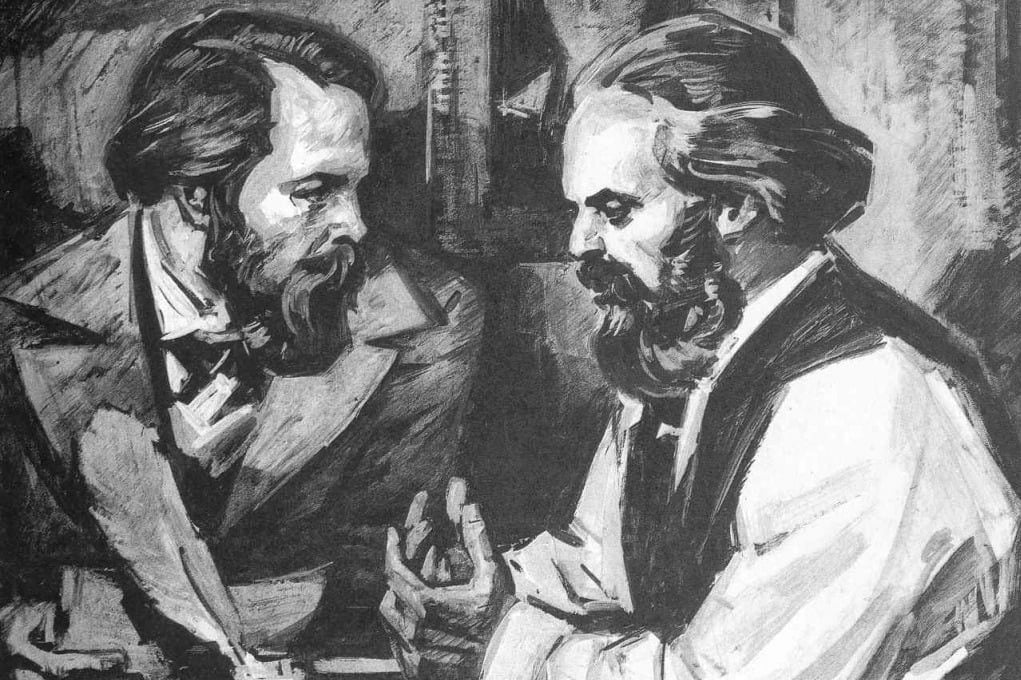
In the Communist Manifesto, Marx and Engels state that communists “do not set up any sectarian principles of their own, by which to shape and mould the proletarian movement.” What did they mean by this?
They meant that communists are distinguished only by the fact that they “have over the great mass of the proletariat the advantage of clearly understanding the line of march, the conditions, and the ultimate general results of the proletarian movement”.
In other words, the starting point for communists is not to simply ‘go with the flow’ of the movement as it is today; to seek to merge with whatever other left-wing parties exist, in the hope of thereby becoming relevant.
Instead, we base ourselves on an understanding of the class struggle in its development, with the aim of seeing beyond the immediate trends, and grasping the underlying process and long-term interests of the working class.
Thus, our principles are not imposed onto the movement, but are the conclusions of the real struggle in its totality.
Fixed formulas
Without this perspective of the overall process, of how this or that element of the class struggle will change, it is easy to fall back upon fixed formulas and labels as a substitute for genuine understanding – seeing only a static picture of the class struggle and its various parties, movements, etc.
Those with such an outlook feel reassured in their revolutionary character by clinging hard and fast to these fixed definitions of political phenomena that are, in fact, anything but fixed. In doing so, however, they confuse rigidity for having principles.
They think that a revolutionary party is defined simply by the formal positions it has on certain questions, and not by its ability to apply a Marxist method to the real world and real events, with all their contradictory features.
A contemporary example of this is the Socialist Workers Party’s fixation on the question of racism, and their labelling of Farage’s Reform as ‘far right’.

The SWP relate everything to the need to ‘fight racism’ and ‘fight Reform’. In doing so, they conveniently ignore the fact that it is Starmer’s Labour that is in power – implementing racist immigration policies that are very similar to those proposed by Reform.
Routine anti-racist campaigning, devoid of political content, meanwhile, has become a rigid formula that the SWP tries to impose onto the situation: largely because it suits their own moralistic worldview and inclination towards hollow activism, and not because class consciousness would really benefit from it.
This is what Marx and Engels meant when they talked about communists not having “sectarian principles of their own, by which to shape and mould the proletarian movement”.
Sectarians want the real movement to conform to their cherished formulas and preconceptions, rather than starting with reality and using the theoretical tools of Marxism to make sense of this.
The hallmark of sectarianism, in this respect, is not simply hostility to other groups; it is formalistic thinking, organisational fetishism, and categorical, fixed definitions of political phenomena, including parties and movements.
As Trotsky states: “The sectarian lives in a sphere of ready-made formulas. As a rule, life passes him by without noticing him.”
Principles and tactics
As previously mentioned, our organisation’s founder, Ted Grant, is known for proposing the tactic of entrism into the mass organisations, such as the Labour Party in Britain.
Those who are inclined to formalistic, sectarian thinking, believe that this tactic sums up Ted Grant. He was simply ‘the entrist’. In turn, if his followers are no longer practicing entrism into the Labour Party, they must have betrayed his ideas. Ted, they say, would see his modern-day supporters as sectarians.
Ted Grant, as a genuine Marxist, did not fetishise any particular tactic. He stuck to his principles, as any genuine communist does. But principles and tactics are not the same thing. His principles were to build a Marxist organisation; an organisation dedicated to freeing the working class from its reformist leadership.
For much of Grant’s life, it is true, this task involved working within reformist organisations. But this was done only so as to win workers – currently under the influence of reformist leaders – away from reformism.
Entrism
Prior to the formation of Militant, Ted Grant led the Revolutionary Communist Party (RCP) in the 1940s.
At that time, there was a debate about whether or not RCP comrades should work within the Labour Party. Some claimed that Labour had a vibrant left wing in opposition to its leadership. For this reason, they argued that the RCP ought to enter into the Labour Party, otherwise it risked becoming a sect, cut off from these left-wing workers.
Grant opposed this at the time, for the simple reason that he thought it was not true that there was a genuine left opposition within the party. This had nothing to do with ‘principles’.
In his response, Grant made a very important point. He explained that:
“[The question of] Entry of the revolutionary cadres into the mass organisations of the working class is one of tactics and not of principle. It follows that to raise the tactic of entry as a question of principle is extreme sectarianism whether it comes from the entrists or anti-entrists.” (Ted Grant, The ILP – A Reply to Stuart, 1946)
Thus, the man who is often depicted (wrongly) as the eternal ‘entrist’, explicitly stated that posing entry – into the mass organisations – as a matter of principle would be “extreme sectarianism”!
Consciousness and orientation
A revolutionary party must stick firmly to its actual principles. But the specific focus of its work, slogans, and orientation – that is, its tactics for putting its principles into practice – must vary in accordance with the actual class struggle.
This includes taking account where consciousness is at – particularly that of the most politically advanced layers.
Today, it is clear that the working class does not maintain the same loyalty or attitude towards the Labour Party – or any of the other main political parties, for that matter – as in the past. This is especially the case for radicalised young people.
The likes of the Green Party may grow and gain electoral support. But it is no longer the case that, in order to win over Green voters, etc., we need to formally back, orient ourselves towards, or work inside this-or-that other party. Our recent growth shows that that is the case.
Patient explanation
As Ted Grant also pointed out at the time, the formal orientation of a revolutionary party is meaningless unless it actually has the forces to put this into practice.
Whether or not our party practices entrism is therefore decided not only by our assessment of the party to potentially be entered, but also by our own strength and priorities.

Furthermore, if we decide not to officially enter into another party, this does not necessarily mean that we write that party off and simply denounce it from the sidelines.
Our approach always and everywhere remains that of putting positive demands upon the left leaders, whilst patiently explaining their limits and the necessity for our ideas: our revolutionary programme and perspectives.
When Ted Grant was arguing against entering the Labour Party in the 1940s, for example, he also wrote articles arguing it should break from its wartime coalition with the Tories.
When Labour did make this break, in the 1945 general election, the RCP called for a vote for it (critically). All of this was done without the comrades formally ‘entering’ the Labour Party.
Marxist education
The RCP today is going from strength to strength. Whether or not we are sectarian does not depend on the tactics we use to build and grow, but on what our party does with its hundreds of recruits; on the ideas, methods, and traditions that we train and educate new comrades in.
Rather than teaching a new generation of revolutionaries to think in formulas, or to learn rigid responses to political questions, we are educating them in the method of Marxism – so that they may apply Marxist theory and communist principles to the real class struggle, in its actual development.
In the future, thanks to this revolutionary education, these cadres and class fighters will be able to struggle for a communist programme wherever the opportunity presents itself: in their workplace or trade union; in their school, university, or community; and in the mass movements and political battles that break out, in Britain and beyond.
Ted Grant’s Collected Writings, vol. 3 – out now!
The third volume of Ted Grant’s collected writings, covering the pivotal years of 1945 and 1946, examines a fundamental turning point in world history – and in the Trotskyist movement itself.
View this post on Instagram
With the defeat of Hitler, a qualitatively new period opened up in the development of both world capitalism and the Soviet Union.
Ted Grant and the Revolutionary Communist Party were alone in grasping the significance of this shift. Instead of the anticipated immediate slump, Stalinism and reformism emerged strengthened, with far-reaching consequences for the Marxist tendency.
While the leadership of the Fourth International around James Cannon, Ernest Mandel, and Pierre Frank clung to the perspective of capitalism’s imminent collapse – leading to a series of disastrous theoretical conclusions that sowed the seeds of destruction of the Fourth International – Ted stood virtually alone in defending a correct outlook and the genuine method of Marxism.
The writings collected here offer an unparalleled insight into the dawn of the post-war era, a period that has decisively shaped the world we live in. Ted Grant’s analysis – spanning from entryism to democratic centralism, Stalinism, centrism, economic perspectives, and more – shows how to apply Marxism to a world undergoing profound transformation.
Get your copy today from Wellred Books Britain.
View this post on Instagram