
The IMF has called AI “the fourth industrial revolution”. AI certainly has the potential to improve our lives. But under capitalism, its potential to revolutionise production – to reduce the working week, facilitate superabundance, and unleash human creativity – is turned into its opposite.
From a gigantic speculative bubble that will threaten millions of people when it bursts; to unemployment; to harder pressure at work; to the ‘slopification’ of art; to the building of all-consuming data centres: the ‘AI boom’ reveals the anarchy of the market in all its vigour.
View this post on Instagram
Our aim must be to liberate this technology from the constraints of the capitalist system, and take it out of the hands of the tech bosses. Instead of using it to pursue profit at any cost, we could use it for the development of humanity.
The growing anger and alienation associated with AI is one indicator that such a world is achievable – if the Revolutionary Communists can connect with this mood and channel it against the capitalist system as a whole.
Below, our readers give examples of the negative consequences of AI as implemented by the tech bosses, and how these are radicalising young people and workers in a revolutionary direction.
Apple vs OpenAI: who owns innovation?
Last month, Apple filed a lawsuit against OpenAI, the company behind ChatGPT, alleging that its senior leadership coordinated a campaign to “steal” trade secrets by “poaching” its staff.
This reversal of relations between these two big tech giants has shocked many. It was only a couple of years ago that Apple and OpenAI announced a major partnership, aimed at embedding ChatGPT into the operating systems of future Apple products.
But this break has not come out of the blue. Slowing AI innovation – and tech innovation more broadly – has sharply intensified the competition between these big capitalists.
It’s no secret that Apple has long feared both the rumoured launch of OpenAI’s first hardware product, and its forthcoming stock market listing, for the threat these pose to its tech empire.
This lawsuit also comes hot on the heels of Elon Musk’s own (unsuccessful) lawsuit against OpenAI following its switch to a for-profit model – a move which puts it directly in competition with Tesla’s AI projects.
The absurdity of the whole situation should not be lost on us. The fact is, Apple’s ‘trade secrets’ represent a private monopoly over invention, stifling innovation and concentrating power in the hands of big business.
In refuting the allegations, OpenAI’s spokesperson said the company was “focused on building innovative technology that empowers people everywhere”.
But only under socialism would this really be possible, where the artificial barriers of intellectual property could be broken down – and the way could be opened to a flowering of science, technology, and human creativity.
Perry Robert, Bermondsey
No to Southall data centre
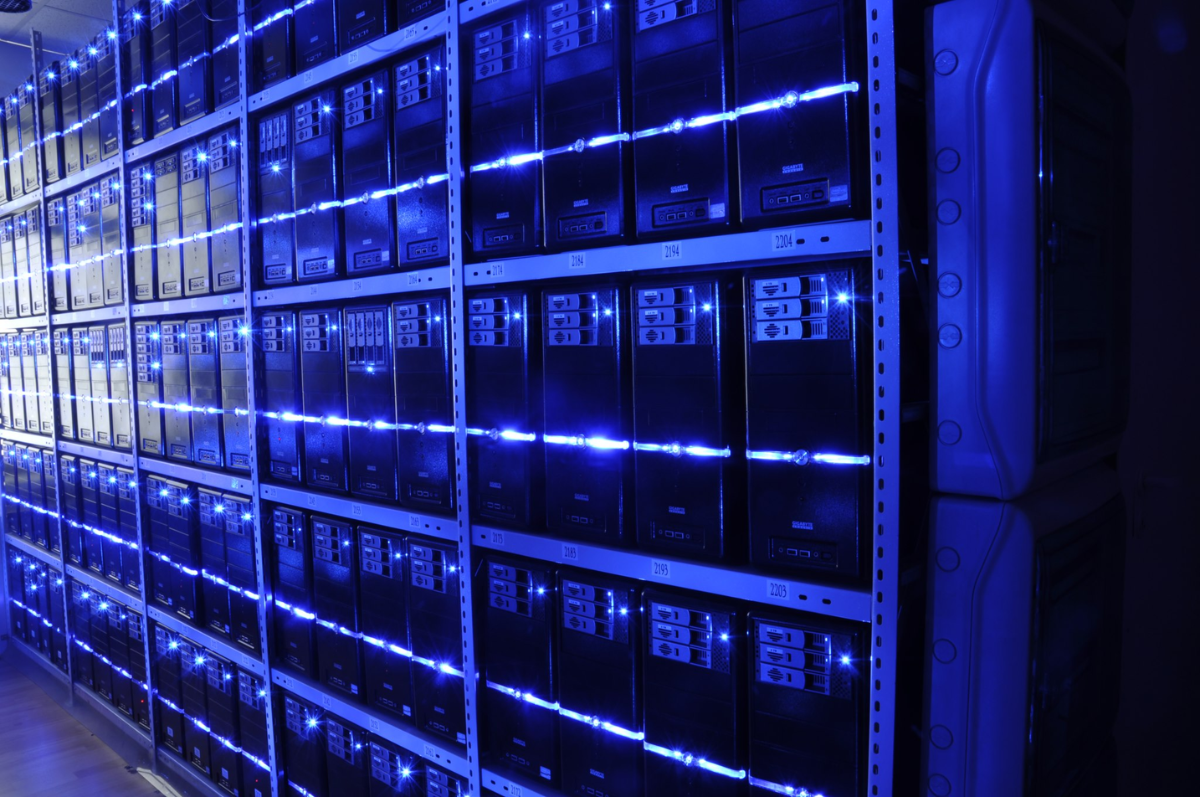
On 17 July, Ealing Council gave approval for a massive new data centre to be constructed in Southall – adding to the nearly 100 that already operate in London, mostly in the West London area.
These existing data centres have already significantly disrupted local people’s lives: the energy grid has been put under serious strain, and the building of desperately needed housing has been delayed.
In Southall, the concerns are around noise pollution, falling air quality, and excess heat. In Slough in 2022, one of Europe’s largest data centres produced so much excess heat its car park saw temperatures of 45 degrees.
View this post on Instagram
Allegedly, this new data centre will somehow utilise ‘new infrastructure’ to redirect the heat it produces; will use solar panels to circumvent the local electricity grid; and will not use local water.
That the developers sweetened the deal with the promise of hundreds of jobs and £17.7 million in local infrastructure investment is just a minor detail in Ealing Council’s decision, of course.
Time will tell whether this latest data centre will provide the indebted local council the economic relief it yearns for – what is certain is the misery it will inflict upon the local community.
Joe Broderick, Kensington
A day in the life of… a software engineer
Privatising the profits, socialising the technical debt
I work as a software developer and over the past six months, management has pushed non-coders to use AI tools to produce custom web pages in days rather than weeks.
As one of the few software developers on the team, I soon became responsible for fixing the problems the AI tools couldn’t.
At first these were minor. But then AI providers changed their pricing models from charging per prompt to charging per token. One colleague exhausted his monthly allowance on the first day and generated more than £1,000 in charges.
Management responded with an angry email instructing staff to stop using AI for the rest of the month and to “be more efficient” in future.
This misses the point entirely. These same managers encouraged people with no programming knowledge to build production software using AI. Those colleagues cannot maintain what they have created because they do not understand the underlying code.
Now the responsibility for supporting five customer projects generated almost entirely by AI has fallen to a handful of developers.
AI has been used to squeeze more output from fewer skilled workers while creating the illusion that expertise is no longer needed.
In reality, the expertise has simply become invisible until something breaks. By then, the savings have already been banked – and the cost is left for someone else to pay.
Laura Pietrzak, North London
Speed at the expense of quality
As an experienced software engineer, I’ve seen the role evolve over time – from employers expecting specialised workers, to expecting generalists with broad knowledge, to today where AI is changing those expectations once again.
AI can very quickly design applications, write code, and carry out extensive testing. It can even collect user feedback and improve existing software with minimal human intervention.
Emphasis on speed often comes at the expense of quality, I find – and it tends to create technical debt that must eventually be repaid.
It’s developers today who are paying for this, with expectations that they will easily and quickly cultivate a deep expertise in the areas where AI still struggles.
But software engineering careers were historically built through repetitive implementation work: gaining skill and experience by writing features, fixing bugs, and gradually taking on more complex responsibilities.
With AI increasingly performing the entry-level work needed to develop good software engineers who can work with or without AI, the prospects for future junior developers become unclear.
Cláudio Miguel, Fulham