June 30th: London March
JUNE 30th: Thousands march in London against the Tory attacks on public sector pensions.
June 30th: Around the country, in towns, villages and cities, marches
and rallies have been taking place in support of those public sector
workers striking to defense of their pensions. Members of the teaching
unions and civil servants on strike were joined in solidarity by members
of other unions, pensioners, school and students – all ready to make a
stand against what this bosses government is doing. The mood could be
summed up in two words: Angry, Determined. In Chelmsford, in deepest
Essex, several hundred trade unionists and others marched through the
town centre to a packed rally in a nearby centre.
On Wednesday 22nd June, 700 activists
gathered in Friends’ Meeting House, London, in opposition to the cuts
and to build for the June 30th strike. Under the banner of "Unite the
Resistance," activists from trade unions, student groups and others
gathered to discuss the cuts. The rally was a great success and shows
the depth of anger against the cuts and austerity.
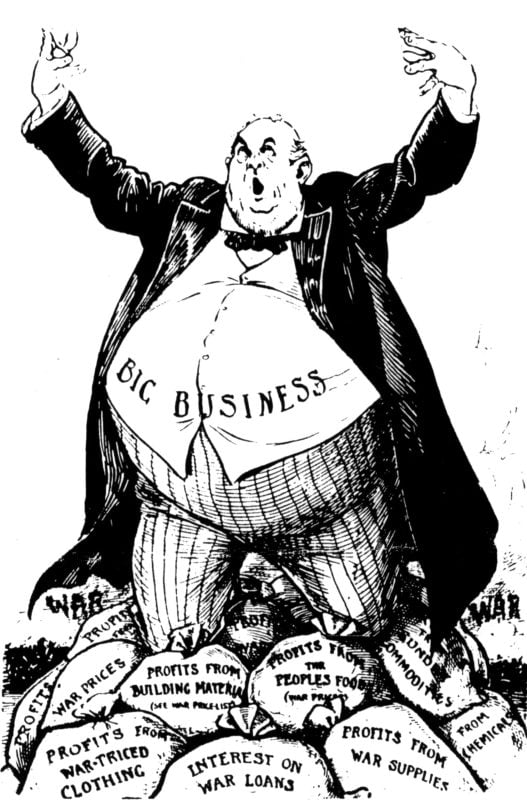
Listeners to ‘File on 4’ on BBC Radio 4 last month would have got an
inkling of the vast river of money that is currently leaving the NHS and
going directly into the coffers of big business.
Today (Tuesday) the
Greek trade unions embarked on a 48-hour general strike against the
austerity measures which are being debated today and are to be voted on
tomorrow. Papandreou says the cuts and privatisations are the only way
of rebalancing Greece’s finances, but the workers and youth on the
streets have other ideas.
Pay more! Work longer! Get less! This is the stark and
uncompromising message on pensions that the Tory- dominated government is
sending to millions of working class people. In the public sector, six million
state employees will find that the expected reward of a half-decent pension in
exchange for low wages during their working life is now being taken away.
The introduction of capitalism, accompanied by rapid industrialisation
over the last 30 years, has turned China into a seething cauldron of
discontent. Conditions faced by the workers, many of them migrants with
no rights, are similar to Victorian times in Britain. “Masses of
labourers, crowded into factories, are organised like soldiers”,
explained Marx and Engels in the Communist Manifesto, which is a fitting
description of working life in China today. The scene is being set for a
massive social explosion.
Cameron and Osborne appear oblivious to the crisis unfolding in front of
their very noses. While standing on the edge of a precipice, they are
busy reassuring everyone that Britain has nothing to fear from the
European financial crisis. They are the modern equivalent of the emperor
Nero, who fiddled while Rome burnt. British banks, they say, are sound
and with enough capital to insulate themselves against a sovereign debt
crisis across the Channel.
Greece stands on the threshold of a revolutionary situation. In the last
period two million workers and youth have repeatedly taken to the
streets to say that enough is enough. Capitalism, which has become a
world-wide and interdependent system, today manifests itself in a global
crisis which is in turn generating an international movement. For this
reason the developments in Greece cannot be viewed in isolation, but as
the latest flashpoint in what is an interlinked chain of events.
As the flames of economic crisis spread across Europe, it is essential
public services such as fire and rescue that are now being cut as a
result. All 49 fire services across Britain have seen their funding from
the government reduced by 25% as part of the Tory-led Coalition’s
programme of austerity. Despite already having one of the most efficient
and affordable fire services in the country, Cambridgeshire is seeing
huge attacks on its fire and rescue services.
The powerful 24-hour general strike
and the mass demonstrations of June 15 in Greece demonstrated how deep
the anger of the Greek working masses runs. It served to send the ruling
class a warning: that this is no ordinary protest movement, but one
with revolutionary connotations. That is why they hurriedly patched
together a new government, in the hope of cutting across the movement.
But to no avail!
Ireland: There have been a number of reports in today’s media that the
Irish economy has grown by 1.3%. Although this is no bad thing, as it
will help to rebuild the confidence of working people, the real picture
is somewhat more complicated than the headlines might indicate on the
first examination. Certainly any economic perspective that doesn’t make a
sober assessment taking into account everything that is happening in
Europe and particularly Greece just now will not stand up to much
challenge.