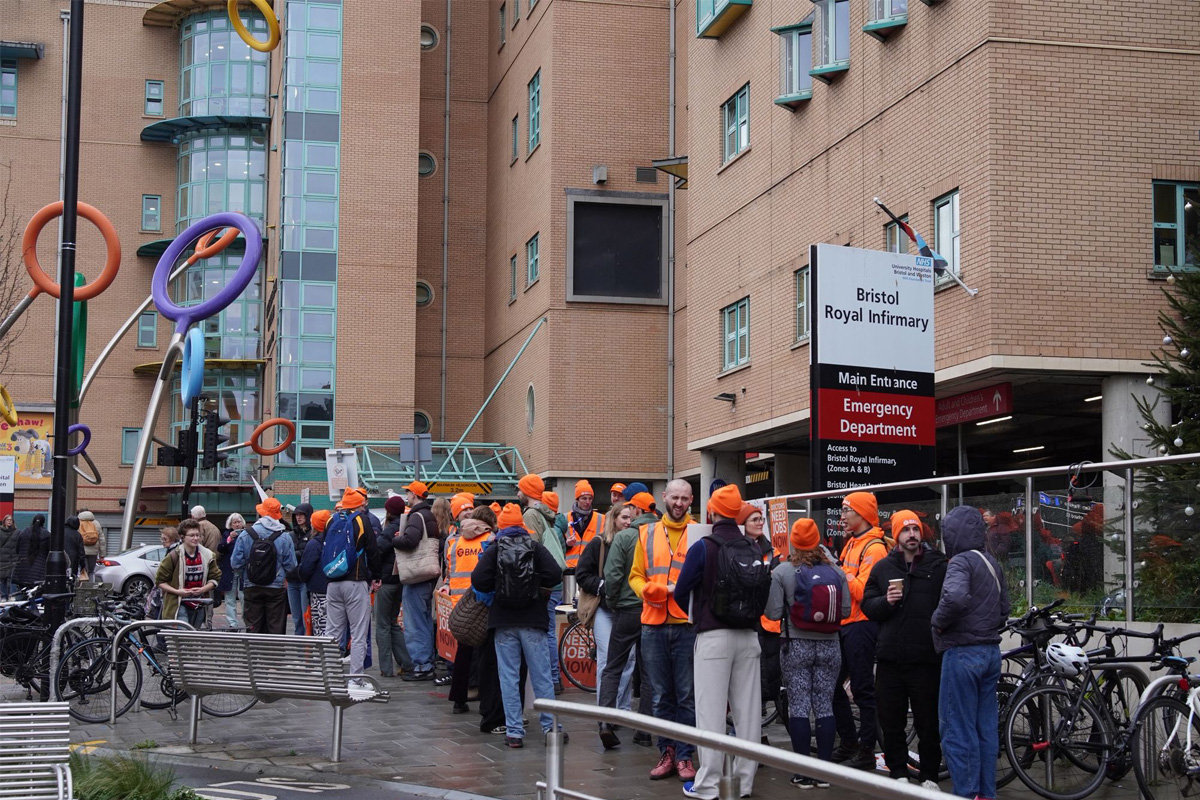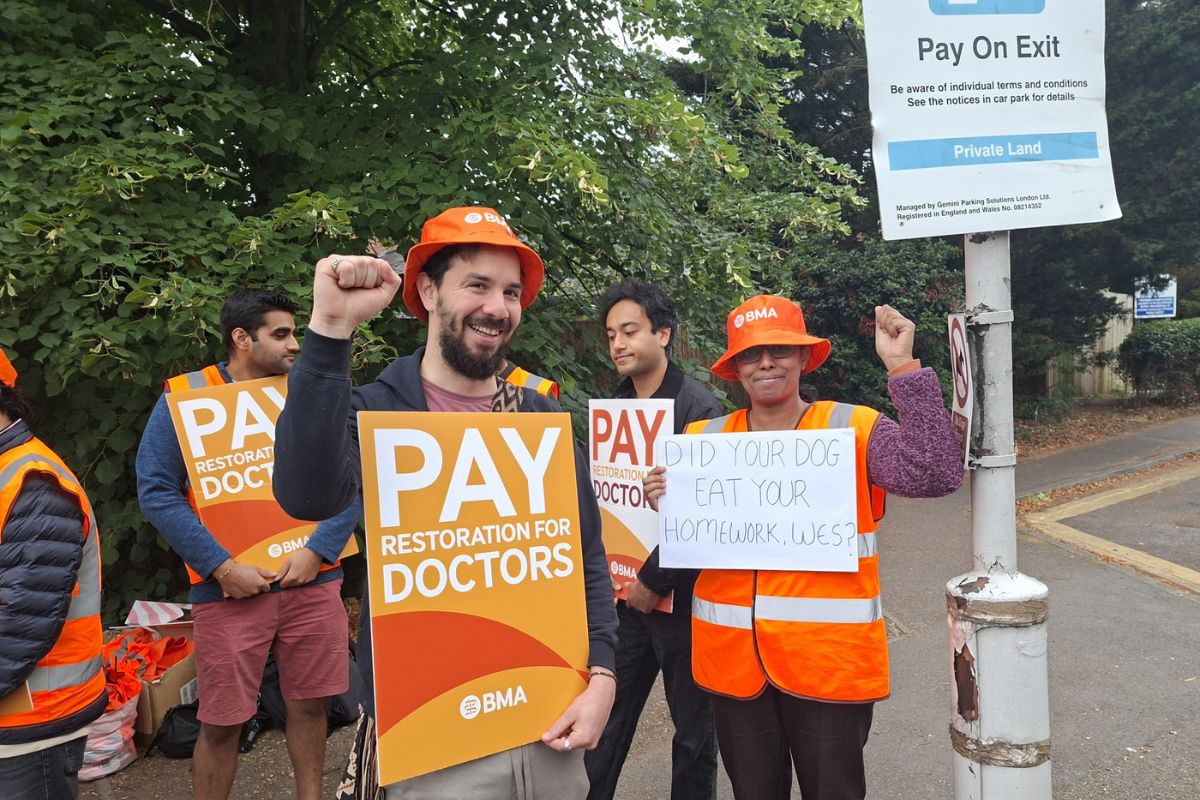
Battle-hardened resident doctors have been at the forefront of the labour movement in recent years.
As a student, I looked up to militant doctors during the 2015-16 strikes – where pickets confronted then health secretary Jeremy Hunt and the Tory minister’s NHS privatisation agenda, chasing him down a corridor, and earning him the household name ‘Jeremy *unt’.
10 years later, after 15 strikes over three years, this dispute has come to a deflating end. On a 57 percent turnout, 53 percent voted in favour of crumbs: an added 3.1 percent pay uplift and 4500 more training jobs spread over 3 years.
The fact that the deal only narrowly got a majority in the ballot – in spite of the union leadership’s campaign in favour – shows how little enthusiasm there is for this deal. Nonetheless, its acceptance is a big kick in the teeth for the labour movement.
One doctor captures the mood:
“Another ten years before the BMA can rally its members and betray them again, then. If I had a pound for every time this happened, I’d have £2. Which isn’t a lot of money, isn’t FPR [full pay restoration], and weird/anger inducing it’s happened twice.”
This strike wave will certainly be remembered for the BMA leadership’s betrayal. They put a bad offer to their members – who themselves had been progressively exhausted in their herculean struggle, while the leaders ground the members’ resolve down through their lack of strategy.
There was really no excuse for this rotten deal. As another doctor put it, “Genuinely feel sick. What a waste of everyone’s strikes.”
I hope he’s done it for a government position. Because if he thinks it was a good / fair deal for the amount of strikes and disruption then we are screwed.
Wasted so much time under the mandate and then folded early.— TraineENT (@traineENT) June 29, 2026
Doctors are certainly sensitive to Labour’s moral pressure to ‘get back to treating patients’. But rank-and-file doctors have held strong in this dispute for 3 years.
Meanwhile, there has been a huge gulf between members’ feelings and the political leadership coming from the top of the BMA. Many doctors suspect that the leaders closed the deal to hand Burnham with a gift upon his ascension to Downing Street. As one doctor put on a chat, “I hope that MP nomination was worth all this.”
These careerists are in bed with the same Labour that has demonised doctors for the last three years. Most doctors, meanwhile, ask themselves: “who are they to say doctors’ strikes affect patient care, when Labour’s austerity and militarism kills workers at home and abroad? What can a doctor do to help patients when NHS systems don’t work anymore, stripped to the bone by austerity?”
Bright, proud doctors – greeted out of university with a load of debt and a hospital shift nightmare – are the bottom of the NHS food chain, the butt of a stressed-out work culture. We can now add increasing job insecurity and eroded pay to their plight. This is what you get for wanting to do something good for people under capitalism.
Happily for Britain’s (and America’s) capitalist vultures, some demoralised doctors will switch to private practice (and who could blame them?). Others will learn an important lesson about trade union bureaucracy. A political storm brews in the BMA’s ranks!