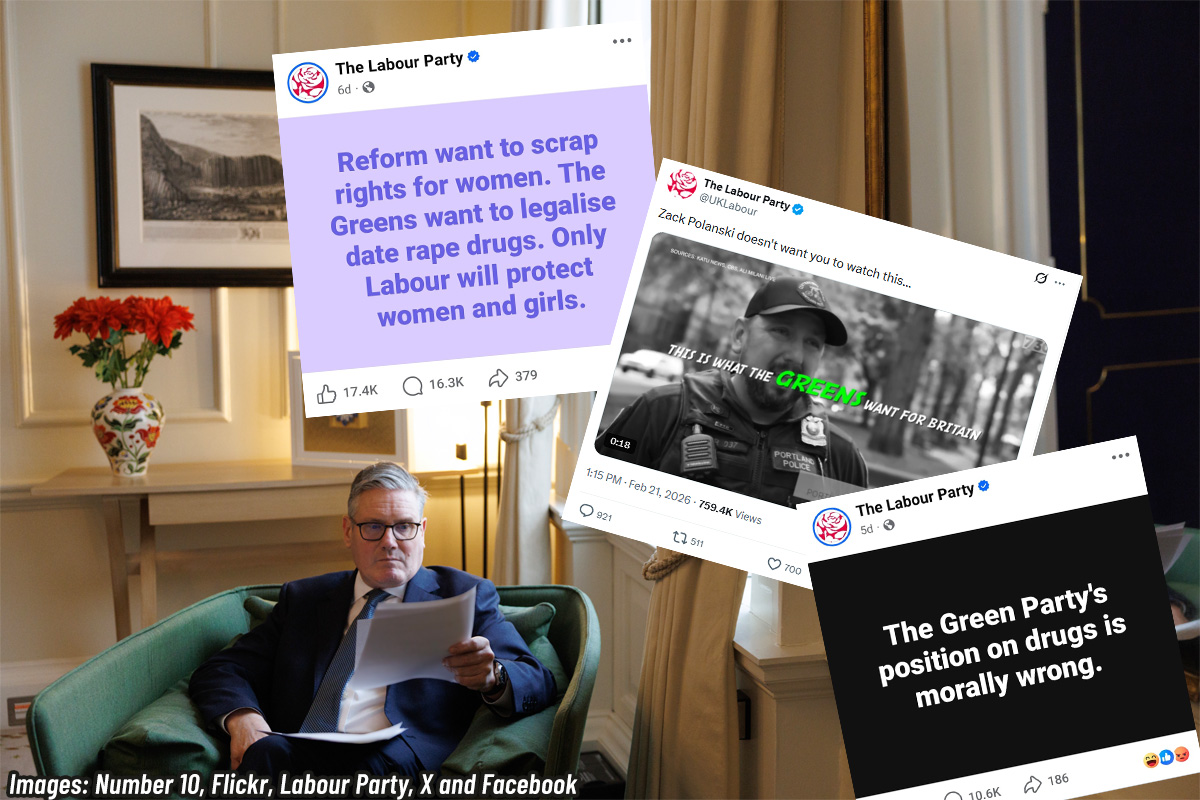
The Green Party’s victory in the Gorton & Denton by-election has shown the surging support for Zack Polanski and his party, alongside the anger and discontent towards Starmer’s Labour.
According to some recent polls, the Green Party has overtaken Labour, and is not far behind Reform UK. It is still early days, but the Greens could be the main parliamentary opposition to a reactionary Farage-led government; or even the leading party in an anti-Reform coalition.
This growing popularity is putting the party and its leaders in the spotlight. Keen to discredit these untested left-wing ‘populists’, Starmer and the establishment have ramped up their attacks and smears against Polanski and the Greens. This includes greater scrutiny of their policy proposals.
Appearing on various ‘mainstream’ news shows and podcasts, Polanski has unsurprisingly been grilled about his programme, particularly on the economy.
“Whatever you’re going to raise from a wealth tax… it’s ultimately about reducing inequality”
Green party leader Zack Polanski says “we don’t need to tax the wealthy” to fund public investment as “we can do that anyway”#BBCLauraK https://t.co/CkTHGctZ4k pic.twitter.com/8kKovmUXfq
— BBC Politics (@BBCPolitics) October 19, 2025
The Green leader is demanding measures to tackle the cost-of-living, wealth inequality, and the power of the billionaires and landlords. This is a welcome step, which we defend.
Polanski’s critics, including former Tory ministers and Bank of England economists, do not have a leg to stand on. They are all, to some degree, responsible for defending the capitalist agenda that has gotten us to where we are today: economic stagnation; historic levels of debt and inequality; crumbling public services; and an ever-worsening housing crisis.
Unfortunately, however, we must admit that Polanski does himself no favours when it comes to such questions.
As communists, we do not care if the Greens’ programme upsets the capitalists. We fight for the interests of the working class.
The problem is that the Green Party’s proposals, ultimately, are reformist, seeking to find a way forward within the dead-end of the capitalist system. For this reason, they are doomed to fail.
The failures of left reformism, meanwhile, would pave the way for an advance of the right.
Debt – fact or fantasy?
At root, Polanski’s whole economic outlook is influenced by the ideas of Modern Monetary Theory (MMT), which is making a return once again, as part of the latest left reformist revival.
In an interview with Laura Kuenssberg, the main idea put forward by Polanski was that of investing in things like the NHS and other public services. So far so good.
How to pay for this? “Taxing the billionaires” would be a key step, Polanski stated, before adding that this is “not even the main point”.
Importantly, the Green leader argued that the national debt is not in itself a problem, and that the UK’s debt-to-GDP ratio could even be higher, implying further government deficit-financing and borrowing to invest.
Polanski even went as far as to say that a lot of the public debt is not really debt at all – it’s owed to the Bank of England, so we owe it to ourselves, apparently.
It is true that the BoE does own over £800 billion in UK debt bonds (around 30 percent of the government’s debt). But the country’s central bank also owes over £1 trillion to private financiers.
As much as Polanski might like to, you cannot simply imagine away the national debt. This debt is not a mere myth, but an objective social relation; a reflection of the very real economic domination of the billionaires and bankers.
To break free of these shackles requires revolutionary struggle, not soothing fairytales.
Modern Monetary Theory
Two of the most influential MMT economists these days are Richard Murphy and Stephanie Kelton, a former economic adviser to Bernie Sanders.
So what do MMT and its proponents claim?
MMT is a theory of money, they say, which aims to describe the state’s role in the economy. Amongst its key tenets are the assertion that:
- Sovereign countries with fiat currencies (i.e. those not pegged to another currency or to gold) cannot run out of money, since they can always create (‘print’) more.
- The role of taxes is not to fund state expenditure. Rather, the state spends first and then taxes come afterwards, serving to suck money and demand out of the economy.
- The aim of taxation is therefore to ‘cool down’ the economy in the event of inflation – if demand exceeds supply; if too much money is flowing around the economy, compared to the value (in commodities) that is circulating.
- The only limit to how much money the state can inject into the system is therefore how much productive capacity exists. The real material and human resources available in a given economy are the hard limit.
Certain ‘practical’ conclusions flow from this. In general, MMT supporters suggest that the government should simply create money and invest this directly into public services, putting people to work in order to bring about full employment. In essence, this is just a new spin on Keynesian demand-side management.
Deficits – boon or bust?
According to Kelton, this ‘theory’ tells us that government deficits are just misinterpreted. Instead of seeing deficits as a scourge, adding to the country’s debt burden, they should actually be seen as the state “contributing a surplus to the economy” – i.e. the government putting in more than it takes out.
This is a ridiculously one-sided way of looking at things, and does not acknowledge the reality of the system as a whole.
Perhaps this type of abstract and utopian thinking can solve all kinds of other problems too?

If a person is going hungry, consistently burning more calories than they can consume, maybe we should reimagine the meaning of this calorie deficit – and see it as a contribution to the rest of the world’s energy system!
Whilst true in a certain narrow (farcical) sense, this is clearly not the full picture. To the individual in question, there would obviously be serious, negative consequences.
As Kelton herself states, “all deficits are good for someone”. She forgets to mention the other side of that equation: all deficits are bad for someone else!
In the case of MMT, the consequences would be inflation, and a rebellion by the capitalist class against the devaluation of their assets.
Class interests
We have dealt with these false theories at length elsewhere. But the central point is this: MMT, like other forms of reformism, seeks to find a solution to the crises of capitalism within the confines of the capitalist system itself.
MMT and its adherents do not understand the real nature of money, profit, or the capitalist economy, however. Primarily, they miss the point that the capitalist system is based on opposing class interests.
Richard Murphy, for example, asserts that “full employment is the goal” of economic policy. Really? Says who?
To the individual capitalist, unemployment is of no real concern at all. And to the capitalist class more widely, unemployment is only a problem insofar as it risks spilling over into mass class struggle.
In fact, the capitalist class generally prefers a certain amount of unemployment in society, so that those workers with jobs feel under pressure to work harder, longer, for less pay, lest they be replaced.
By ignoring the real class interests in society, these charlatans can never hope to understand what capitalism really is.
What is money? What is capitalism?
In his economic writings, Karl Marx explained that money is a representation of ‘exchange-value’ And this exchange-value, of a given commodity, is determined by the socially necessary labour time required to produce or provide this-or-that good or service.
Capitalism, meanwhile, is an economic system based on private ownership of the means of production, and in turn the ownership over the product of workers’ labour.
Capitalist production is done for one reason only: for the sake of producing and realising exchange-value, contained within commodities, at a worthwhile rate of profit.
This is the fundamental driving force behind capitalism. And no matter how the capitalists and their champions like to spin it, as long as capitalism remains, so do these objective laws and pressures.
Of course, the state can create or borrow money in order to stimulate demand. This already happens today, with one important caveat: it is private banks that create the vast majority of the money in circulation, in the form of credit – i.e. by lending it.
In fact, this is how 96 percent of money in the economy is created, existing in digital form as numbers on a screen.
The big banks do not lend out money completely blindly, however. They lend it to businesses and households who request it for the purpose of producing, circulating, and realising exchange-values: a business borrowing money to invest and expand; a family taking out a mortgage to buy a house; and so on.
This credit and lending therefore greases the wheels of the economy, allowing new commodities (containing exchange-value) to be produced and sold; and (in theory) enabling loans to be paid back and the banks to make a profit. But it is only a lubricant of capitalism, not the motor force.
Cuts and crisis
The arguments of the left reformists, and their MMT gurus, correctly criticise the way that austerity and growing inequality bites further into demand, and exacerbates the economic crisis, stifling growth. But they mistake these secondary processes for the initial, fundamental cause.
The stagnation of the economy is not simply due to austerity. And austerity is not the only cause for the lack of effective demand in the economy.
Rather it is the objective nature of capitalist production, including the exploitation of wage labour, that leads to growing inequality and crises of overproduction.
Put simply: the working class cannot afford to consume the value of the commodities that they and their labour produce. A ‘lack of demand’ is inherent in capitalist production.
In other words, capitalism will always produce more than the market can absorb, whether there is austerity or not.
The cuts certainly exacerbate this contradiction. But they are not the primary cause of the problem. And nor are they an ‘ideological’ or ‘political’ choice, as the reformists suggest. Rather, austerity and attacks are the inevitable logic of capitalism in crisis.
In turn, it is the crisis of overproduction that leads to an unsustainable expansion of debt, including state debt. And it is this colossal state debt – which is largely the private property of the capitalists – that makes austerity a necessity for any government that is not willing to wage a militant class war against the bankers, the billionaires, and their system.
Value and inflation
As a result of their misdiagnosis, the proposals of the MMTers are also fundamentally flawed.
They suggest that the state (by which they mean the capitalist state) should create extensive sums of money, to invest in social services and employ workers in public works programmes, etc., thereby achieving full employment.
This, they say, will put money in the pockets of workers, who will go out and spend their new found cash. And this, in turn, will encourage capitalists to produce more, thereby stimulating the economy.
The main problems with this are twofold.
Firstly, as explained above, money is an expression of exchange–value. And exchange-value, although produced by labour itself, is only realised through exchange; through the selling of commodities – goods or services produced for the market.
If money is created simply to pay public sector wages, in order to provide services and build infrastructure for public use, for free, then no commodity exchange takes place. Such economic activity would be taking place outside of the market; therefore no commodities are being produced and exchanged.
In this scenario, money is being created for the production of use-values, rather than to facilitate the circulation of exchange-values. But this is not the function of money under capitalism. Instead, as emphasised earlier, the role of money is as a measure or token of exchange-value, as embodied within commodities.
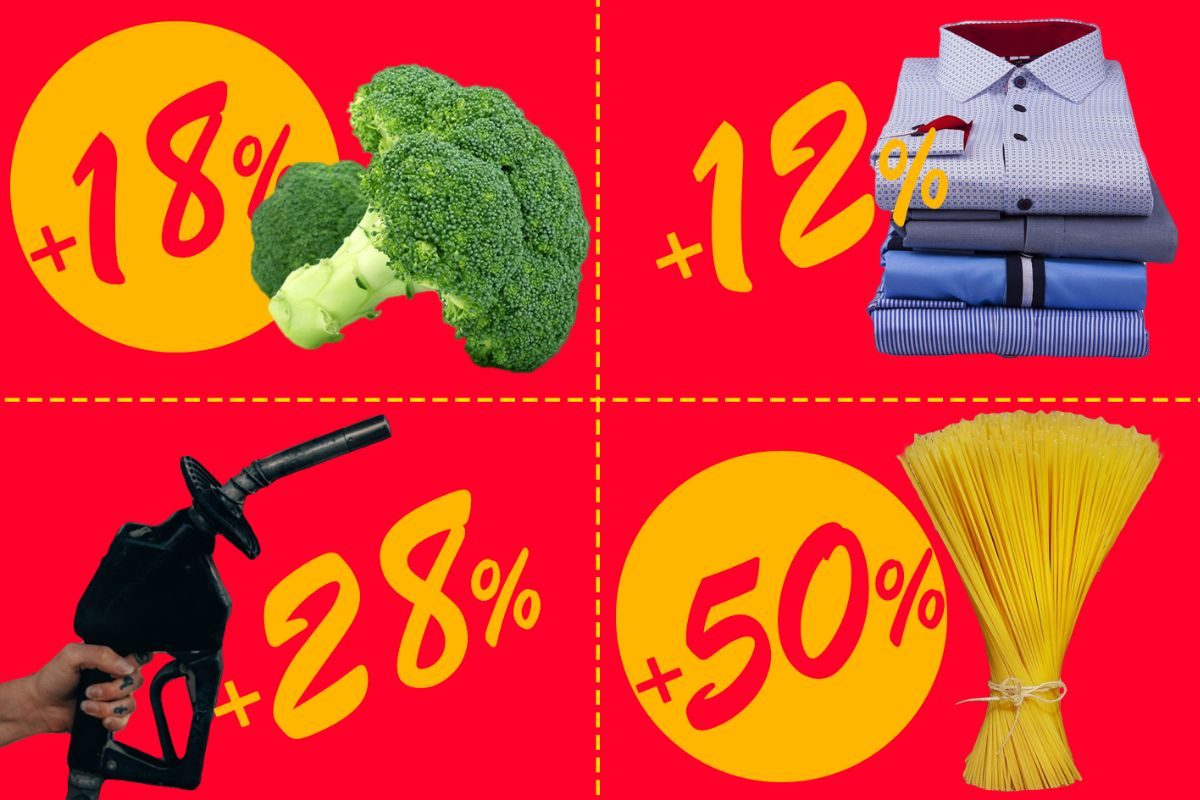
More money would enter circulation, therefore, without a corresponding increase in exchange-value, in the form of commodities. And since money is a representation of value, this means that this currency would become devalued. Rampant inflation – i.e. a generalised increase in prices – would be the result.
Backlash and blackmail
Secondly, the capitalist class, although lacking a clear theory, have an instinctive understanding of the dangers that MMT and money printing pose to their interests.
Investors and creditors would not lend the government money – by buying up state debt bonds – if this was simply to be spent on unprofitable endeavors like free public services and infrastructure.
Instead, there would be an economic backlash by the capitalists against such a government, which would be seen, rightly, as a threat to their profits and wealth. This would include blackmail by the bond markets, and a strike of investment by the bosses.
The tragic case of the Bolivarian Revolution provides a clear example of this. The heroic movement of the Venezuelan masses, spurring on Hugo Chavez and his government, carried out incredible social reforms for workers, peasants, women, and the poor.
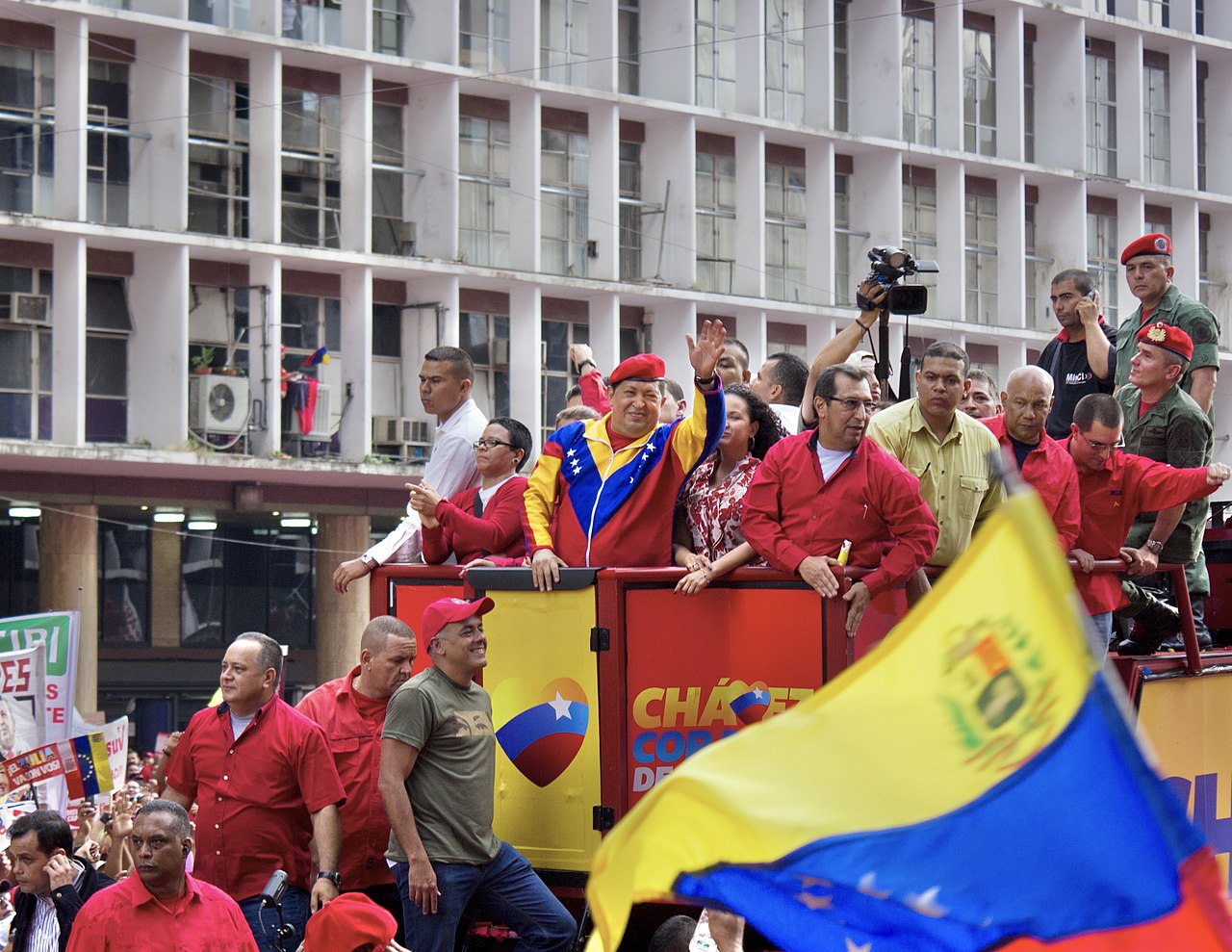
Initially this was funded by the revenues created from the exchange of very real values. The state owned and controlled the country’s oil and mineral resources, for example.
As soon as the price of these commodities collapsed, however, with demand from China slowing down, these revenues dried up.
The government initially refused to cut its social programmes, welfare payments, or subsidies to the public, however. Rightly so!
But instead of funding these by expropriating the capitalist saboteurs, the government reverted to providing these services and subsidies through the enormous printing and borrowing of money.
This – combined with the deliberate sabotage of the ruling class, and of western imperialism – led to devastating hyperinflation.
In short, it was precisely the reformist policies of the Venezuelan government – the attempt to work within the confines of the capitalist system – that led the Bolivarian Revolution to the demoralisation and defeats seen today.
It is our responsibility to learn from such experiences.
Capitalist crisis vs socialist planning
In the final analysis, the working class can only rely on class struggle, in pursuit of revolution and social planning, to defend and secure its material interests – not ‘narratives’ and accounting tricks, as the MMTers suggest.
The state can throw money into the economy. But unless production is socially owned and democratically planned – according to needs, not profits – then governments will always be powerless to the laws of the market.
As the old socialist saying goes: you cannot plan what you don’t control; and you don’t control what you don’t own.
There is an objective crisis of overproduction in the global capitalist system, leading to protectionism, instability, and a slowdown in investment and trade. Against this backdrop, both capitalist competition and the class struggle are intensifying.
The capitalists, those who own the wealth and the means of production in society, cannot be made to produce unless their profits can be guaranteed. The working class, meanwhile, needs housing, healthcare, education, and employment.
If the government wanted to find the money to invest in decent public services, it needn’t resort to either borrowing or the proverbial printing press. It need look no further than the bulging bank accounts of the billionaires.
It is neither money nor need that drives the capitalist economy, but profit. And the capitalists’ profits are derived from the unpaid labour of the working class. The tendency towards inequality, monopoly, and crises are hardwired in.
What is needed, therefore, is not an all-powerful central bank, but a socialist plan of production, based on the nationalisation of the commanding heights of the economy, under workers’ control and management.
This is the economic programme – the revolutionary programme – that workers and youth must fight for.