
Keir Starmer’s anti-worker government has provoked a monumental collapse of support for Labour.
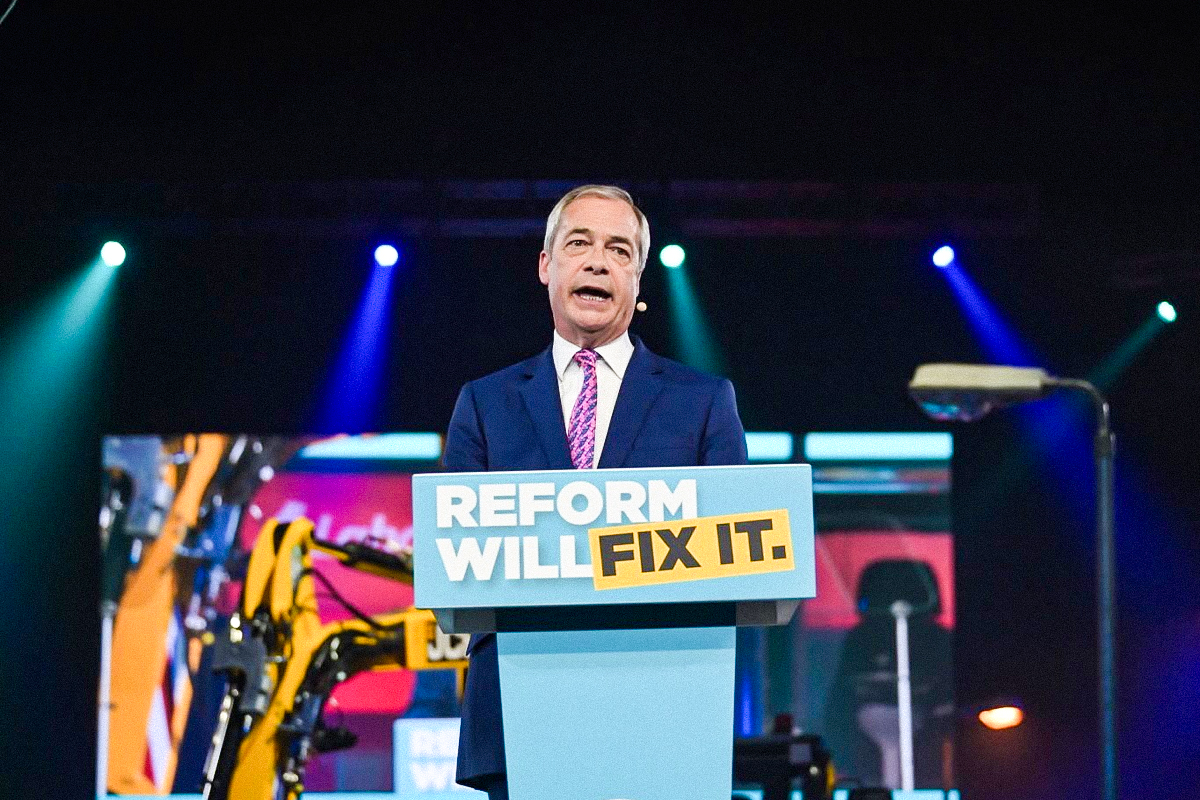
In the absence of a real alternative, many voters have been pushed towards demagogues like Nigel Farage and his Reform UK outfit, which are now leading in the opinion polls.
With his characteristic brand of right-wing populism, Farage has managed to opportunistically connect with the very real anger and frustration felt by so many after 15 years of Tory and Labour austerity.
Tapping into anger over class issues, Farage has made a boat load of promises throughout Reform’s rise. Last summer, he pledged to ‘raid the banks’ to fix the state’s finances, and has since given verbal backing to the idea of nationalising British Steel and Thames Water.
But Farage has always directed this class anger towards culture-war talking points: the ‘woke’ establishment, or migrants and refugees crossing the channel on small boats.
Some on the left try to reduce the Reform’s rise down to their anti-migrant rhetoric. Their outlook is that the British public is simply becoming more racist and reactionary; that society is ‘shifting to the right’. But is this the case?
The Communist has always said otherwise. We have pointed out that the root of right-wing populism is the widespread disillusionment with the establishment parties and their system.
Demographic breakdown
This correct analysis has recently been confirmed by a large poll of Reform supporters conducted by ‘Hope Not Hate’ and publicised by the Guardian.
Over eighty percent of respondents were primarily concerned with the cost of living, the sewage in our water, and feeling betrayed by establishment politicians. A significant layer has favourable views on multiculturalism, and would welcome asylum seekers fleeing war.
‘Reluctant Reformers’, who represent almost twenty percent of those polled, back Farage’s party out of frustration with mainstream politics, and for lack of a better choice. This cohort values “fairness, stability, and public services – especially the NHS”.

The ‘Working Right’, meanwhile, represents one in four Reform supporters. They are described as “economically insecure and angry”, feeling “betrayed by elites” while also viewing immigrants as competitors for scarce resources.
This isn’t to say genuine reactionary elements aren’t also part of Reform’s heterogenous electoral base. For example, 18 percent of respondents were dubbed ‘Hardline Conservatives’: typically disgruntled ex-Tories who oppose both immigration and workers’ rights.
But this cohort is dwarfed by the three-quarters of Reform supporters that would, for example, back a windfall tax on energy companies and the banks, according to one YouGov poll.
Shaky social coalition
These figures paint a picture of a very unstable social base. Swathes of Reform supporters are seeking a genuine alternative to economic and social hardship, and are distrustful of the institutions of British capitalism.
But with Reform now leading the polls, Farage now feels the need to reassure the billionaire class that he’ll be a trustworthy steward of their system.
He’s already walking back promises of British Steel and Thames Water nationalisation, promising instead to “deregulate and become more competitive”. He has also reneged on his pledge to abolish the two-child benefit cap, and is talking about the need for ‘fiscal restraint’, i.e. more austerity.
Farage’s Thatcher-esque turn is directly at odds with the interests of his base. A Reform government implementing more austerity policies would immediately begin to see its shaky social coalition splinter along class lines.
This ‘populist’ outfit would wind up being exposed as yet another party upholding the status quo. In fact, the same fate lies in store for any party basing itself on a capitalist programme.
Pulled in one direction by an electoral base desperate looking for an alternative, and in another by the businessmen and billionaires that may soon be forced to rule through it – a Reform government would have dynamite built into its foundations.