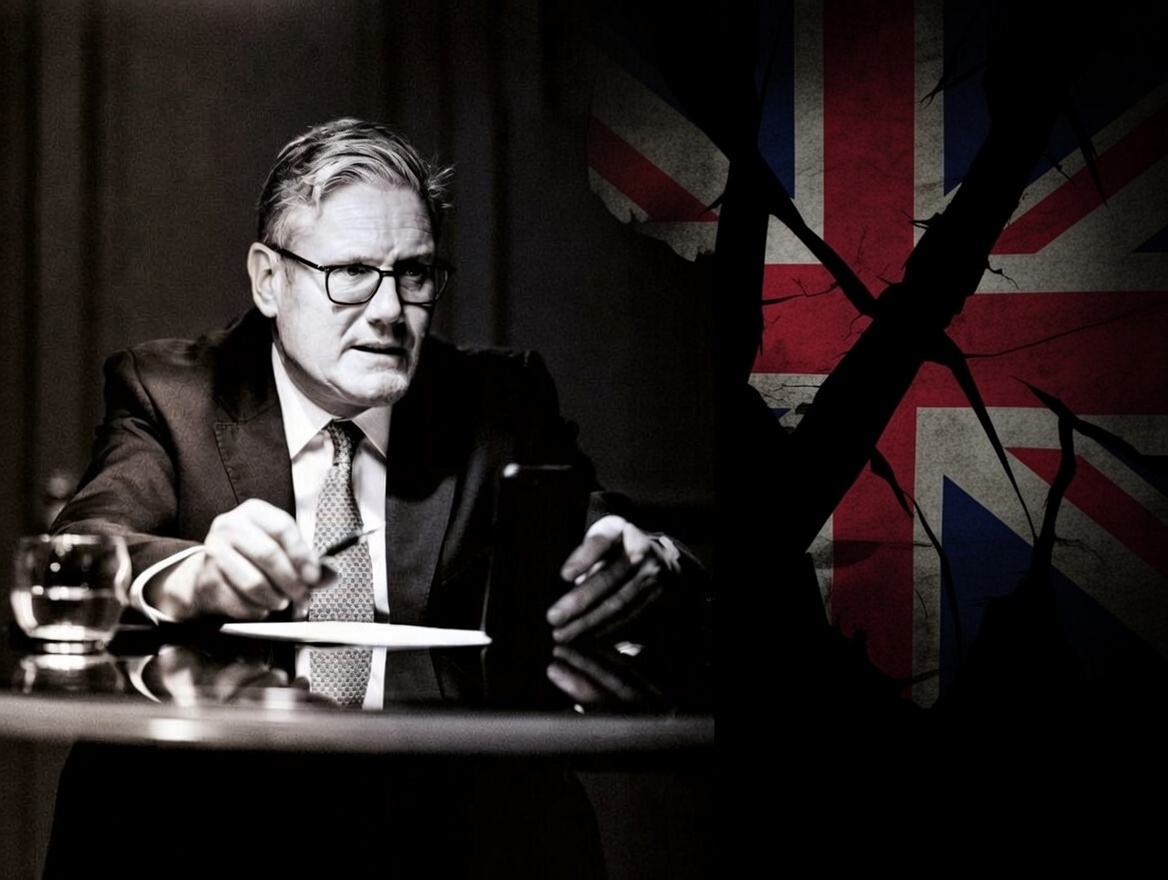

As 2026 gets underway, British capitalism is entering another year in its long-running decline and disarray.
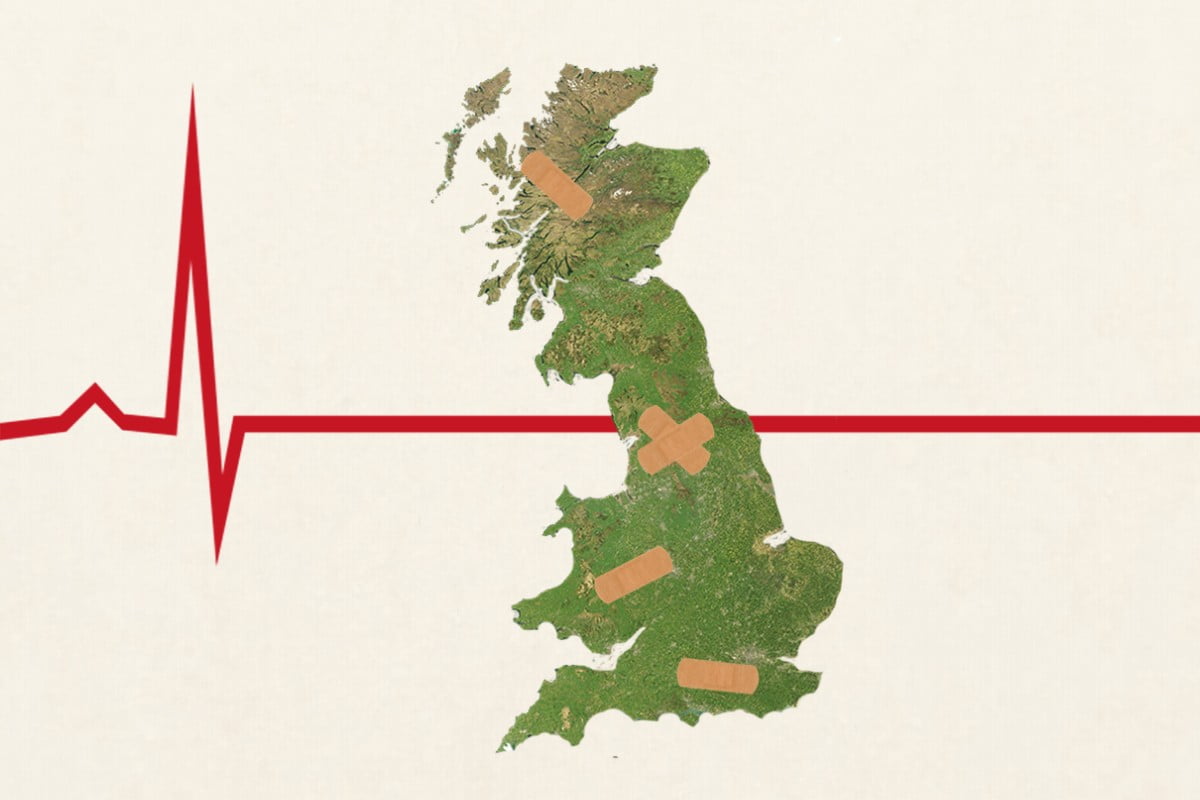
This isn’t just a rough patch. Economic weakness, institutional decay, and social malaise are converging. Together they point to a system that has reached its limits.
Crisis of the regime
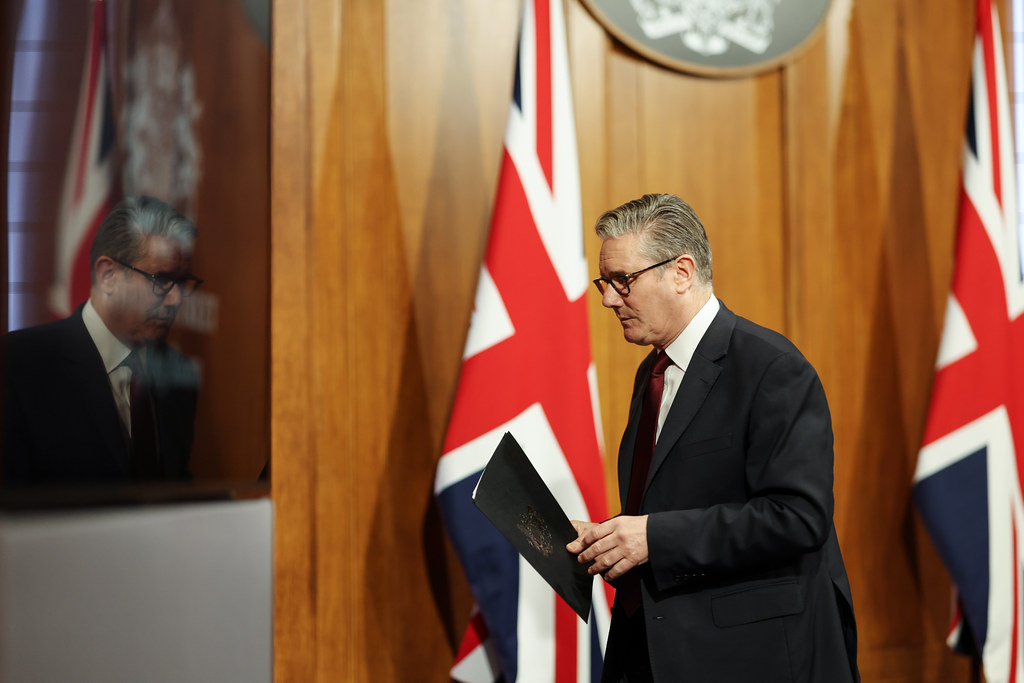
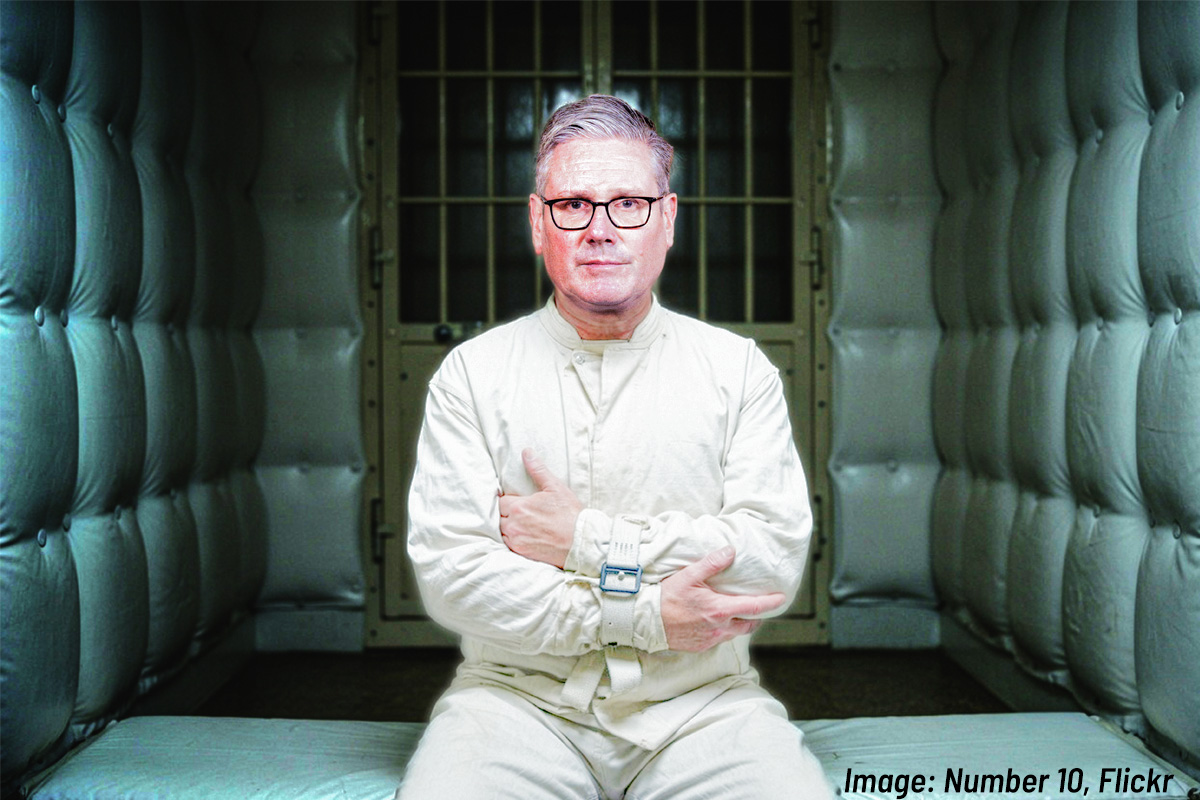
As the management committee of this broken system, the Starmer government is hated.
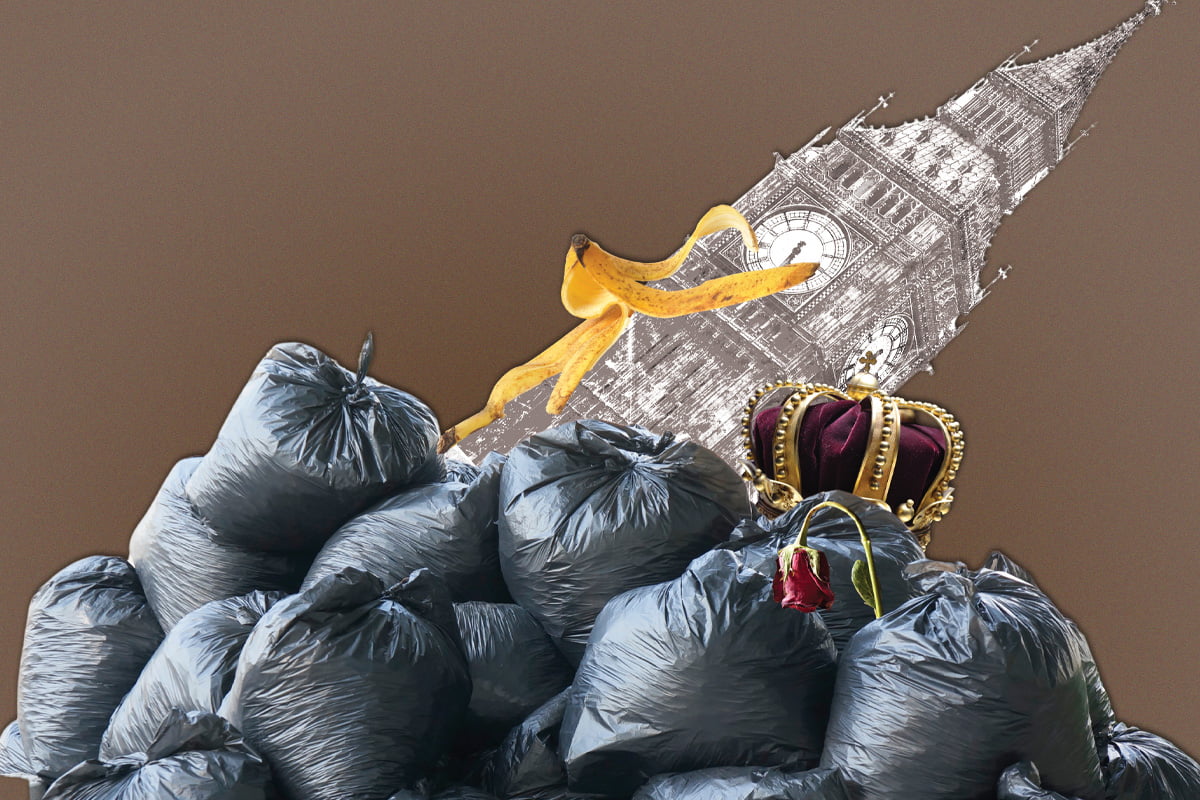
But the anger goes deeper than just the government. The authority of Britain’s major institutions has collapsed. The police, the monarchy, the BBC, the courts, Parliament itself – none command any real respect.
What’s striking is that the distrust comes from the left and right. The right sees ‘two-tier policing’ and a biased media; the left sees repression and corruption.
All see the economic crisis and falling living standards. And increasing numbers draw the conclusion that these institutions are not neutral, competent, or legitimate.
Westminster’s two-party system is now finished. Historically, Britain’s electoral system produced stable governments by rotating power between two large parties that could both, when push came to shove, be trusted to defend the interests of British capitalism. That arrangement is now breaking down.
Reform and the Greens are no longer marginal protest parties; they represent sustained electoral currents, based on widespread anger and indignation against the status quo.
So mainstream are these political parties becoming, opinion polls even see Nigel Farage forming the next government. This poses a serious problem for the ruling class. The entire machinery of the British state is built around the two traditional parties.
Parliamentary committees; the House of Lords; the Privy Council; ministerial offices; the informal networks through which the state is run: all these presume long-standing parties, staffed by people trained in bourgeois governance, well-versed in Westminster’s unwritten rules, vetted by security services, and integrated into the establishment and its culture.
Reform, however, lacks the experience, discipline, and trusted personnel required to manage British capitalism.
More broadly, there is trouble for capitalist democracy as a system.
Elections change the faces at the top, but without any real, fundamental change in policies. The financial markets openly demand particular measures, and almost always get their way.
The British state and its representatives stand by while international law and diplomatic norms are trampled by their master in the White House.
What little semblance of democracy we have under capitalism is being strangled by imperialist jockeying and economic constraint. And these restraints are being widely felt.
Britain’s weakness
This crisis of the regime is connected to instability and fragility in the economic foundations of British capitalism.
Britain is no longer a major industrial power. Manufacturing has been hollowed out over decades. Productivity growth is poor. Investment is low. Debt is high. The economy relies heavily on finance, property, and services.
The country’s economic decline has now reduced its total GDP to less than that of India. Its economic output per capita is ranked nineteenth in the world. By the end of 2026, it will have fallen to twenty-first, behind Hong Kong, Finland, Belgium, and Qatar.
British capitalism therefore needs trade and investment from anywhere it can get it. This is becoming an existential question. But in a world where inter-imperialist rivalry and protectionism is intensifying, this comes with risks.

China has a lot of money in the UK. Starmer is looking to ‘reset’ relations with the EU. Britain needs to maintain economic relationships with these big powers, but that risks damaging relations with Britain’s largest investor: the USA.
The Prime Minister therefore finds himself pulled in different directions. He and his government are in a weak negotiating position, with British capitalism lacking both economic independence and strategic leverage.
In the face of US isolationism and unpredictability, Starmer is trying to pivot towards Europe. But the continent as a whole is in relative decline.
Where European capitalism once represented around a third of world output, it now accounts for little more than a tenth. China is increasingly outcompeting European businesses and encroaching on their markets. Starmer is therefore hitching his dinghy to a sinking ship.
The Labour government is trying to attract investment at a time when British capitalism is economically feeble and frail, and when there is growing competition on the world market.
To do this, they must offer a ‘business-friendly’ environment for international capital. That means deregulating and privatising, attacking workers’ wages and conditions, and slashing the welfare bill – in short, waging war on the working class.
Social malaise
The sickness of British capitalism expresses itself socially in a pervasive sense of decline.
Emigration figures are one indicator. Over the past year there has been a net outflow of both UK and EU citizens, overwhelmingly under the age of thirty-five. This is a vote of no confidence by young workers in the future that capitalism has to offer.
Investment tells a similar story. Britain is increasingly seen as ‘uninvestable’ for long-term productive capital. Investment into the UK fell sharply in 2024 compared to the previous year.
Any investment that Britain is able to attract is targeted at globally competitive niches, not the domestic economy. Housing, infrastructure, health, and social care: all these are neglected by the capitalists, because they do not promise quick returns.
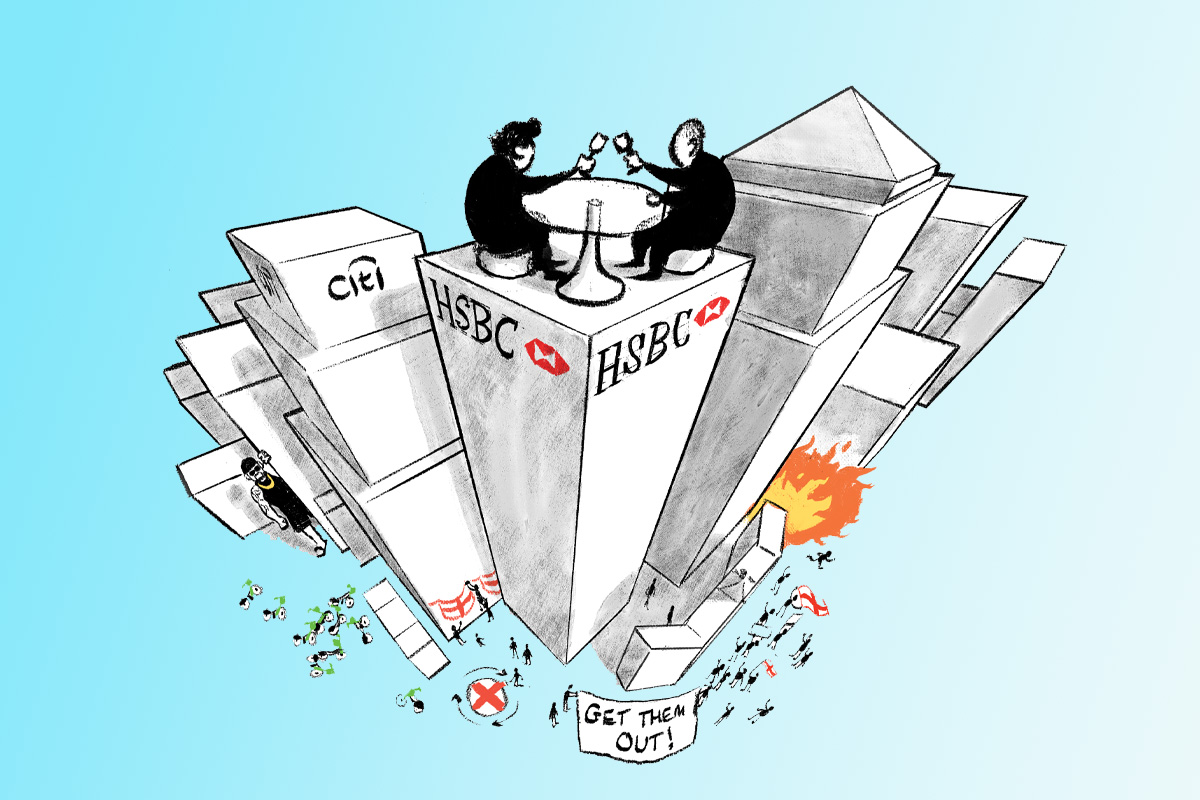
The consequences are visible everywhere. The NHS is in an advanced state of decay. Budgets are low, staffing is inadequate, and workers’ health is deteriorating.
Britain has the lowest life expectancy in western Europe, alongside the highest rate of preventable deaths. Housing conditions are appalling, while hundreds of thousands are homeless, with rough sleeping rising rapidly. Millions lack savings to cover basic needs.
State-run services are visibly eroding. Courts are paralysed by backlogs, caused by years of underfunding. Prisons are overcrowded and unstable.
Even national security appears fragile. The UK’s armed forces are dilapidated. Cyber attacks are mounting. And Russian naval incursions are publicly exposing the country’s vulnerabilities.
Flag-waving and culture-war rhetoric are also a symptom of Britain’s decline. A layer of voters look backwards for a return to the ‘good old days’, or cast around for foreigners or asylum-seekers to blame for the country’s ills.
The reality is that capitalism and its political representatives are responsible for ‘broken Britain’. The enemy of the working class does not travel in small boats, but in super-yachts.
Farage and Reform
Nigel Farage demagogically taps into this malaise. But he and his party, Reform UK, cannot resolve it.
Unlike Trump in the USA, a Farage government – as with Starmer or the Tories before – would have no room for manoeuvre, since Britain is economically weak, dependent, and exposed.
The bond markets, the Bank of England, the civil service, and the various arms of the British state would all immediately seek to impose discipline on any unreliable renegade politician, as Liz Truss discovered in 2022.
In fact, Farage is already moderating his language as he approaches power, talking of fiscal restraint and balanced books – just like the Labour leaders.
Meanwhile, his party is welcoming a slew of high-ranking Tory party defectors through the door, including former Chancellor Nadhim Zahawi. Just this week, the Tories’ shadow justice secretary Robert Jenrick was sacked from the party, and has now jumped ship to Reform.
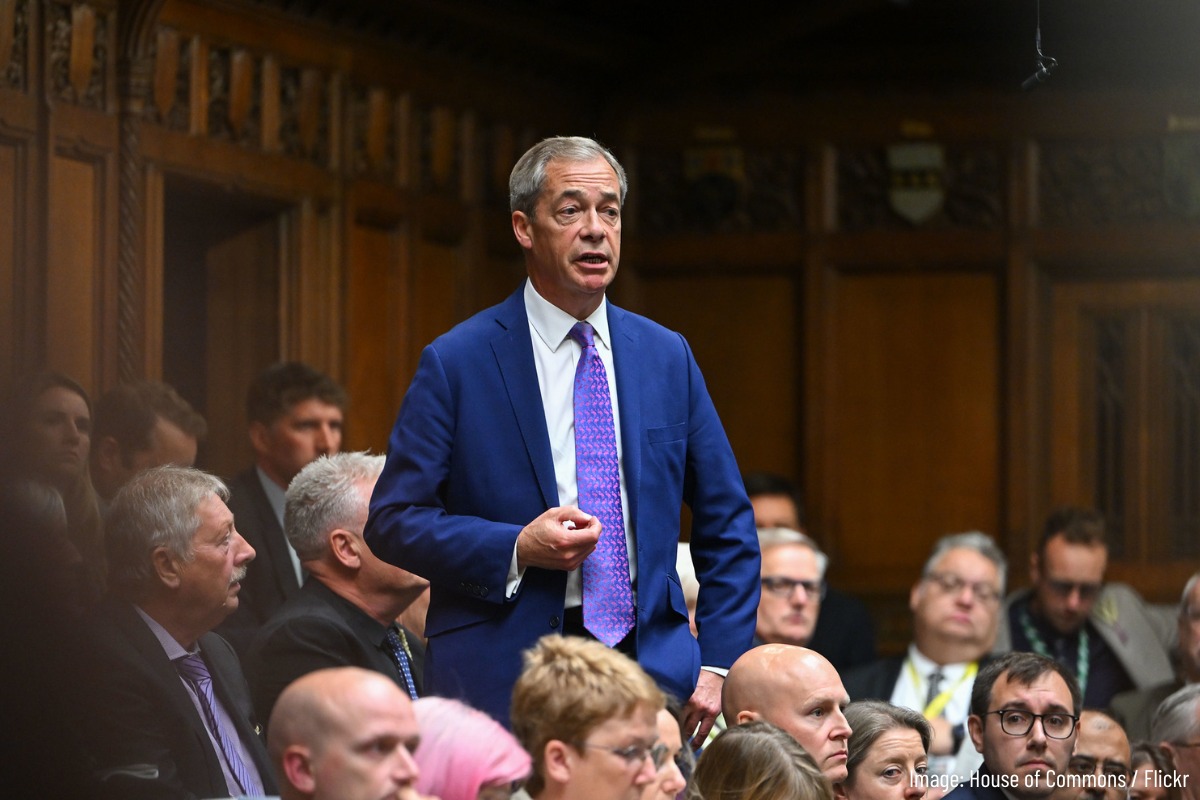
On the ground, Reform-led local councils illustrate the problem in miniature. They are raising taxes, cutting services, overspending, and losing councillors through infighting.
In short, right-wing populists like Farage will promise everything to everyone in order to get power. But once in charge, they find themselves entangled in a web of capitalist contradictions.
A Farage-led government would face the same dilemma as any other: either open up the economy to the capitalists even further – through privatisation, attacks on pay and pensions, and cuts to social spending – or face capital flight and crisis. Either path would rapidly destroy his support, just as it has for Starmer.
Farage is not a fascist. He is a reactionary demagogue, who relies on a contradictory base of anti-establishment supporters. But this unstable coalition will not survive contact with the realities of governing amidst a deepening crisis of capitalism.
The rise of Reform, and the prospect of a Farage government, will not stabilise the situation. Instead, such a perspective increases the volatility in society.
The crisis of the regime, and of British capitalism, will intensity. Workers and young people will get even more angry. In turn, there will be increasing political polarisation and radicalisation – with a growing layer drawing revolutionary conclusions.
Reformism vs revolution
For years now, there has been a giant vacuum on the left of British politics. But this is beginning to be filled.
The growth of the Greens, for example, reflects the ferment among workers and youth. Figures such as Zarah Sultana, meanwhile, are coming out with radical demands to “nationalise everything”. And for the first time ever, a left-winger – Angela Egan – has been elected as general secretary of Unison, the giant public sector union.
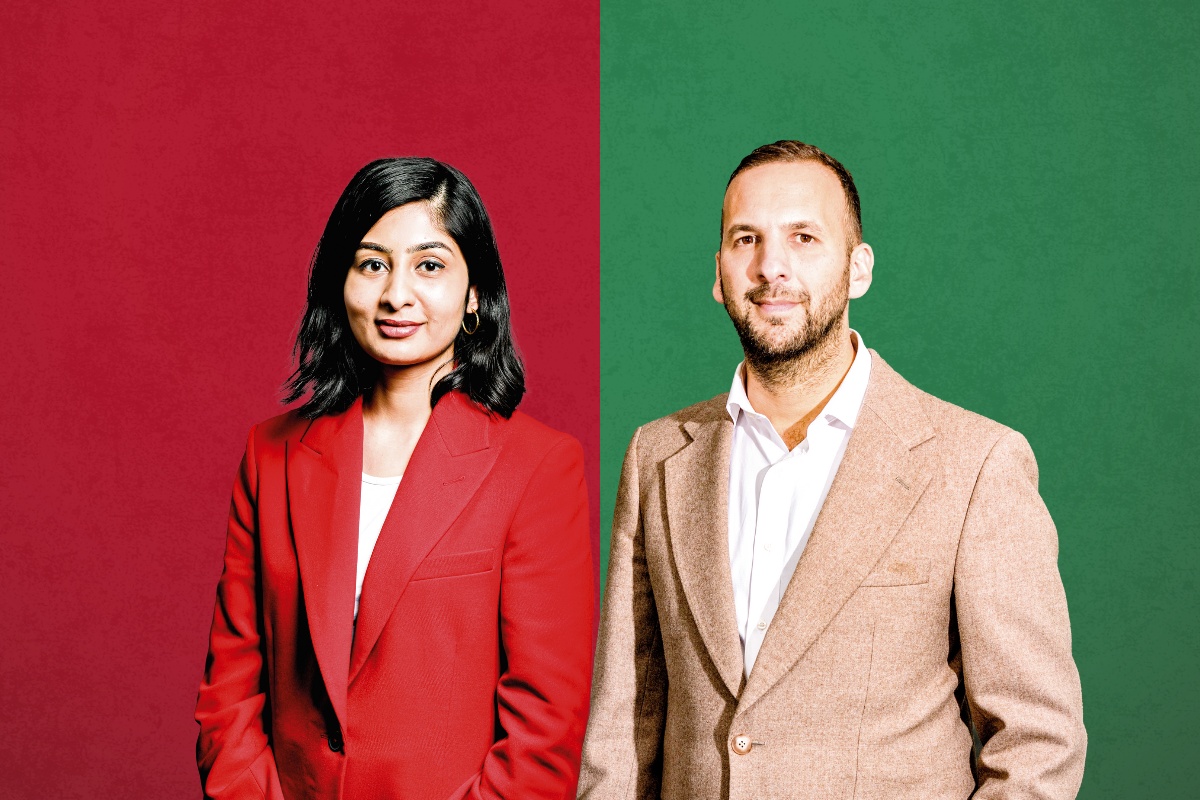
The Green surge; Sultana’s strident rhetoric; flashes of industrial action; the election of a left-winger as leader of Britain’s biggest union: all these express real anger, and a search for alternatives.
Across the left, however, no-one is clearly and consistently advocating what is needed: a complete break with capitalism.
Ultimately, the Green Party’s programme is limited to attempts to reform and regulate the capitalist system. This falls far short of what is required to solve the problems facing the working class.
Zarah Sultana has gone further, talking about the need for “a fundamental transformation of society to replace capitalism with socialism”. When pushed by her opponents, however, she has oftentimes struggled to articulate what this entails and backtracked in terms of radicalism.
Similarly, the trade union leaders have failed to channel the discontent amongst rank-and-file members into the kind of militant, coordinated action that is needed to seriously challenge the government.
At the same time, the support for the reformist left does not have deep roots. Large layers are already looking beyond what Polanski, Sultana, and co. are offering, towards revolution and communism.
Huge numbers, especially of young people, openly describe themselves as communists and revolutionaries. Many who might vote for the Greens are also questioning the system itself.
We, the communists, need to reach, organise, and educate these radicalised layers, by presenting ourselves boldly and explaining our ideas patiently.
Forward to 2026
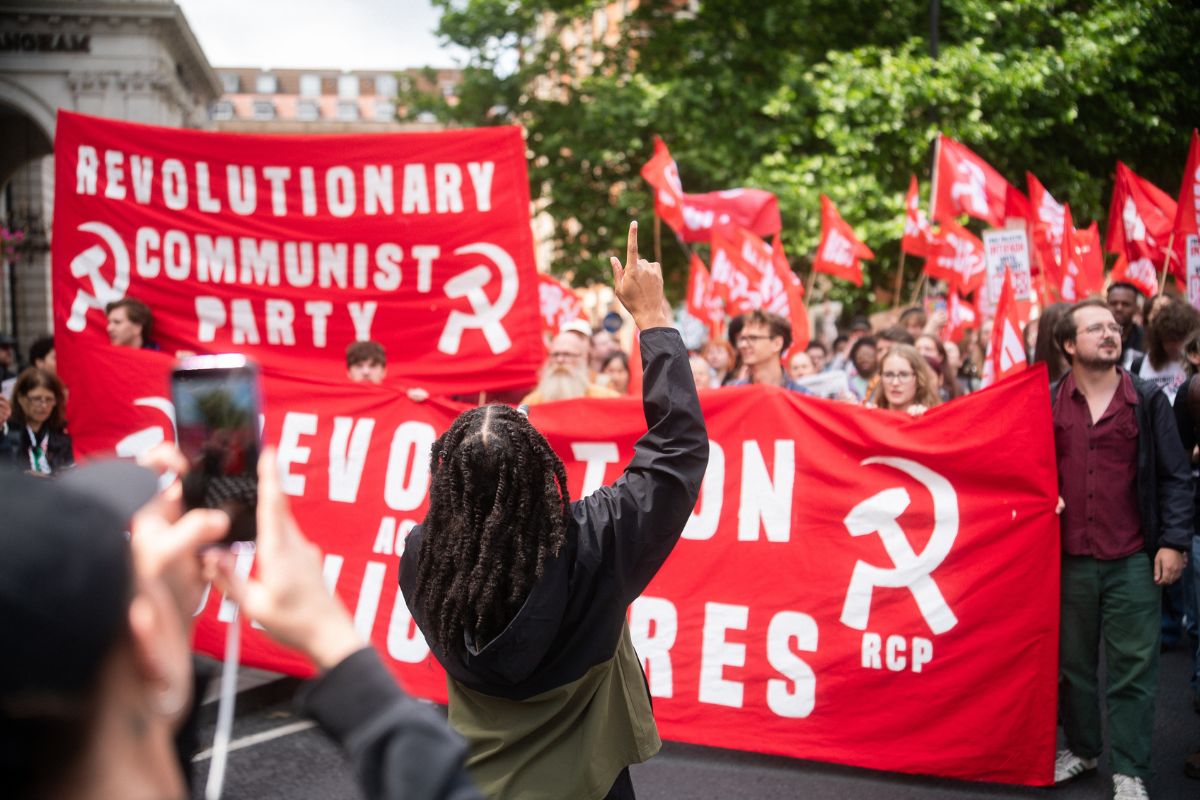
The situation in Britain today can be summarised as such: the old order is crumbling; the ruling class cannot rule confidently, as they once did; but the working class does not yet have the militant leadership it needs, industrially or politically. The result is drift, decay, and repeated shocks.
This impasse will not resolve itself gradually. Economic pressures will intensify. Inflation, unemployment, and social breakdown will provoke struggle. The British establishment and its institutions will continue to lose their authority, because they cannot deliver stability or improvement.
In such conditions, consciousness can change rapidly.
The opportunities for communists are clear. Whether these are seized depends on our ability to explain, organise, and link the burning issues of the day to a clear understanding of the capitalist system that produces them. That is the task posed for us in 2026.