Once again, the crisis around prison overcrowding and early releases is back in the headlines.
Back in January, we wrote that “prisons are overcrowded, probation services are chronically understaffed, and crimes from burglary to violent offences are on the rise. Despite successive governments’ promises to be ‘tough on crime’, Britain’s repressive institutions are falling apart.”
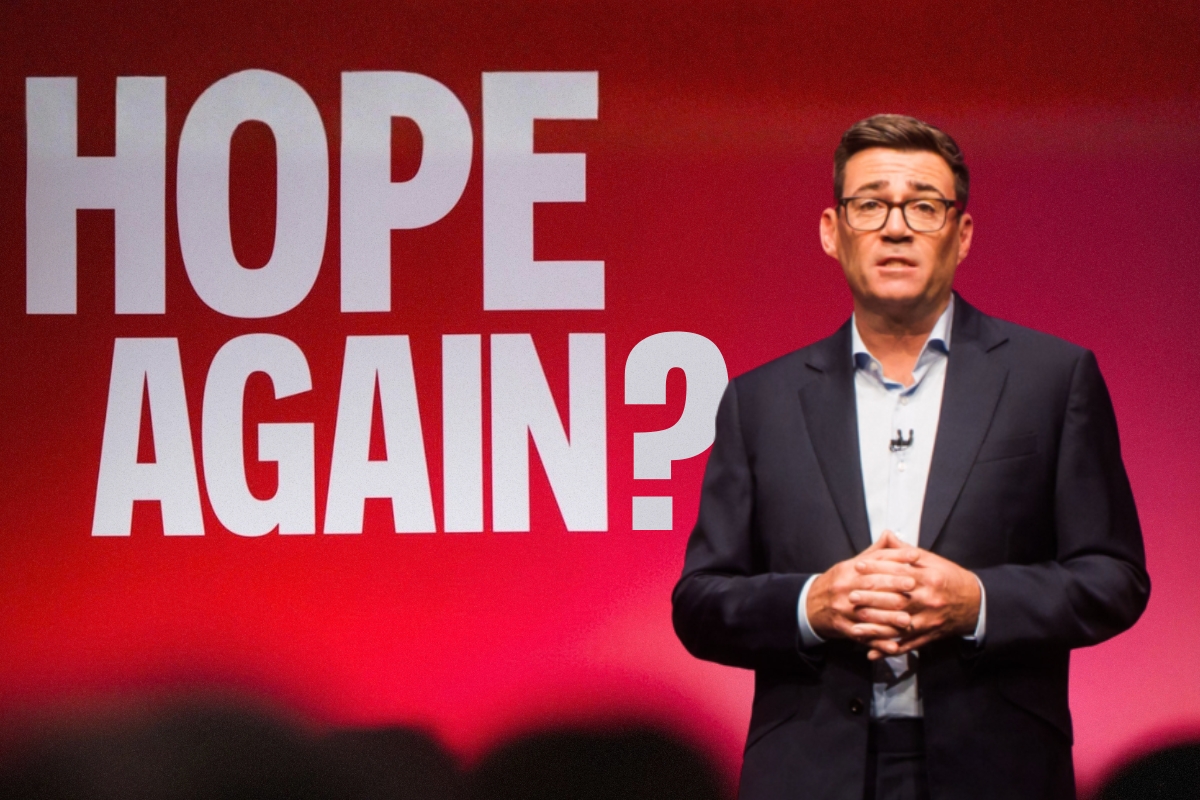
Now, five weeks into his premiership, Labour’s Andy Burnham has found himself embroiled in the same problems and contradictions as his predecessor, Keir Starmer.
Within days of entering Downing Street, Burnham ordered a pause on the controversial early release scheme started by Starmer in 2024.
This would have seen a wide range of prisoners – from offenders of non-violent crimes, to serious violent and sexual offences, such as manslaughter, GBH, and even rape – eligible for earlier release at either one-third or one-half of their sentence, depending on the severity.
This policy has faced criticism from concerned victim advocacy groups, but also, cynically, from Reform and the Tories who have used it repeatedly as an anti-immigration talking point.
Reform in particular have used this to fuel their ‘lawless Britain’ narrative. They have tapped into Britain’s widespread social malaise, part of which is people feeling unsafe in their communities.
They have consistently tied this to migration, whipping up fear around asylum seekers and small boat crossings, inflating the number of crimes committed by these groups, and exploiting crime that is committed by migrants or asylum seekers, for example, the sexual assault in Epping last year.
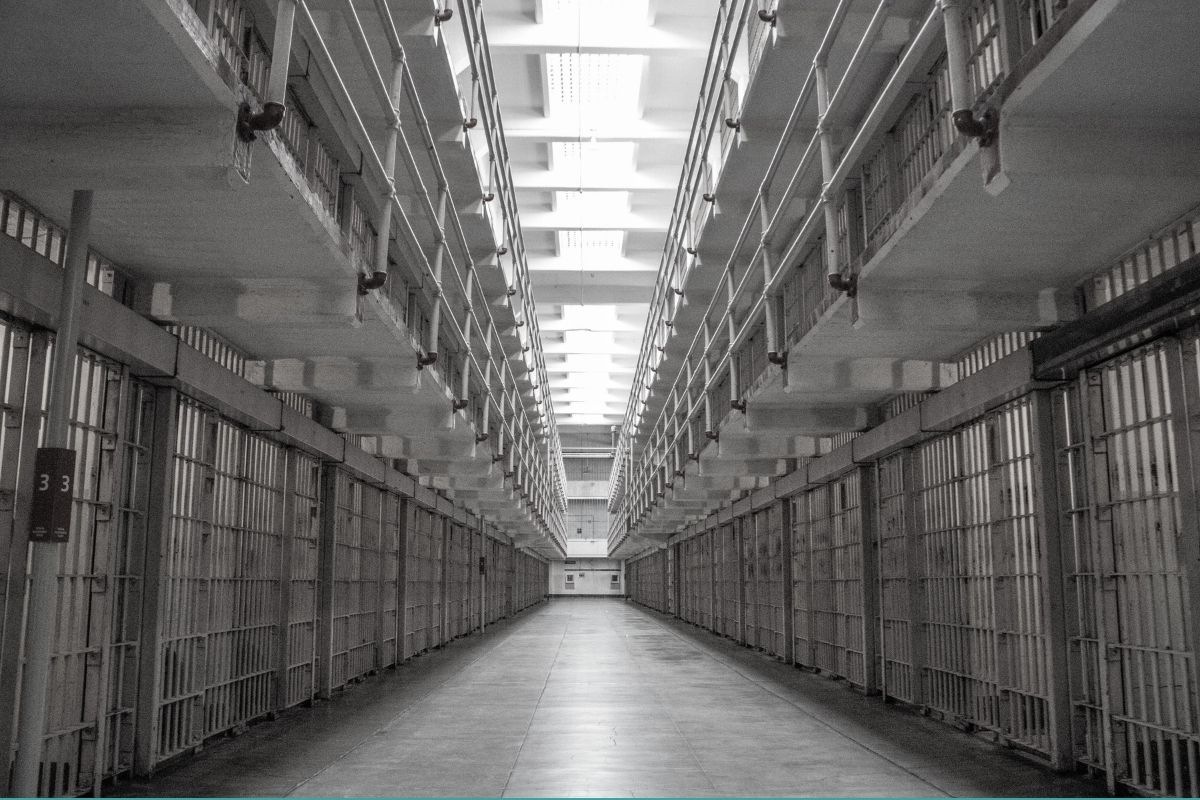
Prisons are bursting at the seams
Burnham’s government was caught between a rock and a hard place. On one hand, they faced backlash from an unpopular policy; but on the other, they faced the mounting pressure of a prison system that is at breaking point.
As of 3 August, Britain’s prisons are 97 percent full, and are set to reach capacity in November.
Over the last three decades, the number of people in prison has doubled. Added to this, between 2012 and 2023, the average prison sentence increased by 25 percent. Shockingly, 22 percent of prisoners in England and Wales are serving time for non-violent crimes.

The ‘tough on crime’ agenda has been a feature, to one degree or another, of every British government from Thatcher onwards. Alongside the fact that Thatcher’s anti-welfare state policies naturally led to an increase in crime and social decay, this was an attempt to cultivate the image of a strong state, capable of keeping order, and perpetuate a culture war to divert attention away from economic and other social issues.
But ramping up incarceration to be ‘tough on crime’ is as shortsighted as you can expect from the defenders of British capitalism: due to over 15 years of austerity, there have been real-terms budget cuts for prison and probation services.
This means not enough prison spaces have been built to keep up with the amount of people the state throws in prison. Therefore prisons, and those who staff them, have been pushed to their limits.
Starmer’s government greenlit the building of more prison spaces by 2032. But without the early release scheme, the prison population is already projected to outstrip these future available spaces – and that’s assuming they even get built!
Adding to this comedy of errors, there are also currently-empty prison cells that cannot be used, due to understaffing.
For example, in March 2025, a new £400 million ‘super prison’, HMP Millsike, was opened near York. In spite of this hefty price tag, it has over 300 empty cells, reportedly because the prison is struggling to recruit enough staff.
This is not really surprising; a 2023 report found that half of prison officers do not feel safe at work. And turnover rates are extremely high. 50 percent of officers who left the service in 2021 had been in the role for less than three years, and 26 percent left after less than a year. It’s safe to assume that this exodus has only exacerbated in the past five years.
Probation services not fit for purpose
Despite his initial hesitation, Burnham will continue down the same path as his predecessor, with some additional conditions to exclude prisoners convicted of rape and other serious sexual and grooming offences.
There is no exact data on how many prisoners will be released through this scheme, but there will be approximately 5,000 releases across 10 months starting in October 2026.
Eligible prisoners will be automatically released once the set proportion of their sentence is reached, unless they’ve had time added to their sentence while in prison. In other words, the prison system will automatically release people who may pose a danger to the public.
Shockingly, this is set to include perpetrators of domestic violence, at a time when domestic violence rates are already on the rise. Domestic violence has extraordinarily high rates of reoffence – up to a staggering 98 percent amongst high-risk individuals.
And while the probation system is completely inadequate at dealing with this, it is being pushed more and more to breaking point, meaning the safety and lives of survivors of domestic violence are on the line.
This is no exaggeration: in 2021, Michaela Hall was murdered by Lee Kendall in 2021 two weeks after he was released from prison, where he had been serving a sentence for assaulting her.
An inquiry into her death found that Kendall was mistakenly categorised as a ‘medium-risk’ offender. This mistake was put down to “horrendous work pressures” of probation workers.
Probation workers at breaking point
Unfortunately this is not an isolated case. And indeed, as we previously wrote, the burden on probation workers – who are tasked with reintroducing prisoners back into wider society – is insurmountable, to the point where sickness from overworking and stress is the norm in this sector.
When people are released from prison, they remain on probation for the remainder of their sentence, and can be recalled if they break their conditions. This means that when people are released early, the burden is just passed from bursting prisons to an overstretched probation service.
Without taking this inevitable increased workload from thousands of early releases into consideration, there is already a huge shortage in the amount of probation officers that are needed as a baseline. This will add more pressure onto the remaining workforce.
Even the Chief Inspector of Probation for England and Wales has admitted that he does not think the system will be able to cope.
It is no surprise that the probation officers’ union, Napo, has just balloted their members for potential strike action. On 11 August, it was announced that 90 percent of its members voted in favour.
The government wants you to focus on prisons and policing.
But it’s probation staff who are managing high-risk offenders in your community.
Now they’re voting on whether to strike and who can blame them#respectprobation #Napo #PayProbation
— Napo the Union (@Napotheunion) August 6, 2025
In a statement, the union said: “Napo is pressing for urgent national action to tackle the workload crisis before it pushes probation staff any further to the brink.”
We will have to wait and see what happens next, but all of this is a stark reminder to Burnham that he will not be able to escape the problems faced by Starmer. It doesn’t matter which party, or politician is at the helm; there is no way out for anyone trying to manage the decline of a broken state, and a broken system.
Is there a solution?
The truth is, there is no solution to this crisis on a capitalist basis.
Ultimately, poverty and instability are what drive crime. The majority of people in prison grew up in low-income areas. If everyone had good jobs, financial security, and stable homes, crime would decrease substantially.
Incarceration is also very ineffective at tackling crime. It should be no surprise that reoffending rates are as high as they are, given how traumatic the experience of prison can be – where drug use, violence, and abuse are rife.
Rehabilitation services, mental health support, and community programmes would be the best way to prevent crime, and to help incarcerated people re-enter society. But all of these things have been cut to the bone thanks to austerity and economic decline.
Building more prison spaces and increasing policing cannot tackle crime and social decay. Even when it is ‘working’ efficiently, the ‘justice’ system merely continues the cycle of crime. The police, meanwhile, are some of the worst thugs out there. The working class does not stand to gain by handing more power to the state of our class enemies.
But carelessly releasing incarcerated individuals into wider society is no solution either. No one wants to have more thieves, abusers, and gang members on the streets – especially when probation and support services are at breaking point.
The only path towards safer communities is overthrowing the system that produces all of the crimes, violence and instability in society.