As chaos and catastrophe engulfs the Middle East, and in turn the global economy, it can seem like the whole world has gone mad.
In particular, those (nominally) in charge seem to be the most deranged and delirious of all.
Trump returned to the White House – taking over from senile ‘Sleepy Joe’ – promising to end America’s ‘forever wars’. Like a reckless gambler, however, he has now hubristically thrown the US into an unwinnable conflict with Iran.
And like a man trapped in quicksand, the American President is sinking ever faster, the more he struggles to extract himself from this existential predicament.
All roads lead to ruin
The insanity of Trump’s decisions no doubt has a subjective element. The US President is notorious for his capriciousness and mercurial unpredictability.
Ultimately, however, it is objective conditions and contradictions that explain this apparent lunacy.
On the one hand, erratic and myopic characters like Trump are the product of an unstable, decrepit system.
To paraphrase the 18th-century political philosopher Joseph de Maistre: every ruling class gets the leaders it deserves. And the current occupant of the Oval Office, on this count, is the perfect representative for today’s short-sighted, parasitic, degenerate billionaire elites.
On the other hand, given the concatenation of forces and pressures at play, whatever Trump does at this point will be wrong.
If he backs down and withdraws from the Middle East, this will mark a humiliating blow – not only to his prestige, but to the position of US imperialism on the world stage.
If he doubles down, meanwhile, this will only accelerate the pre-existing decline of American capitalism and US imperialism, economically and militarily.
In other words, all roads lead to ruin – for Trump and for American imperialism.
Crumbling system
In a world wracked by turbulence and turmoil; in a system pregnant with crises: in such a volatile situation, when the outcome of events rests on a knife edge, accidental factors can play a pivotal role.
This includes the individual actions or personal qualities of this or that political figure – whether it be Donald Trump, Benjamin Netanyahu, or Britain’s own Keir Starmer.
As bourgeois politicians, these leaders are supposed to represent and defend the interests of the capitalist class and their system. Yet, as the crisis deepens and the tensions in society intensify, these gentlemen increasingly seem to make decisions that are at odds with this purpose.
Declaring war on Iran has massively backfired on American imperialism and its allies, including Israel and the Gulf states.
By distancing himself from Trump’s war, meanwhile, Starmer has damaged – perhaps irreparably – the so-called ‘special relationship’ between the UK and US: a partnership that is vital for British capitalism, and for the economic, military, and political interests of the British establishment.
“All of those countries that can’t get jet fuel because of the Strait of Hormuz, like the United Kingdom, which refused to get involved in the decapitation of Iran, I have a suggestion for you…” – President Donald J. Trump pic.twitter.com/aPYmL0qspa
— The White House (@WhiteHouse) March 31, 2026
Again, such seeming irrationality is a reflection of the anarchy of capitalism – and, in turn, of the impossible, hopeless position faced by those who seek to uphold this crumbling system.
As the ancient Greek proverb states: whom the gods wish to destroy, they first make mad.
One shock after another
The dangers facing the world economy show most graphically that there are no good options for the ruling class.
The impact of the Iran war – most notably, the closure of the Strait of Hormuz – is driving up prices across the planet. This is the third shock to hit global supply chains in the last five years, following the pandemic and the conflict in Ukraine. And it comes on top of other growing inflationary pressures, such as the increase in protectionism and militarism.
This fact, alone, demonstrates not only how flammable the world has become, with uncontrollable blazes alighting with ever-greater frequency; but also how vulnerable the capitalist system is when such fires appear, with a mass of accumulated combustible material just waiting to be ignited.
For ordinary families, this latest wave of inflation will be felt in terms of rising supermarket prices, energy bills, and borrowing costs. This, in turn, will bite into people’s wallets, and therefore into consumer demand – potentially tipping the global economy into a new recession.
Deadly dilemma
Already, commentators are drawing parallels with the 1970s, when a similar oil shock helped to spark a ‘stagflationary’ crisis: soaring prices alongside stagnant economic growth.
The difference today, however, is that we could be facing not ‘stagflation’, but ‘slumpflation’ – high inflation alongside a major crash; possibly even a depression.
And furthermore, with debt levels at an historic high, and public finances already overstretched, governments everywhere have no ammo left in their arsenals when it comes to confronting this latest crisis.
Herein lies the dilemma. Do politicians and policymakers try to subdue inflation by hiking interest rates, curbing demand, and thereby provoking a downturn?
Or do they try to stimulate growth and maintain employment through Keynesian means, such as deficit financing and money printing, which would further fuel inflation and cause a backlash from the bond markets?
For capitalism and its representatives, the overall result is the same either way: ever-greater instability and crisis. For the working class, meanwhile, the choice is between death by hanging or death by a thousand cuts.
Capitalist straitjacket
For ‘Sir’ Keir Starmer, Britain’s hapless Prime Minister, this is only one of many insoluble quandaries in his intray.
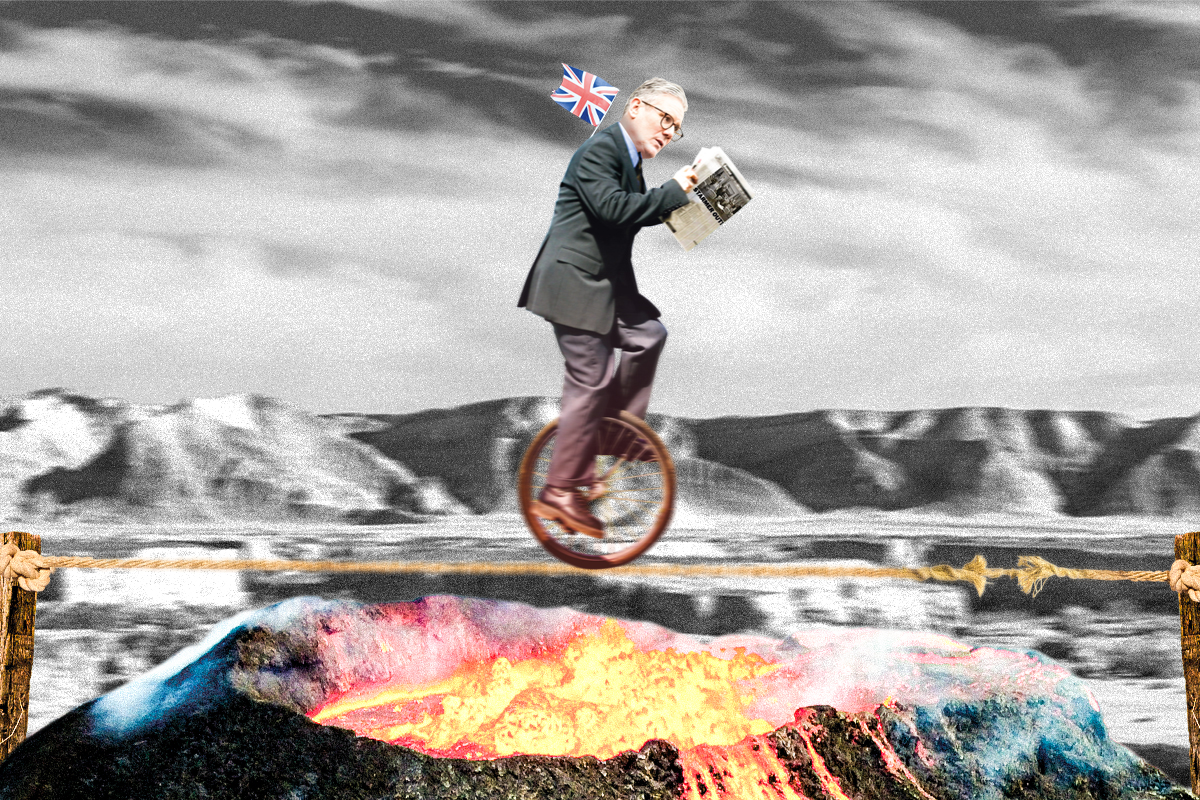
Given the weak position – and long-term decline – of British capitalism, the UK PM cannot afford to sever trade ties with any of the world’s major economies, such as the USA, EU, and China. Yet simultaneously appeasing Washington, Brussels, and Beijing is increasingly difficult in an era of heightening tensions between the big imperialist powers.
The Greenland crisis earlier this year, when Trump made a grab for the Danish-claimed Arctic island, showed the trouser-splitting contortions that Starmer is having to undertake as geopolitical tectonic plates shift and the old world order breaks down, ripping the decades-long transatlantic alliance apart.
The most delicate balancing act for the Labour leader, however, is that which he is conducting in his efforts to meet both the needs of capital and those of the masses.
On one question after another: Starmer’s government finds itself crushed between the hammer of capitalism and imperialism, on one side, and the anvil of the working class, on the other.
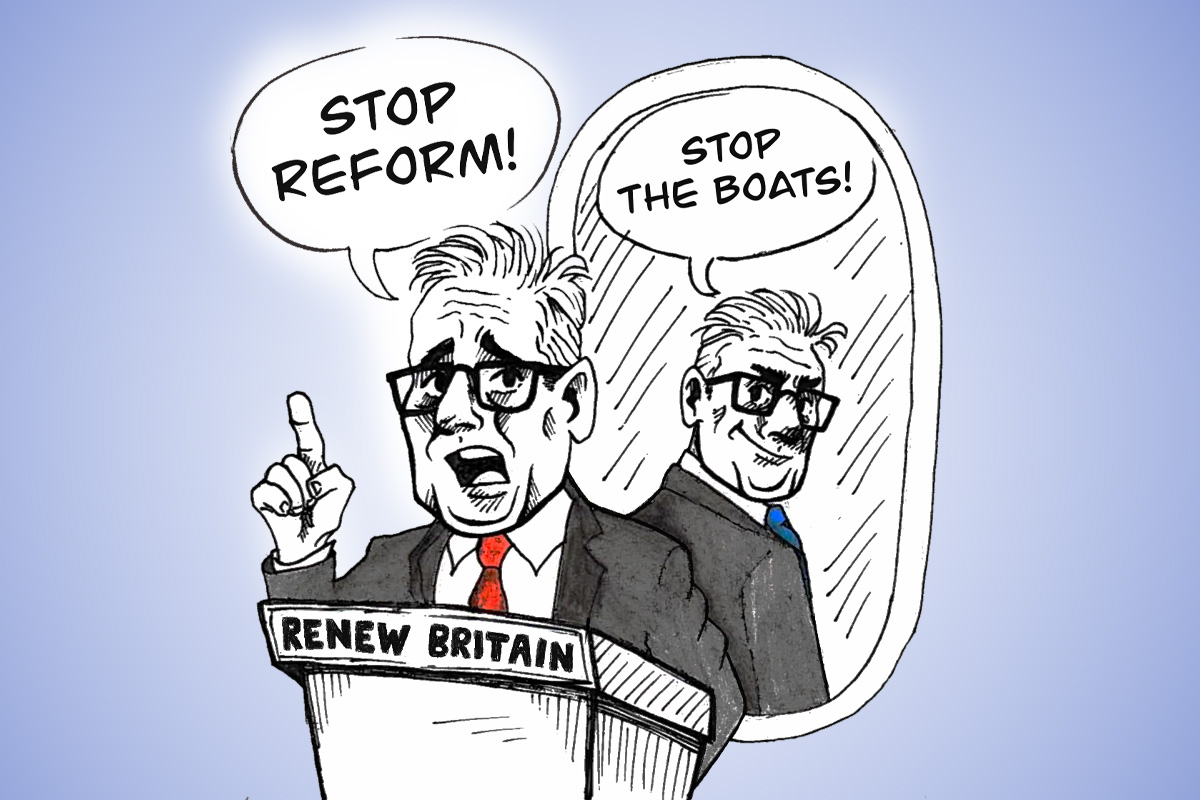
Placating the belligerent Trump whilst avoiding getting sucked into an Iraq 2.0. Outflanking Reform to the right on culture war issues like immigration, whilst maintaining the votes of young people, Muslims, and ethnic minorities. Carrying out the attacks that Britain’s capitalist creditors demand, whilst subduing backbench rebellions over welfare cuts.
On all this, and more, Starmer and his ministers find themselves in an ever-tighter bind. And as support for Zack Polankski’s Green Party surges – hoovering up voters to Labour’s left, and potentially prizing away the trade unions – the conflicting pressures on this crisis-ridden government will only magnify.
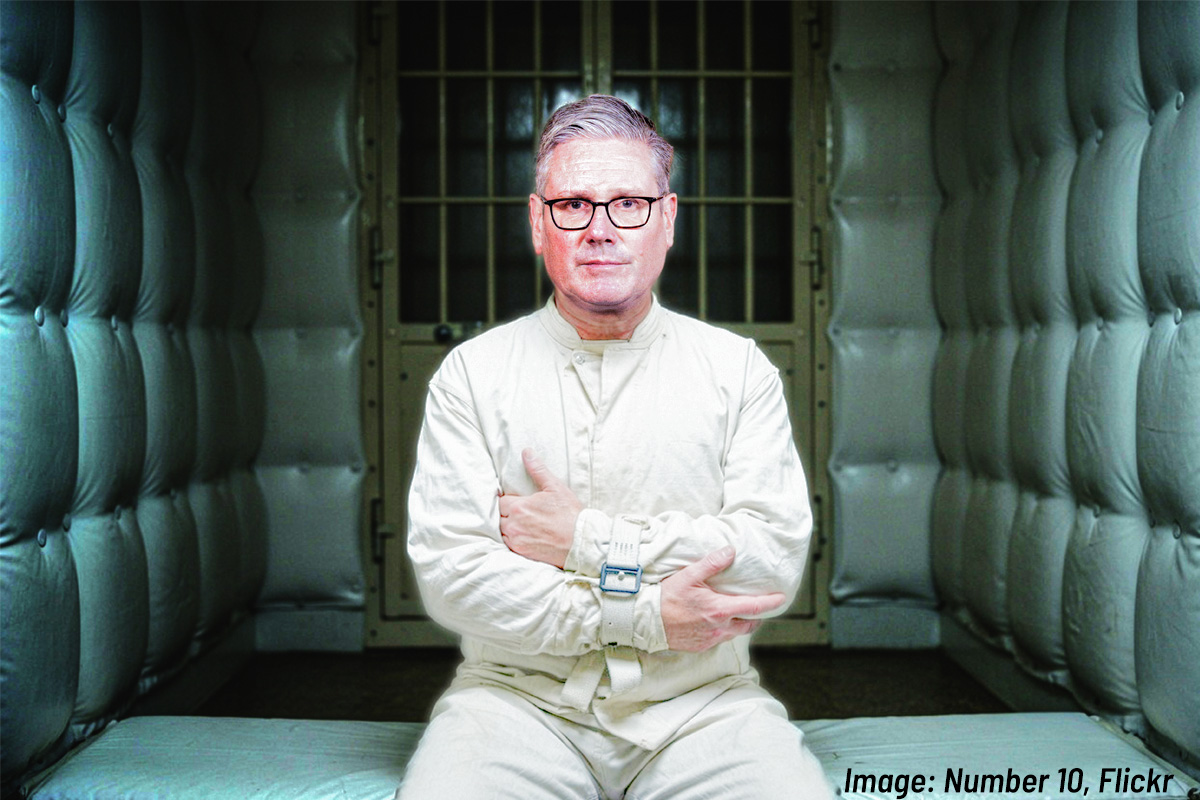
Even Houdini could not escape from the straitjacket in which Starmer finds himself entrapped. And the same goes for whoever replaces him in 10 Downing Street.
Britain’s special crisis
This has nothing to do with the personal qualities – or lack thereof – of Keir Starmer, and everything to do with the special (albeit increasingly not-so-special) crisis of British capitalism.
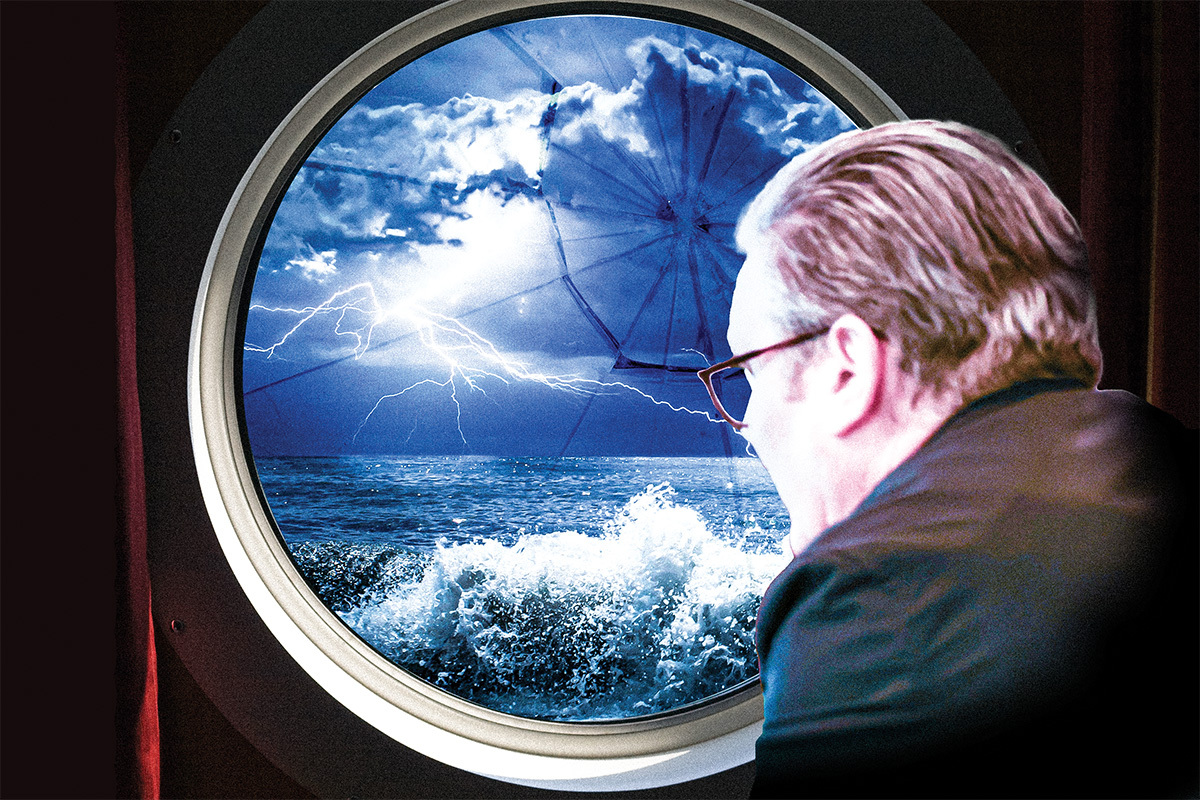
The decay of Britain’s industries and infrastructure; the reliance on financial gambling and speculation, and on attracting foreign capital; the failure of the bosses to invest in machinery and modernisation, and the subsequent lack of competitiveness: all of this leaves the UK economy in a particularly vulnerable position today.
Britain’s leaders have even less room for manoeuvre. UK governments are even more held to ransom by the bond markets; by the dictatorship of capital. The country’s economy has fewer reserves of fat, and its political establishment and institutions have ever-diminishing reserves of authority.
This is why the UK economy is set to be hit harder by the fallout of the Iran war, in terms of the impact on growth and inflation. And it is why Britain finds itself torn more sharply as the old status quo is shredded; pounded more violently by the trampling feet of clashing imperialist titans.
Revolutionary implications
All of this, in turn, finds its reflection in terms of greater social instability and political fragmentation.
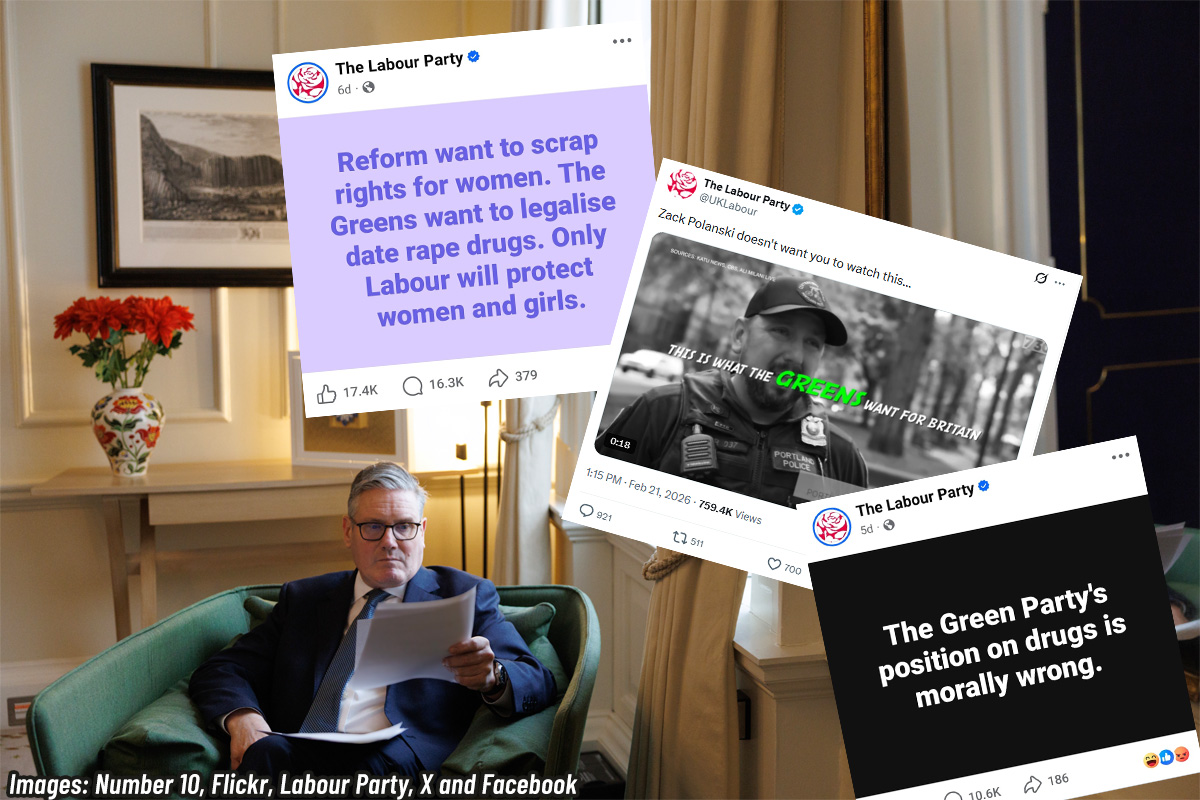
The two-party setup that has dominated in Westminster for over a century is now collapsing. Insurgent ‘populists’ are on the march – to the right with Farage’s Reform, and to the left with Polanski’s Greens. The ruling class increasingly finds itself with no reliable representatives to carry out its bidding.
Within the confines of capitalism, meanwhile, political leaders find themselves less and less in control of the situation; more and more a hostage to events: acting not ‘rationally’, in accordance with the capitalists’ class interests, but selfishly and shortsightedly, driven by personal political expediency.
This has revolutionary implications. After all, as Lenin noted, revolutions begin with splits and crises at the top: when the old regime can no longer rule as it has done; and the masses can no longer tolerate the mounting pressures on their lives.
Reason becomes unreason
Whether it be Starmer, Farage, or Polanski: anyone who presides over this sick system will be forced to administer a bitter medicine of austerity to the working class.
Blow by blow, this deepening crisis is transforming consciousness. The madness of capitalism is producing a profound questioning of the whole system in the minds of millions, as workers and youth connect the dots between imperialist war and genocide, the rise of racism and reaction, the global Epstein scandal, and the growing class chasm between them and us.
On the basis of these events, growing layers are drawing radical – even revolutionary – conclusions. In the words of Hegel, reason is becoming unreason.
This is preparing the way for social explosions and revolutionary upheavals. And Britain, far from being immune to such bedlam, will find itself the stage for particularly fierce class struggles.
“Britain is nothing but the last ward of the madhouse,” Leon Trotsky aptly remarked, “and quite possibly it will prove to be the ward for particularly violent cases.”
Only a revolution to overthrow this chaotic system can put an end to the mayhem and misery of capitalism, once and for all.
So if you’re mad as hell at the billionaires and warmongers, join us – the communists of the RCP – in this fight. We have no time to waste.