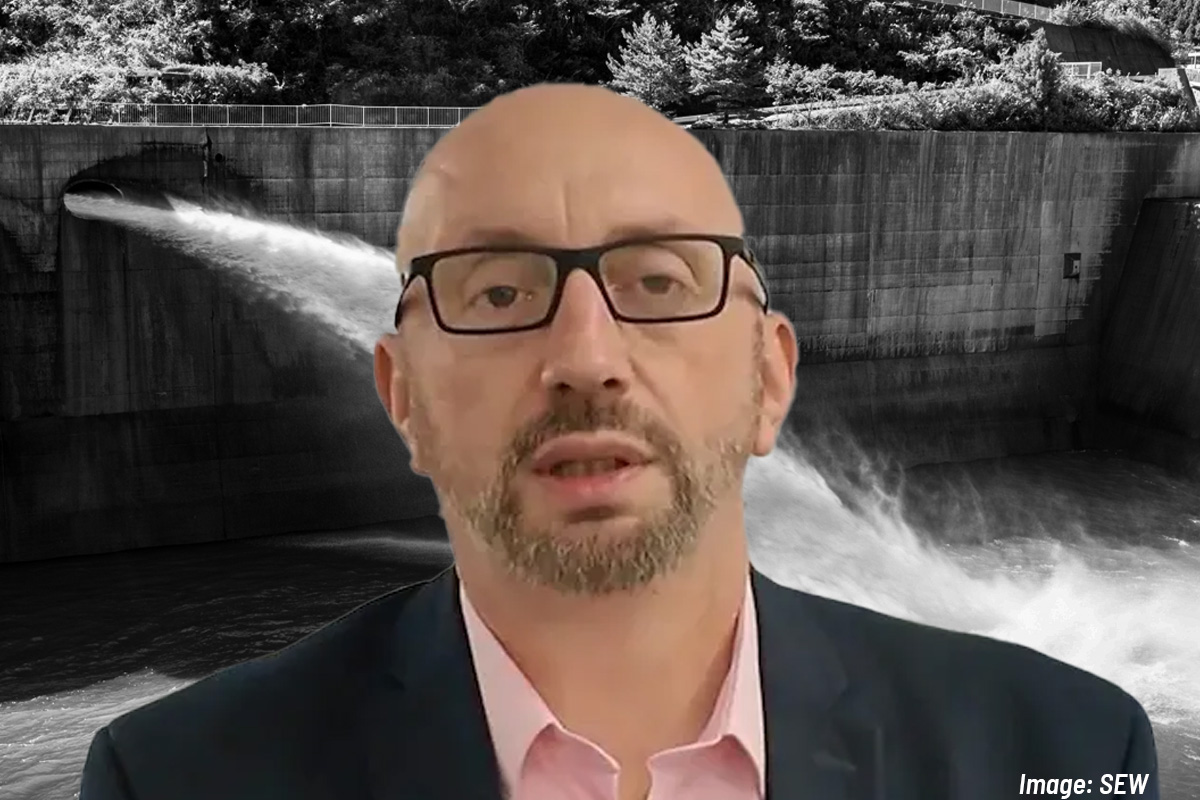

This month, tens of thousands of residents across Kent and Sussex have been left without running water, as antiquated infrastructure failed under the impact of storms and frozen pipes.
Water companies were handing out bottled water to the residents of Tunbridge Wells, repeating scenes from just over a month ago, after a similar incident turned off the taps for two weeks from 30 November.
Money down the drain
Disgracefully, this disaster could have been prevented. The company responsible, South East Water (SEW) has already been under investigation by water regulator Ofwat since 2023, over concerns about their supply resilience.
Now there are four ongoing investigations by regulators Ofwat and the Drinking Water Inspectorate into SEW. So many watchdogs, and so little water…
SEW itself admits that (34 years ago, during privatisation) it inherited an archaic network, composed of too few connections and too many small treatment plants… and this “takes money and time” to fix.
The wretchedness of these private profiteers knows no end. Having failed their contractual obligations, SEW bosses are now pledging to invest in infrastructure upgrades – by demanding Ofwat allow them to raise bills by more than 20 percent! That comes on top of the 36 percent hike that Ofwat already accorded from 2025 to 2030.
Even from the point of view of ‘free-market’ economics, it ought to be fairly scandalous to make ‘the customer’ pay for the failures of your service. Evidently however, it has become quite normal to make the working class pay for the crisis created by its rulers. Such is the reality of capitalism today: that is to say, monopoly capitalism in crisis.
And yet, it is hardly the case that poor little SEW has no money to spend. Back in 2023, after weeks of widespread water outages and a staggering £18 million in losses, SEW still scraped together £2.25 million to shower its shareholders with dividends over just six months. They really have prepared a salty cure for south-easterners’ dry throats.
The message is clear: shareholder payouts come first, public need comes last. This was always going to be the product of the reckless privatisation pursued by Britain’s capitalists – who myopically sold off Britain’s key infrastructure for a quick buck ever since the days of Thatcher.
After all, when you throw money down the drain, it tends to form a nasty clog.
Murky waters
The situation at SEW has led to a broad coalition of MPs – from locals Mims Davies (Tory) and Mike Martin (LibDem), to Nigel Farage and parts of the Labour government – demanding that heads roll. No doubt, politicians are fearful that if they say nothing, theirs will be next on the chopping block.
I have no confidence whatsoever in South East Water. The CEO, David Hinton, must resign. pic.twitter.com/q6GrUbqGmG
— Helen Grant OBE MP (@HelenGrantMP) January 12, 2026
But in spite of these calls to ‘action’, SEW CEO David Hinton appears determined to carry on. After all, having earned £457,000 in the last financial year, incompetence is quite profitable! In fact, the Guardian reports that Hinton is in line for a £400,000 ‘service award’ if he stays until 2030; which would begin paying out as early as 2028.
You would be forgiven for thinking that four investigations, constant disruption, and near financial collapse would make his position untenable. The shareholders would disagree however, having come out in support of Hinton despite his laughable performance.
In doing so, they have said the quiet part out loud. SEW has never cared about the quality of its service, let alone ‘the public good’. Hinton’s role was to satisfy the limitless greed of wealthy investors, no matter the consequences. Such is the logic of the capitalist system.
As for accountability, these swindling grifters hold nothing but contempt for anyone who seeks to question them. Hinton was incredulous that the media should even question his salary in the wake of these recent failures, accusing all those who complained of “politicising” the issue.
But rest assured, he insists that his pay is not relevant, and that he is “absolutely working as hard as everybody else behind the scenes”. Seemingly intent on performing his best impression of a cartoon villain, he told customers that he “shares their pain”, and that he needs to remain in the post as he is the only one who can fix the crisis.
To sue SEW or not to sue SEW?
SEW’s doubling-down has left the politicians and regulators in a conundrum.
Ofwat could fine SEW 10 percent of its turnover, about £28 million. But doing so would increase the ‘financial strain’ on the company – that is to say it would disincentivise its greedy shareholders further from investing in the network.
That is not to say that the financial situation of SEW is not dire. The company is £1.3 billion in debt – more than four times its annual revenue. But as we have seen, that will not stop shareholders from paying themselves handsome dividends.
To them, it is only a matter of how much gets pumped out of the system and into their pockets, and how much gets pumped into their creditors’ pockets, before the whole ponzi scheme collapses.
The alternative to fines, however, would be to cave in to SEW’s demands to raise bills. That would be unpalatable to the politicians: doubly so, seeing as they have already put up a token of resistance against SEW.
Nationalisation, not regulation!
The colossal arrogance of SEW’s CEO and shareholders does not come out of nowhere. They know how to play the system. And like a sewer rat, if you spot one, you know that others are swimming about in the murky waters.
In the parasitic model of water privatisation, ordinary people bankroll the system. First, they pay the bills. Then, they pay again when the service they paid for fails. Then, when the state bails out the bankrupt monopolies, ordinary taxpayers foot the bill yet again!
All the while, their money ends up caught in an opaque web of overseas investment funds and wealthy shareholders, who provide no value beyond presiding over decline.
Research by the University of Greenwich claims that investors have withdrawn £85.2 billion from ten water and sewerage firms since the industry was privatised in 1992. And when the taps run dry, consumers are left to pick up the tab through spiralling price hikes.
As a whole, England and Wales’ water infrastructure is at breaking point. In October 2025, the Environment Agency gave England’s water companies their worst ever marks in environmental performance, amid skyrocketing levels of pollution.
The sector is burdened with eyewatering levels of debt, nearing £70 billion, with Ofwat reporting concern for the finances of ten out of sixteen water companies.
The Labour government has previously blamed it all on the regulator – proposing to abolish Ofwat and replace it with… another, more powerful, regulator. ‘This time, it will work – we promise!’, they must be thinking.
Either the charlatans at the helm of the state are hopelessly deluded, or trying to deceive the public. Most likely, it is a combination of both.
The reality is that privatisation has failed. The CEOs and shareholders of the water monopolies are engaged in a daylight robbery of the working class, while corrupt politicians look the other way.
We say: expropriate this gang of thieves! Put all utilities – water, energy, communication, and waste – under the democratic control of the working class!