In a recent interview with Spill Magazine, Charles Hendy – founding member of the Irish folk band The Mary Wallopers – had this to say about creating folk music today:
“People like to think folk music is really people just sitting around singing ‘Kumbaya’… The folk songs of antiquity up until now are not like that. Folk music is not meant to be soft. It is hard music. It is social, political and it is aggressive. We want to inject a bit of that into it.”
Ironically, today it’s the leaders of the official ‘left’ who are doing little more than sitting around singing ‘Kumbaya’ while the world burns.
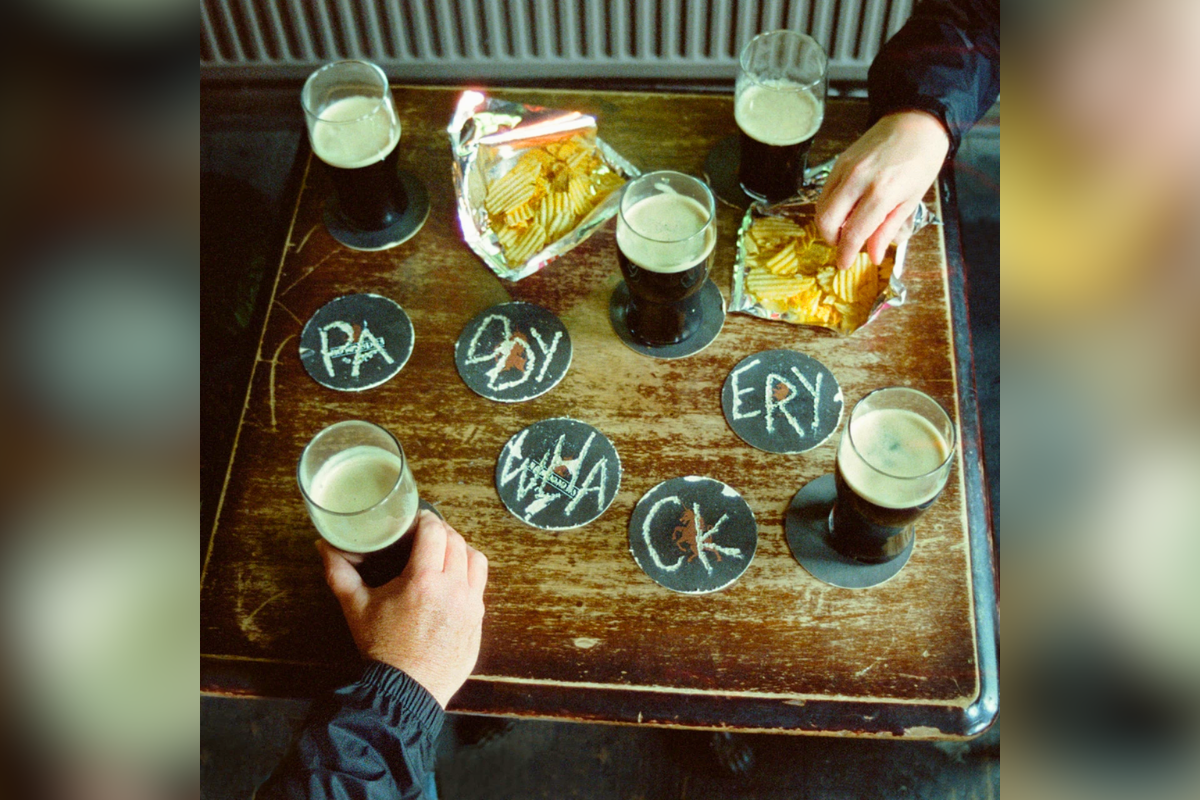
The Mary Wallpapers, meanwhile, are releasing their third and best album to date, Paddywhackery.
This album isn’t just a criticism of capitalism, but a powerful antidote against pessimism – a clarion call to the working class and the oppressed to recognise their collective power.
Principles before bank accounts
Right now, as I am writing this review, the rapper Macklemore has captured the righteous anger of millions across the world. He has boldly taken a stand against the whole of the billionaire establishment after being removed from Ed Sheeran’s tour for his support for Palestine.
He is just one of many artists who have put their principles before their bank accounts. Since The Mary Wallopers formed in 2019, they have been unapologetically on the side of the downtrodden and oppressed – and they have been some of the most vocal artists in support of the Palestinian struggle.
View this post on Instagram
As we reported on at the time, their sound was scandalously cut off after unfurling a Palestine flag while performing at last year’s Victorious Festival. In response, the band defiantly stated:
“If you believe in saying something that’s right, you should just do it regardless. Especially as an artist, and even more so if you’re an artist that considers yourself politically engaged. You can’t shy away from doing something for fear of not being able to get a gig.”
It’s this refusal to submit to the interests of the rich and powerful which, in my opinion, forms the backbone of Paddywhackery.
‘The Workers’ Song’
In line with this, the album was released on the band’s own independent record label. “We have had major labels try to sign us, but it was never a fit,” Hendy explained to Spill. “I don’t think we would suit a major label because we would have to shut up about things.”
Alongside their support for Palestine, the Mary Wallopers have consistently called out major record companies, notorious for their corruption and censorship, as central to the “poisonous” state of the music industry:
“We don’t fucking trust them and they don’t have any need to exist anymore unless they’re going to pump a load of money into you and make you a sensation, which we have never been interested in and never will be interested in.”
Paddywhackery featuring a cover of ‘The Workers’ Song’ poignantly drives this point home.
This beautiful song, first performed by Scottish singer Dick Gaughan, vividly and poetically articulates the cruel injustices experienced by the working classes across the centuries to today:
“And when the sky darkens, and the prospect is war
Who’s given a gun and then pushed to the fore?
And expected to die for the land of our birth
Though we’ve never owned one lousy handful of earth.”
Scandalously, record company Celtic Music has an iron grip over the rights to Dick Gaughan’s music. This means that, despite an ongoing legal battle, much of his work remains unavailable to listen to today. The label has also never paid Gaughan royalties for a number of his albums.
The Mary Wallopers have been vocal supporters of Gaughan, and all the artists struggling against the crooked Celtic Music label:
“The lowest behaviour possible is taking something as pure as music and a message and going, ‘I’m gonna make a load of money off this; I’m gonna own this.’ The people own it; everyone owns it. Everyone has a right to it.”
The inclusion of ‘The Workers’ Song’ in their live sets and the album is not just a protest against the capitalist vultures in the music industry.
Huge explosions of the class struggle are being prepared today. The Mary Wallopers bringing this song to the new generation is a priceless contribution to our class’ cultural heritage.
“People deserve to be riled up and shook,” said Charles Hendy ahead of the album’s release. “Wake up and get something better for yourself.”
Continuing the legacy
The Mary Wallopers continue a rich, precious tradition of radical Celtic folk in these islands, with countless artists writing and performing songs giving voice to the oppressed and sharply criticising the status quo.
In the 1960s, ‘McAlpine’s Fusiliers’ – written arguably one of the greatest folk songwriters of all time, Dominic Behan, and popularised by The Dubliners – shed light on the brutal conditions of Irish labourers brought over to rebuild Britain after the Second World War. It became an anthem for Irish workers in England.
One of the standout songs on Paddywhacker, ‘The Big Mixer’, makes reference to the very same Sir Robert McAlpine – the owner of the main construction company responsible for relentlessly exploiting Irish migrant labour. “Don’t stop the big mixer going,” were his dying wishes, the song suggests.
View this post on Instagram
The song goes on to point out that today, rather than Irishmen working on the railroads, we have low-paid workers in Tesco’s struggling to make ends meet. But we are still stuck in the same cycle of exploitation, churning up desperate workers – leaving us breaking our backs for the bosses, while they “count all your money in stacks”.
On the band’s social media, they dedicate the song to “All the people doing a hard day’s work and forced back to the Big Mixer to make profits for someone else.”
This theme continues in ‘Landlord’s Demise’, a song which feels as fitting in 2026 as a century ago. This song takes us on a journey through Ireland’s revolutionary history, tracking how the English landlords were heroically driven out by the Irish – only to be replaced by greedy Irish landlords:
“This song it is an ancient one, I wish that I could say
But greedy little landlords never really went away
There’s no need for protection or an army at their call
All their friends and family are working in the Dáil.”
These original songs are interspersed among covers of traditional works like ‘The Mickey Dam’, which recounts the trials and tribulations of Irish migrant laborers. With this skilful weaving of the new and old together, The Mary Wallopers show how the same struggle which existed back then still exists today.
An authentic expression
‘Paddywhackery’, the pejorative term the album draws its name from, describes commercialised Irish art, where the artist has exaggerated and stereotyped ‘Irishness’ to make money.
“It is very hip to be Irish at the moment,” reflects Charles Hendy. The Mary Wallopers have certainly been accused of inauthentic paddywhackery themselves – for being ‘too Irish’, with their drinking and singing; their banjos, accordions, and tin whistles.
“We were just being ourselves,” says Hendy. “What is paddywhackery? Is it us or is it the commercial Irishness that is being sold at the moment?”
Listen to this album and you will see ‘paddywhackery’ is the complete opposite of what The Mary Wallopers stand for. What is more authentic – and true to the burning anger that exists in young people in Ireland and beyond today – than a group of young, working-class people singing about real things that real people care about and connect with?
View this post on Instagram
And their songs don’t just pass comment on how terrible things are, they provide inspiration and optimism. Sharing their hopes for the album’s reception with Spill, the band said: “I hope that people will feel hopeful. I think being hopeful is an act of resistance. Because no one wants us to feel hopeful, not the powers that be anyway.”
It was the combination of their boldness, authenticity, and optimism that drew me to them seven years ago when they first formed the band. I remember being sat by myself during the COVID lockdowns, listening to their infamous three-hour-long livestreams. It inspired me to get out into the world and start fighting for something better.
It’s the same feeling I still get when I watch them perform live to thousands of young people who also feel the same way.
It’s a peculiar feeling to express in words. It makes you feel as if you are part of something bigger than yourself. That you’re part of a culture and tradition that goes back centuries.
There’s something very moving, about knowing that we feel the same raw emotions that those before us felt – listening to and singing the same music.
Just as the communists of past generations sang the songs of MacColl, Behan, and The Dubliners, I encourage communists today to continue these traditions by singing the songs of The Mary Wallopers.