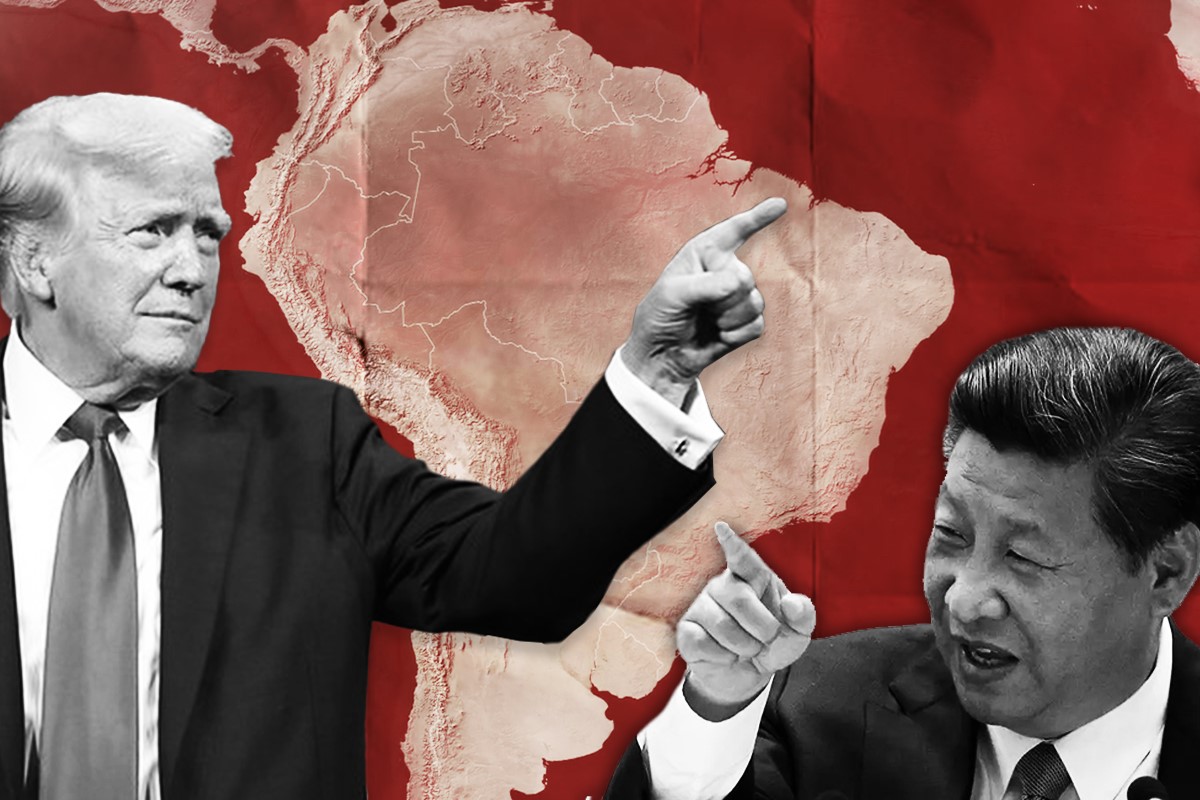
Where is Donald Trump’s wild ride taking the world? Has the spectacle of Maduro’s kidnapping dealt a significant blow to Chinese influence and power in Latin America? Are the Yanks at the beginning of a successful drive to kick out ‘non-hemispheric actors’ in the Western Hemisphere? And if so, will the result be a world carved up into neatly defined spheres of influence, with East and South East Asia left to China?
Many on the left have welcomed Trump’s honesty in stating the cynical, crude reality that international rules and values are (and always were) nothing but smokescreens for the exercise of imperialist power, now to be discarded as so much discredited ballast. Instead, Trump tells us, it’s all about making sure the oil is controlled by the US, and not China.
If it were simply about gaining control of Venezuela’s oil, however, the Americans could simply have done a deal with Maduro, who had been signalling for a long time that he would be open to such a deal. Moreover, his government has been left intact, so it is open to question how much control the US will be able to have over Venezuela and its oil in the long term. Although the Americans have powerful “layers of leverage” over Venezuela, as Rubio says (i.e. more military action and a naval blockade), it is also mired in a dramatic and high profile conflict with Europe over Greenland. Trump may find himself having bitten off more than he can chew, and should political struggles and unrest break out in Venezuela, the US may struggle to deal with it.
The American raid on Venezuela was impressive at first sight. Many have commented that this shows China’s limitations vis-à-vis American imperialism: China is incapable of ‘projecting power’ in that way, its weapons and military personnel are inexperienced and untested, and when its ‘friends’ are attacked by the US, it merely stands by and watches.
The raid was, however, quintessentially American in that it was superficial and short-sighted. Just a single couple was removed from power. In other words, it was hardly a demonstration of “overwhelming force”, as Trump himself called it in the subsequent press conference. It is clear that Washington dreads a serious intervention and is loath to put ‘boots on the ground’ for fear of being bogged down and provoking enormous resistance at home.
The real purpose of the raid was political and symbolic, and thus part of a much more general goal than simply getting the oil or even ‘running’ Venezuela. It was intended to strike fear into other governments of the region, to show (in as efficient and cheap a way as possible) ‘who’s boss’. The hoped-for effect is for the continent’s leaders to submit to US pressure and bullying, to break off infrastructure deals with the Chinese, and generally give the US what it wants in terms of critical minerals and anything else that may prove important in the future.
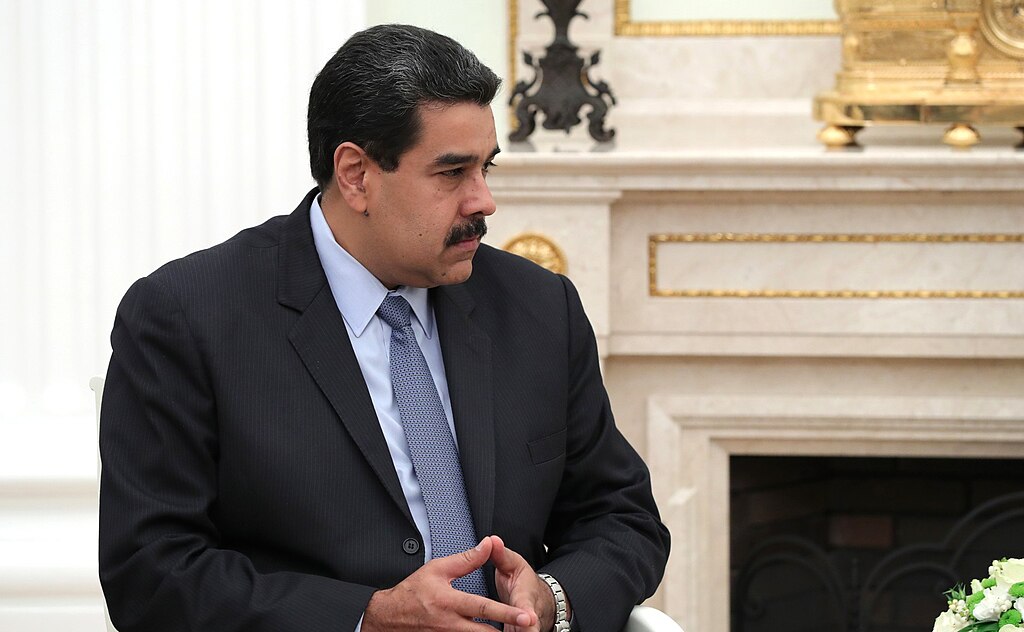
The kidnapping of Maduro is a particularly clear example of how US imperialism is increasingly reliant on military means to achieve its ends. This is because it is an imperialist power in decline, one that is now weaker than it was when it conquered the position of world superpower and therefore out of step with reality.
Imperialism, as a system, is based on unevenness – some economies developed earlier than others, and thus had the means and the need (i.e. to get access to resources and cheap labour for the home economy) to subjugate others. This contradictory unevenness means that the imperialist system is never stable and fixed; the relative size and power of different capitalist economies changes.
Chinese leviathan
As older imperialist powers like the US decline, they also decline in an uneven way. US industry is a shadow of what it was, relative to the world economy, and has been eclipsed by China. But its military remains by far the most powerful in the world. Thus, the US is exploiting this privilege in an attempt to hold back the economic tide of China. The question is, has its industrial base atrophied to such an extent that it cannot make use of the access to resources its military may be able to secure for itself?
In these actions, the US is revealed as a sort of an inverted mirror image of China. The US is using military muscle to wrest immediate imperialist advantages for itself in a way that China simply cannot. China will, in the short term at least, find itself cut out of Venezuelan resources and possibly other Latin American resources and infrastructure as a result of Donald Trump’s much more aggressive policy.
For instance, it may be forced out of control of the ports at either end of the Panama Canal by American pressure on the Panama government, and the US has succeeded in pressuring Argentina to halt the construction of a Chinese astronomical observation base there. It is possible they will also be able to force Argentina to award lithium mining contracts (vital for building batteries) to US firms instead of Chinese.
Unlike America, however, China is not looking for quick wins. It is playing the long game and generally has time on its side. Instead of military muscle, it depends upon the inexorable force of trade, wearing down obstacles like the relentless, gentle flow of water over stones.
This does not mean that China will easily win its Great Game with US imperialism. The relentless pressure of trade wears China down too. China’s industrial leviathan needs to be served by huge markets all over the world. Chinese capitalism is a victim of its own incredible success at developing productive, efficient and high-tech industry. Overproduction has become an acute problem for Chinese capitalism.
Thanks to this overproduction, anti-Chinese tariffs are popping up all over the world, not just in the US. Japan, South Korea, Europe, and many developing countries either have or are in the process of erecting barriers to Chinese exports to protect their own industries. So, the threat of losing even relatively minor markets is a serious one for China.
Nevertheless, as we saw with Trump’s rapidly escalating trade war with China early in his second term, China’s weakness – its reliance on exports – is ultimately more of a strength.
“China has gone from doing nearly no business in the region [Latin America] two decades ago to bilateral trade worth more than $500 billion in 2024.
“Chinese mining companies extract copper from Peru and lithium from Argentina. China’s agricultural conglomerates import lifeline commodities like soybeans from Brazil. Chinese utilities power entire cities. […]
“China has economically displaced the United States in 10 of 12 countries in South America alone, according to research by Francisco Urdinez, an associate professor of political science at the Pontifical Catholic University of Chile. China now engages in more trade, investment and development financing than the United States in most of the region, including Central America.”
There is simply no alternative to trading with China for South American countries, as even Milei, Argentina’s virulently anti-China and pro-Trump president, has found out.
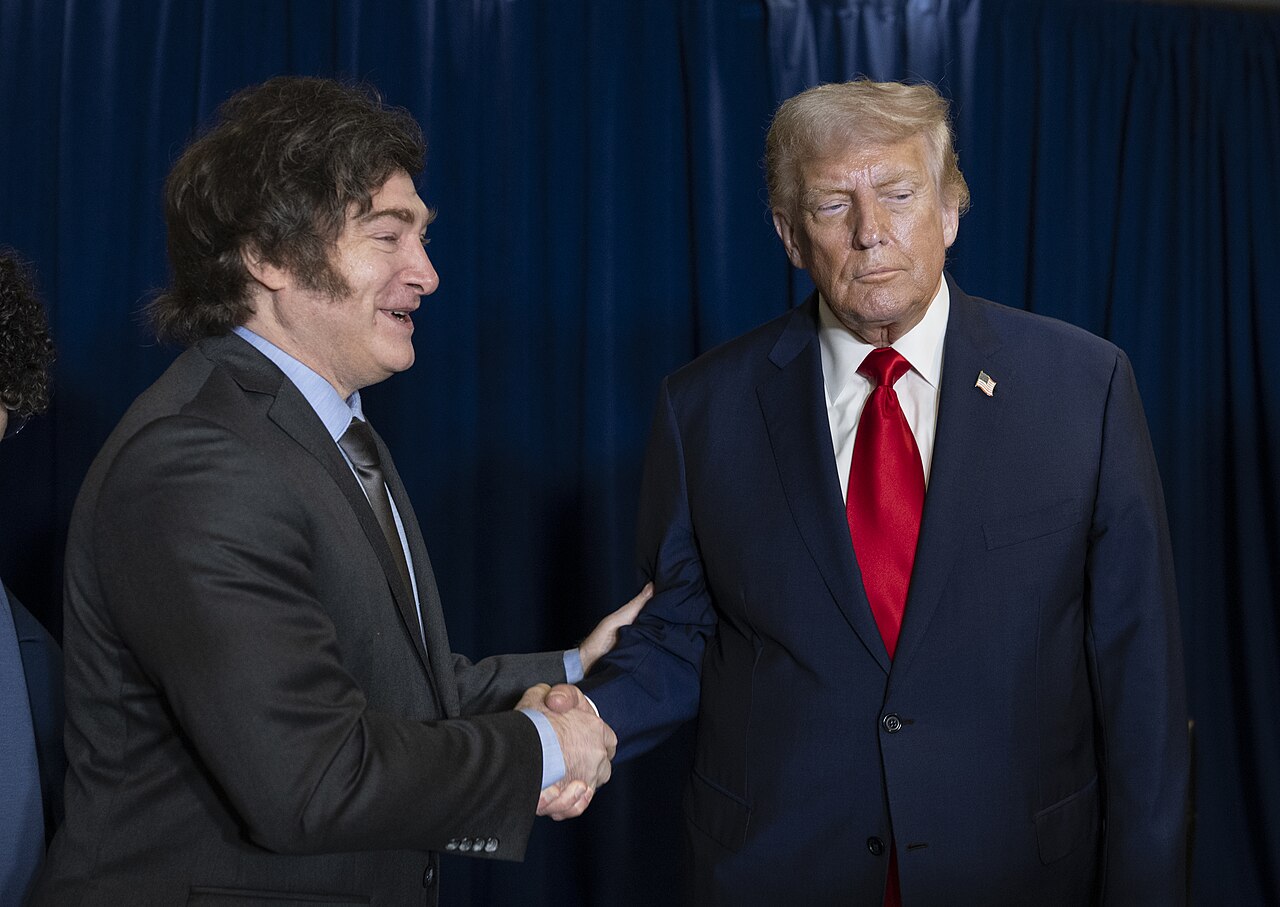
During his election campaign, Milei declared he would never work with ‘communist’ regimes, in which he explicitly included China. Almost immediately after winning the election, he struck another note:
“Milei backtracked on that pledge and agreed to extend the longstanding currency swap agreement with China, securing access to an additional $5 billion […] unsurprisingly, the United States expressed disappointment over Milei’s reversal. In a bid to block the renewal of the currency swap, Treasury Secretary Scott Bessent traveled to Buenos Aires on April 14. His message was pointed: “What we are trying to keep from happening is what has happened on the African continent,” he said, signaling Washington’s concern that Argentina, too, could drift deeper into Beijing’s orbit.
“Bessent reportedly threatened to withdraw the United States’ $20 billion Extended Fund Facility (EFF) loan—Argentina’s 23rd such arrangement with Washington since 1958 and a crucial bailout that preceded the Chinese swap.
“But Milei remained unmoved, opting to proceed with the agreement with Beijing.”
Since then, Bessent has had more success in getting Argentina to take loans from the US and not China, but the point is that this was very difficult to achieve even with a supportive government such as Argentina’s.
Milei has reiterated this position in the wake of Trump’s new campaign for the US to keep out ‘non-hemispheric actors’ in Latin America, stating that despite his approval of the fact that “Trump is redesigning the world order”, “I’m not going to break the trade links with China. In fact, the United States has trade links with China” (Interview with Neura, quoted in Buenos Aires Times).
As well as its domination of trade, China leads the US in terms of aid and credit to the region: “Between 2014 and 2023, for every $1 lent or given in aid by the United States in Latin America and the Caribbean, China provided $3, said Brad Parks, the executive director of AidData.”
This all means that China has, to use a term Trump understands well, a great deal of leverage on South America. The US has enormous military power over the Americas, invests a great deal in it, is ‘next door’ and has a huge Latin population itself, so there is no doubt it can and will cause serious setbacks for Chinese imperialism in South America. But it cannot push China out of the hemisphere and simply take control of all the key infrastructure and resources.
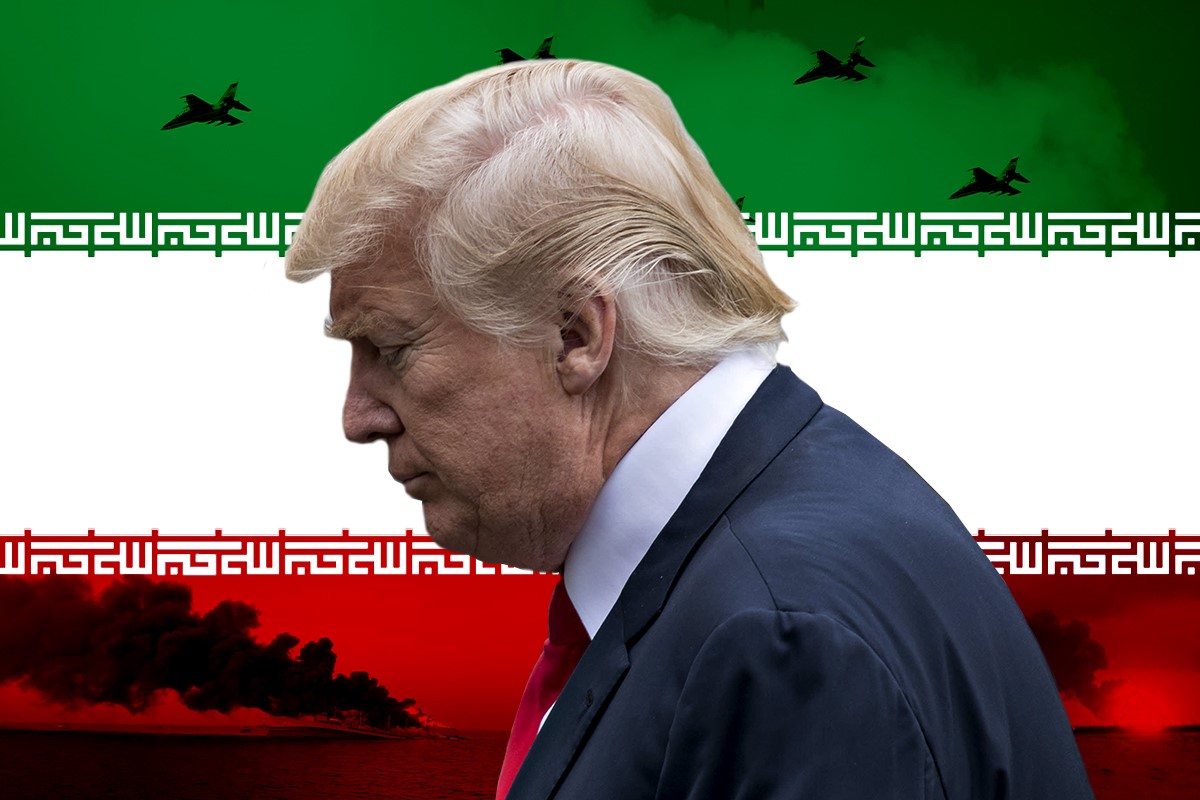
Furthermore, to reduce what is going on to being a simple deal on ‘spheres of influence’ – the notion that the US is planning on controlling the Americas but will cede Asia to China and Russia – is far too simplistic. This can be seen from the fact that last week Trump threatened to bomb Iran because he spies an opportunity to force regime change.
The US is the most powerful imperialist power on the planet. It has military bases all over the world, capital invested on every corner of the planet, and the dollar is the global reserve currency – something Trump is very keen to maintain.
It will not simply retreat to the Americas. In fact, the White House’s 2025 National Security Strategy states that “we must prevent the global, and in some cases even regional, domination of others.” In other words, whilst US imperialism, under Trump, may have given up on the idea of entirely dominating the world, it will do what it can to prevent China from extending its power even in Asia, as this would only enhance China’s power and influence in general, including in Latin America.
The nature of imperialism, as a global system, is inherently anarchic and the relative strength and interests of the various powers are always changing and conflicting, which will constantly undermine any equilibrium that Trump may wish to establish with Russia and China. Even if Trump and the wider US ruling class wanted to ‘leave China alone to its sphere’, China could not afford to let the US exclude it from trading and building infrastructure with the Americas.
Mask off
In this context, what will be the long-term effect of the US’s new approach of combining extreme belligerence with a brazenly arrogant and openly imperialist attitude? It can clearly successfully bully and intimidate Latin American countries, especially with the threat of regime change and naval blockades.
It is as if, in today’s world, everyone has realised imperialist powers don’t need an ideological mask. Who cares if you piss off the poor masses of ‘shithole countries’, as Trump once called them? Who cares if you piss off Europe, which is in deep decline? Will they ever really do anything against the US?
Trump does have a growing coterie of like-minded, supportive politicians in power, such as Milei in Argentina, Kast in Chile, Jeri in Peru, Noboa in Ecuador, Asfura in Honduras, Bukele in El Salvador and Paz in Bolivia. For these politicians, Trump’s overtly imperialist rhetoric is actually welcome.
It is almost certainly not welcome for the masses throughout Latin America however (and the rest of the world, for that matter), including many of those who voted for these right-wing populists.
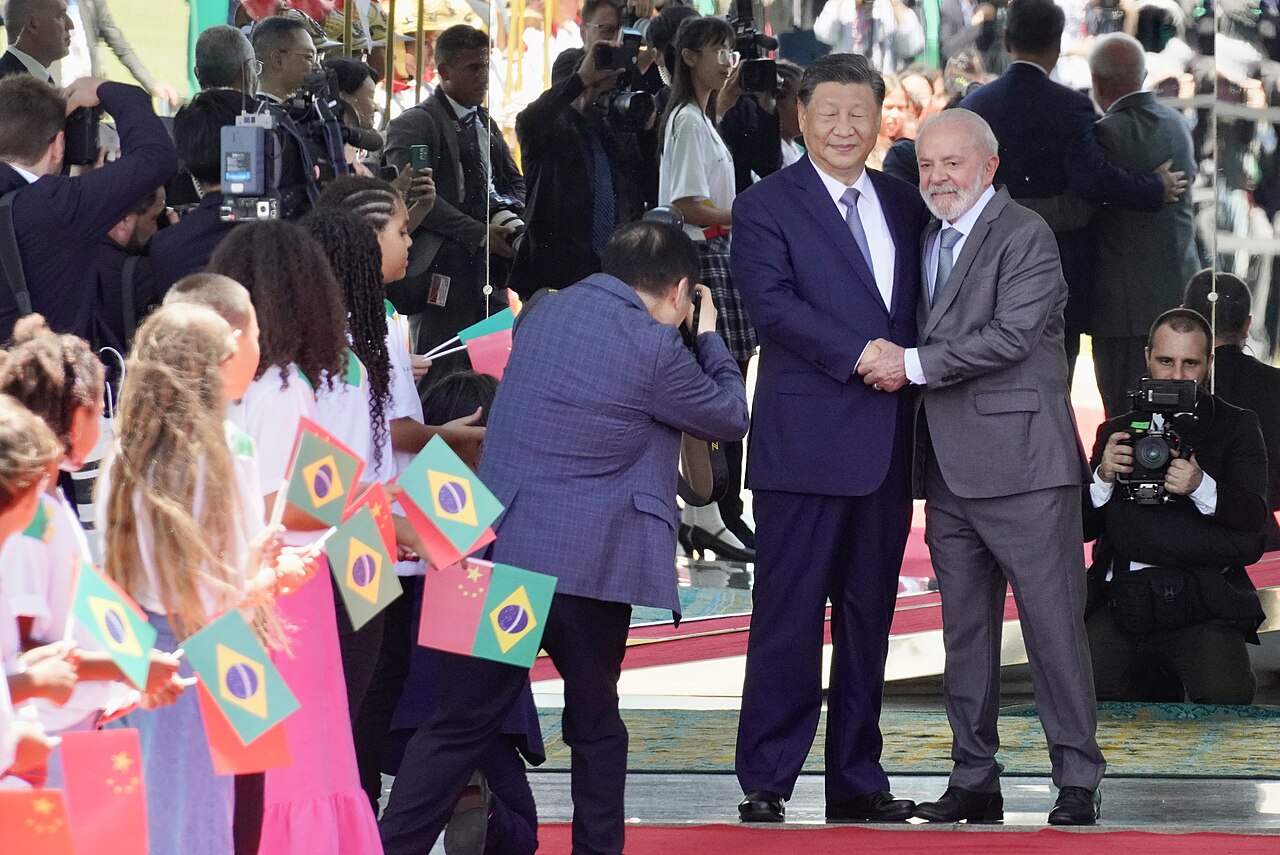
We have seen in Brazil how counterproductive Trump’s bullying can be. After imposing massive tariffs and threatening the Brazilian government for prosecuting the pro-Trump former president Bolsonaro, the Brazilian right wing lost masses of support. They were seen as collaborating with bullying US imperialism. Lula’s government has been strengthened by being seen as standing up to America, and the US ended up backtracking on the punitive tariffs, which were also hurting US companies.
Exactly what the fallout will be, it is too early to say, but it is obvious that naked US bullying is very unpopular in Latin America. And indeed, far beyond Latin America it is having a profound impact on consciousness. Liberal, democratic illusions are being torn down as the reality of world relations under imperialism is exposed: what goes is what serves the plunder of the rich and powerful.
Another American century?
Like those delusional British politicians who think Britain can still be a serious world power, the US seems to have its share of Monroe-doctrine fantasists, as is clear from the White House’s 2025 National Security Strategy:
“We want an America that cherishes its past glories and its heroes, and that looks forward to a new golden age.”
They seem unaware that, unlike in 1823, much of the rest of the Americas are now relatively developed economies with big working classes and a viable alternative power to ally with: China.
What effect would the annexation of Greenland have? To be sure, Denmark and Europe will not fight back; they will capitulate and cede the territory without a fight. But that doesn’t mean it wouldn’t have long-term political effects that undermine US influence. It would certainly push Europe more in the direction of Chinese imperialism. Even Canada is moving in that direction.
Should the US attempt regime change in Cuba, that too would have complex ramifications that cannot be foreseen. Vietnam, an important point of support for the US in South East Asia, a country which balances between US and Chinese imperialism, has very close relations with Cuba. Vietnam has already started to lean more towards China, which makes sense given its proximity and important trade relations. A US attack on Cuba would not be decisive for Vietnam, but it would be another weight tipping the scales in China’s favour.
China is quite successfully, if quietly, using all this chaos emanating from the US (as well as Israel’s US-backed genocide in Gaza), to enhance its soft power. It is constantly chipping away, not only with the artillery of trade, but also politically, by presenting itself as stable, reliable, and non-interfering.
For the foreseeable future, however, China, which only has one overseas military base, is not able to step into the US’ shoes. As events in Venezuela have shown, it is forced to be a bystander even when its own ‘all-weather partners’ (as China classified Venezuela) are attacked – especially when those partners are far from Chinese shores.
Consequently, insofar as US imperialism alienates the world with its actions, which it certainly is doing on a vast scale, it will only push the world capitalist system further into chaos. Under capitalism, there is no alternative to imperialism, wars and economic crises. The entire system is at a dead end. What is needed is a global revolutionary alternative, which is what the Revolutionary Communist International is building.