
The Epstein files give us something unusual. Never before have we had such an insight, albeit partial and uneven, into the inner workings of the capitalist class.
The leaked Panama Papers in 2016 and the Paradise Papers a year later gave us a glimpse. We saw how the world’s capitalists secretly slip their money across borders and onto tiny islands, where they can avoid tax and scrutiny.
Occasionally, we catch sight of the vast revolving door sweeping people between government jobs and the private sector. So common is this practice that no one even tries to keep it a secret. It’s an accepted connection between capitalists and their political representatives.
For a case study, look at Britain. In recent years, the Spycops scandal, the Jimmy Savile case, the ousting of the Liz Truss government, and threats made by serving generals that they would not obey a Corbyn government, have all illuminated the shadowy backrooms inhabited by the ruling class.
But these are individual cases. The significance of the Epstein files is that they reveal the process as a continuous, interconnected whole. They show us the social fabric through which wealth and power move.
Marx and Engels explained in The Communist Manifesto how capitalist society is divided into mutually antagonistic classes, based on their relationship to the means of production. The capitalist class is compelled to exploit the working class in order to make profits and stay competitive in the market. The resulting concentration of fabulous wealth at one pole, and misery at the other, is therefore not a mistake but inherent to the system. Contrary to what the utopian socialists believed, the ruling class could not be convinced to give this up for the advancement of all humanity – in fact they would do whatever was necessary to preserve their rule.
It is in this context of class struggle that Marx and Engels developed their theory of the state. From them, we understand that “the executive of the modern state is but a committee for managing the common affairs of the whole bourgeoisie” (Marx and Engels in The Communist Manifesto). The state is, at bottom, an instrument of class rule and oppression by means of a monopoly on violence: ‘armed bodies of men’ at the service of protecting property relations. And most importantly, therefore, the “the working class cannot simply lay hold of the ready-made state machinery and wield it for its own purposes”, it must “smash it” – it cannot be reformed (Marx in The Civil War in France).
Millions of Epstein files have been released. Millions more have not been. There are inevitably millions that have not even been collected, and more that have been destroyed. And of course, the most sensitive things will never have been recorded at all – whispered conversations and secret meetings that will never see the light of day.
What we see is a dense network of associations. Financiers, royalty, politicians, billionaires, academics, scientists, and many others all meeting, collaborating, opening doors for one another, and closing ranks. The files show us an intricate ruling-class ecosystem, not so much machine-like and conspiratorial, more like a thick, lawless forest. It has its well-trodden paths and regular routes. But it also has darker, more obscure corners, inhabited by all manner of poisonous and dangerous creatures.
From the outside, this can appear both chaotic and coherent at the same time. The files seem to confirm the wildest conspiracy theories of a child-abusing cabal that gathers on private islands to run the world. But simultaneously, the files show grifting, grasping, desperation, and arbitrariness, among Epstein and his associates, which does not align with an all-powerful conspiracy.
Both things can be true. The Epstein class is not drawn together by a prearranged conspiracy, but by ties of mutual self-interest. For all their diverse views, they draw towards a common understanding by a shared class consciousness. Their immense power and wealth forms a protective ring around them, which creates a milieu of impunity, in which the wildest abuses can be perpetrated without repercussion.
The Epstein files give us a closer look at how the ruling class reproduces and maintains itself through its inner relationships and institutions. This system is part of what makes it so resilient as a class. But it is also, as the scandal surrounding Epstein’s exposure has proven, something that can fatally undermine it when a light is shone into its depths.
The billionaires
Epstein was a financier. He was particularly skilled at manipulating currency markets, moving money across borders, and hiding it from tax authorities.
It should therefore come as little surprise that there are a large number of billionaires in the Epstein files. He maintained close contact with many of the richest people in the world. Some of the world’s largest companies, such as Glencore, Apollo Global Management, and Rothschild Group used his services.
The files give us an insight into the world of offshore tax havens – a key part of any billionaire’s life. Epstein’s own island is part of the US Virgin Islands, which has a notorious tax regime. He had connections with bankers all over the world, particularly at Swiss banks such as Rothschild, with their strict secrecy laws.
For the capitalist class, when it comes to money, borders do not matter, taxes are optional, and legality is irrelevant, especially in the era following the collapse of the USSR, the era of so-called globalisation. Over time, a network of institutions for preserving its eye-watering wealth has grown up around the world. Nodal individuals like Epstein help the billionaires to navigate it, in exchange for a cut – one big happy family of bourgeois parasites.
The diplomats
Navigating currency markets, skirting sanctions, and avoiding tax are international affairs. Diplomatic knowledge is therefore valuable currency for financiers like Epstein. It follows that the files are full of diplomatic contacts.
Norwegian names are particularly prominent. This is not by accident. The Norwegian establishment has carefully cultivated its image as a diplomatic powerhouse. Its ambassadors are widely respected. Its expertise is highly sought after.
It has always been the case that the capitalist politicians who specialise in a squeaky clean image are stinking hypocrites. Under capitalism, the rule of law is necessary so that competing capitalists can be confident to invest and trade without being cheated. Around this necessity, illusions in the sanctity and fairness of the law arise, even though in reality it is constantly bent and broken by the rich.
A global division of labour arose in which certain countries, such as the Scandinavian ones, the Netherlands, Belgium, Switzerland, ie. small countries that have little imperialist role to play, specialised in spreading these illusions by means of institutions such as the UN, human rights and international law, talking shops, Nobel prizes etc. They were useful in spreading the appearance of international justice under the American imperialist world order, but their own prosperity always depended on the uglier realities of American imperialism.
The prevalence of diplomats from such countries as Norway in the files is therefore very revealing. As players in the world of international diplomacy and negotiations, they accumulated secrets. For a man like Epstein, those secrets can be traded for favours, monetised for market speculation, or deployed for blackmail and manipulation.
Epstein’s diplomatic contacts reached the top of the White House, to Russian and French ambassadors, to the Council of Europe, and to the British, Saudi, Yemeni, and Indian governments, among many others.
Some of his most important contacts were Israeli overseas operatives, with whom he had joint business ventures and through whom he funded the IDF and Israeli settler organisations.
Through these diplomatic contacts he facilitated imperialism. He partnered with his Israeli contacts to sell security infrastructure and technology to the governments of the Ivory Coast and Mongolia. He teamed up with a billionaire Emirati to take over Nigerian ports. He used connections in Venezuela to speculate with international oil bonds.
He sat on the overlapping point between the export of finance capital and international diplomacy. He could take a cut as a ‘fixer’, but he also became quite rich just off the favours others were willing to render to nurture their friendship with him. The files reveal to us what modern imperialism looks like in the flesh – not operating through boots on the ground, but through bankers and ambassadors.
The statesmen
Epstein’s network reached beyond the diplomats into the heart of state institutions and intelligence services around the world.
The ruling class, through its state apparatus, uses people like Epstein to do their dirty work. In return, they are protected. When Epstein was revealed to be behind the biggest Ponzi scheme in US history in the late 1980s, he mysteriously avoided prosecution. When he was caught sex-trafficking children in 2008, he got away with a slap on the wrist because the US Attorney was told he “belonged to intelligence”.
To the extent that he “belonged to intelligence”, Epstein did not work exclusively for any particular state. Like his billionaire clients, he wasn’t particularly interested in national borders except as a means of pitting people against each other, creating competition, and profiting from it.
This is why he was friends with right-wing ideologues like Steve Bannon. He was a cheerleader for British culture-war thug Tommy Robinson, and Brexit politicians like Boris Johnson and Nigel Farage. He saw them as creating money-making opportunities for the world ruling class.
As he wrote in an email to billionaire Peter Thiel, referring to Brexit, he noted what a wonderful thing it was for the likes of him, who could sweep in and asset strip the country:
“return to tribalism, counter to globalization. Amazing new alliances. You and I both agreed zero interest rates were too high, and as i said in your office. finding things on their way to collapse , was much easier than finding the next bargain”.
Remarks he shared in an email to former Israeli prime minister Ehud Barak go even further. They are callously gleeful in their embrace of human tragedy for the purpose of money making: “with civil unrest exploding in ukraine syria, somolia [sic], libya, and the desperation of those in power, isn’t this perfect for you.”
Ehud Barak replied soberly: “You’re right [in] a way. But not simple to transform it into a cash flow.”
There were no political principles involved here. It was just business. Epstein could maintain friendly relations with Bannon, and at the same time, a ‘left’ academic like Noam Chomsky. ‘Liberal’ or ‘conservative’; religious or atheist, it didn’t matter, as long as there was money to be made.
What the files demonstrate is how the state is connected to the ruling class, through fixers and middlemen like Epstein. Under capitalism there are objective forces and pressures of the market, and competing state interests. But these don’t just float above society in a disembodied way. Inevitably they produce individuals who give voice to them, channel them, and of course make their own money off them. Epstein was such a person, opportunistically catching the currents of capitalism and world relations.
None of this was done according to a complex conspiratorial plan – that much is clear from the files. Epstein was simply pursuing his own narrow interests of money, prestige and pleasure through the networks he built up. This is how the entire capitalist class operates – each pursuing his own individual interests. In some cases that involves direct corruption of state officials – Epstein was certainly involved in that. But in other cases the corruption is indirect. The outward forms of a democratic state are preserved, but through the sum total of wealthy and powerful individuals pursuing their chaotic and personal interests, the state is moulded to work in the interests of the ruling class as a whole.
The models
State intelligence and international finance is not just about cutting deals. It’s about trading favours and other means of leverage. In that sense, polished politicians and gleaming billionaires are only one step removed from vicious gangsters and depraved criminals. Epstein stood at that intersection.
The shared history of the state and organised crime is long and repulsive, with both using sex, honeytraps, and compromising candid photos to pressure witnesses, turn spies, or for simple extortion.
J Edgar Hoover, the first ever director of the FBI, is alleged to have been involved in such activities alongside gangsters of the National Crime Syndicate. The lawyer Roy Cohn, who had connections to the Reagans, the Clintons, the Trumps, CIA directors, and US Senators, was also linked to people who ran paedophile sex rings.
Sex and blackmail have long been currency among criminals, state agents, and billionaire fixers. This is the real morality of those who preach ‘family values’ and ‘decency’.
In Epstein’s hands, this reached industrial proportions. His sex trafficking operation spanned the globe and acquired a respectable veneer through the modelling industry. The files are full of modelling-agency bosses, modelling scouts, and models themselves.
Finance and banking contacts often sent Epstein new modelling agencies he could invest in or take over. He was particularly interested in Eastern Europe, where the crisis following the fall of the Soviet Union left vulnerable women desperate for work.
It is somewhat inevitable for a class of competing individuals, always looking to stab each other in the back, to find themselves bound together by seduction and blackmail.
The academics and the tech titans
For the Epstein class, young women and girls are one type of currency. Another is the cutting-edge intellectual environment around academia and tech. The single largest group of people in the files are academics, who Epstein used to embellish his ruling class network.
Many of Epstein’s first connections to the academic world came via Ghislaine Maxwell’s father, Robert Maxwell, who was a pioneer of subscription journals that locked scientific research behind paywalls (as well as an intelligence asset for the Israeli Mossad).
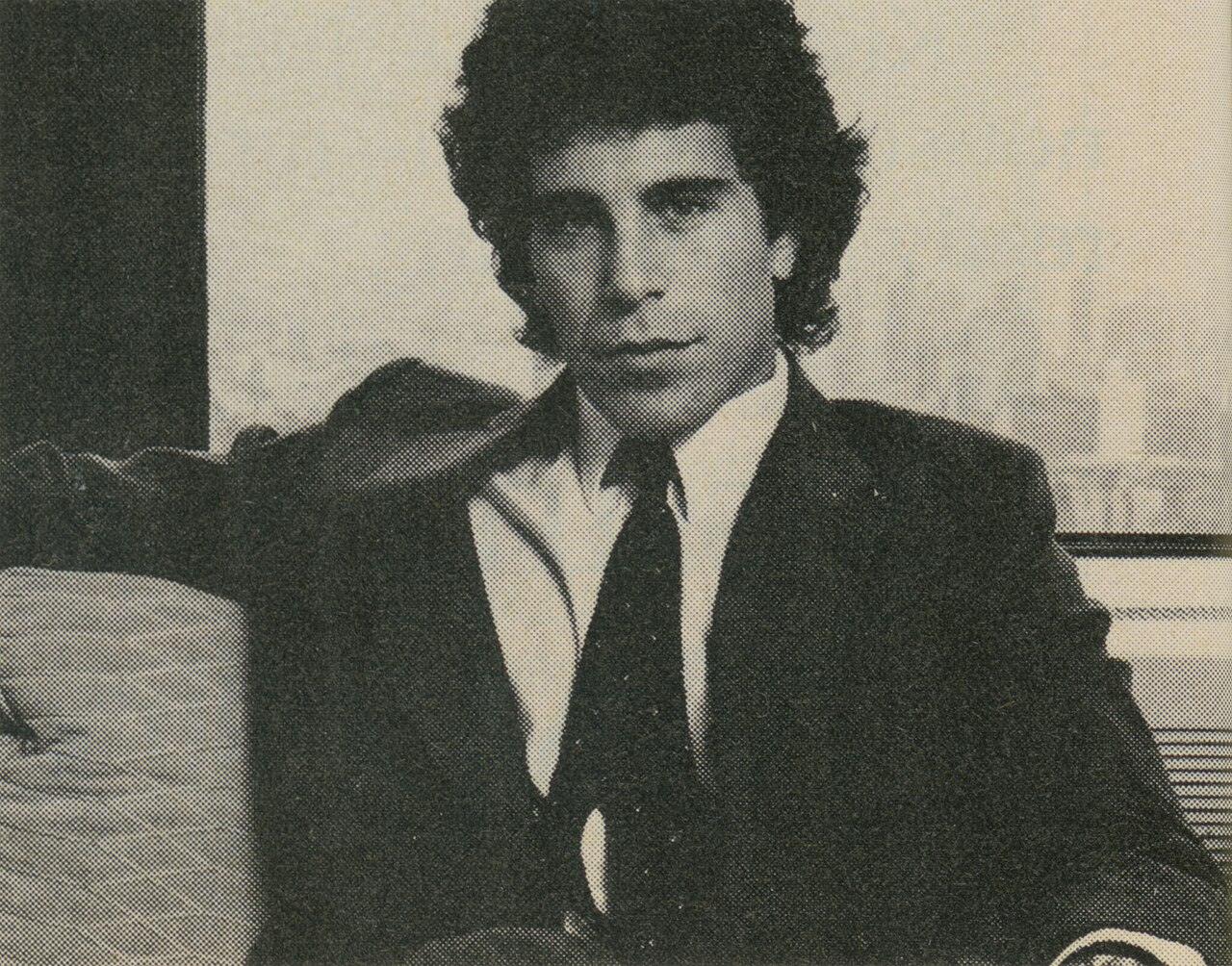
Epstein was particularly interested in academics and individuals working on the fringes, especially when it came to tech. He was, for example, close to those scientists who first began to develop artificial intelligence. He was closely linked with the bosses of Microsoft, Google, Meta, and X. This gave him access to valuable information about potential investments, as well as interesting people to raise the social standing of his parties, and for the general influence that reputable scientists can wield.
He funded research at Ivy League universities in the US and was made a visiting fellow at Harvard. This alone shines a light on the nature of funding at academic institutions. They are so desperate for cash that they accept money from any rich private individual with a shady background, without asking too many questions.
It also illuminates the fact that the most prominent ideas in any given society are the ideas of the ruling class. Wealthy individuals with connections to international capitalists and the state are able to fund research that interests them. And the files show that, among his interests, Epstein was an enthusiast for eugenics. The Epstein files illustrate how the valve connecting academics with the rest of the ruling class really works.
Epstein was not an evil genius. He was a mediocre man from an unremarkable background who stumbled and charmed his way into the heart of the world ruling class. The psychologist Steven Pinker, one of the many scientists who crowded round Epstein, described him as an “intellectual imposter” who would “abruptly change the subject” and “dismiss an observation with an adolescent wisecrack”.
Maybe this was, in part, Pinker trying to restore his own reputation. But the evidence seems to be that Epstein, in his thinking and writing, was lazy and arrogant. It is doubtful if any of these scientists told him as much. Epstein must have sensed his own mediocrity, and took comfort in surrounding himself with intellectual sycophants to mask that void within himself.
Burn it to the ground
Being a mediocrity, he collected people, but not strategically. Like the rest of his class, he was a short-sighted, grasping opportunist. He speculated in the currency markets, diplomatic and state secrets, sexual depravity, and intellectual curiosity. He made his investments in markets and people without knowing whether they would pay off, but if he built his portfolio wide enough he knew he would see returns.
Epstein ended up getting too powerful for his own good. His network and knowledge was too wide, he became complacent, arrogant and brazen, hence his downfall. But the capitalist system cannot survive without people like Epstein. The real question is who is playing this role now? Because of necessity, there will always be individuals filling the gap in the market he once held.
The files give us a view of how the ruling class rules. It uses money, diplomacy, intelligence services, organised crime, and universities to preserve its wealth and power. Every part of the system is linked by a thousand threads to every other part. The state, the media, the judiciary, all the organisms of capitalist society that purport to provide ‘checks and balances’ are, in reality, as much a part of this corrupt and rotting system. It is a nightmarish black expanse, almost impossible to penetrate.
In an article for Pravda in 1918 titled ‘Democracy’ and Dictatorship, Lenin articulated a profound theoretical insight. Even the most democratic society, with constituent assemblies and general elections, remains a dictatorship of capital as long as the bourgeoisie rules. That’s because it’s their system, no matter how many ‘democratic’ niceties are introduced. There are 1001 tricks to avoid subjecting capital to democratic control, and their system is designed to accommodate them all. What Lenin explained in theory, the Epstein files prove in practice.
Looking at this there is one inescapable conclusion. This forest cannot be reformed. It is poisoned from the roots upwards. Cutting back a few trees here, or planting a few flowers there, will make no fundamental difference. The whole thing, the entire ruling class and its system, must be burned to the ground.