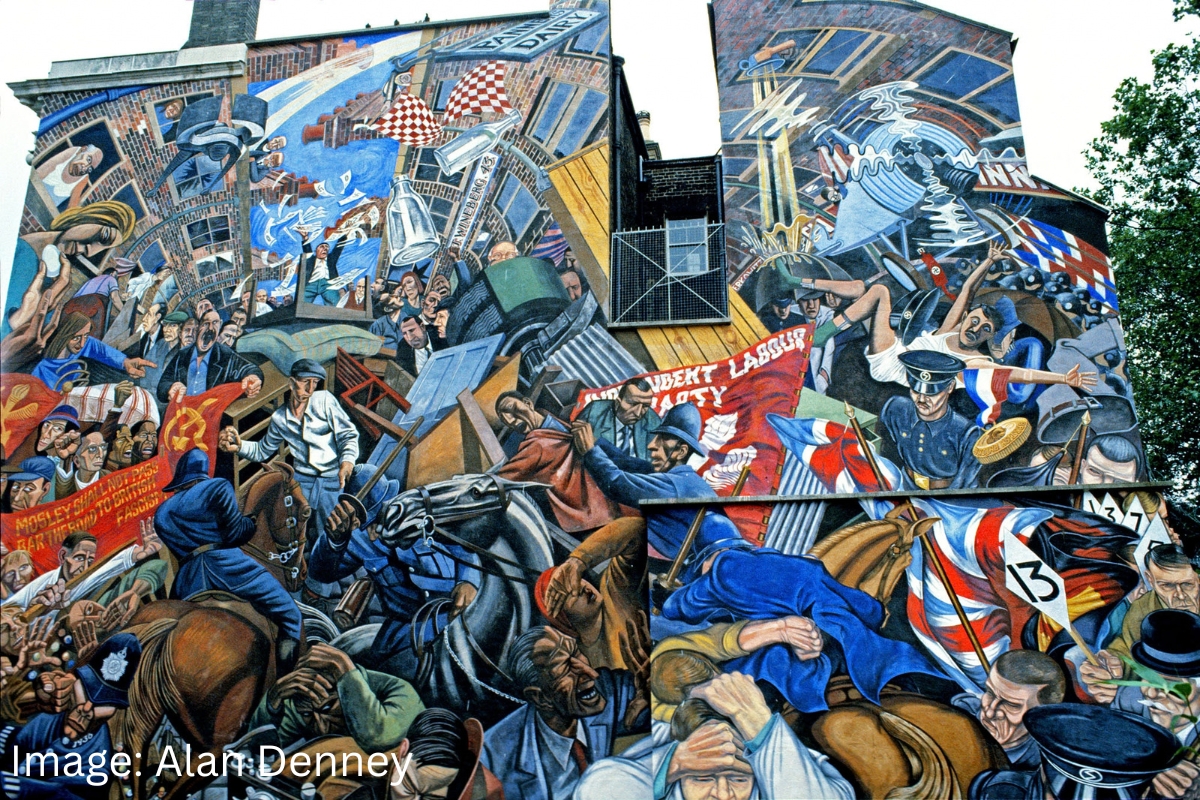
Ninety years ago, on the streets of London’s East End, hundreds of thousands of workers and young people hammered the British fascists and the police who were protecting them.
The story of the Battle of Cable Street, whose 90th anniversary is 4 October 2026, has been told many times, and should be studied by everyone who wants to fight the far right today.
But there is one part of the story that is often missed: not everybody on the left wanted to fight the fascists that day.
In fact, lots of people who considered themselves left-wing told people to stay away from the anti-fascist demonstration. When the moment came to seriously confront the fascists, they called for demobilisation.
Looking back, it can be hard to understand or accept that kind of weakness from people who called themselves socialists. It is easier to remember the heroes of Cable Street than to ask who counselled caution, who urged people to go home, and who stood aside.
But we should have the courage to confront history head-on. We should celebrate those who fought the fascists. But we should also ask: who told people not to fight?
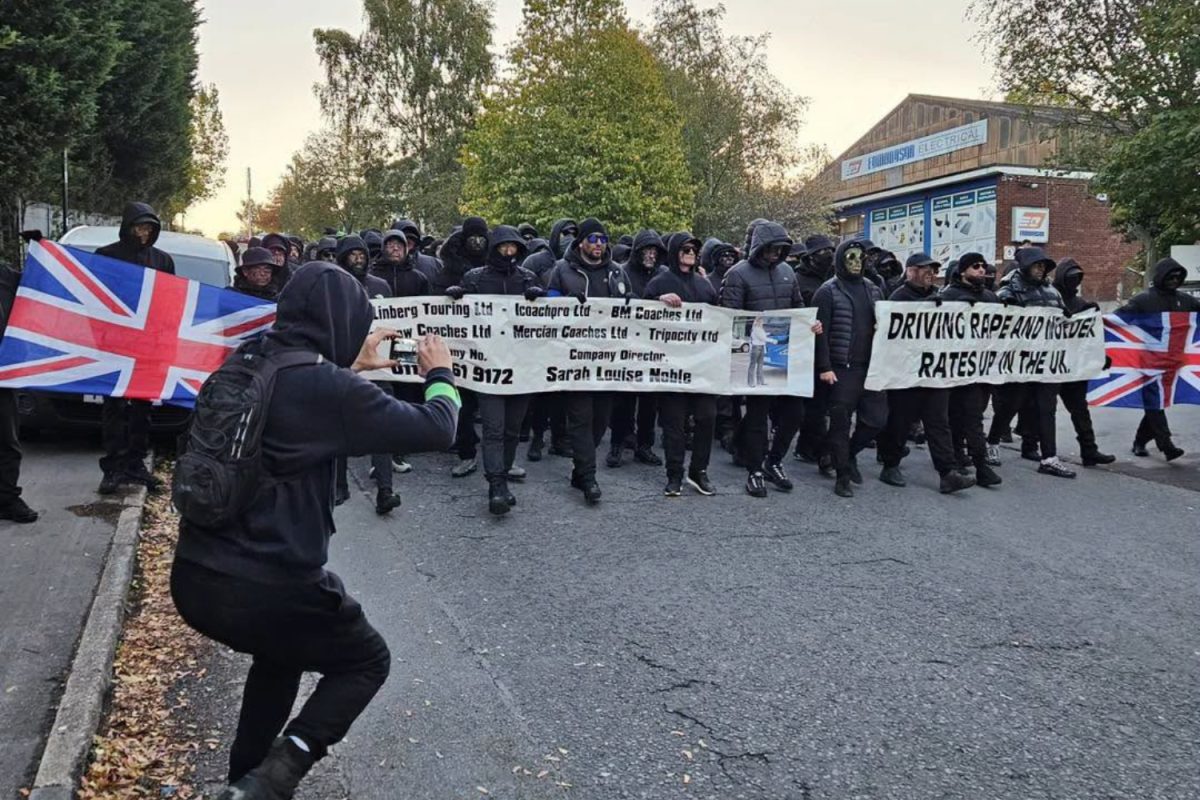
Because then another question follows. When the far right takes to the streets today, ninety years later, who will stand and fight, and who will tell us to stay at home?
The failure of the petition
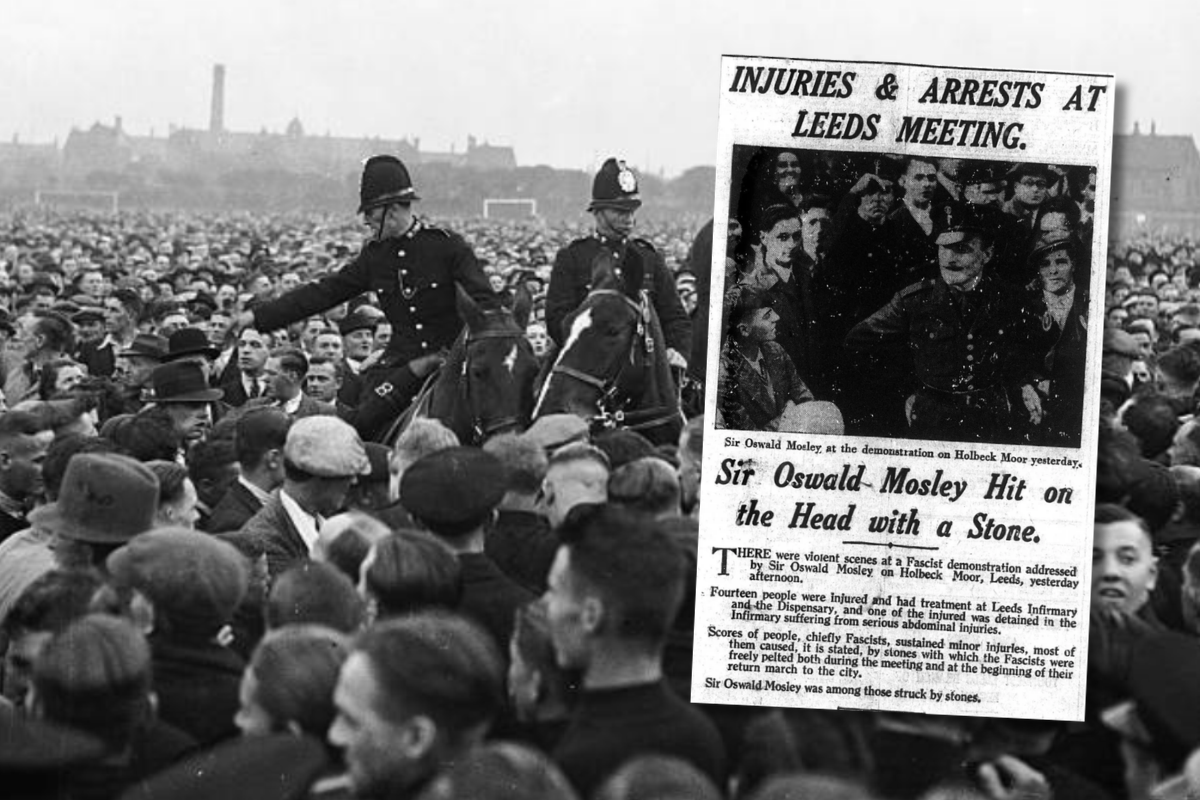
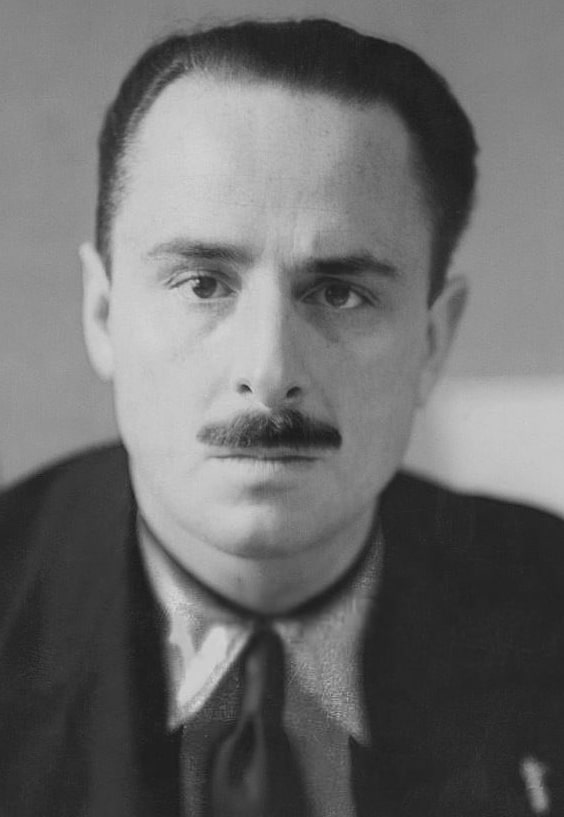
In September 1936 the fascists announced their plan to march through the East End of London. Oswald Mosley and his British Union of Fascists intended to deliberately provoke the local Jewish population.
A petition to the Home Secretary was organised, asking him to stop the march. It was a polite, respectable appeal for peace, harmony, and goodwill.
One hundred thousand people signed this petition. A delegation headed by James Hall, Labour MP for Whitechapel and St George’s, took it to the Home Office. With him went the secretary of the London Trades Council, a representative of the Jewish People’s Council, and Father John Groser, an Anglican priest and member of the Independent Labour Party.
In addition, the Labour mayors of Stepney, Bethnal Green, Hackney, Shoreditch, and Poplar all visited the Home Office to plead with the government.
The Labour MP for Bow and Bromley, George Lansbury, contributed weakly to the effort. He wrote to the Home Secretary, not asking him to ban the march, but simply to reroute it through a less “congested” area.
The Home Secretary ignored Lansbury and the mayors, and refused outright to meet the petitioners. He sent an underling to tell them bluntly that he would not ban the fascist march.
“On the contrary”, recalled the Marxist Ted Grant who participated in the Battle, “[the Home Secretary] sought to facilitate it in every way. Ten thousand foot and mounted police drawn from all over London and the provinces were mobilised to protect Mosley…The weight of the state was brought to bear to protect the blackshirts in the teeth of the opposition of the London working class.”
The movement splits
The respectable appeal to a Knight-of-the-Realm home secretary had failed. When considering what to do next, the movement split.
For some, they felt they had tried their best, but there was nothing more to be done. The fascists must be allowed to march because the authorities had said so. The working-class, heavily Jewish population of the East End should remain peaceful and respectable, and hope for the best.
Others came to the opposite conclusion. If the government and the police were willing to put the rights of fascists to march ahead of the rights of East End workers to safety, then the workers would have to take matters into their own hands.
There was a split between those who believed that fighting fascism should remain respectable, orderly, and within limits laid down by the authorities; and those who would not wait for permission from the establishment to protect themselves, their families, their homes, and their neighbours. The former talked about opposing fascism; the latter actually did it.
The fighters
The call to meet the fascists on the streets came from the Independent Labour Party (ILP). The ILP was not a large organisation, with only a few thousand members. It had some Trotskyist influence within it, though Trotsky himself had advised his followers to leave the party earlier in 1936, due to the sectarianism of its leaders.
But whatever its weaknesses, it led the call to action. The East London Advertiser described the proposed counter-demonstration as “the ILP demonstration against the fascists”. The front page of the Star, announced the “ILP Call to the Workers”.
The ILP led with more than just words. Father John Groser was a leading ILP member, an Anglican priest, and one of the Home Secretary’s petitioners. But he moved rapidly from constitutionalism to confrontation. He was at the forefront of the Battle of Cable Street, and had his nose broken by police batons as he held the line against the forces of fascism and the state.
Alongside the ILP stood the Ex-Servicemen’s Movement Against Fascism, made up of mostly Jewish First World War veterans. They had applied for permission to hold a counter-demonstration even before the petition was handed in, but had been refused. They resolved to march anyway, with or without police authorisation.
Many other working-class Jewish organisations joined the calls for a mass mobilisation against the fascists. The Jewish People’s Council was the umbrella organisation, which comprised the Workers’ Circle and the Jewish Councils of Action, among others.
In addition, thousands upon thousands of rank-and-file trade unionists and Communist Party members surged into the streets to oppose the fascists. The workers of East London blocked the streets with demonstrations and barricades, to defend themselves against Mosley and his police protectors.
The cowards
But there were those who argued against holding a counter-demonstration to stop the fascists. They were ready to give up as soon as their polite constitutional efforts had failed. Many of these respectable ladies and gentlemen were the so-called ‘leaders’ of the East End workers.
Labour MP George Lansbury, for example, said, “What I want is to maintain peace and order and I advise those people who are opposed to Fascism to keep away from the demonstration” (our emphasis).
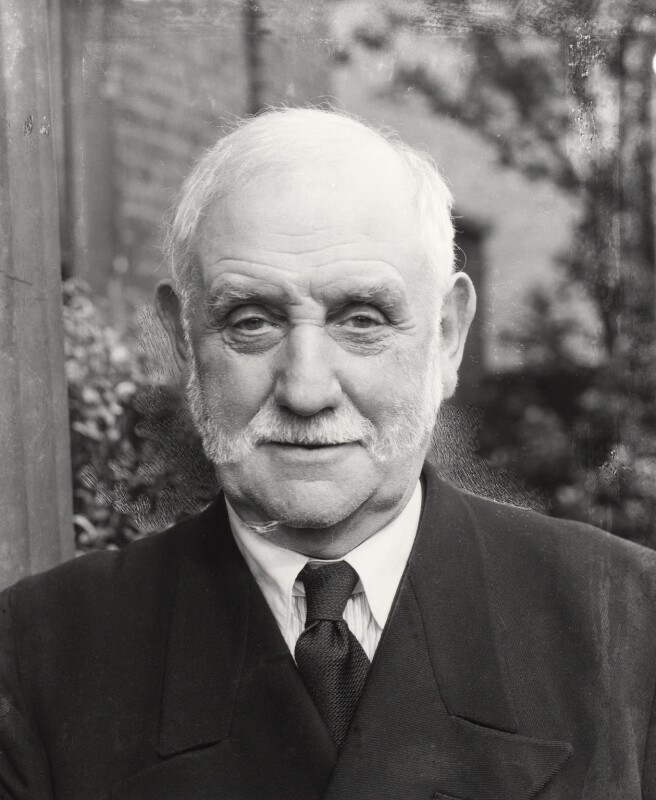
He was joined by the leader of the five local Labour mayors. Helena Roberts, Mayor of Stepney, wrote in the East London Advertiser the day before the demonstration: “I appeal to all East Londoners most earnestly to stay away” (our emphasis).
The official newspaper of the labour movement, the Daily Herald, approved of these appeals to hide from the fascists. Lansbury and Roberts were giving “sound advice”, it printed.
The official leaders of the Jewish community were no better. The well-heeled members of the Board of Deputies of British Jews, and the respectable editors of the Jewish Chronicle, insisted that working-class Jews should simply allow Mosley to march his blackshirts through East London without any physical opposition.
Meanwhile, the national leadership of the trade union movement remained eerily silent about the whole thing.
The leadership of the Communist Party (CP) initially had little interest in physical opposition to Mosley. They wanted instead to focus on a rally in solidarity with Republican Spain elsewhere in London on the same day.
The CP leaders were less interested in the real mood among the working class than they were in sucking up to the ‘respectable’ leaders of the labour movement. This was Stalin’s instruction from Moscow. His ‘popular front’ policies aimed to win influence at the top of the labour movement rather than build a revolutionary movement among the workers. As we have seen, those labour movement leaders were not keen on confronting the fascists in the streets, and the CP leadership was correspondingly lukewarm.
It was only under enormous pressure and excellent organising from rank-and-file party members that the leadership of the CP changed tack at the last minute. They redirected their forces towards Cable Street to counter Mosley and his thugs.
Unfortunately, after the Battle of Cable Street, the CP leaders turned back to the Stalinist policy. As Ted Grant later explained:
“[A]fter 1936 this militant policy of the Communist Party changed and they now avoided any counter-action against the fascists on the wide and militant scale witnessed before. With the coming of Hitler to power the Communist Parties throughout the world had degenerated into nothing but instruments of Russian foreign policy, and their activities reflected this.
“In their efforts to placate those Tories and Liberals who favoured an alliance with Stalin, the Communist Party made every endeavour to paint itself as just another party of respectable and law-abiding citizens.
“To take militant action against the fascists would offend the new-found Tory and Liberal “friends” of the Stalinist party. The activities and provocations of the fascists now went unheeded; counter-demonstrations and actions of the workers against fascism were no longer organised. The former policy of militant action was replaced by appeals and pleadings to the state to take measures against the fascists.
“Just prior to the war, a monster rally of blackshirts, imported from all over the country into London for the purpose, gathered at Earl’s Court to hear Mosley. On that day the Young Communist League of London organised a ramble in the countryside! […] Demonstrating against the blackshirt rally outside Earl’s Court were only the Trotskyists and a small number of anti-fascist militants. Of the Communist Party there was no sign.”
But in October 1936, despite the timidity of the labour and Jewish leaders, the working class picked up the gauntlet thrown down by Mosley and the Home Secretary. The response was magnificent. Hundreds of thousands of local people – socialists, communists, trade unionists, Jews, and Christians – ignored the cowardice of their leaders, surged into the streets, and crushed the fascists and their police protectors.
What does this tell us about today?
Ted Grant wrote that the “united action of the workers at Cable Street demonstrated anew the lesson: only vigorous counter-action hinders the growth of the menace of fascism”.
What follows is that we should be wary of anyone telling us to fight the far right with appeals to peace, harmony, and goodwill. That kind of liberal pacifism will get us nowhere.
Nor should we rely on the government. In 1936 Britain had a Tory Prime Minister. He wasn’t a fascist himself but he did nothing to stop the fascists, in fact he tried to facilitate them. In 2026 we have a Labour prime minister. He is not far-right himself, but through his policies attacking working-class people, and by tail-ending far-right rhetoric on immigration, he is facilitating the far right’s growth. Ruling-class politicians of any party won’t help us. We don’t ask the arsonist to put out the fire.
We should also be wary of so-called community and left ‘leaders’. Just because they occupy leading positions doesn’t mean they will act in the best interests of the working class, as Cable Street proved. Their leading positions can expose them to all the pressures of ‘respectable’ society and constitutional cretinism. Weakness and compromise follow.
Have the lessons been learned?
We should ask whether those organising the official celebrations of the 90th anniversary of Cable Street have fully learned these lessons.
The Board of Deputies of British Jews, which opposed the anti-fascist demonstration, has organised several events to celebrate the anniversary of its cowardice. One of its offerings is a “video installation [that] reimagines the Battle of Cable Street through the movement of bird murmurations.” It seems unlikely the most important lessons will be drawn out.
Elsewhere, one leaflet promoted by the Communist Party of Britain, the main successor of the old CPGB, encourages people to come to the celebrations to “stand with the RNLI [lifeboat] volunteers” because we need to go “beyond politics” to stand with people who “show compassion”. The line of its newspaper, the Morning Star, seems to be to appeal to the government to stop the far right.
Unite the Union, meanwhile, is marking the anniversary with a gig in East London. “DJs curated by Sports Banger and King Alpha Sound System will be performing at the Cable Street 90 event”, says the union’s press release.
It continues, “Jonny Banger, of Sports Banger, said: ‘Fascists hate dancing. That’s why we are honoured to be at Cable Street 90 – united in the spirit of rave and resistance. Join us in solidarity for a proper East End knees-up and put fascism back in the bin.’”
“Fascists hate dancing. That’s why we are honoured to be at Cable Street 90 – united in the spirit of rave and resistance. Join us in solidarity for a proper East End knees-up and put fascism back in the bin” – Jonny Banger
Saturday 3 October, 8pm til late at Kachette in… pic.twitter.com/DPFmiIwxuk
— Unite For A Workers’ Economy (@UniteEconomy) September 22, 2026
With such promotional material, we could be forgiven for being unsure whether the real lessons from Cable Street have been learned. If they haven’t, then the wide array of faith, community, trade union, SWP, and CP leaders that have been assembled to support the anniversary celebrations would be at risk of making the same mistakes as their forebears ninety years ago.
What do the communists do?
To fight the far right we need to base ourselves on the real mood among the working class, which today is an uncompromising one of anger at the system and a rejection of the entire political establishment.
It’s from that mood – not vague moralism, cautious constitutionalism, video installations, or raves – that mass mobilisations against the far right will come. And it is among that radicalised layer of workers and young people that revolutionary ideas will take root and acquire material force.
Ultimately those ideas are what we need to uproot and overturn the capitalist system, in whose crises and decline the far right festers. Giving a coherent expression to the radicalised mood, and connecting it with a revolutionary programme, is the central task of those who want to fight the far right today.