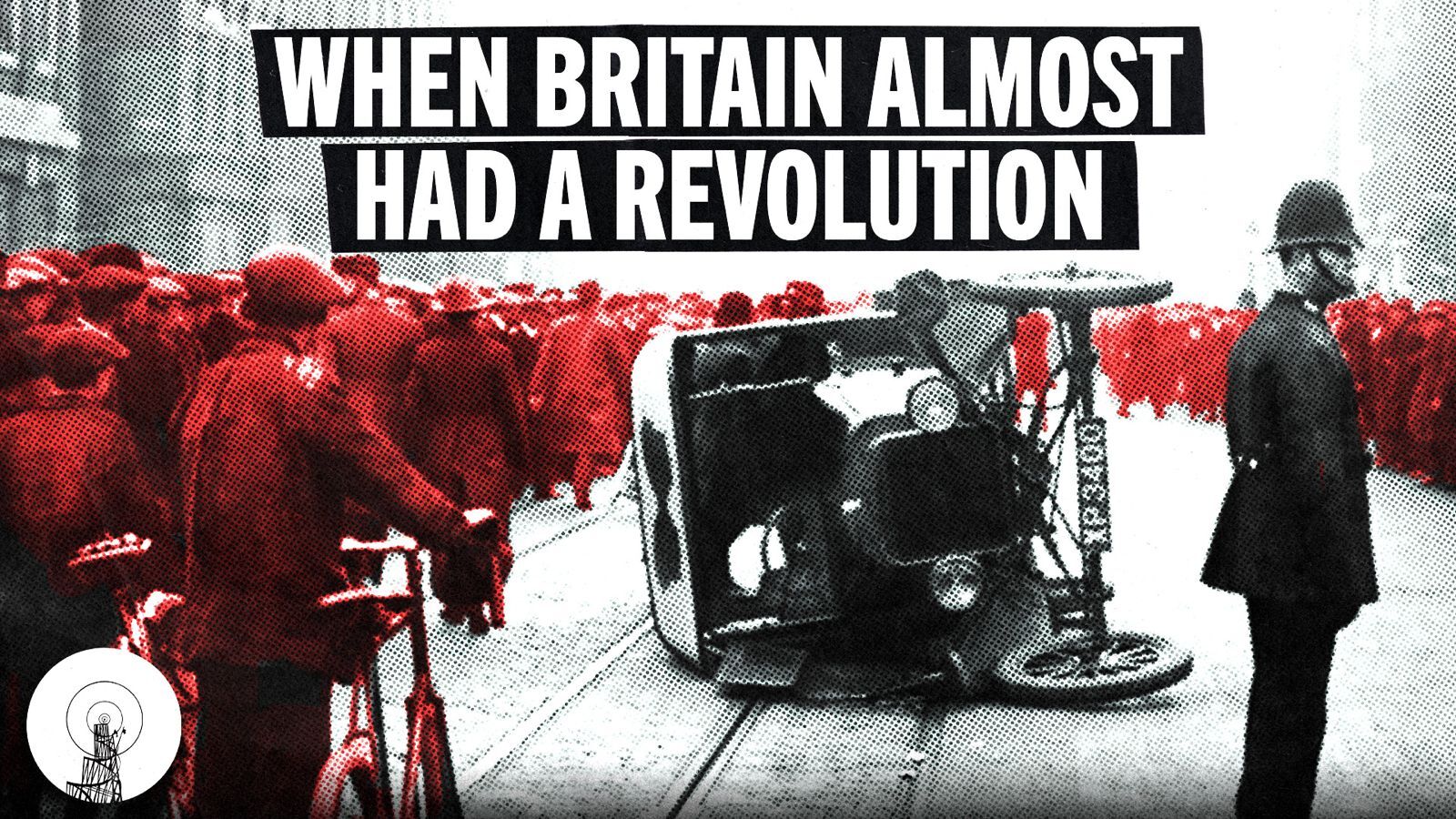

A stereotype holds that British workers have always been conservative and averse to radical class struggle. But a century ago, they waged a general strike that reached revolutionary proportions, threatening the very foundations of capitalist society.
The Guardian newspaper declared on 10 May 1926: “It is just a week since Civil War was declared in this country. It is not a war of arms; it is not yet even a war of tempers; it is a trial of strength.”
But the strike ended suddenly after nine days, at its peak. What happened?
Shamefully, little has been written to mark the centenary of the 1926 general strike, and the accounts that do exist completely misrepresent it in various ways.
View this post on Instagram
Right-wing historians say the unions were simply a ‘boil that needed lancing’ and the workers’ case was a hopeless one (despite the terror the strike struck into the hearts of the establishment at the time).
Meanwhile, some left-wingers deny that the workers were actually defeated! Which rather raises the question of why they were forced to accept brutal wage cuts, lengthened hours and targeted sackings, leading to a whole period of paralysis on the industrial front.
Perhaps the most scandalous takes come from the inheritors of the right-wing trade union leaders who led the strike to defeat. For instance, Paul Nowak, General Secretary of the Trades Union Congress, states in his 100-year retrospective:
“Some have argued the defeat was rooted in the TUC’s failure to properly prepare for the strike and prosecute it with a view to bringing down the government. But I think it is fair to posit that the leadership of the TUC, our unions and – more importantly – the three million workers who answered the call to action were motivated by a desire to bring ministers and mine owners back to the negotiating table. Their goal was to win a fair deal for the miners, not overthrow the government or usurp parliamentary democracy. The General Strike was a moment of solidarity, not revolution.”
This ‘strategy’ of holding the strike securely within ‘safe’ bounds for capitalism is precisely what led to its defeat in the form of a rotten ‘deal’ negotiated over the heads of the workers on the picket lines, which imposed precisely the cuts and attacks they had walked out over!
The real story of the 1926 General Strike reveals a tragic failure of leadership. Despite the immense power and courage of the British workers – who paralysed the country, established their own embryonic seats of power and even developed a rival press – they were ultimately sold out by the trade union leadership.
This major episode in the British and world class struggle is full of lessons for class fighters today, at a time when the capitalist system is one more in an historic crisis and trying to force ordinary people to shoulder the burden.
Tune in to the latest episode of Spectre of Communism below, where Ben Gliniecki – General Secretary of the Revolutionary Communist Party and author of A Communist History of the British General Strike – sets the record straight.
Reading list
A Communist History of the British General Strike – Ben Gliniecki
Accounts critiqued
The 1926 General Strike: revolutionary potential, reformist betrayal, and the lessons for today – Dylan Murphy
How the 1926 General Strike shaped trade union solidarity – ASLEF General Secretary David Calfe
“Their Greatest Effort Ever”: The British General Strike at 100 – Cal Winslow
General Strike was ‘the boil that needed lancing’ – BBC (citing David Torrance, author of The Edge of Revolution: The General Strike that Shook Britain)
Reflections on the General Strike, 100 years on – Paul Nowak, General Secretary of the Trades Union Congress