What is currently happening in Cuba and Venezuela is of interest to communists and anti-imperialist fighters all over the world.
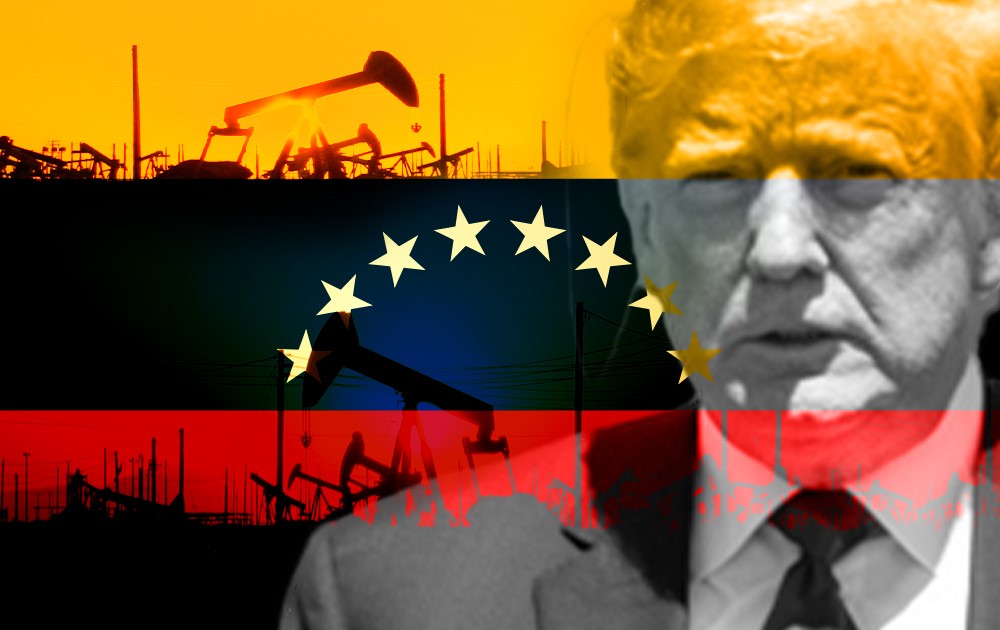
The US military aggression against Venezuela on 3 January this year, with the kidnapping of president Nicolás Maduro and Cilia Flores, has left the Cuban Revolution even more isolated.
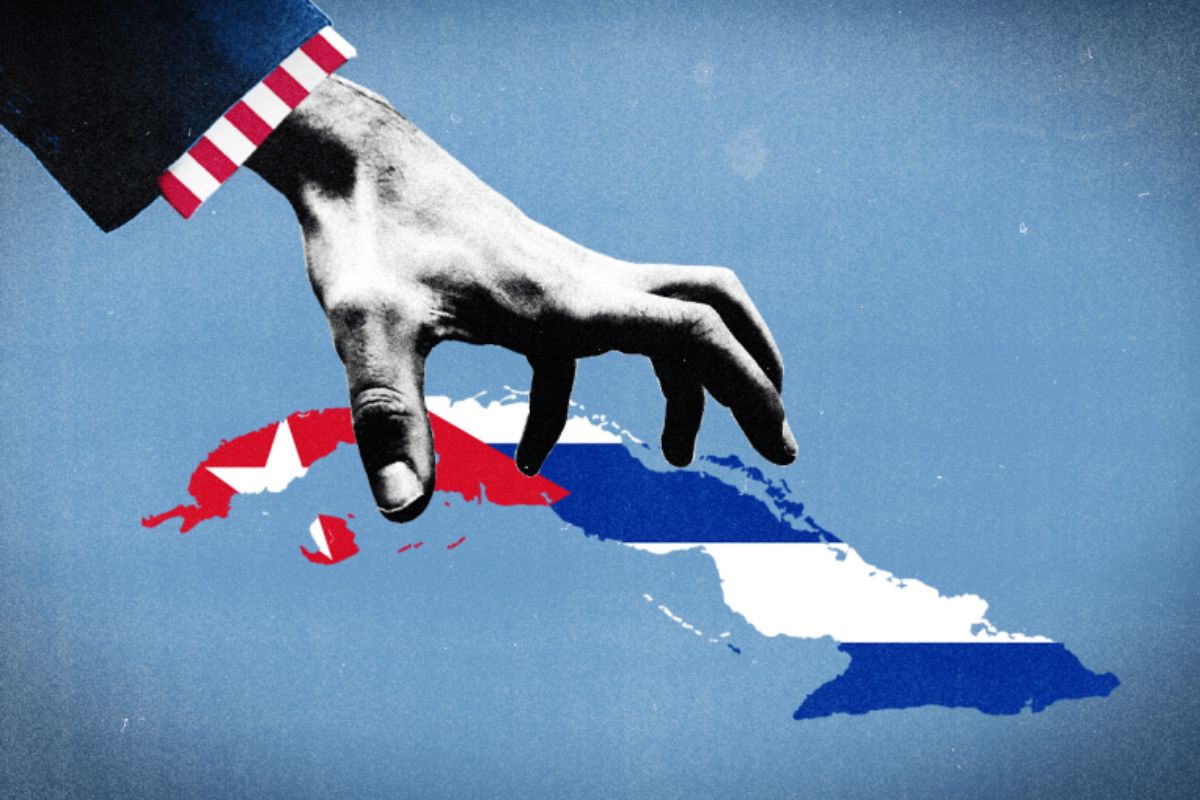
Trump and Rubio have taken advantage of that to step up their assault on the Caribbean island with a near-total oil blockade aimed at forcing its surrender by hunger.
The position of the Revolutionary Communist International (RCI) faced with these events has been clear: opposition to US military aggression against Venezuela, both before and after the 3 January attack; unconditional defence of the Cuban Revolution; and an appeal for the world working class movement to mobilise its forces against US imperialist aggression.
In this we seem to have caught the attention of the Revolutionary Communist Group (RCG), a small organisation based in Britain who chose to dedicate a couple of paragraphs in an article about Cuba to attack our position (“With friends like these…British ‘left’ attacks Cuba”, Ellie O’Hara, 26 July 2026).
There are bound to be disagreements between communists about many different things. Nothing’s wrong with that. A genuine discussion of different points of view may be useful, and may even help to sharpen the understanding of particular phenomena and strengthen the stance of revolutionaries towards them.
Unfortunately, we have to say, this is not the approach adopted by the comrades of the RCG. Their article is full of distortions and lies about the real position of the RCI towards Cuba. From such a method, no-one can learn anything.
Let’s see what the comrades of the RCG have to say:
“The Revolutionary Communist Party (RCP) is equally forthright in its attacks on the PCC, with its leading writer on Cuba and Latin America, Jorge Martin, accusing the party of attempting to ‘water down the system’ so that a ‘nationalist capitalism’ is created (The Communist, republished 14 April).”
In fact, I have never uttered nor written the words attributed to me by comrade O’Hara, and these words do not appear at all in the article they purported to quote, as anyone doing a simple word search will soon find out.
In fact, these words were not written by myself, but by the Cuban comrades of Punto y Aparte, an editorial collective made up of Cuban revolutionaries and communists.
On 23 June this year, the comrades published an article commenting on the announcement by the Cuban leadership of the most wide-ranging package of pro-capitalist reforms in decades. The article is entitled “Cuba, el fantasma y las reformas” (“Cuba, the ghost and the reforms”) and contains the following paragraph in its concluding section:
“A difficult path lies ahead for supporters of the Revolution, especially considering that the political movement forged by Fidel Castro is currently being dismantled from two distinct fronts. On one side, there is the counter-revolutionary faction that – with the help of the United States – hopes to return the country to how it was in 1958. On the other, the bureaucracy that emerged from the Revolution is doing everything in its power to water down the system it administers, transforming it into a form of nationalist capitalism – much like what their counterparts in Caracas and Managua are doing.”
I quoted this section of the article in an episode of the Against the Stream podcast which we dedicated to the question of the Cuban Revolution and the capitalist reforms announced by the leadership.
What I said is that the task of communists regarding the Cuban Revolution is three-fold: to step up the campaign of mobilisation to defend it, particularly in countries where it can have a more direct impact (I mentioned the United States and Mexico, where the Sheinbaum government has cut off the sale of oil to Cuba); to participate in the debates that are taking place within Cuba about the best way to defend it; and to speed up the process of building a revolutionary leadership all over the world, so that the isolation of the Cuban Revolution can be broken.
Debate within Cuba
As I will explain below, the RCG conflates any criticism of the Cuban leadership with an attack on the Cuban Revolution itself, and responds with indignation at the idea that left organisations outside of Cuba could express an opinion on the actions of the Cuban government.
But in Cuba itself, there has been a wide-ranging debate about the capitalist measures approved in June. There have been several high-profile articles published by Cuban revolutionaries, members of the Cuban Communist Party, criticising the decision in different degrees, warning about the dangers involved, offering possible alternatives and – yes, comrades of the RCG – criticising the bureaucracy.
Let us see some examples. Michel E. Torres Corona is the host of the Con Filo programme (a nightly political commentary program on Cuban state television), and the director of the state-run Grupo Editorial Nuevo Milenio. He published a scathing article titled “¿Se acabó el socialismo en Cuba?” (“Has socialism come to an end in Cuba?”), criticising the speedy introduction and lack of discussion of the economic measures approved, but above all, the way in which they were being presented as a ‘victory’ and a step forward for socialism:
“And yes, we communists have suffered a defeat in Cuba: the reformists have won this round; they have infiltrated the physical space of the State and—far worse—the minds of those who exercise authority within it, whether as representatives of the people or as government officials.”
There is also the well-known Cuban film director Javier Sánchez Gómez, who wrote an article in the Uruguayan left-wing magazine Brecha with the headline “Cuba and the complete turn towards capitalism” (translated and published with permission by marxist.com). His verdict of the current process of reforms is this:
“[T]he Cuban state, economically blockaded by the United States, failed to keep the capitalist forces – which the reforms themselves had generated – in check, and ultimately succumbed to their pressure. Private actors gradually penetrated state structures and the Cuban Communist Party (PCC) itself, through corruption, family ties or friendships with leaders, capitalising on the loss of ideological identity, naivety, and the socialist movement’s powerlessness in the face of the blockade. This business community organised an efficient private media apparatus, coordinating with a group of liberal economists, known as ‘The Gurus’ or the ‘Havana Boys’ (in reference to the ‘Chicago Boys’). For years, they have been putting forward proposals for privatisation, the dismantling of the state and the dismantling of socialism, disguising these as solutions. This is in the face of a revolutionary, communist, and pro-Fidelist rank-and-file that still defends socialism, but is exhausted, crushed, and left with no options and, above all, without leadership.”
One does not have to agree with his diagnosis in full, nor with all of his conclusions, but certainly this is the voice of a Cuban revolutionary, a communist, a convinced Fidelista who is raising the alarm about the way things are going in Cuba.
Who is ‘ignoring the facts’?
The RCG article accuses me of “ignoring the facts of state power – that the PCC represents the will of the working class and the need to organise against imperialist-backed opposition, sabotage and the chokehold of the blockade.” But several Cuban communist commentators are arguing that what the RCG states is not the case.
The RCG further attacks me:
“Martin shared the classic opportunist playbook of trying to separate Cuba’s communist leadership from the masses, implying that a sinister – and of course ‘Stalinist’ – bureaucracy is at work to suppress critical thought, completely ignoring the reality of Cuba’s vibrant participatory democracy.”
I don’t actually ‘imply’ anything. What I wrote in the article they are referring to is:
“This economic policy of ever-increasing concessions to the market, and this foreign policy of supporting reformism and geopolitics, is compounded by the impact of the dead weight of the bureaucracy. The more or less open repression of critical thought alienates the most vibrant and revolutionary elements of society, especially among the youth, who are seeking an alternative path on the left.”
While the RCG paints a picture of a “vibrant participatory democracy”, the truth is that there are many examples of the kind of bureaucratic repression of critical thought, both historical and in recent times.
There is the quinquenio gris (“five grey years”) of Stalinist suppression of critical thought amongst intellectuals, writers, and artists, back in 1971, which led to the disbanding of the Philosophy Department of the University of Havana, and the closing down of its magazine Pensamiento Crítico – both led by the outstanding Cuban communist thinker Fernando Martinez Heredia; the purge at the Centro de Estudios de las Americas in 1998.
More recently, there is the closing down of the Taller Bolchevique in 2008; the expulsion from the PCC of Cuba’s foremost academic on the question of racism, Esteban Morales, for having written articles linking the question of corruption and the bureaucracy, in 2011 (he was later readmitted); the removal of the director of Alma Mater magazine in 2022; the bureaucratic choking of the Pañuelos Rojos in the same year.
There are many other examples which could be given, which reveal the bureaucratic features which exist in the Cuban political regime.
The questions of bureaucracy and bureaucratism have been discussed at length in Cuba in recent years. Some Cuban communists have openly advocated the need for workers’ democracy, including Emilio Aybar, who was until recently director of the prestigious Juan Marinello Cultural Institute, and Frank Josué Solar Cabrales, professor of History of the Cuban Revolution at the Universidad de Oriente (including in his recent article “‘Better Tehran than Caracas’: guidelines for the defence of the Cuban Revolution”).
There is a vibrant debate in Cuba, but it is one which often has been limited through bureaucratic measures and repression of those who express a critical point of view within the Cuban Revolution.
In fact, even Fidel Castro himself, in his famous speech at the University of Havana in 2005, warned that the Cuban Revolution could be defeated by mistakes from within, and specifically mentioned corruption and bureaucracy. I would recommend the comrades of the RCG to familiarise themselves with these facts and opinions.
Is it ‘arrogant’ to criticise the Cuban leadership?
The RCG article also accuses me of arrogance:
“With typical arrogance, Martin somehow blames Cuba for not leading a ‘world revolution’ while downplaying and critiquing the exemplary internationalist solidarity shown by Cuba across the world and particularly in Venezuela.”
I did not blame Cuba for not leading a world revolution, nor did I downplay the solidarity shown by Cuba across the world. In fact, what I said was:
“No one can deny the international solidarity shown by the Cuban Revolution, sending doctors to all parts of the world where they were needed, nor Cuba’s heroic feats in Angola.”
No honest person could read this sentence and draw the conclusion that I am somehow downplaying or criticising Cuba’s international solidarity.
In the article quoted, I did criticise the Cuban leadership for not advising the Venezuelan Revolution to go down the route of abolishing capitalism:
“[T]he policy of the Cuban leadership… instead of encouraging the Venezuelan Revolution to learn from its own experiences, consistently advised moderation, ‘not to provoke the enemy’, ‘to understand the differences’ and ‘not to copy models’. Some prominent Cuban figures devoted themselves to campaigning against workers’ control in Venezuela, declaring it to be ‘counter-revolutionary’.”
That the Cuban leadership gave this advice to Venezuela is a fact and it cannot be denied by anyone who is familiar with the Bolivarian Revolution.
I understand that at a recent Revolutionary Communist Party meeting in Liverpool on the topic of the Cuban Revolution, some RCG comrades argued that it was correct for the Cuban leadership to advise Venezuela and Nicaragua not to follow the example of the Cuban Revolution by abolishing capitalism. They argued this on the grounds of “national self-determination” and not interfering in other countries’ matters.
If this is indeed what the RCG comrades argued, that would be a scandalous position – and certainly not a communist one. Proletarian internationalism in practice, means that one takes an interest in the affairs of the struggle of the working class around the world, and, in as much as it is possible, attempts to influence them in the direction of socialist revolution. That was the reason why the Bolsheviks, immediately after taking power, proceeded to found the Communist International.
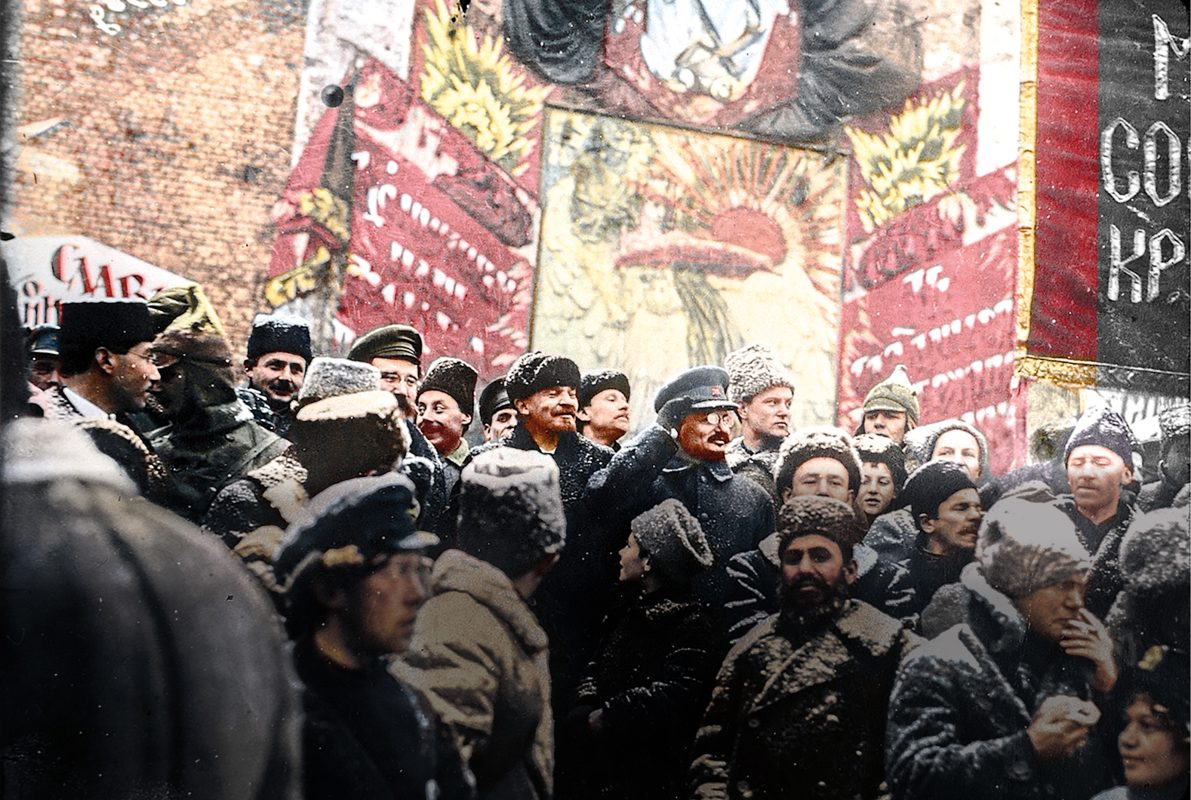
The Comintern was not a diplomatic society for mutual appreciation, but rather, the attempt to build a worldwide party of socialist revolution, and that involved sharp polemics about revolutionary matters in all countries. The idea that the German Revolution was a matter for German communists, from which the Russian communists should keep out, was contrary to the whole spirit and practice of the Comintern.
On the contrary, Lenin, Trotsky and other leaders of the Comintern frequently expressed their opinions, on many occasions very sharp criticism, and advice, on the policies of the French, the Italian, the British, the German, the Dutch and many other communist parties. Communists from the Netherlands, Germany, Italy and many other countries did not shy from criticising, very sharply, the Russian communists. It never occurred to Lenin to argue that “Communists in the imperialist core countries cannot criticise us”.
In fact, even the tradition of the first years of the Cuban Revolution refutes the type of approach which advocated ‘non-interference’ in the affairs of other countries on the part of communists. For the best part of the 1960s, the Cuban leadership was locked in a battle against the counter-revolutionary Khrushchev policy of ‘peaceful coexistence’. Fidel Castro and Che Guevara sought to promote world revolution – a debate which led to a split in many of the Latin American Communist parties.
Fidel Castro himself engaged in a lengthy polemic against the Venezuelan Communist Party. We can discuss whether they were right or wrong, the merits and limitations of their policy – but they never argued that Cuban communists could not express an opinion about the policy of revolutionaries in other countries! That internationalist policy, which they followed in the 1960s, was later to be abandoned in the 1970s when Cuba became much more dependent on and linked to the USSR.
Much later, at the First Extraordinary Congress of the PSUV in 2009, Hugo Chávez issued a bold call for the formation of a Fifth International, on a revolutionary anti-capitalist and anti-imperialist basis. Chávez also regularly welcomed members of left parties across the world to attend meetings of the PSUV, and sought their advice.
This internationalist approach seems to be alien to the RCG, an exclusively British-based group which to my knowledge does not seek to build an international communist organisation, or even engage in critical debate with communists from other countries.
As for the ‘arrogance’ of which I am accused, I plead innocent. The RCI has a modest voice, and we cannot pretend to dictate to anyone what they should or should not do. But it is our internationalist duty to express an opinion about things we consider extremely important for the world working class movement.
We aim to engage in a comradely debate with those Cuban communists, and those from other countries who care to listen to our opinion, which we offer as comradely advice. We know that many in Cuba follow our publications and read our articles. Some agree, some don’t. The idea that it is arrogant for internationalists to attempt to work out a point of view about what is happening around the world… is the opposite of Marxist internationalism.
Finally, in the aforementioned article, comrade O’Hara seems to take offence at Fiona Lali going to Cuba. The reason for her visit was the participation of Independent Candidate – a documentary by Teilo Vellacott covering Fiona’s 2024 election campaign in East London – in the Festival de Cine Pobre de Gibara, a festival for self-funded documentaries.
Holding the film festival in the dire conditions created by the oil blockade was an act of defiance against US imperialism, and that is the reason she went – to show solidarity with the Cuban Revolution!
As for O’Hara’s statement that Fiona “failed to express any support for Cuba”, we can only suggest that perhaps she should have gone to Specsavers! Fiona has expressed support for the Cuban Revolution before, during, and after her visit to the island, and will of course continue to do so.
View this post on Instagram
Unconditional defence versus uncritical cheerleading
The Revolutionary Communist International stands clearly for the unconditional defence of the Cuban Revolution – a concept that seems puzzling to the comrades of the RCG.
Let’s explain. Unconditional defence means that we defend the Cuban Revolution – against imperialist aggression, threats, and bullying – without putting any conditions on our support or on the Cuban Revolution.
This does not mean that our support is uncritical. A true friend is not the one who always tells you what you are doing is right. A true friend is the one who tells you what he thinks, even when he believes what you are doing is not right and may even be harmful. He does that because he cares what happens to you.
The position of the RCI on the Cuban Revolution is clearly expressed in our articles, including the recent statement of our International Executive Committee, and is summarised in its title: “Defend the Cuban Revolution! Defeat US imperialism! Fight for world socialism!”
These are not just words, the RCI has been involved in organising solidarity with the Cuban Revolution for many years, a campaign that we have stepped up in recent months in response to the renewed assault by US imperialism.
On 10 October, the US section of the RCI, the Revolutionary Communists of America, organised rallies in nine different cities across the country in defence of the Cuban Revolution and against US imperialism. The campaign was featured in the Cuban TV main news bulletin.
View this post on Instagram
Over the years I have come across comrades from the RCG, particularly in Venezuela solidarity work. I have found them to be dedicated and hardworking, committed to the revolutionary cause. Despite our political differences, we have on occasion worked together to denounce imperialism and defend the Venezuelan and Cuban revolutions.
However, there are serious problems with their political line and general approach. The comrades adopt a policy of uncritical cheerleading. This is particularly jarring in relation to Venezuela. As we have explained over a period of time, after the death of Hugo Chávez, the Maduro government progressively dismantled the gains of the Bolivarian Revolution.
Where Chávez had promoted workers’ control and management, Maduro destroyed it. Where Chávez nationalised key sectors of the economy, Maduro moved to privatise state assets. Where Chávez promoted mass revolutionary grassroots participation, Maduro exerted bureaucratic control and moved against parties to the left of the ruling PSUV party (including the Communist Party of Venezuela).
In 2018, Maduro’s government introduced a package of monetary economic measures which destroyed collective bargaining, pulverised the purchasing power of wages and then proceeded to take repressive measures against trade union leaders who attempted to organise the defence of workers’ rights. Revolutionary Bolivarian activists who denounced corruption in PDVSA, the state-owned oil company, were falsely accused of being CIA agents and thrown into jail.
None of this was explained by the RCG, which maintained its uncritical support for the Venezuelan government, and explained that it was, in fact, “building socialism”.
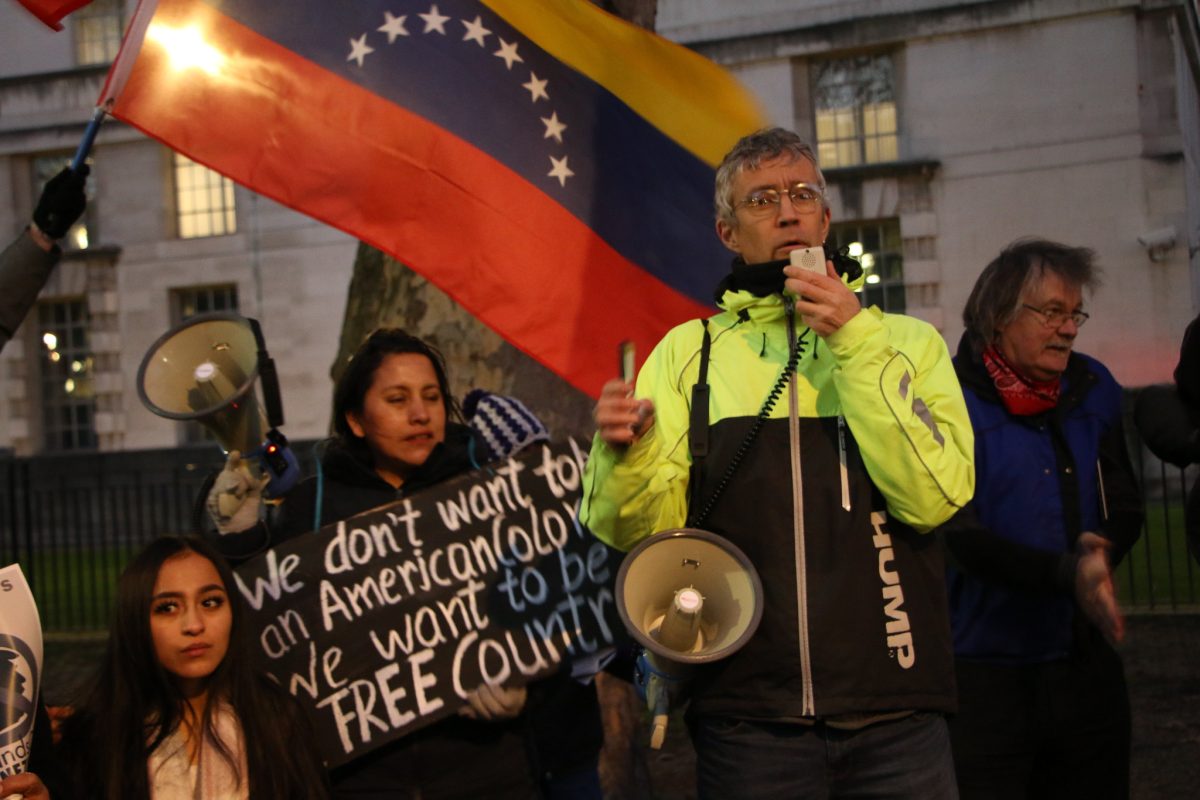
The position of the RCI throughout this whole process was, of course, very critical of the increasingly counter-revolutionary policies of the Maduro government. But at the same time, our position was one of unconditional support for Venezuela against imperialist aggression and sanctions. We mobilised widely to oppose the Guaidó coup and all other attempts of the reactionary, pro-imperialist Venezuelan oligarchy, as the comrades of the RCG know very well.
The situation in Venezuela became even worse after the US imperialist attack of 3 January. The Delcy Rodríguez government has submitted to the diktats from Washington, and proceeded to dismantle what little was left of the gains of the Bolivarian Revolution.
It has destroyed the hydrocarbons and mining laws passed by Chávez so as to give up both sectors to US multinational corporations on extremely favourable terms. It is preparing for the wholesale privatisation of state assets.
At the time of writing, the government has just opened up the electricity sector to private companies – destroying Chávez’s nationalisation of the sector. It has passed a counter-reform of the housing law, to the detriment of tenants’ rights. It is preparing a counter-reform of Chávez’s labour law.
Meanwhile, the sale of Venezuelan oil is carried out under US supervision on the basis of case-by-case licences, with the proceeds going to accounts controlled by the US treasury in Washington, only to be disbursed with permission from the Trump administration.
Former Venezuelan Minister of Industry Alex Saab – who only a few months ago was considered a Venezuelan hero by the Maduro administration – has been handed over to the United States authorities without even going through the legal formalities of an extradition process. He is now in jail in the United States, and is likely to be used as a witness in the trial against Nicolás Maduro.
And that is not all. In foreign policy, the Delcy Rodríguez government has criticised Iran for attacking the Gulf countries (!) rather than the USA and Israel for their imperialist aggression on Iran.
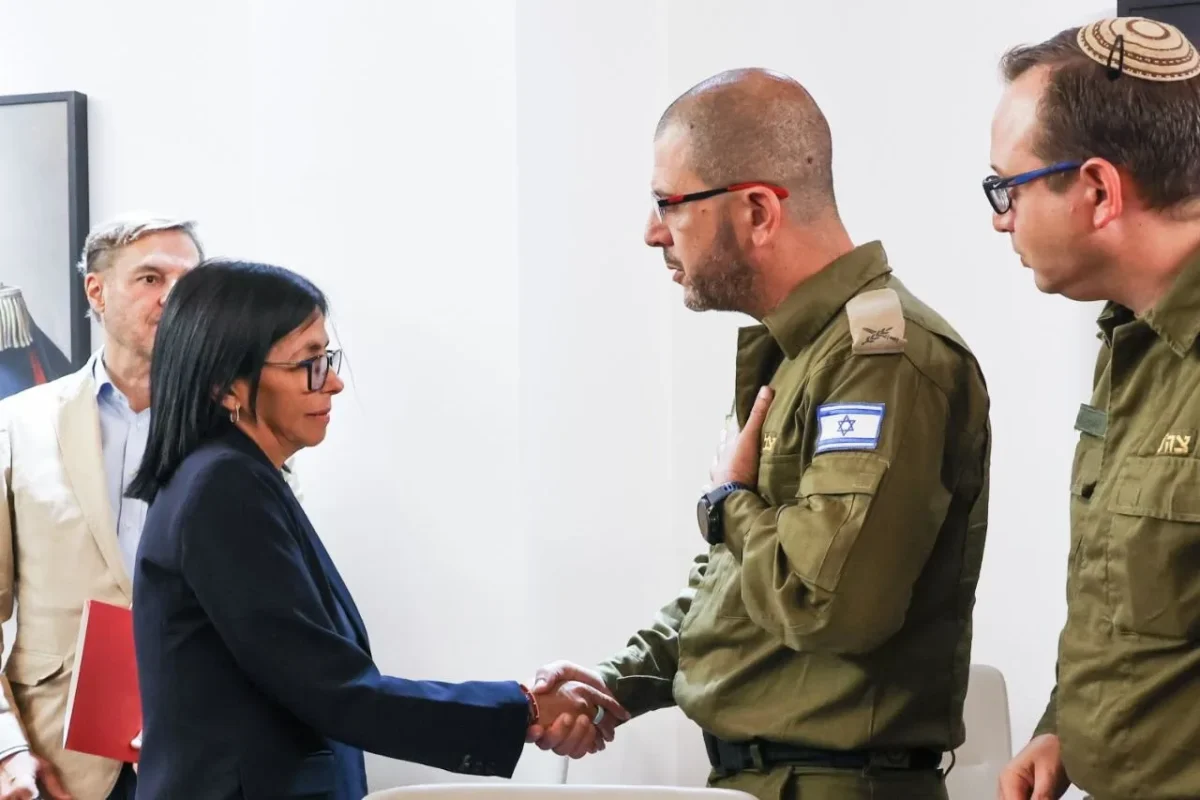
Egregiously, her government has allowed the presence of Israeli IDF officers and personnel in Venezuela, under the guise of earthquake relief, and has moved to restore diplomatic relations with the genocidal state of Israel, thus reversing Hugo Chávez’s bold move taken in 2009 to break off relations with Israel.
US military forces have been allowed in the country and now their permanent presence is being negotiated. The US army was allowed to carry out strikes in Venezuela, under the excuse of fighting drug cartels, and has now carried out a joint operation with the Venezuelan army against the ELN guerrillas in which innocent men, women, and children were killed.
The new Venezuelan Foreign Minister, Oliver Blanco – who hails from the reactionary pro-imperialist opposition to the Bolivarian Revolution, and once called for Chávez to be tried at The Hague – has made it clear that the country is undergoing a process of “democratic transformation”. This is the logical conclusion from Delcy Rodríguez and other high-ranking government officials praising the “new period of relations with the United States”.
Last week, Delcy Rodríguez accompanied the US ambassador in the re-inauguration of Washington Square in Caracas, to mark the anniversary of the birth of the United States. A band played the US anthem. The celebration continued with champagne at a reception at the US embassy. This is the way the Venezuelan government of Delcy was cheering on the Trump administration which carried out brutal military aggression against her country less than a year ago, and which still holds the Venezuelan President Maduro in custody as a war prisoner.
Open your eyes to reality
The inescapable conclusion from all of this is that, as we warned back in January, Venezuela has been forced into a situation of semi-colonial subjugation, and the Delcy Rodríguez government is an agent of that subjugation.
This is a complete betrayal – and one which has been denounced as such by a series of high-profile organisations and intellectuals who supported Maduro until the end, and many who initially supported the Delcy Rodríguez government. These include PSUV founding members Mario Silva, Bolivarian intellectual Luis Britto García, the Coordinadora Simón Bolívar from the 23 de Enero neighbourhood, amongst others.
Most of this has not been reported by the RCG, despite the fact that they have published 21 articles about Venezuela in 2026. When it has been mentioned, in one or two more recent pieces, it has been explained away as the result of Delcy Rodríguez and Venezuela having “the gun of US imperialism to its head”.
This is perhaps the most scandalous practical example of the bankruptcy of the policy of uncritical support which seems to be the hallmark of the RCG. In this case, it has led the comrades of the RCG to close their eyes to reality, to paint it to their members and supporters in a rose-tinted light, and finally to pass imperialist counter-revolution for revolution.
This method reminds us of the policy of the Stalinist communist parties, which demanded absolute loyalty to the corrupt and bureaucratic leadership of the Soviet Union… until overnight, to their surprise, that same leadership of the “Communist” Party of the Soviet Union led the wholesale restoration of capitalism!
The members (and many of the leaders) of the communist parties were left with their mouths open, without being able to explain or understand what had happened. As a result, many of them fell into despair, scepticism, and cynicism, with many abandoning the struggle altogether.
To the leaders of the RCG we say: tell the truth! To the members of the RCG we say: examine the assertions made in this article, consider them critically, compare them with reality; seek the facts for yourselves and analyse them.
As the Cuban communist Fernando Martínez Heredia would say, “think with your own head”. Communism is not about blind worship. The truth is revolutionary.