
At the time of writing, ‘Sir’ Keir Starmer is still the prime minister. But such is the pace of events, that this may not be the case by the time you read this.
If Starmer is still in Number 10, he might as well order in the removal vans now. His days in Downing Street are certainly numbered. It is only a matter of time before he must hand over the keys.
Kick them all out!
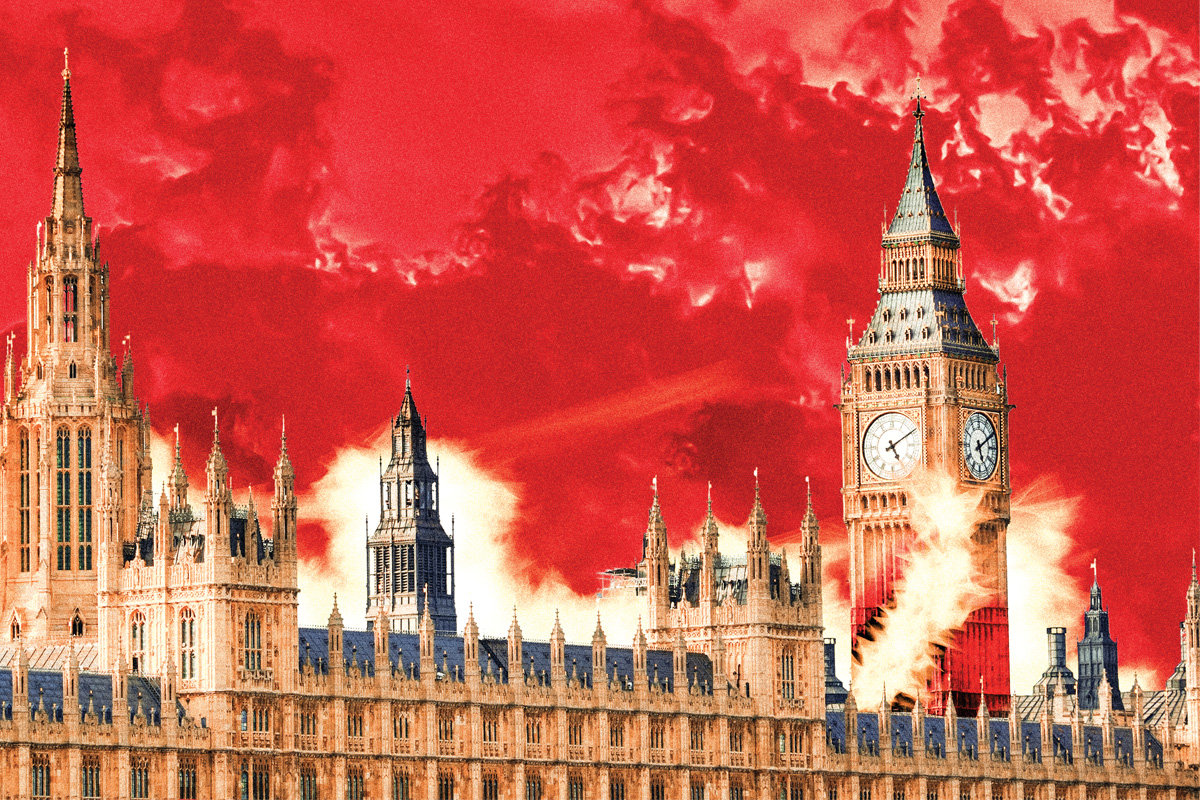
The global Epstein scandal has achieved what Guy Fawkes never managed: to detonate a mountain of dynamite in the foundations of Westminster; in the heart of British politics.
Moreover, it has engulfed the entire international establishment, including the White House, Wall Street, and Buckingham Palace. And it will no doubt accelerate the downfall of Labour’s hapless leader too.
It was not long ago that Starmer was celebrating victory at the 2024 general election. But now he is the most unpopular PM in recent history – with a net approval rating that languishes even lower than that of Liz Truss, Boris Johnson, or Rishi Sunak at their nadir.
The Labour leader was already hated: for aiding and abetting the genocide in Gaza; for continuing the Tories’ attacks on workers, the poor and vulnerable, and migrants; for his grovelling and fawning towards his American counterpart, Donald Trump.
Revelations regarding billionaire paedophile Jeffrey Epstein and Peter Mandelson, Starmer’s former ambassador to the USA, have poured petrol on this burning anger, however.

Grilled in the House of Commons, the Prime Minister was forced to admit that he knew about the sordid links between Mandelson and Epstein at the time when he appointed the then Labour peer as UK-US ambassador.
The latest tranche of the Epstein files suggest that Mandelson not only maintained a close friendship with the convicted sex-offender, but also provided the disgraced financier with valuable political services, giving him access to important insider information.
The fact that Starmer tied himself to this Blairite scoundrel is bad enough. But above all, the Mandelson-Epstein affair reinforces the widespread – correct – belief that the whole establishment is rotten; that a venal cabal of plutocrats, politicians, and princes are running amok at our expense.
The same criminals who have facilitated the slaughter of women and children in Palestine are guilty of abusing women and children as part of an elite international nonce network.
These reprobates are exploiting and oppressing ordinary people everywhere – responsible for bloodshed abroad, and for social murder back home.
Their hypocrisy stinks. They cynically whip up a divisive culture war against migrants and refugees, alleging that asylum-seekers are a danger to young girls and to ‘British values’. Yet they are part of the biggest grooming gang of them all. The only ‘values’ they really care about are the interests of the billionaires and bankers.
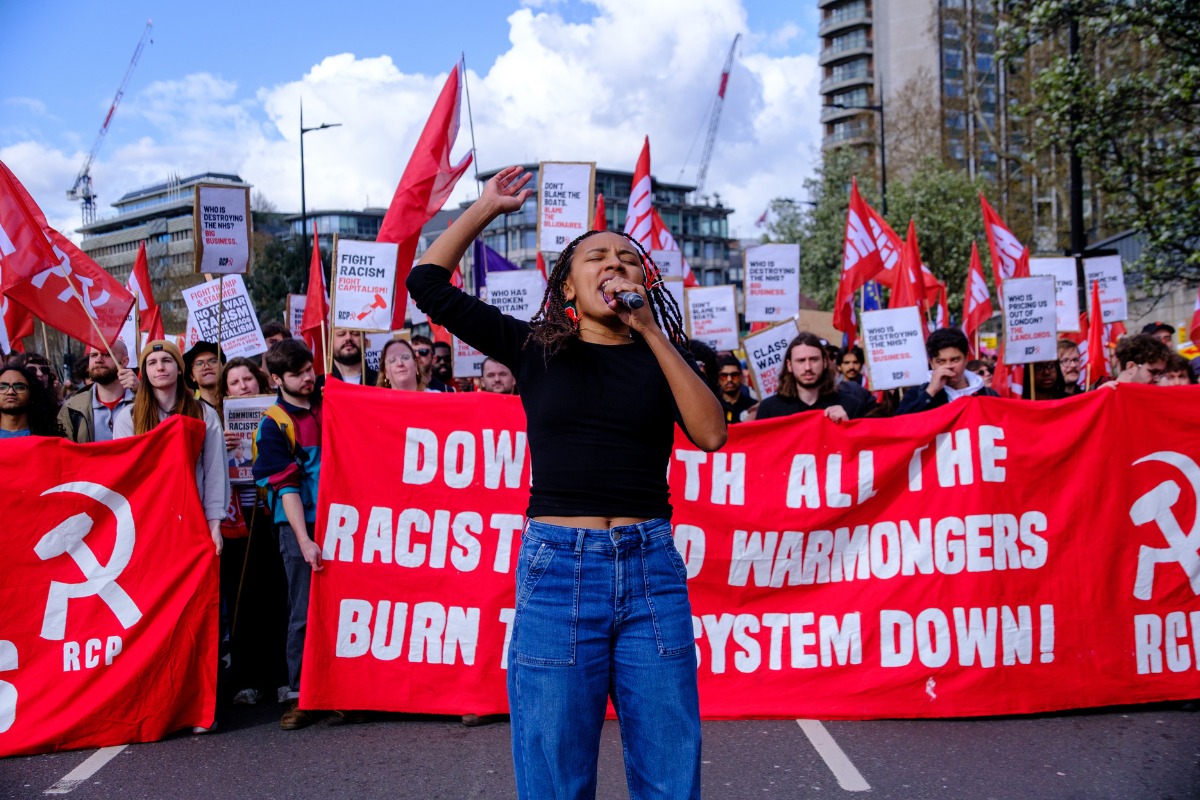
The rest of Parliament is no better. Labour, the Tories, and Reform: they are all cut from the same cloth. They are all liars, crooks, and warmongers. Workers and youth must organise and mobilise to kick them all out.
But even that is not enough. Ultimately, it is the system that they defend and uphold that must be brought down – a putrid system that breeds violence and misery; sexism and racism; war and chaos; corruption and depravity.
That’s why we say: Starmer out! Down with the entire capitalist establishment! Overthrow their sick system!
Looking into the abyss
At one point, following the latest revelations surrounding Epstein and Mandelson, it looked as if Starmer would be pushed out by enraged Labour MPs – angry not so much about the crimes that have come to light, but at the thought that these misdemeanours could cost them their jobs.
Potential leadership challengers began their manoeuvres. Backbenchers declared that Starmer’s time was up; that the Epstein-Mandelson affair represented “the beginning of the end”.
Scottish Labour leader Anas Sarwar even publicly called on his Westminster counterpart to go, no doubt expecting other senior Labour figures to follow him over the top and into battle.
“The distraction needs to end, and the leadership in Downing Street needs to change”
Scottish Labour leader Anas Sarwar calls on Keir Starmer to stand down as prime minister
Follow live: https://t.co/CwxuLGeoxX pic.twitter.com/zDLbNEVN0Y
— BBC Breaking News (@BBCBreaking) February 9, 2026
Rather than pouncing at the opportunity to oust Starmer and launch a leadership contest, however, Angela Rayner and Wes Streeting offered the Prime Minister their ‘support’ – no doubt like the support that a rope offers a hanged man.
These schemers clearly want to replace Starmer. But they are also hesitant about taking on the position of PM: a truly poisoned chalice.
At the same time, Starmer offered up the scalp of his hatchet man, Morgan McSweeney. This sacrifice seemed to be enough to placate a layer of exasperated Labour MPs, for the time being at least.
When push came to shove, then, the Parliamentary Labour Party flinched. MPs looked into the abyss and stepped back in fright, terrified of opening up a potential Pandora’s Box by forcing their forlorn leader out of office.
The prospect that everything might unravel – that a bloody palace coup could precipitate panic on the markets, a devastating general election defeat, and the coming to power of a Farage government – was seemingly too much for these cowardly careerists to swallow.
Like a wounded animal, therefore, Britain’s pathetic Prime Minister limps on…for now.
Hammer and anvil
The immediate pressure on Keir Starmer may have subsided. But this reprieve is only ephemeral; a temporary stay of execution. The knives are still out for the Labour leader.
Starmer and his government are ensnared in a terminal crisis – caught between the hammer of the capitalists and the anvil of the working class.
On the one hand, Starmer and his ministers are rightly despised by ordinary voters for promising nothing and delivering even less: for cutting welfare to pay for warfare; for bombing hospitals and schools abroad, whilst allowing hospitals and schools back home to crumble and collapse; for overseeing fraying public services, rising rents and bills, and living standards that go from bad to worse; for being no better than the Tories when it comes to scandal and sleaze.
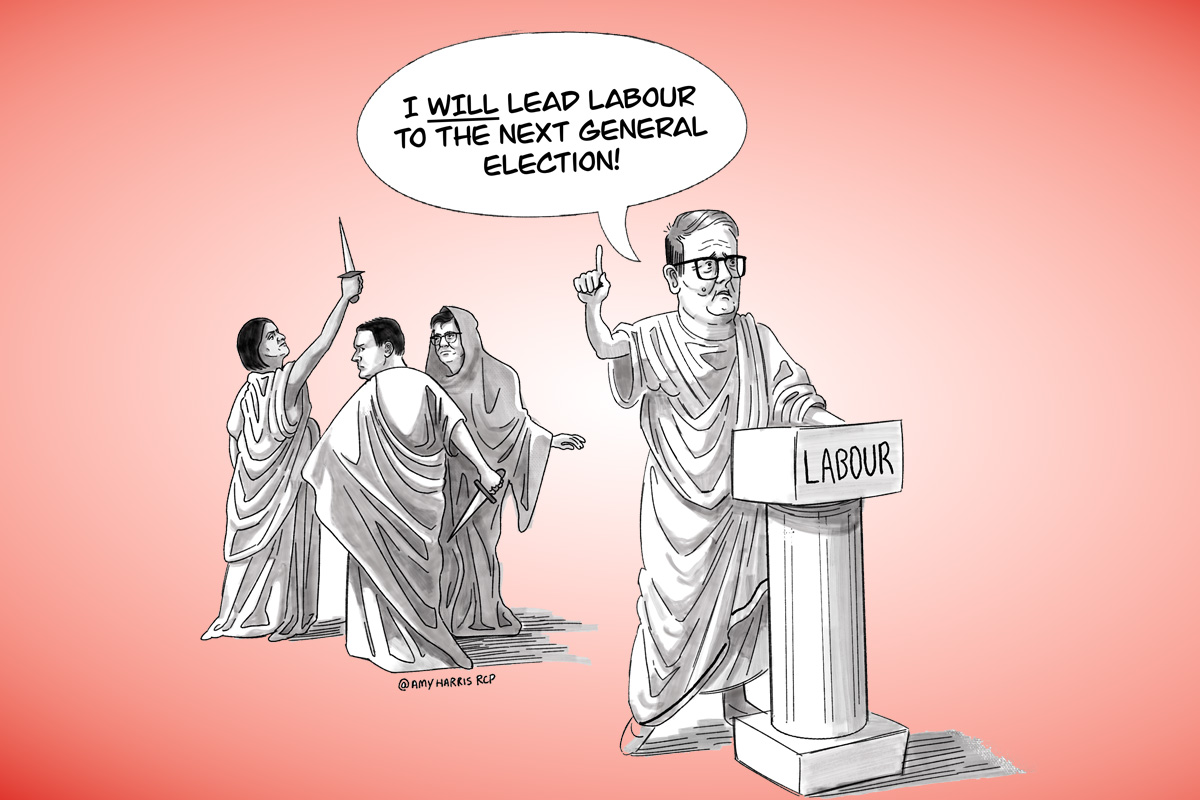
Hence the increasingly mutinous mood amongst Labour backbenchers – responding to the white heat they can feel from below, and fearing oblivion come the next election – most notably with last summer’s rebellion against proposed cuts to benefits for disabled people and pensioners.
On the other hand, the ruling class are not happy with Starmer’s government either.
They hoped Starmer would restore stability and professionalism to British politics after 14 years of Tory chaos and corruption. If anything, however, the tumult and turmoil has only intensified.
Above all, the bosses and bankers want Labour to use its sizable majority to push through the cuts, attacks, and deregulation needed to dig British capitalism out of its longstanding quagmire.
But parliamentary revolts, along with last autumn’s drab Budget, suggest that Starmer and co. cannot fully be trusted; that the Labour leaders do not have the authority or ability to implement the capitalists’ austerity agenda.
No good options
Yet what alternative do the ruling class have?
Most likely, any replacement for Starmer from within the Labour Party would come from the so-called ‘soft left’. The bookies’ current favourite is Rayner.
From the perspective of the establishment, these ‘left’ MPs are even less reliable than the current prime minister; more susceptible to the pressures of the working class.
Pushing for a general election, meanwhile, would be a risky move. The Tories are completely washed up and discredited, and are haemorrhaging both voters and high-profile personnel to Reform UK.
Farage’s party, in turn, has moderated itself in recent months. Experienced Tory defectors, including former senior ministers like Nadhim Zahawi and Suella Braverman, have given Reform a more serious sheen. And a number of wealthy donors are moving their money, in order to gain influence over this government-in-waiting.
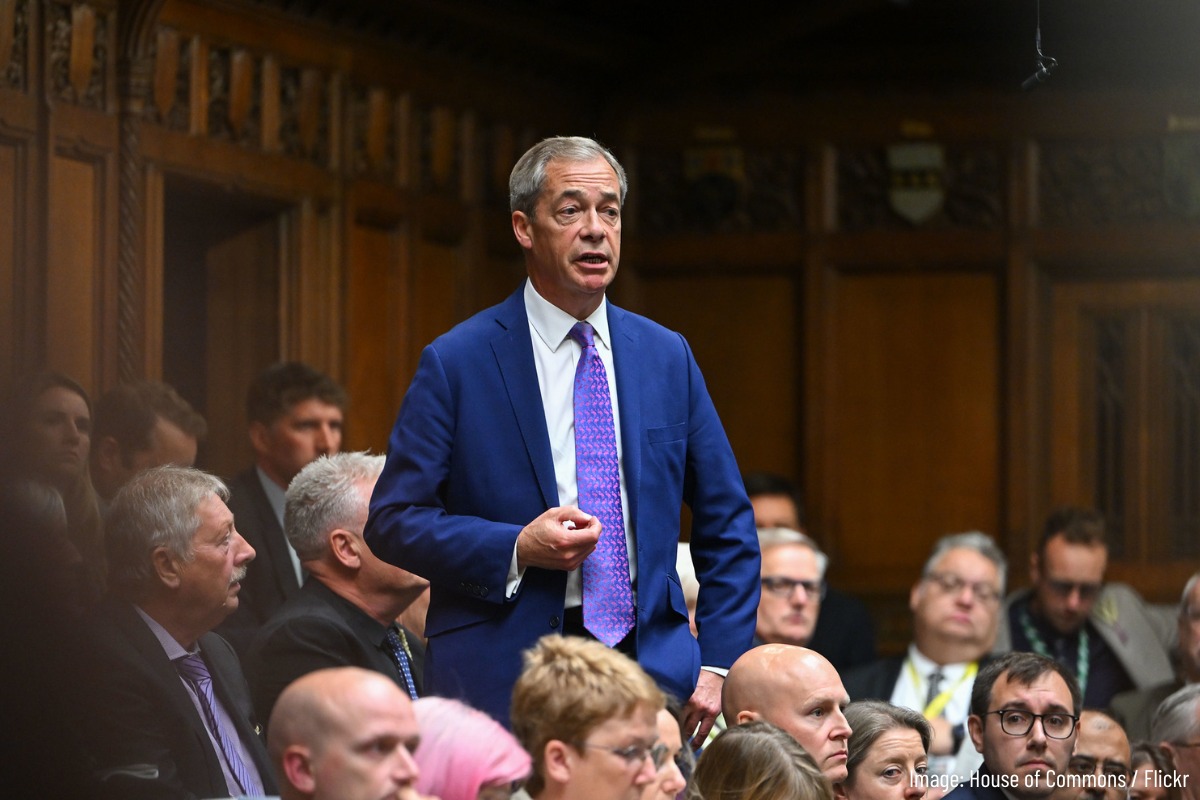
At the same time, Farage is increasingly emphasising Reform’s business-friendly, neo-Thatcherite programme, with pledges to balance the books and slash regulations.
All of this no doubt makes Reform a more appealing option for the ruling class. Nevertheless, Farage’s populist, demagogic character and heterogeneous, contradictory coalition of support means that he and his party cannot be completely relied upon either.
And so the consensus amongst the serious strategists of capital, for now, is that Starmer should remain in place, despite his shortcomings – “the least bad available prime minister”, in the words of leading Financial Times columnist Janan Ganesh.
For all his faults, at least he is one of them: a knight of the realm; a loyal servant of the establishment.
“In suggesting that Starmer should remain in charge,” Ganesh concludes, however, “it is hard to know if one is doing him a favour or volunteering him for hell.”
We should add: whoever sits in Downing Street, whoever the ruling class push forward to represent them, will have to endure this agonising purgatory – presiding over a regime in crisis; a system in crisis.
On the basis of capitalism, there can be no stability, only further volatility and decline.
Political deadlock
This brings us back to the present deadlock. Put simply: it is the very threat of things spiralling out of control that engenders paralysis, keeping Starmer in his place.
Labour MPs are under pressure to rid themselves of their loathsome leader, but are afraid of making a decisive move. Meanwhile, the capitalists are restless, wanting a strong government that can carry out their brutal programme, but have no better champion than the impotent Starmer.
And so Starmer survives through mere inertia, like Wile E. Coyote as he runs off a cliff – before he looks down and plummets to the ground.
Eventually political gravity will take its toll on the PM, however, and one side or the other will decide that Starmer is too much of a liability.
We may not have to wait long. Humiliating defeats in this month’s by-election in Gorton and Denton or the upcoming May elections – or both – could prove to be the final straw.
Where are the unions?
When the moment comes, the key question is: who will strike the knockout blow?
Will it be the ruling class deciding they have had enough of Starmer, and are ready to manoeuvre their preferred successor into Downing Street? Or will it be the working class, as an organised force, imposing its imprint on the situation?
In this respect, it must be said that the trade union leaders have played a lamentable role. For years, they have all insisted that rank-and-file members should hold tight, ‘wait for Labour’, and give Starmer’s government a chance. Yet workers’ patience has understandably worn thin.
Even now, with Starmer failing to deliver anything for ordinary workers, and anger bubbling away within society, the union leaders have said little and done even less.
Unite general secretary Sharon Graham, for example, generally considered one of the more left-wing union leaders, has made a few noises about potential disaffiliation, due to the discontent towards Starmer’s Labour amongst her members.
Similarly, the general secretaries of several affiliated unions, along with around two dozen backbench MPs, have released a joint statement, calling on the Labour leadership to “restore party democracy” and “end nasty factionalism”.
But all this amounts to is a form of semi-opposition: vague, tepid, and lacking any real bite.
The TUC leaders, meanwhile, expend far more energy warning about the dangers of Reform UK than they do criticising Starmer – even as the latter attempts to outflank Farage to the right on questions of migration and ‘law and order’.
View this post on Instagram
If (or when) Starmer does go, it is likely that the union leaders would back a so-called ‘soft left’ like Angela Rayner or Andy Burnham. These figures are no true friends of the workers’ movement, however, but are wolves in sheep’s clothing; opportunists who cynically adopt left phraseology in order to climb the greasy pole.
Lest we forget, Starmer also cloaked himself in left-wing pledges when he ran to be Labour leader, only to openly reveal his knife when the time came, stabbing Corbyn and purging his supporters from the party.
For class struggle
Instead of issuing hollow threats, or sowing illusions in careerists like Rayner, the trade union leaders should be organising a mass campaign of militant action, including strikes and protests.
The aims of such a movement should be bold and clear: to kick out Starmer; to show on full display the unstoppable strength of the working class; and to fight for a real solution to the problems that workers face – on wages, jobs, housing, services, and more.
This would put the working class at the steering wheel of British politics, rather than being in the backseat behind Machiavellian upstarts and parvenues.
Furthermore, this would bring to the fore the class questions in society, cutting the ground from underneath the feet of reactionary charlatans like Nigel Farage and Tommy Robinson.
Sadly, the current leadership of the labour movement falls far short of what is required. None of them have a fighting perspective, nor any faith in the ability of the working class to mobilise and transform society.
Instead, they cling to the idea that capitalism can be patched up; reformed to be ‘nicer’ and ‘kinder’.
Flowing from this, their whole outlook and approach is based not on class struggle, but on class collaboration: appealing to the bosses and their representatives to provide workers with a few extra scraps from the rich man’s table.
Yet what has this actually delivered for workers in recent decades?
As Leon Trotsky explained, in an epoch of deepening capitalist crisis, the trade unions must either be transformed into militant battalions of the working class, or they will become bureaucratic tools acting on behalf of the bosses.
Communist alternative
At the same time, the political options available on the left are also not sufficient.
The Greens have surged in terms of support, with tens of thousands joining the party – understandably attracted by the radical-sounding rhetoric put forward by new leader Zack Polanski about fighting the billionaires and landlords.
When put to the test, however, the Greens have been found wanting. When it comes to beating Reform in the upcoming Gorton and Denton by-election, for example, the party’s leading figures have tried to rally voters with liberal, wishy-washy platitudes about ‘choosing hope not hate’.
To properly defeat Farage and Reform requires not moralistic appeals, but clear class policies – socialist answers to the crises of low pay, shoddy housing, and industrial closures that plague working-class communities.
Jeremy Corbyn and Zarah Sultana’s Your Party, meanwhile, has floundered and stalled – wrecked from birth by the squabbling of its founders.
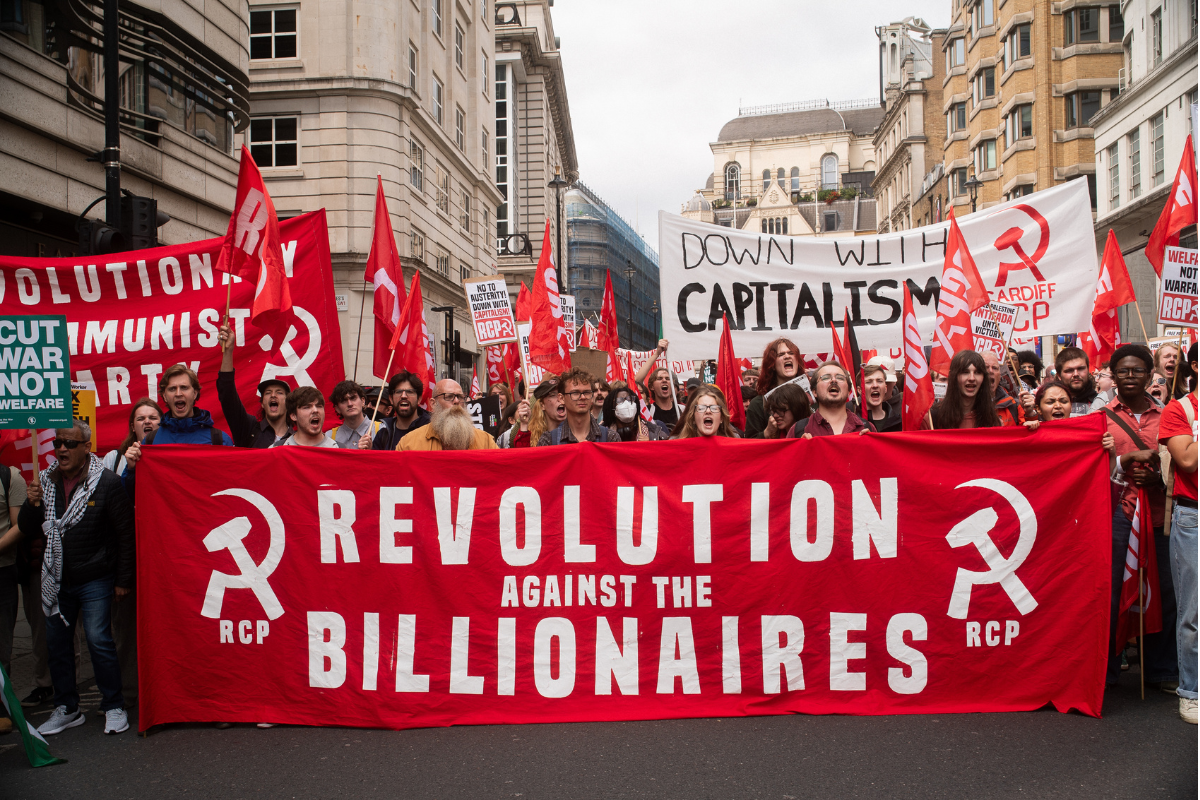
The urgent task, therefore, is to build a communist alternative; a revolutionary leadership that can provide a way forward for workers and youth.
This is what the Revolutionary Communist Party is striving towards. Our numbers and influence – although growing – are still modest. But our ideas are powerful. And with your help, we can turn these into a material force that can transform society from top to bottom.
Burn it down
We are witnessing an unprecedented situation, in Britain and internationally.
The old world order is breaking down, as capitalism stagnates and writhes, protectionism rises, and institutions like NATO rust.
With this, all the pillars of the capitalist establishment are being undermined: from the media and the monarchy, through to the police and parliament.
Britain’s two-party political system is fracturing, with polarisation to the right and the left. A growing layer – particularly amongst the youth – are being radicalised by these events, and are drawing revolutionary conclusions.
In this turbulent context, the Epstein scandal is acting as yet another catalyst for transforming consciousness – preparing the conditions for further upheavals and social explosions.
“A budding Vladimir Lenin,” notes another astute Financial Times writer, “might see the [Epstein] files as kindling awaiting a revolutionary spark.”
This is indeed how the revolutionary communists see these developments; this latest sickening example of the degeneracy of the elites.
It is time to burn their whole rotten system down.