
“Upon my head they placed a fruitless crown,
And put a barren sceptre in my grip,
Thence to be wrenched with an unlineal hand,
No son of mine succeeding.” (Macbeth, Act 3, Scene 1)
Shakespeare’s Tragedy of Macbeth tells the story of a cruel, ambitious thane by the name of Macbeth, who murders the good, virtuous King Duncan to usurp his throne.
But, upon assuming power, Macbeth’s paranoia and suspicion drives him mad. With his violent persecutions, he alienates his followers and his people. In the end, his regime can survive only by the sword; by drowning friends and enemies alike in blood.
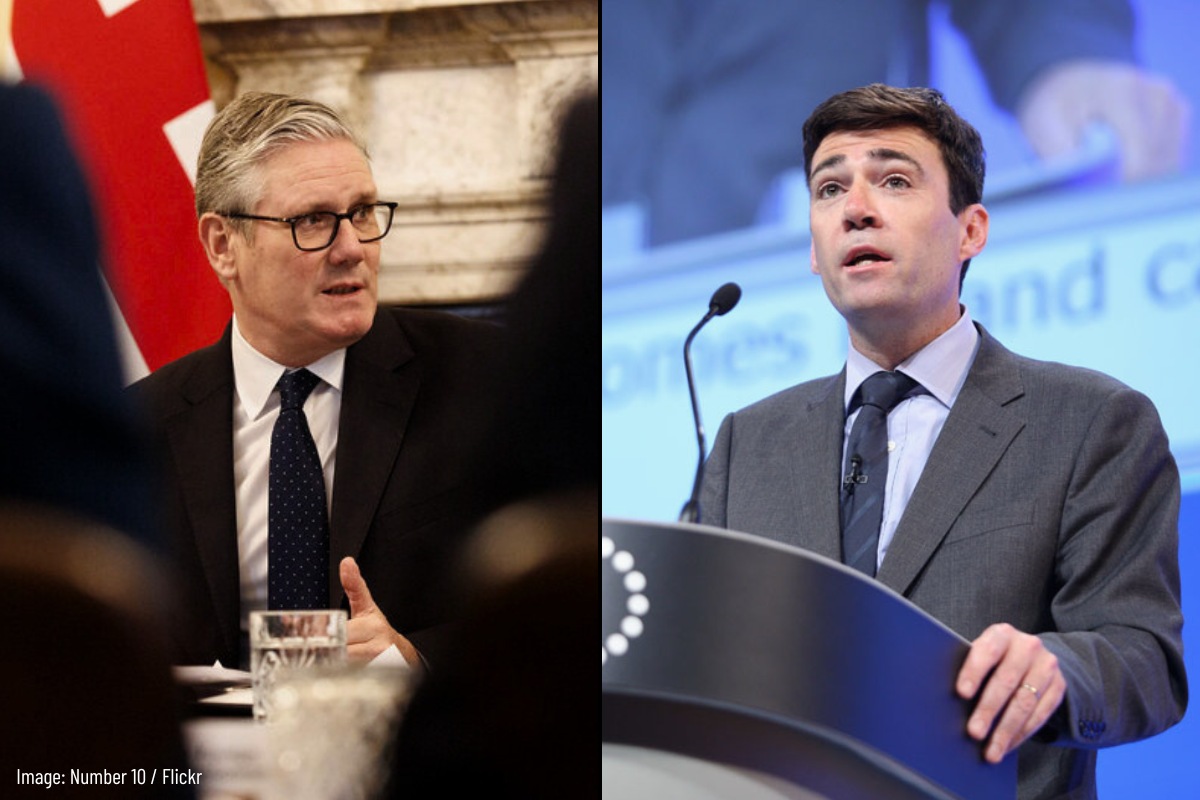
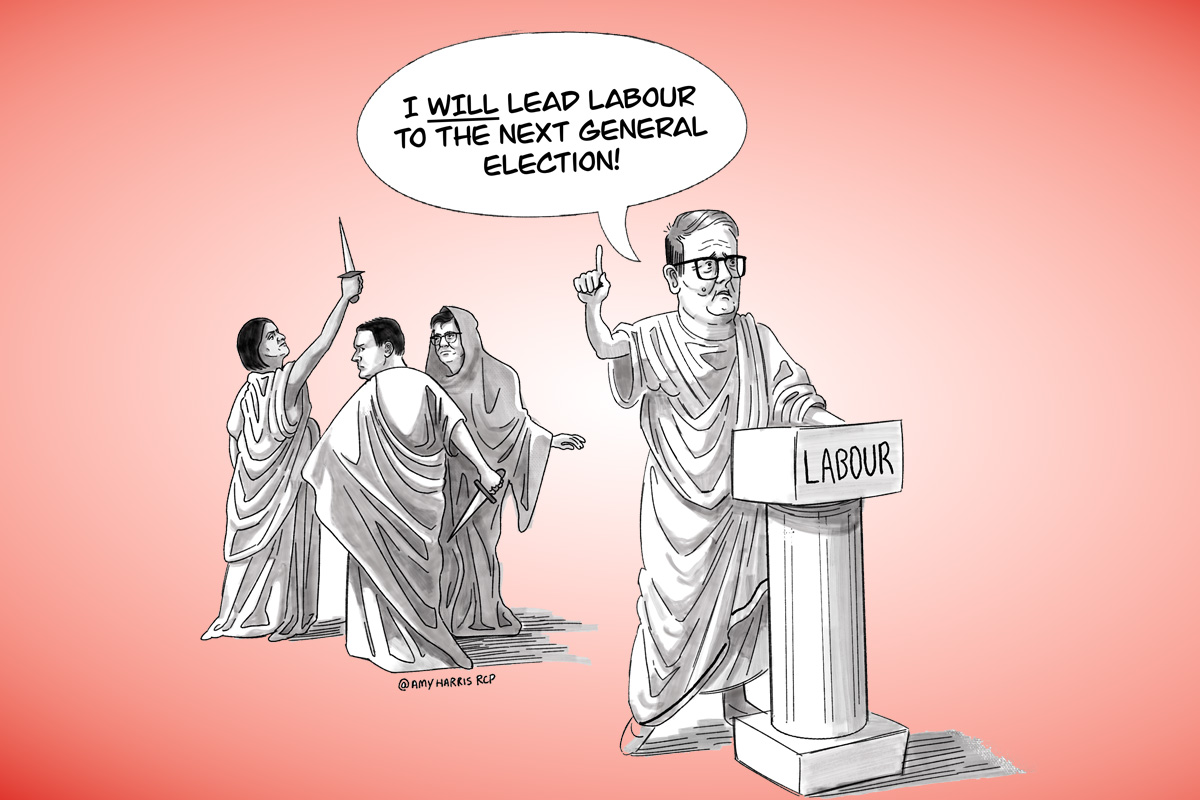
A very similar tale – albeit less sanguinary – can be found in the political career of ‘Sir’ Keir Starmer, our very own Thane of Holborn and St Pancras.
After deposing popular left-winger Jeremy Corbyn as Labour leader, this Knight of the Realm – full of Macbeth’s “vaulting ambition” – rose to the high office of Prime Minister, and embarked on an onslaught of attacks on the working class, at the behest of the bankers and billionaires.
As a result, he is now despised by the British public. And this is being reflected in rising anger and frustration amongst his own MPs, of all shades and stripes, who are getting extremely nervous about Labour’s annihilation come the next election, and the impact this will have on their beloved parliamentary careers.
Government of crisis
Starmer’s government has been one of crisis since day one.
Labour’s election ‘landslide’ in 2024 wasn’t the result of any enthusiasm for the party’s policies or platform. Rather, it was down to a burning desire to kick out the Tories after 14 years of austerity and decline, and the distortions produced by Britain’s first-past-the-post electoral system.
Since then, Starmer and his government have continuously haemorrhaged support on all sides: for their complicity in the Gaza genocide; for presiding over further cuts and social decay; for their clampdowns on democratic rights – the list goes on and on.
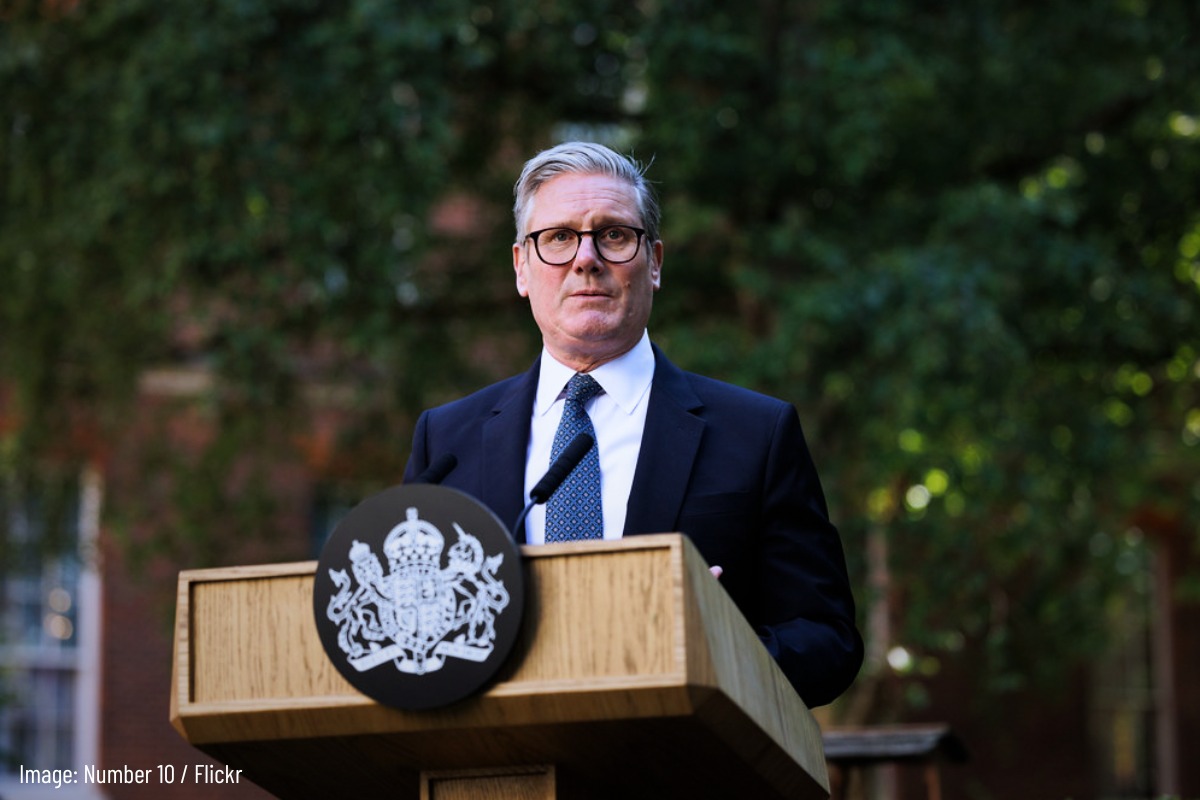
Starmer is universally hated: by workers and the middle classes; on the left and right; amongst the young and old.
Even the capitalists are unhappy with him, for not acting ‘decisively’ enough in carrying out the cuts to social spending and regulation required to save British capitalism.
But with the Tories discredited, the ruling class are reluctant to see Starmer defenestrated, due to the lack of any better alternative when it comes to managing their interests.
Given the economic and political instability, in Britain and internationally, removing Starmer could unleash pandemonium.
With an incredibly polarised political situation, and the very real possibility of an untested Reform government around the corner, the establishment has assumed the attitude of ‘better the devil you know, than the devil you don’t’.
Having suffered an era of Tory chaos, the ‘bond markets’ – which, in demystified terms, means the wealthy capitalist investors bankrolling the government – want stability. In fact, as a threat to fend off any would-be rebels, Starmer’s allies have openly bragged that the financial markets are on their side.
And so, despite being the most unpopular PM in living memory, Starmer limps on like a wounded animal, yet to be put out of its misery.
Rumblings of opposition
In the meantime, potential challengers to Starmer have been biding their time, waiting for the most opportune moment to make their move.
Over the past year, there have been faint rumblings of opposition within the Labour Party. First, a deputy leadership election – triggered by Angela Rayner’s messy exit from the leadership – saw a battle between right-winger Bridget Philipson and the so-called ‘soft left’ Lucy Powell.
The latter’s victory was widely viewed as a rebuke to Starmer’s leadership, and a sign of growing protest in Labour’s parliamentary backbenches and party ranks
Although, as is to be expected from such weak and pathetic ‘lefts’, Powell’s election to the position of deputy leader has had (and will continue to have) zero political impact.
Then, in November last year, came the mysterious press briefings from anonymous staffers at Number 10, accusing Blairite Wes Streeting of manoeuvring to launch a coup against Starmer.
Starmer quickly backtracked, and apologised for his team’s behaviour; the matter was settled. But the picture this debacle painted was one that cannot be erased so easily: an incredibly shaky, insecure regime – resting on a knife’s edge – spying enemies and pretenders everywhere.
Enter Burnham
Andy Burnham is a strange political creature; a veritable chameleon of the Labour Party.
Having served as an MP, a private secretary and minister for Tony Blair, and now as the Mayor of Manchester, he is the archetypal Labour Party careerist. On the left, you sometimes hear people joke:
“A Blairite, a Brownite, a Milibandite, and a Corbynite walk into a bar. The barman asks: ‘What are you having tonight, Mr. Burnham?’”
In truth, Burnham was never a Corbyn supporter. In fact, he challenged Corbyn as a moderate ‘soft left’ candidate in the 2015 Labour leadership election. And later, he happily joined in with the right wing’s smears over Corbyn’s alleged ‘antisemitism’. He was neither loyal to Corbyn, nor part of his hardcore, Blairite opposition.
Nonetheless, in his time as Manchester Mayor, he has been able to carve out an image of himself as a pragmatic, left-leaning voice – espousing what he calls “business-friendly socialism” and the “Manchester model” of public investment, devolution, and municipalism.
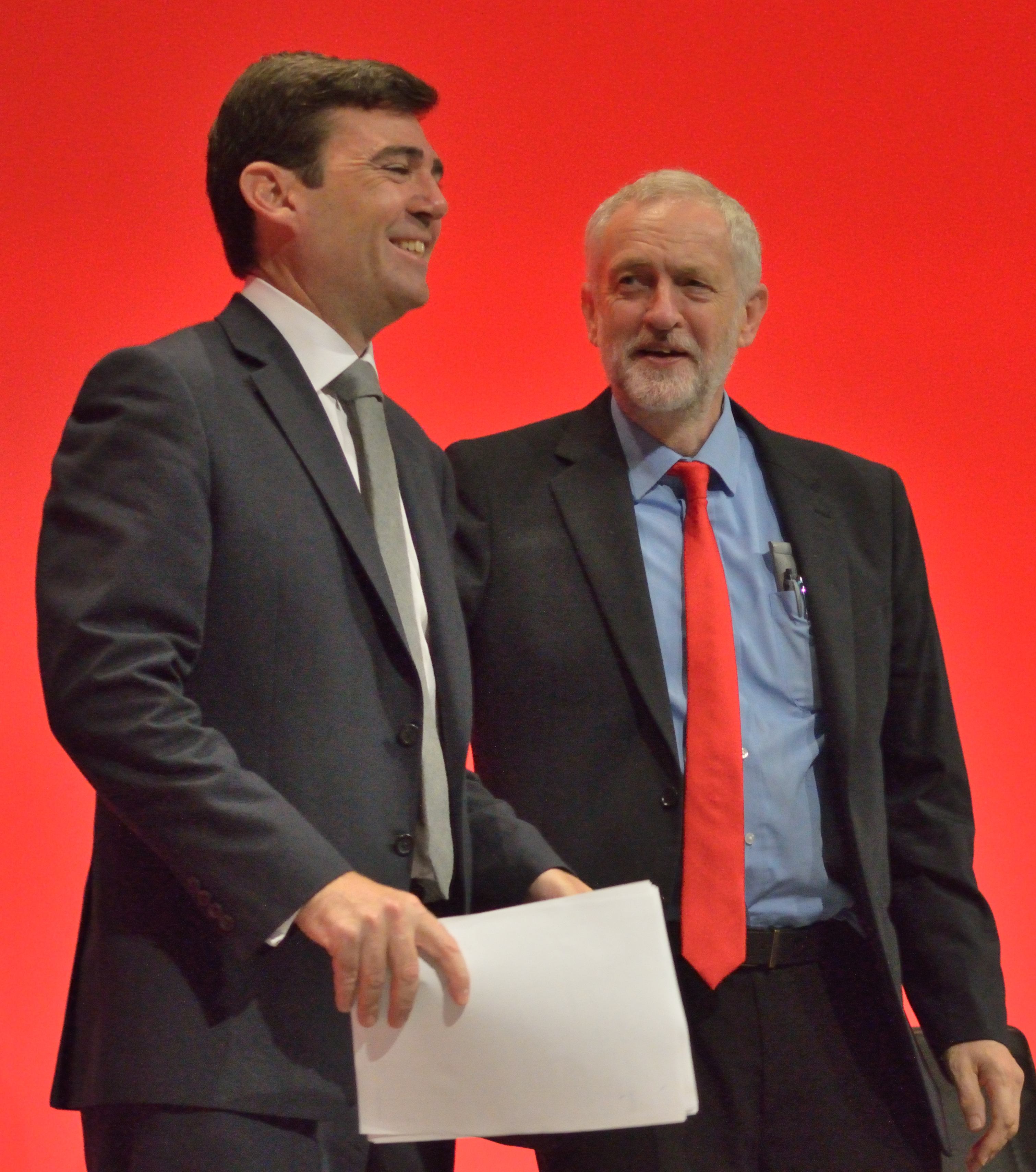
Recently, he has shifted ever so slightly more to the left with some of his language – no doubt positioning himself for a potential leadership challenge.
In a Guardian article last week, for example, Burnham decried the “four horsemen of Britain’s apocalypse”, namely “deindustrialisation, privatisation, austerity and Brexit”. And in a clear snub at Starmer, he has also commented that the government “should not be in hock to the bond markets”.
In a further bid to bolster his anti-Westminster image, he is even waxing lyrical about replacing the House of Lords (…with an elected ‘Senate of the Nations and Regions’), maximising devolution to the UK’s regions, and overhauling the electoral system.
With populist rhetoric scoring victories for Farage on the right, and the Greens’ Zack Polanski storming the polls with his own brand of left-wing “eco-populism”, it looks like Burnham is trying to concoct his own peculiar, paradoxical brand of moderate, centre-left ‘populism-lite’ – an extremely weak brew, it must be said.
All of this, mixed with Burnham’s superficial championing of left-behind, working-class areas of the country, has led to him being dubbed the ‘King of the North’, and viewed as a possible candidate to replace Starmer.
Burnham does seem to have some level of favourability. An Ipsos poll from last month placed him as the second-most highly-favoured (read: ‘least-disliked’) politician in the UK behind Farage, across all political parties. Burnham was also the only politician to beat the Reform leader in the survey’s head-to-head breakdown.
Opinion polls are only ever a snapshot of consciousness, which can change unexpectedly from one day to the next. We must therefore treat them with a pinch of salt. But the very publication of this survey will have piqued the curiosity of Labour MPs looking for a saviour – and sounded the knell of treason in Downing Street.
It’s been an open secret in Labour circles that Burnham has ambitions to replace Starmer. And the establishment press are clearly intent on whipping up this story every time some nameless ‘source’ whispers something vague about Burnham’s ‘plotting’.
Last month, for example, the front page of The Mail on Sunday exclaimed: ‘STARMER ROCKED BY NEW ANDY BURNHAM COUP PLOT’.
The trouble for our would-be Labour leader, however, is that he must be a sitting MP in order to challenge Starmer for the top spot. This has, until now, thwarted his ambitions.
By-election bust-up
So, when a by-election was announced in Burnham’s back yard – in Gorton & Denton, East Manchester – the rumour mill once again sprang into action, churning out stories about the Mayor’s impending battle to return to Westminster.
And when Burnham confirmed his intentions to be selected as a Labour candidate, the establishment press went into overdrive.
I have today written to the Chair of Labour’s National Executive Committee seeking permission to enter the selection process for a candidate for the forthcoming Gorton and Denton by-election.
Read my letter here.👇🏻 pic.twitter.com/TwKgADsuSB
— Andy Burnham (@AndyBurnhamGM) January 24, 2026
Concerned that Labour’s ruling NEC, loaded with Starmer loyalists, might block Burnham, a whole host of figures – from former-deputy leader Angela Rayner, to current-deputy leader Lucy Powell, to London Mayor Sadiq Khan, to Starmer’s own minister Ed Miliband – called for the NEC to stay out of the selection process, and let local party members choose their candidate.
Even some left-wing figures in the labour movement – including Unison’s new left-wing general secretary Andrea Egan, and the leadership of the Fire Brigades’ Union – have spoken out in favour of an open selection process, implicitly taking Burnham’s side.
We should have no illusions, however, in Burnham and his clique. These so-called ‘soft lefts’ have no solutions to the problems facing the working class. In fact, they don’t genuinely care about the working class, but are merely careerists looking to feather their own nests.
As the civil war inside the Labour Party during the Corbyn years showed, these ‘lefts’ are, in reality, just wolves in sheep’s clothing. If they got into power, they would happily carry out the exact same ‘business-friendly’ programme that Starmer has.
Just ask the striking transport workers in Burnham’s trumpeted ‘Bee Network’ what they think about his ‘socialist’ credentials.
The trade union leadership cannot afford to sow any illusions in careerist charlatans like Burnham. An expectant ‘wait-and-see’ approach towards the Labour government has handicapped the trade union leaders – and therefore the industrial struggle of the working class – ever since Starmer’s election.
Any hopes in Burnham, however, were quickly dashed yesterday, when the party’s NEC blocked him from running over a technicality – in yet another bureaucratic stitch-up.
And so the Northern Rebellion was quashed…for now.
Precipitous path ahead
This latest episode has exposed Starmer’s extreme weakness and insecurity – before the eyes of the Labour Party, the British establishment, the bond markets, and the public.
As The Times, one of the more sober mouthpieces of the ruling class, commented: “Blocking Andy Burnham betrays more weakness.” Elsewhere, “turmoil” is the word on journalists’ lips.
#TomorrowsPapersToday
Daily Mail leads with Labour turmoil as Starmer faces revolt over Burnham block — more at https://t.co/6eo1mbiEHg pic.twitter.com/qCMhSjtUmr— The Sentinel Current (@sentinelcurrent) January 25, 2026
The irony of this entire sorry saga is that Labour are looking increasingly unlikely to win the Gorton & Denton by-election. The latest polls show that Labour’s favourability has dropped 20 percentage points since the 2024 general election.
Labour have blown it. This is it. Time to take on Reform.
Manchesters first Green MP is coming. Join us to help get them elected on Saturday.https://t.co/pTo5QEJ2Nj pic.twitter.com/5ILvtXd4iQ
— Zack Polanski (@ZackPolanski) January 25, 2026
Farage’s Reform and the Greens are well-poised to take over this once-safe Labour seat. Both parties will be throwing everything into this contest, as a test of their electoral viability, and as a warm-up for the coming May elections. We may well see a repeat of the drubbing that Labour received in the Caerphilly Senedd by-election last autumn.
In effect, this by-election will be viewed as a referendum on Starmer’s government.
If anyone could have saved Labour’s skin in this by-election, it was probably Burnham. Having some nameless Westminster hack parachuted in will only incense local voters even further.
Polling suggests that a majority of Mancunians oppose Starmer’s blocking of Burnham, and a third of them will be less likely to vote Labour as a result. A number of voters interviewed by the Telegraph have said they would have voted for Burnham, but are now considering Reform.
Starmer began his premiership by saying he will put “country first, party second”. Now, he is apparently putting ‘faction first, party second’; willing to risk losing this bellwether seat – and, in turn, any remaining shred of authority – rather than see a challenge to his leadership.
Whatever the results of this by-election, it will be a mere prelude to an even more calamitous routing for Labour in the coming May elections.
A crushing defeat this spring could precipitate a leadership challenge, sooner rather than later. This would open up a Pandora’s box of instability for Britain’s governing party – something the ruling class would desperately prefer to avoid.
How exactly events will pan out is impossible to say, and will ultimately be decided by a struggle of living forces.
With Labour flanked on either side by Reform and the Greens, the party’s leadership could shift to the ‘soft left’; or it could be wrestled into the hands of outright Blairites like Streeting and Mahmood, banging the drum even harder over ‘law and order’ and culture-war issues.
One thing is certain: ‘Sir’ Keir looks as lonely, paranoid, and bedevilled as Shakespeare’s King of Scotland. Perhaps, right this minute, he is sorrowfully wandering the dark halls of 10 Downing Street, lamenting his tragic fate:
“Life’s but a walking shadow, a poor player
That struts and frets his hour upon the stage
And then is heard no more. It is a tale
Told by an idiot, full of sound and fury,
Signifying nothing.”