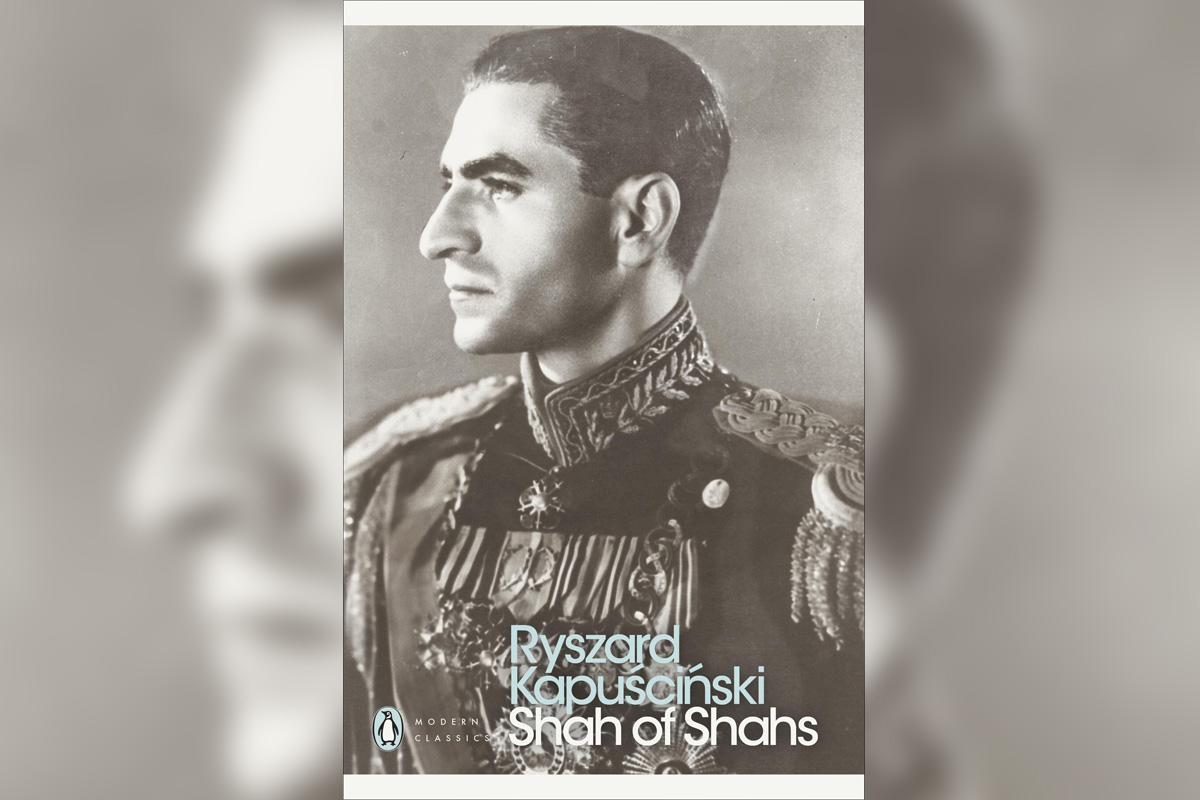
Ryszard Kapuściński, as a foreign reporter for the press agency of Stalinist Poland, was a witness to the Iranian Revolution, along with 26 other revolutions and coups across the colonial world.
In Shah of Shahs he doesn’t pretend to give us a factually watertight report of the events, but paints a gripping picture of the country and its people, its modern history, and the revolution itself, through a series of impressions akin to a literary version of a pointillist painting.
We learn about the origins and the rule of the Pahlavi dynasty through musings on a collection of photographs.
Each image prompts a new story: on the rise and fall of Reza Khan, on the British backed coup against Mossadegh who dared to nationalise the oil, on the glaring injustice of the rich foreigners hosting balls in palaces while ordinary Iranians lived in squalor.
Pahlavi Iran
The Pahlavis – whose exiled scions are to this day yapping at the leash of their American masters – were but a speck on the timescale of Iran’s 2,600 years-long history.
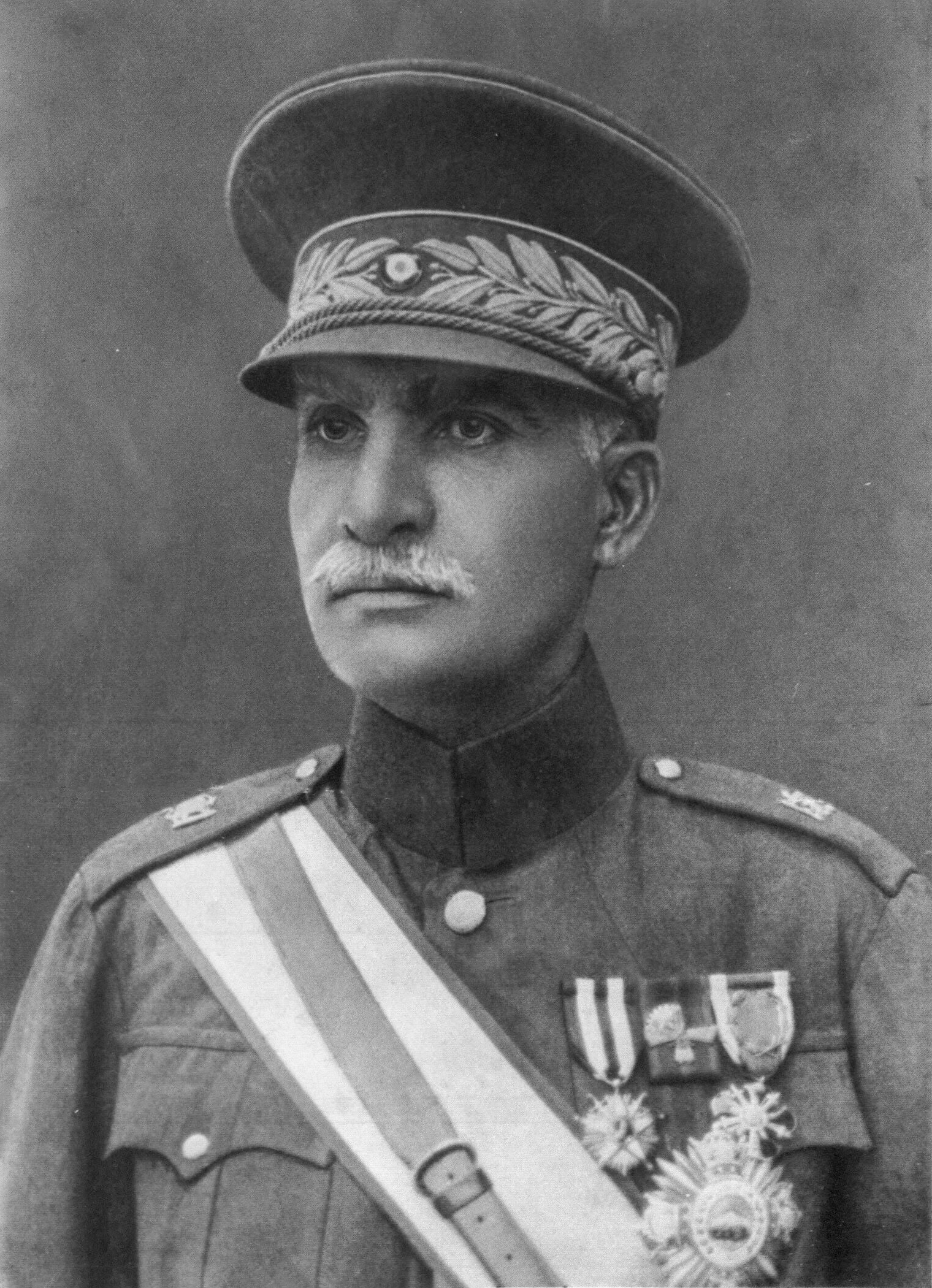
The founder of the dynasty, colonel Reza Khan, at the behest of British imperialism, launches a coup d’état, and installs himself in 1925 as “Shah Reza the Great, Shah of Shahs, Shadow of the Almighty, God’s Vicar and the Center of the Universe”.
Greedy for land and money, he launches a roughshod modernising effort to establish a strong army, but also to undercut the influence of the mullahs over the people.
His hamfisted methods include banning traditional Iranian dress, forcing the population to adopt European clothes, ordering police to tear chadors off women, and many other acts of senseless repression. This will push the people of Iran even further towards the mosques.
Kapuściński summarises the programme of Reza Khan: “In his own brutal words, he wants to put the ignorant mob to work and build a strong modern state before which all will beshit themselves in fear.”
“Empire giveth; empire taketh away” the author wryly notes, as the British depose Reza Khan in 1941 and install his son, Mohammad Reza. The book does a fantastic job of conveying what a narcissistic megalomaniac Mohammad Reza Pahlavi was. While his father came from a very humble background, the second Pahlavi was born into this bubble of wealth, prestige, and power.
“He loved reading books about himself and looking through albums published in his honor. He loved unveiling his monuments and portraits. Catching a glimpse of the monarch’s likeness was nearly unavoidable. To stand in any given place and open your eyes was enough: The Shah was everywhere.”
His rule was disrupted by the Abadan Crisis in 1953, when Prime Minister Mohammad Mossadegh attempted to nationalise Iranian oil, taking it out of the hands of the British. Mossadegh was promptly removed by a concerted effort of Anglo-American imperialism, and the Shah returned to install a totalitarian regime that only a few can rival.
Kapuściński’s writing makes you feel the cloud of fear and oppression so dense as if you were able to cut it.
“The ubiquitous terror drove people crazy, made them so paranoid they couldn’t credit anyone with being honest, pure, or courageous. After all, they considered themselves honest, and yet they couldn’t bring themselves to express an opinion or a judgement, to make any sort of accusation, because they knew punishment lay ruthlessly in wait for them.”
The regime’s strength was helped by a period of economic boom. Pahlavi Iran was a case of combined and uneven development, where brand new modern industries were being established next to villages with no access to fresh water.
This chaos was directed by a megalomaniac, absolute monarch who held a deluded ambition of modernising the country to the level of the United States within a decade. This delusion was fueled by a massive increase in oil prices, which filled the state coffers, and attracted a vast horde of international investors who swarmed Iran like lice.
As entire oil refineries were being shipped from abroad, along with a mass of the most modern weaponry for the state, the masses truly got to experience the ‘uneven’ character of this development.
While the Shah’s court lived in virtually-unlimited riches, hosting some of the most lavish parties in world’s history, the savage goons of SAVAK – the secret police that can be only compared to the Gestapo in their brutality – kept the masses in check.
Revolution and counter-revolution
But as the author states: at some point – a point impossible to exactly predetermine – “a harassed, terrified man suddenly breaks his terror, stops being afraid… Without that there would be no revolution.”
Ted Grant in his 1979 article on the Iranian revolution says the same: “A totalitarian system can only maintain itself by means of terror and a system of informers while the masses are inert. But once the masses move into action against the regime it is the beginning of the end. The monstrous secret police are shown to be impotent in the face of the movement of the masses.”
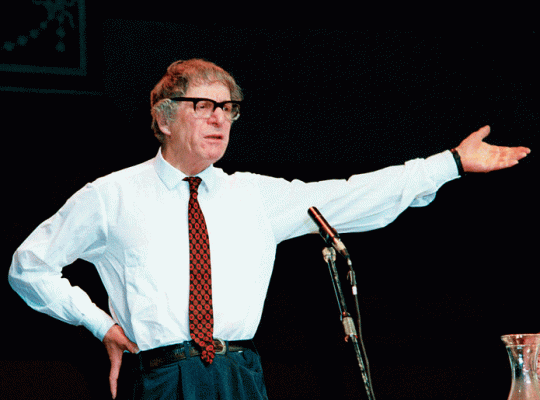
Ted’s article is in fact a fascinating companion piece to read alongside the book. Kapuściński through his masterful use of literary reportage gives you a real feel for the people of Iran, the country’s history, and the psyche of the masses in the revolution.
Ted’s analysis, on the other hand, helps one understand the underlying revolutionary processes scientifically, and covers some missing elements that the author’s Stalinist bosses in Warsaw wouldn’t allow him to write about. The abject betrayals of the Stalinist Tudeh party are conspicuous for their absence.
At another luxurious party on the New Year’s Eve of 1977 Jimmy Carter, US president at the time, declared Iran to be “an island of stability in one of the most troubled areas of the world.”
Within a week, an article in the government newspaper, crudely attacking Ayatollah Khomeini, will spark the protest in Qom which will be brutally extinguished, leading to more protests engulfing the country. Within a year, the Shah will be forced to flee the country like a rat, but not without first stealing some £1 billion of assets belonging to the people of Iran.
The leadership of the revolution fell into the hands of the very mullahs whose influence the Pahlavis wanted to undercut. Mosques were one of the only places where people felt free to speak their mind without fear of SAVAK agents, and so people naturally flocked to these.
However, with the power of the Iranian working class that grew on the back of the rapid economic development, an organisation of only a few thousand revolutionary cadres could’ve provided leadership necessary to lead the people of Iran to socialism.
The orders to the Tudeh party from Moscow were clear, though: do not rock the boat, we want no trouble there, follow the ayatollahs. The Tudeh party lent support to Khomeini and the mullahs, only to become one of the first victims of the new Islamic regime.
Decades of experience reporting from revolutionary battlefields crystallise in Kapuściński’s own thoughts, where with remarkable clarity he conveys a great deal of wisdom about revolutions which Marxists would usually only gain first from theoretical study.
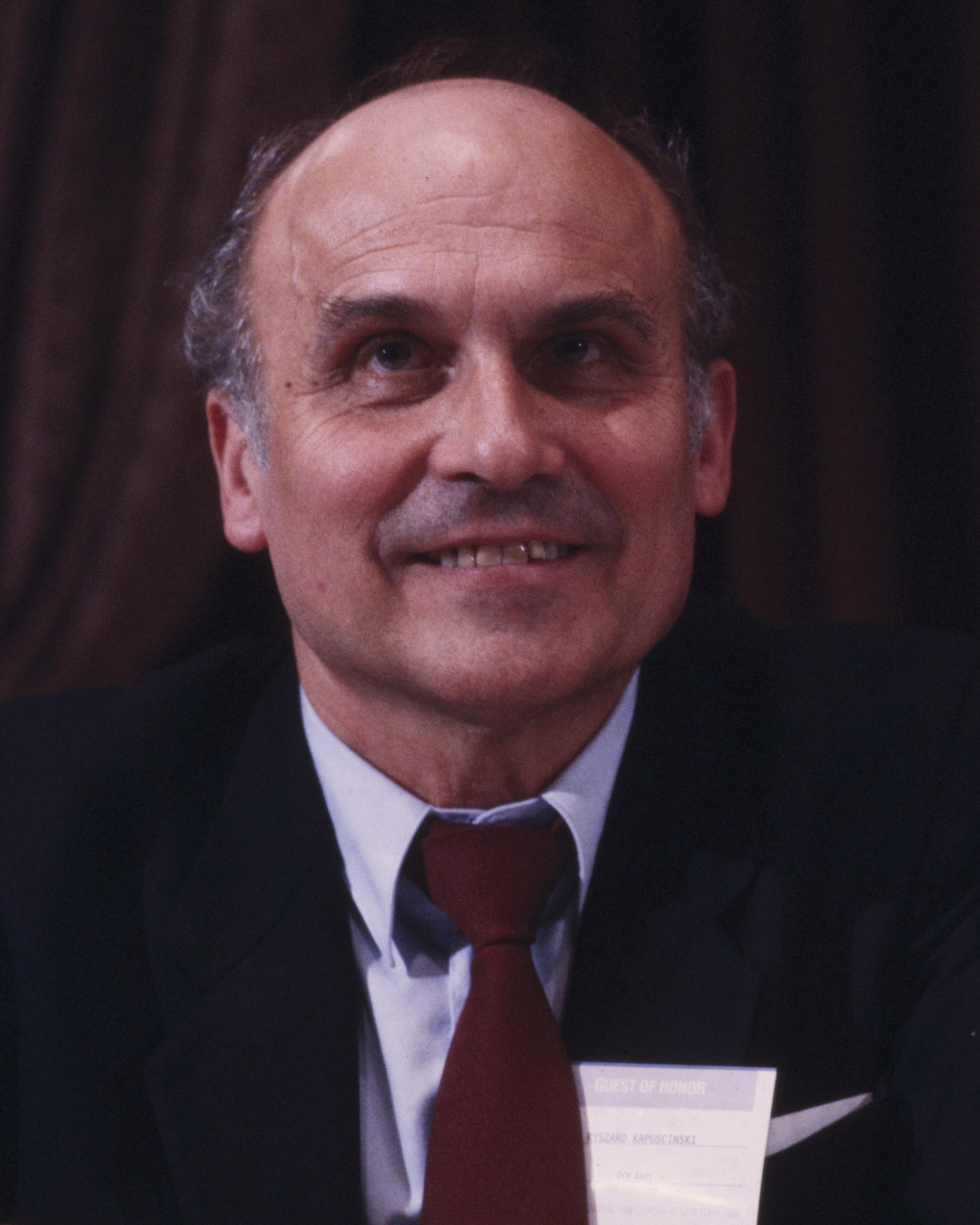
Surviving through 40 arrests and escaping four death sentences, Kapuściński gives us an unforgettable peek into the full, all-consuming and untamed process of a revolution – and its impact on the psychology of the masses and individuals.
The people of Iran experienced centuries of oppression, betrayal, humiliation, and terror by rapacious monarchs, foreign imperialists, and now their mullahs.
Today as they are pummeled by the rabid, senseless violence of the US-Israeli onslaught, perspectives for revolutionary change and genuine freedom may seem bleak.
In one of the dialogues in the book a man expresses his doubts on the eve of the events of 1978: “Who is going to carry out this revolution of yours? They are all sleeping.” His brother replied, “these very people will do it. One day they will sprout wings.”
Indeed, they will – in Iran, in the Middle East, and across the entire world.
Shah of Shahs is available from Wellred Books Britain.