Resistance is a recent photography exhibition in Edinburgh – which ran from 21 June 2025 to 4 January 2026 – showing how protest and class struggle shaped modern Britain.
The exhibition was curated by British Oscar-winning director Steve McQueen, Clarrie Wallis, and Emma Lewis.
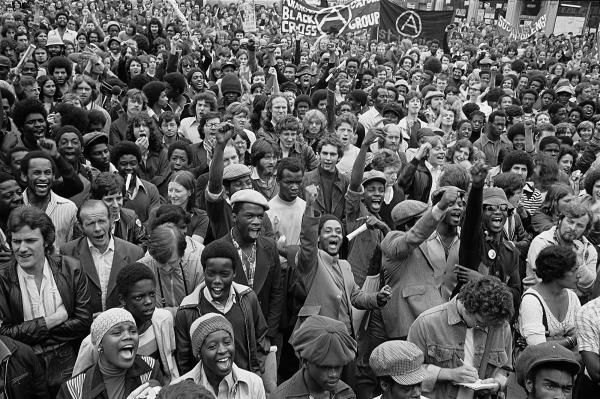
In each of its various rooms, we are taken through a history in protest photography: from images of lone suffragettes amongst a sea of police officers; to seas of faces filling the frame in protest against Thatcher’s Clause 28, which banned local authorities from “promoting homosexuality”.
Unflinching depictions
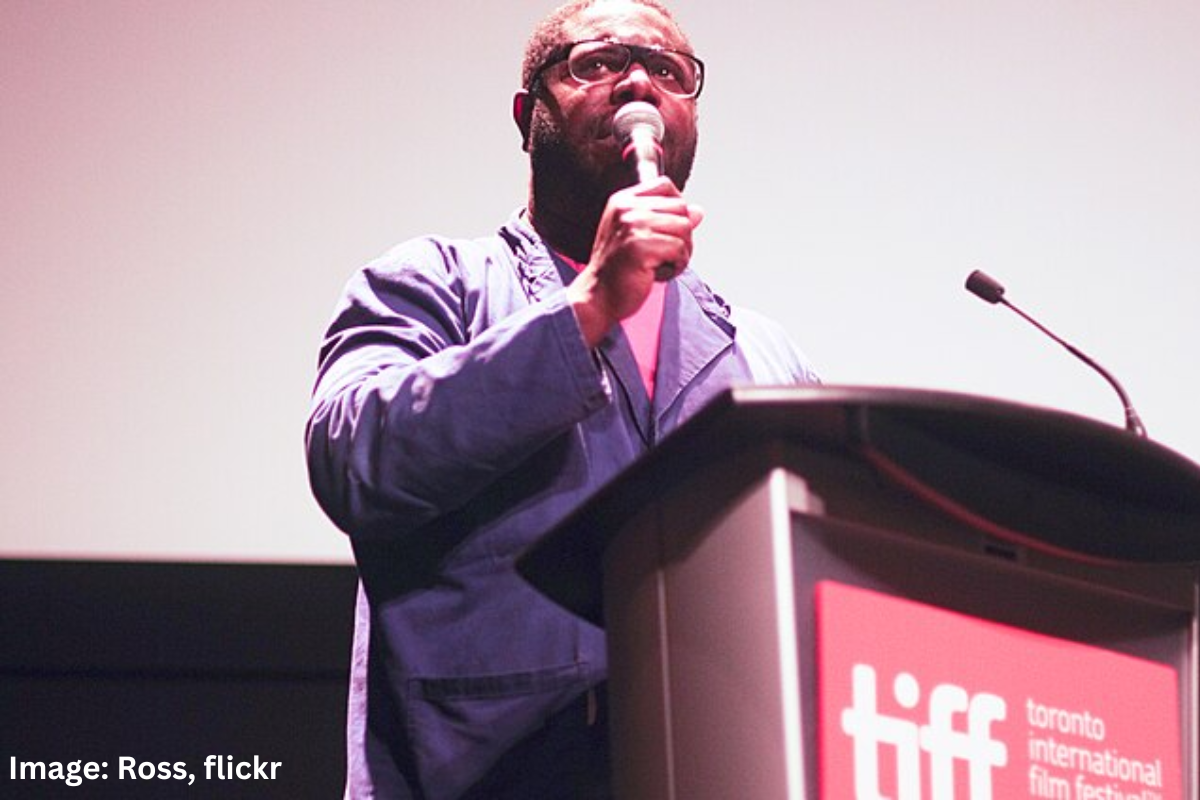 Steve McQueen is not always promoted in the bourgeois media as a ‘political’ artist. And yet throughout his work we are shown unflinching depictions of the violence and prejudice of capitalism, imperialism, colonialism, and class society as a whole.
His first feature film, Hunger, deals with the torture and mistreatment of Bobby Sands and the Irish hunger strikers by the British state. His Best-Picture-winning 12 Years a Slave is a harrowing true story of an educated black American freeman, who was captured and sold into slavery in 1841. And his five-part BBC series Small Axe deals with institutional racism within the British police, the Mangrove trial, and the Brixton Riots.
Subject matters such as these are rarely dealt with by such a high-profile artist. And although small-scaled in comparison to his other work, Resistance fits in with the broader themes of McQueen’s body of work.
Candid moments
The photographs, which were taken by both renowned and unknown photographers, capture things like candid moments of joy during protest: for example, a couple dancing at the first Caribbean Carnival in 1959. One image, entitled ‘A defiant celebration in response to racist violence’, was a particular favourite of mine.
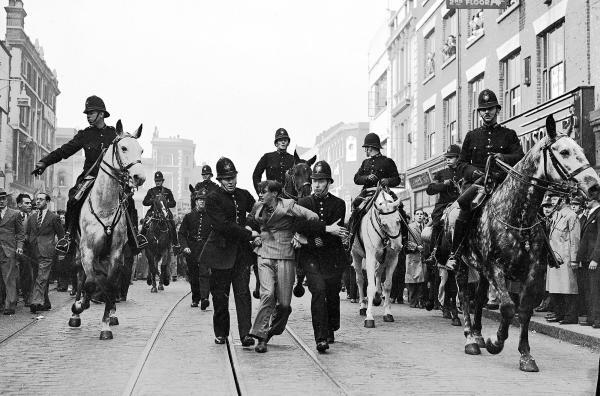
These photos also capture the other side of such events, however, including violence, hunger, and prejudiced sentiments – such as ‘Britain for the British’ – that remain present in today’s society.
Strikingly, all the photographs are in black and white. This lends a seriousness and concreteness to the exhibition, without making the images feel dated or anachronistic.
What shines through at all times is the humanity, expressed in shots that are sometimes candid; sometimes chaotic and messy. The faces are at the same time historical, but also recognisable. Every person or in this collection of images could be standing behind you in the supermarket queue.
Class struggle
Communists have always pointed out that the limited rights the working class enjoys today were won through bitter class struggle and revolution. This is aptly showcased in Resistance.
The exhibition concretely demonstrated to me the daily battles of the working class against everything from exploitation and oppression to everyday problems. It showed me the creativity of the working class during struggle.
And it exposed the hypocrisy of the capitalist state and the ruling classes, who pretend that they benevolently granted these rights out of their good will and generosity.
The exhibition correctly suggests that the working class cannot be complacent. Real change will only take place through struggle. This is often forgotten or buried.
In fact, the words ‘there will be no miracles here’ is spelled out in lights outside of Modern Two, the Edinburgh art venue hosting Resistance. This suggests that the curators are aware of this very fact.
Although not part of the Resistance exhibition, it does lead us perfectly to a quote from the book that accompanies the exhibit:
“But that progress did not appear out of a clear blue sky. There was nothing inevitable about it…They did not simply arrive of their own accord, invited by the historical moment to take their place at the table of right-minded decency. They were not given or granted. They were demanded and they were conceded.”
Protest photography provides vital documentation – a necessary reminder – of this reality. For this reason, exhibitions such as Resistance deserve to be viewed as widely as possible.
But most importantly, we must continue and complete the struggle to change society. Capitalism is in terminal crisis. And the rich and powerful are taking the world down with them, as their system sinks.
Until we overthrow capitalism, we will continue to see images like the ones shown in the exhibition.
No-one else will fight our battles for us. There will be no miracles here. We must create them for ourselves.