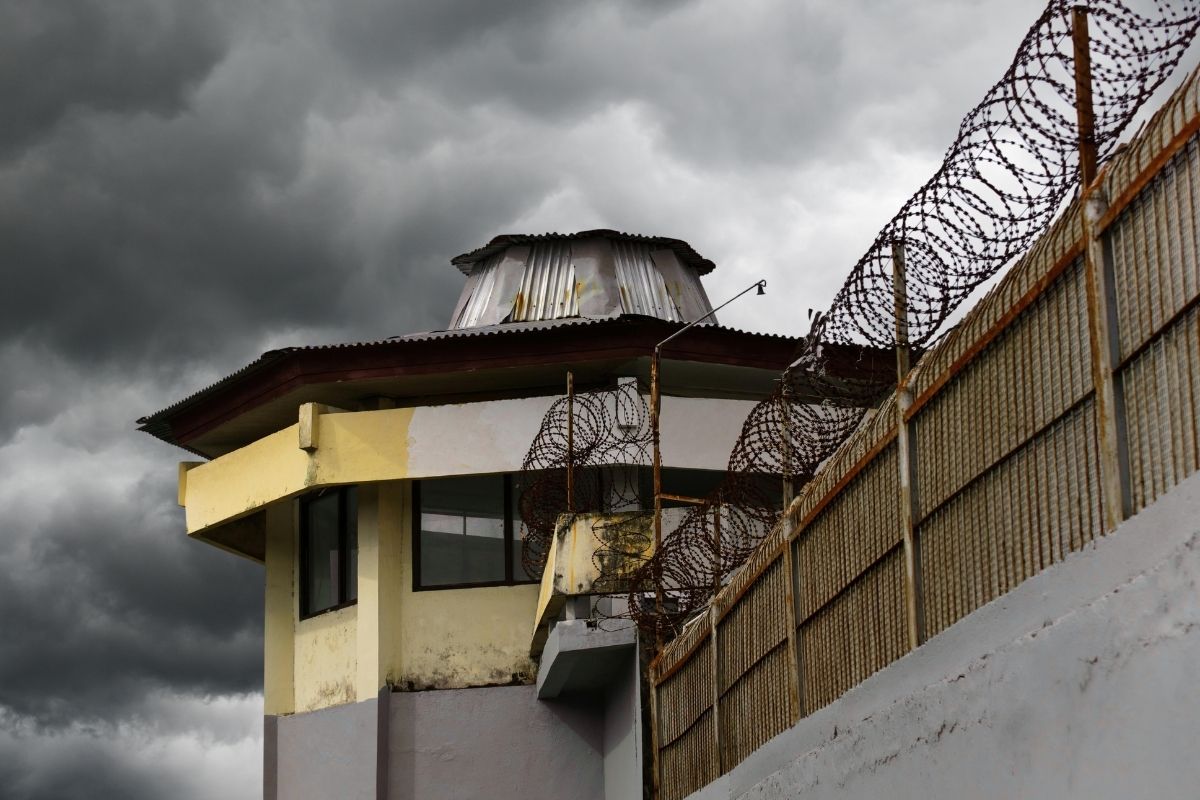

Tory or Labour, successive British governments have vowed to be tough on crime.
When he became Prime Minister in 2019, Boris Johnson promised more police, more prison spaces, longer sentencing, and better prison security. Similar promises were made by Rishi Sunak and Liz Truss before they took the helm.
Not wishing to be outflanked by his friends on the other side of the house, Starmer put ‘law and order’ at the heart of his election campaign, praising the methods of Thatcher. He – laughably – promised to restore public confidence in the police.
However, at the same time as making these big (and expensive!) promises, these same parties have continuously made cuts to the services they would need to do this.
They can promise all they want, but the state’s institutions are too overburdened and underfunded – its staff too overstretched and demoralised – to carry out any of these law and order pledges.
Bursting prisons
 One example of this is the Prison and Probation Service, which has seen an 11 percent real-terms budget cut since 2008 – despite the number of prisoners doubling in the last 30 years.
There are currently around 90,000 people in prison in England and Wales, with about 20,000 of these for non-violent crimes. Adding to this are 18,000 currently people on remand, rotting away while they await trial, amidst severe court backlogs in Britain’s crumbling legal system.
Since the pandemic, the prison population has been rising each year. It is estimated to hit over 100,000 by 2030. But prisons are already fit to burst, operating at 98.9 percent capacity. This means there are fewer than 1,000 cells left across England and Wales.
Several prisons are already far over capacity. For example, in 2024, an inspection of HMP Wandsworth found the facility was operating at 157 percent capacity.
Scandalously, instead of the limited budget going towards fixing issues such as these, the Ministry of Justice still pays £4 million a year – including £1.5 million to the Royal Family – on renting a prison that is unusable because it is contaminated by radioactive gas!
Another factor in this chaotic situation is that prisons have a huge turnover of staff – who are overstretched, inexperienced, and suffering from very low morale. A 2023 survey found that over half of prison workers do not feel safe at work.
Tens of thousands of early releases have been signed off to try and solve this crisis. Unfortunately this has resulted in serious mistakes being made.
Late last year, the accidental release of two sex offenders made national news. Justice Secretary David Lammy was then forced to admit that twelve prisoners had been accidentally released from prison in just three weeks.
Right wing and the media had a field day with this, all for their own purposes. But the facts undeniably are that, in the last two years, the figures for prisoners released in error have risen by over 200 percent.
Probation services crumbling
Meanwhile, probation services – which are vital for reintegrating offenders back into society – are also operating far beyond capacity, with staffing in some places at 61 percent of what it should be.
In January 2025, the BBC published a testimony from an anonymous probation officer who revealed feeling suicidal from the pressure of his job,and regularly experiences panic attacks:
“Waves of nausea, heart racing, profuse sweating, and I wake up in the night thinking: ‘Have I missed something at work that could lead to someone getting hurt?”
He also admitted that in his office it is not uncommon for officers to cry at their desks under the pressure of their workloads. Senior probation staff claimed that sickness amongst probation officers is on the rise, and that a shocking 75 percent of sick leave in the role is down to stress.
These consequences of these increased workloads and the exhaustion of probation officers can be immense.
One such tragedy is the case of Zara Aleena, who was murdered by a stranger in June 2022 while walking home in East London. The perpetrator was released on probation a mere nine days earlier and should have been recalled to prison after failing to check in with his probation officer.
While cases of this extremity are not widespread, in recent years a growing number of horrific crimes, such as rapes and murders, are taking place due to the failures of the probation system. These are some of the barbaric consequences of a system in crisis.
Broken Britain
It is no surprise that social malaise is growing in Britain.
Today, 73 percent of burglary cases are closed without a suspect being identified. In England and Wales, an estimated 89 percent of reported violent and sexual offences are left unsolved. In fact, the proportion of violent and sexual offences solved has almost halved since 2017.
According to a March 2025 survey, 50 percent of adults feel less safe in Britain than they did ten years ago, with many saying they are scared of becoming victims of crime. Of those surveyed, 75 percent believed that violent crime rates were increasing.
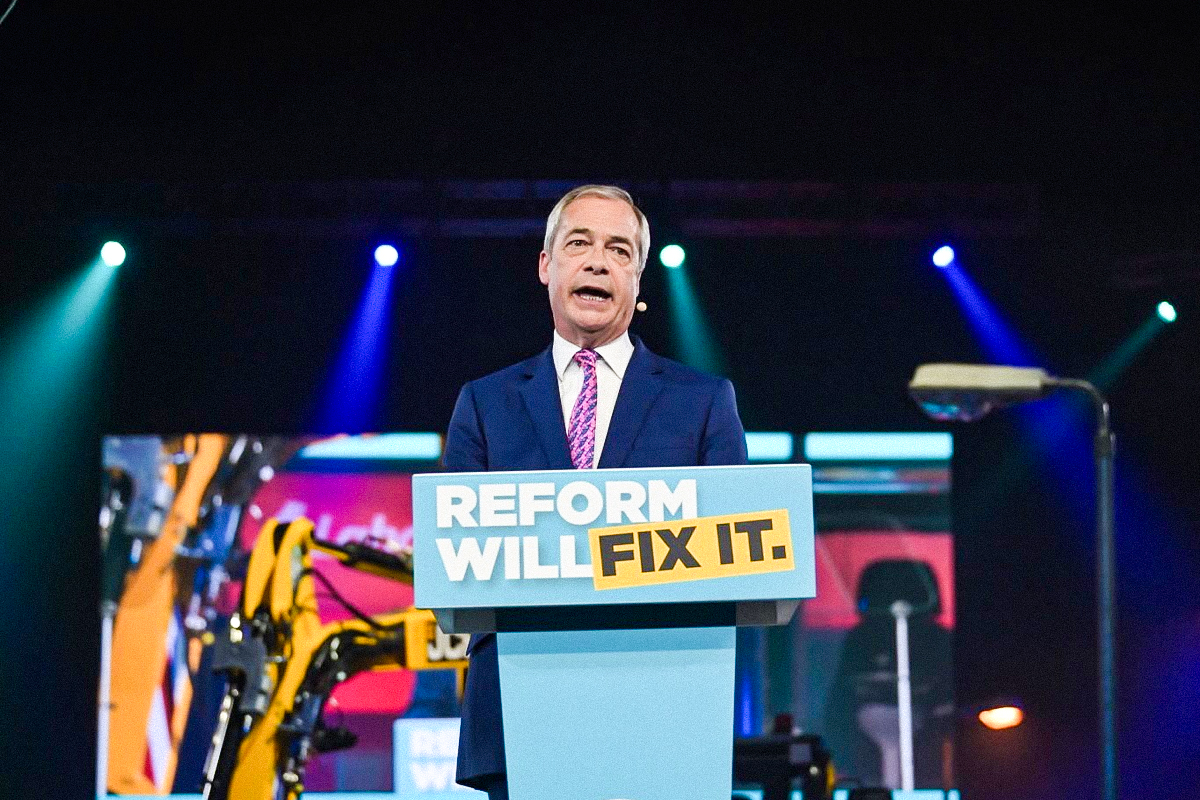
This discontent and disillusionment in British society is expressing itself in many ways. One of those ways, as we have explained in previous articles, is with the rise of figures on the right, like Farage and Tommy Robinson.
These right-wing populists and demagogues are currently reaping the rewards from the crisis of the state institutions. They are tapping into the hatred of Starmer’s Labour government, which they portray as soft on crime.
Alongside this, they have been able to play on people’s legitimate anxieties around feeling unsafe in their homes and neighbourhoods, cynically whipping it up in the direction of anti-immigrant sentiment.
We saw the result of this when protests erupted in Epping in July last year, after an asylum seeker was jailed for sexually assaulting a teenager. Tensions then escalated again in October, when he was accidentally released from prison.
Ready to explode
However, this feeling of hatred for the establishment is not isolated to the right wing. Disgust and rage against the establishment is deepening at either end of the polarisation taking place in British society today.
There is a whole generation of radicalised young people who hate the government, hate the police, and have no faith whatsoever in the ‘safety’ of the status quo – or the solutions to crime offered by the capitalist system.
We understand that no amount of investment in prisons and police can fix the problem of crime and social decay. The police are some of the worst thugs and criminals out there, and Britain’s brutal, punitive justice system only perpetuates the cycle of crime.
In order to create safe communities, free from violence and abuse, we need to upend the system that produces crime.