
Whether you’ve dived into the epic poem itself, seen it told in that one episode of The Simpsons, or, like me, you were read versions of the most exciting tales at bedtime as a child – everyone is familiar with some aspect of The Odyssey.
The alluring sirens; the formidable cyclops; the Trojan Horse; the archetype of the hero’s journey – all are enduring features of a story that is over 2,700 years old.
With such timeless source material, many filmmakers could get away with simply producing a thoroughly entertaining and thrilling watch.
However, Christopher Nolan, acclaimed filmmaker of narrative puzzles (The Prestige, Inception) and highly-sensitive character studies (Oppenheimer) alike, has opted for something much more with this latest adaptation.
Anti-war
In fact, the art of any adaptation, but especially one of a story as rich as this, lies in the choice of themes and ideas which are amplified by the director.
Now is a time of heightened world tensions, war and genocide. It should come as no surprise, then, that Nolan lays special emphasis on the Trojan War and its effects: both at home and abroad, both psychological and social.
At root, Nolan has re-told The Odyssey as an anti-war story.
We’re still taken along the familiar journey which Aristotle once famously summarised as follows: A man (Odysseus) is away from home for many years; at home, his estate is being ransacked for feasts and parties by suitors that plot against his son and intend to marry his wife; the man returns home after many hardships (mythological beasts, enchantresses, storms and shipwrecks) to destroy his enemies; he saves the day and restores order.
This broad outline is preserved, but Nolan emphasises how each twist and turn of the story is a consequence, more or less direct, of the destruction and bloodshed carried out at Troy. In Nolan’s inimitable style, the Trojan War hangs heavy over all the action in the film.
Rest assured, this isn’t a glorification of heroic warriors or holy wars. Instead, as the film progresses, so too does the violence and horror of war that is depicted on screen.
From soldiers drowning inside the Trojan Horse while they wait on the city’s beaches, to the scenes of the sack of Troy itself and the grizzly deaths of Odysseus’ crewmates on their adventure home, there is no shying away from war’s brutal reality.
A complicated man
Nolan makes use of film’s ability to montage one sequence with another, which can suggest the complicated interaction of past and present. We’re constantly brought back to the devastation at Troy – just like how the minds of those traumatised by it return to it, try to process it, and begin to realise the full sweep of its consequences.
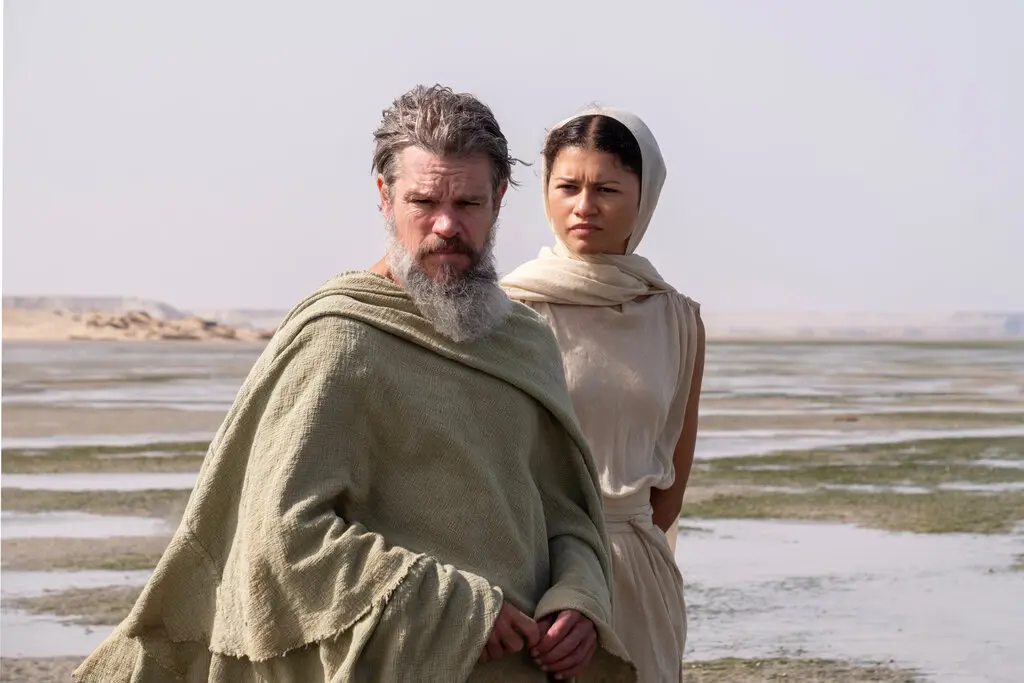
These consequences are naturally most deeply explored through the film’s eponymous hero, Odysseus (played austerely by Matt Damon). But here again, Nolan has subtly re-written the way our hero re-lives both the war and his fateful journey home.
In the poem, Odysseus is recounting his journey after leaving the nymph Calypso’s island. In the film, we find Odysseus still on Calypso’s island, as she encourages him to break the block on his memories, recall his past, and complete his quest. The reason she erased his memory to begin with, she explains, is because the pain would be too difficult to endure.
This small change allows Nolan to craft the narrative so that we, as the viewer, piece together the war and the journey at the same time as Odysseus.
View this post on Instagram
Like anyone recalling harrowing and traumatic events, the film reveals these events incompletely, in a partial way – especially the war. This means that as the film progresses the threads slowly come together like a tapestry weaved on a loom.
The tapestry of Odysseus’ twenty-year journey is complex – the film opens with the words “tell me about a complicated man,” and he is complicated indeed! But it’s that ambiguity that makes for a thrilling story, and a more truthful one, too.
Odysseus is at times an inspiring leader, at others a brutal one; he’s a sly and cunning tactician, but also vengeful and arrogant. Most often his heroic deeds precede him, but it’s these that weigh him down with guilt.
As we learn more about what took place at Troy, the difficulties faced on the homeward journey almost appear as punishment for the brutal way the war was fought.
The message seems simple: actions have consequences – and terrible actions (such as in war) have terrible consequences.
Zeus’ Law – and hypocrisy
More often than not when someone thinks about Greek mythology, they think about the vast pantheon of gods: Zeus, Poisedon, Athena, and so on.
In The Odyssey, too, they usually play a central part. In Nolan’s hands, however, it’s only Athena who is really represented, played ephemerally and subtly by Zendaya, with the other most noticeable mention being Zeus’ law.
Frequently invoked throughout the film, the custom is essentially that you should be kind to any stranger that enters your home because they could be a God in disguise. You should give them gifts, let them eat and drink, and treat them as you’d wanted to be treated yourself – lest they bring misery and misfortune upon you.
View this post on Instagram
But since the battle at Troy, adherence has slipped: there are no warm welcome for Odysseus on his journey, and in Ithaca suitors plague his palace while his wife, Penelope (Anne Hathaway) suffers their torments and her own sense of loss.
Indeed, the use of the Trojan Horse at Troy is shown to be the most profound violation of Zeus’ Law: a crossing of the rubicon. Posed as a gift from the Greeks to the Trojans, in honour of Athena, it was accepted as custom – while inside the horse a Greek army waited to slaughter Troy from the inside out.
Gods and men
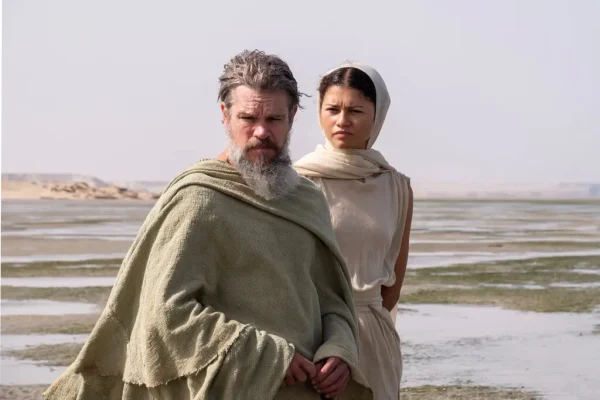 As Odysseus reflects on this betrayal, he, like the viewer, becomes more convinced that he is the subject of divine punishment, or that the gods are responsible for this carnage.
Instead, it is the war and devastation carelessly launched by mortal kings and generals, with no real care for all the lives that will be brutally cut short, are posited to be the real curse on mankind.
Through all the thrilling and satisfying action we’re left with a sober reflection on war and its effects: a devastating force which, the film threatens, could easily erase civilization as we know it. We’re encouraged to listen to stories like The Odyssey and so digest the mistakes of the past.
It can also be easy to over-intellectualise epics like these, however. Fundamentally, The Odyssey makes for a thrilling watch, full of schemes, intrigue, disguises, comeuppance and emotional reunions. Nolan has treated us to a real spectacle full of monsters, warships and witches. It is only a good thing that this story, brimming with ideas, has made its way onto the big screen once again.