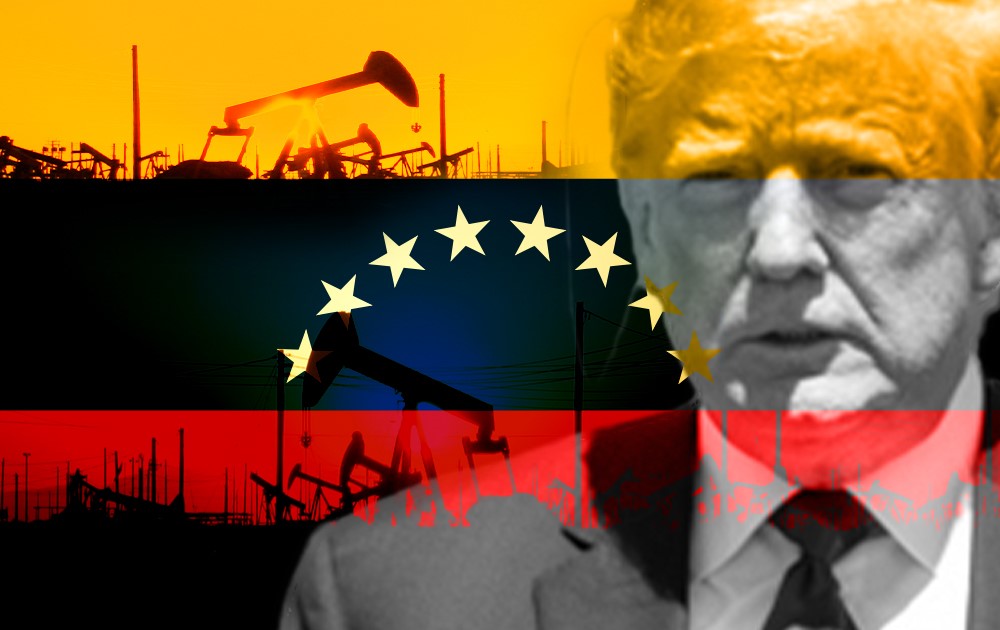
The US invasion of Venezuela at the beginning of this year is an event of historic significance. With the kidnapping of President Nicolás Maduro and his wife under a hail of bullets and bombs, the Trump administration announced the definitive end of the ‘rules-based’ world order.
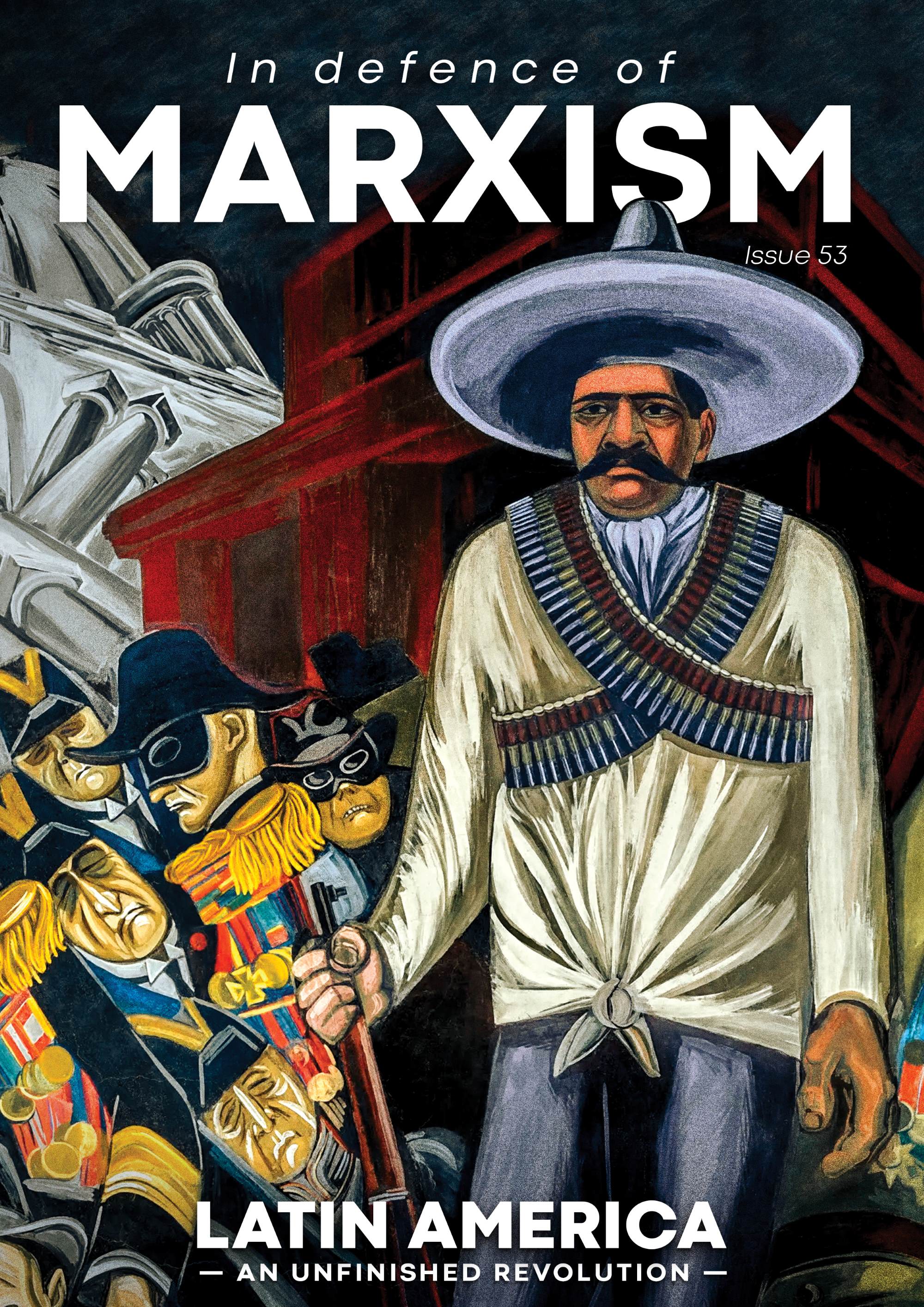
[We publish here the editorial of issue 53 of ‘In Defence of Marxism’ magazine – the quarterly theoretical journal of the Revolutionary Communist International. Get your copy now!]
Gone is the era of appeals to ‘international law’ and ‘democracy’ as fig leaves for imperialist interventions. This operation was nothing other than the naked reduction of a sovereign nation to a semi-colonial state in pursuit of raw materials and spheres of influence.
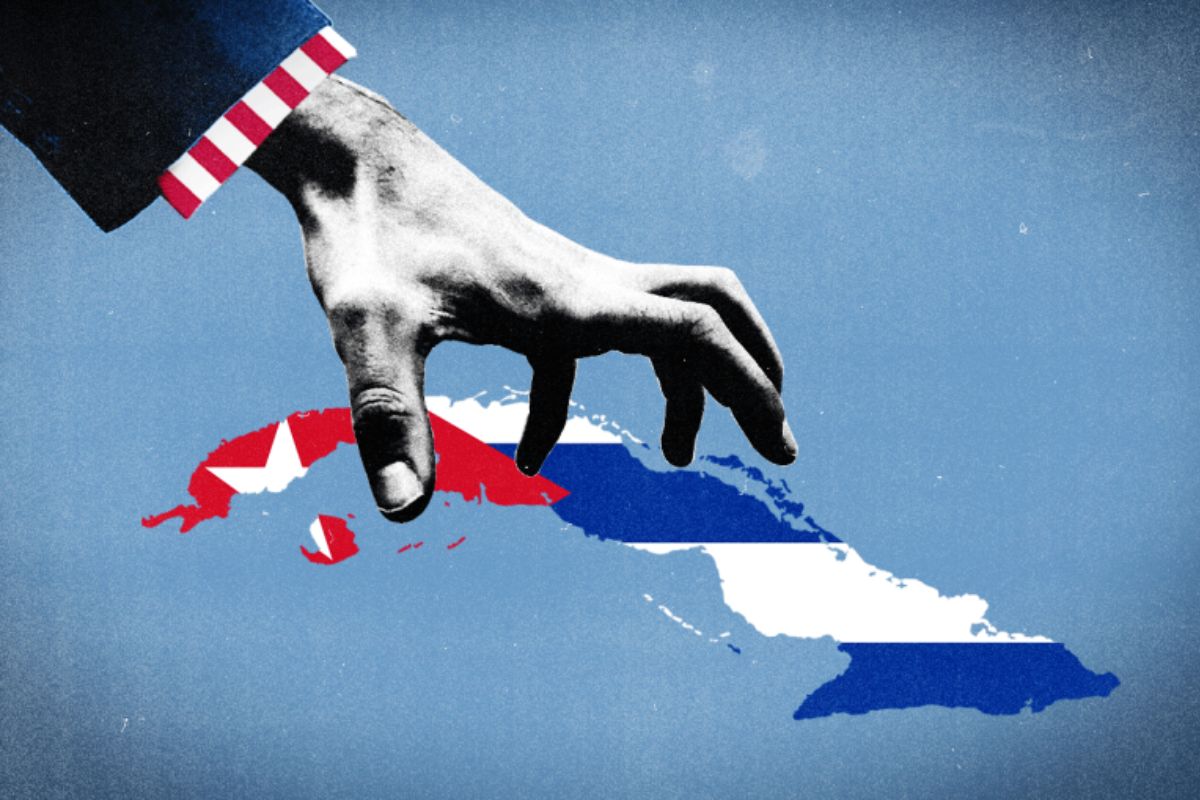
Operation ‘Absolute Resolve’ was also intended as a clear message to the rest of the Americas, and was followed with direct threats to Colombia, Mexico and Cuba. This is all part of an attempt by US imperialism to re-establish firm control over the continent, as codified in Trump’s new National Security Strategy document and the ‘Shield of the Americas’ summit in March.
The essence of Trump’s policy, referred to as the ‘Trump corollary to the Monroe Doctrine’ – or ‘Donroe Doctrine’ – can be summed up in the words of the US State Department’s official X account:
“This is OUR Hemisphere, and President Trump will not allow our security to be threatened.”
In this, the Trump administration is merely restating a long-standing policy of US imperialism in relation to its so-called ‘backyard’. Back in 1912, President William Taft claimed the Western Hemisphere “will be ours in fact as, by virtue of our superiority of race, it already is ours morally”.
But this is not the ‘return of imperialism’, as the liberal press laments. It is simply the continuation of five centuries of domination, plunder and exploitation in Latin America.
View this post on Instagram
Five centuries of plunder
Latin America has everything required to build a paradise on Earth, but its people have been forced to endure a hard purgatory. First under the domination of Spain and Portugal, then Britain, and last but not least the United States, for 500 years the lands and peoples of Latin America have been ruthlessly and systematically looted. This constant plunder was captured brilliantly in Eduardo Galeano’s 1971 book, Open Veins of Latin America.
The original conquistadors came searching for gold and silver, but as the world market developed, so too did its rapacious appetite for other raw materials which were essential for the development of the modern economy: iron, tin, copper, oil, and now lithium, known as ‘white gold’, and cobalt for ‘green’ and military technologies.
The loot may have changed form over the centuries, but the brutality of its extraction has remained constant.
Indigenous forced labour and enslaved Africans once worked the mines of Potosí. Today, ‘free’ indigenous workers are driven by desperate poverty to work exhausting days for meagre wages, only to die of lung poisoning by the age of 45, almost 30 years earlier than the rest of the population. What is this but slavery by another name?
Latin America’s riches are not limited to the minerals beneath the ground; its stunning biodiversity and rich soils have provided key commodities for the world market for centuries. Indigenous crops like cacao, cotton and rubber were joined by intensive cash crops from abroad – sugar, coffee and bananas – introduced on a massive scale through the plantation economy.
The extension of the plantations went hand in hand with the destruction of both the environment and countless indigenous peasant communities, who saw their lands stolen and were forced to work on haciendas as serfs or in the mines. A similar process is taking place today in the rainforests of Brazil, where indigenous people are being displaced and killed by gold miners and ranchers.
These old haciendas have since evolved into modern latifundios: gigantic estates that monopolise the land. The Spanish nobles and the Catholic Church were simply followed by the capitalist lords of the land, such as the United Fruit Company, which in the 1950s owned 40 per cent of all arable land in Guatemala.
In many ways this process of dispossession and exploitation reflects what Marx describes as the ‘primitive accumulation of capital’, which paved the way for the rise of the capitalist system. But unlike in Europe, this brutal exploitation did not result in strong, industrialised economies in Latin America. Instead of being invested at home, the profits were siphoned off into foreign bank accounts, with only crumbs falling to the local cronies of foreign capital.
Ore from foreign-owned mines is transported by railways funded by foreign loans to ports where foreign shipping companies pick it up, only to be refined elsewhere and sold back to the region at much higher prices. Any attempts by domestic firms to compete have been crushed. This cycle of dependency is reinforced by debt. Where colonies once paid a tribute to the Spanish Crown, they now pay a much greater sum in interest to banks in the ‘advanced’ countries.
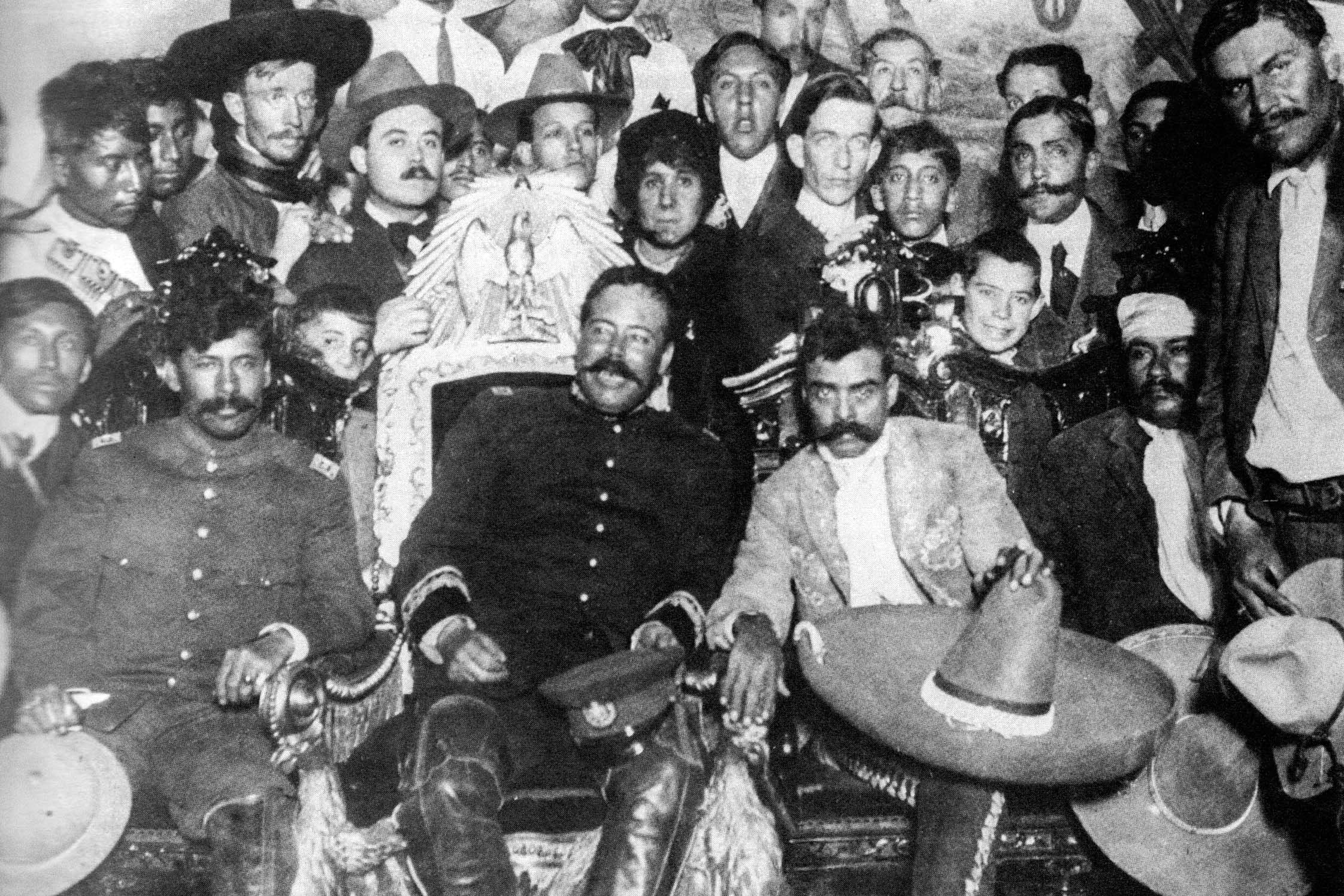
This system would be impossible to maintain without an endless cycle of imperialist interference, war and genocide. The result is an average poverty rate that is roughly double that of the OECD countries. In total, 56.5 per cent of Latin Americans are either ‘in poverty’ or ‘vulnerable’, making this the most unequal region in the world.
The poverty and violence suffered by the masses inevitably drives migration. As early as 1830, Simón Bolívar lamented: “The only thing to do in America is migrate”.[1] By 2020, 47.2 million emigrants from the Americas were living outside their country of birth, often following the flow of stolen profits to find work in the nations that impoverished their homelands.
The torch of revolution
Centuries of oppression have been met with centuries of resistance and revolution from the people of the region.
The first successful revolution against slavery and colonialism in Latin America took place in Haiti, where the 1791 slave uprising transformed the most profitable colony in the world into the first independent nation of Latin America and the Caribbean.
This was followed by a wave of revolutions in what was then known as Spanish America, after the defeat of the Spanish monarchy by Napoleon in 1808. The first of these revolutions began in La Paz in July 1809, when the Junta Tutelar de los Derechos del Pueblo, led by Pedro Domingo Murillo, issued a bold declaration of independence, condemning the “tyranny of an unjust usurper who, degrading us from the human race, has branded us as savages and regarded us as slaves”.[2]
Though Murillo was captured and executed by imperial forces in January 1810, he declared defiantly:
“Compatriots, the torch I leave lit, no one will be able to extinguish”.[3]
He was not wrong.
In the spring of that year, revolutions broke out in Caracas and Buenos Aires, beginning an era of revolutionary wars that would eventually liberate all of Spanish-speaking South America.
Meanwhile, in the early hours of 16 September 1810, Miguel Hidalgo rang the bells of the church of the Mexican town of Dolores and issued his famous ‘Cry of Dolores’, of which there are many reported versions, including:
“My children! Join me! Help me defend our homeland! The Spaniards want to hand it over to the godless French. No more oppression! No more tributes! To those who follow me on horseback, I shall give a peso; and to those on foot, 50 cents.”[4]
By 1826, all of the modern nations of Latin America, except for Cuba and Puerto Rico, had won their independence.
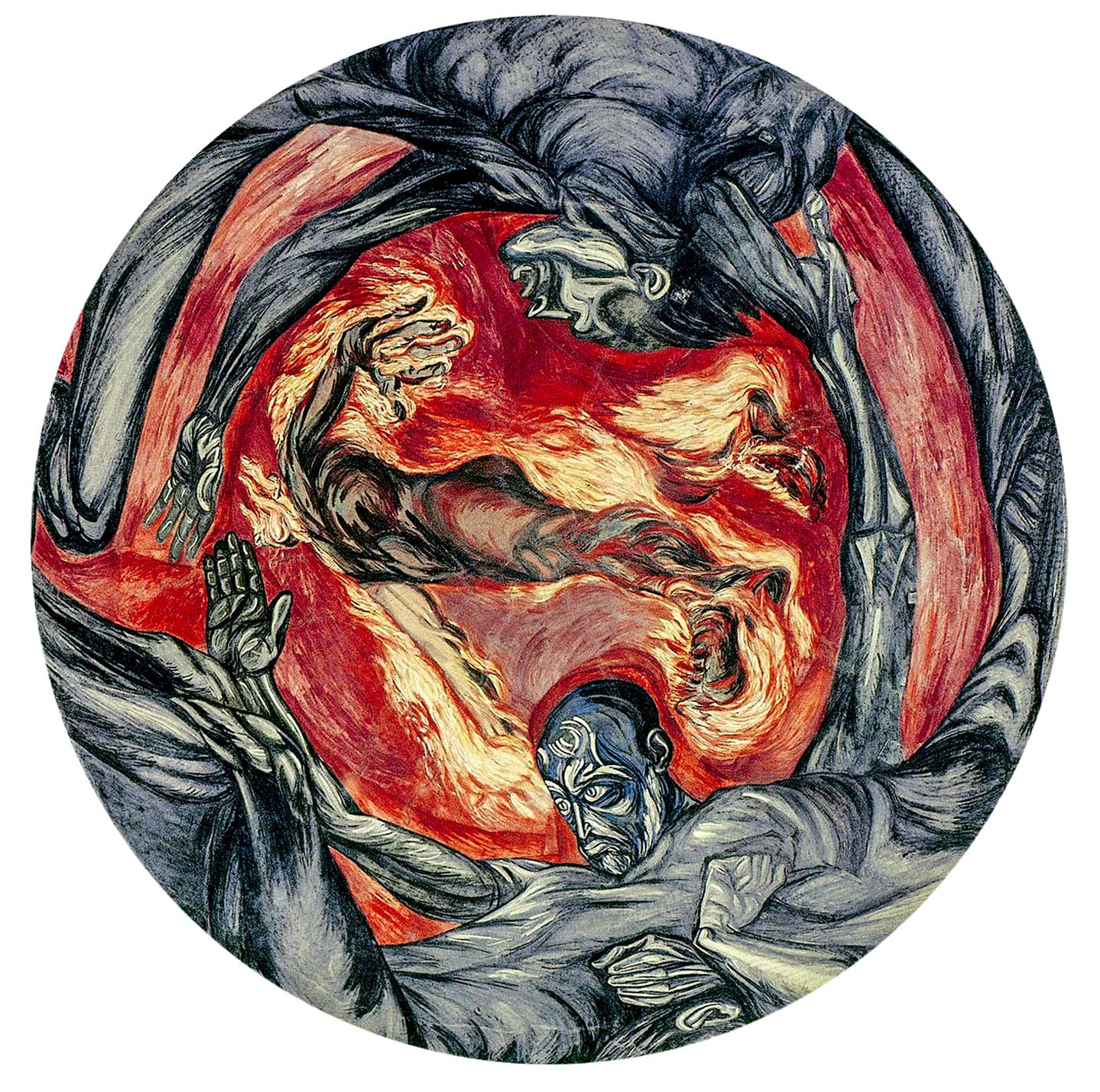
These movements were profoundly progressive, raising the classical demands of the bourgeois-democratic revolution: national sovereignty, legal equality, the abolition of slavery, and land reform. Yet, because the domestic criollo (creole) bourgeoisie feared the masses more than it hated the Crown, these goals were often compromised or left half-finished.
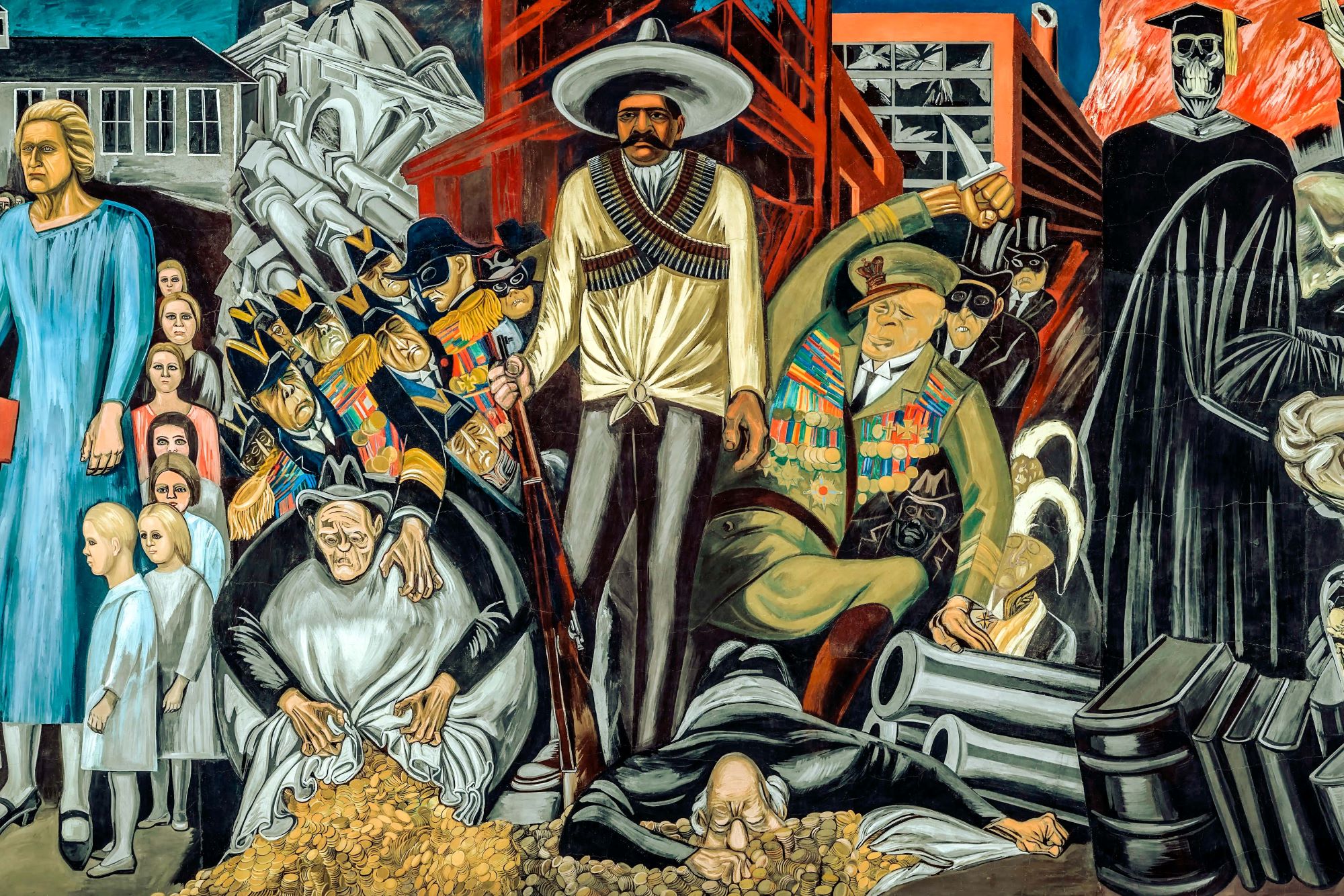
The torch of revolution was passed again a century later, with the outbreak of the Second Mexican Revolution in 1910. This era saw the rise of radical peasant leaders, such as Pancho Villa and Emiliano Zapata, whose cry of “La tierra para quien la trabaja” (Land for those who work it) has become a central demand of revolutions throughout Latin America.
Since then, inspiring revolutionary movements have swept the region again and again. But this not only demonstrates the heroism of the masses; it shows that the great Latin American Revolution has not been completed.
Unfinished tasks
Despite two centuries of struggle, not one of the fundamental demands raised by the masses has been fully carried out. National sovereignty – defined as the supreme authority of a state to govern itself without external interference – remains an aspiration rather than a fact, in a region where imperialist interference makes itself felt at every level of society.
Leaving aside the fact that Puerto Rico remains an ‘unincorporated territory’ – a colony – of the United States, to what extent can we speak of national sovereignty, even in countries which are formally independent?
What does sovereignty mean in Venezuela when its president can be kidnapped by a foreign power and put on trial in New York like a common criminal, while the policies and even the budget of the government are dictated from outside? And can the state of Argentina truly be considered sovereign when its debt restructuring laws can effectively be overruled by a court in the United States, as occurred when US ‘vulture funds’ successfully sued Argentina in 2013?
Similarly, for decades the US military has operated with impunity within the territory of Colombia, carrying out political interference, torture and murder in the name of ‘fighting narco-terrorism’.
Ultimately, this lack of political sovereignty stems from these countries’ lack of economic independence. Across the region, the most important sectors of the economy are dominated by foreign monopolies.
It is estimated that as much as two-thirds of Chile’s mining sector is foreign-owned. Even in countries where mines are largely operated by local co-operatives and the state, as in Bolivia, many local operations are in fact foreign-financed and reliant on technology provided by firms in the imperialist countries.
The picture is similar in the manufacturing sector. Mexico’s automobile industry provides its biggest source of exports and is up to 90 per cent foreign-owned. Meanwhile, foreign banks, such as Santander, dominate the financial sector.
One of the most central demands of the Latin American Revolution has been land reform. With the most unequal land distribution on Earth, 1 per cent of the region’s ‘super farms’ control more productive land than the remaining 99 per cent of farmers combined.
In Colombia, the top 1 per cent of farms account for 81 per cent of the land. And this extreme inequality in turn drives the ongoing violence and instability in large parts of the countryside.
In this context, even formal democracy becomes a hollow shell. While Latin America has produced more constitutions than any other region on Earth, the rights enshrined in these documents are largely confined to the paper they are written on.
The reality is a region that has been wracked for over a century with coups and civil wars, separated by periods of ‘stability’, in which all the institutions of formal democracy – parliament, the courts, the media – are stitched up by a tiny, corrupt oligarchy.
The great betrayal
The cause of this stagnation is a weak and parasitical domestic bourgeoisie that has betrayed the revolution since its inception.
Even during the Spanish American Wars of Independence, Bolívar’s dream of uniting the Andean territories of the Spanish Empire into a single Federation of the Andes was frustrated by the local criollo elite, who prized the luxuries and loans of British merchants and bankers over the threatening aspirations of their own impoverished people. Like Esau in the Bible, the Latin American bourgeoisie sold its birthright for a ‘mess of pottage’.
Today, the ruling classes of all Latin American nations are still inextricably tied to – and often identical with – the latifundistas who monopolise the soil. This renders meaningful land reform impossible without striking against the core interests of the domestic capitalist class.
This can be seen in Colombia today, where the land reform programme of President Gustavo Petro has been bogged down and frustrated by a constant campaign of resistance, slander and destabilisation from the Colombian oligarchy.
As Galeano explained, the bourgeoisies of the region came into being as “liberally oiled cogs in the global mechanism that bled the colonies and semi-colonies”.[5] Utterly dependent on foreign imperialism and the world market, they are incapable of developing a truly independent national economy. Instead, they are fit for nothing but the role of hired lackeys and sicarios – assassins hired against their own people.
The only thing the Latin American ruling class has ever excelled in is the production of vicious dictators in the service of foreign imperialism. The history of every Latin American country is stained by the atrocities carried out against hundreds of thousands of peasants, workers and indigenous people: castrations; the slashing of pregnant women’s bellies; tossing babies in the air to be caught on the points of bayonets – all in the name of the defence of ‘civilisation’, ‘democracy’ and ‘free trade’.
Even when they are not carrying out mass murder, the stupidity and servility of the reactionaries is beyond belief. For example, the Venezuelan ‘pro-democracy’ leader, María Corina Machado, recently handed her Nobel Peace Prize to Donald Trump as a trophy for invading her own country.
Meanwhile, the leering, chainsaw-wielding ‘anarcho-capitalist’, Javier Milei, who loves to play the hard man with the workers of Argentina, runs like a puppy dog to his master’s feet in Washington. These people are a vivid representation of a class without a brain, a heart, or a future.
In recent years, many in Latin America have looked toward China as a potential alternative to US domination. It is understandable that many see Beijing as a better partner: Chinese investment often comes without the threat of military intervention and political humiliation that characterise relations with the US. However, as long as the economy remains in the hands of the same corrupt capitalist class, the same contradictions, inequality and foreign dependency that is holding the region back will continue.
Therefore, what is necessary for the Latin American Revolution to advance is the overthrow and expropriation of the oligarchs and foreign monopolies. Without this, the aspirations of the masses will remain unfulfilled.
View this post on Instagram
Important lessons
In January 2005, Hugo Chávez announced that the only way to escape the historical stagnation of Latin America is through revolution to “break the capitalist hegemony, break the hegemony of the oligarchies in these lands”. But he continued:
“[C]apitalism cannot be transcended from within. Capitalism needs to be transcended via socialism.”[6]
The great tragedy of the Bolivarian Revolution is that, despite Chávez’ efforts, it did not go all the way and overthrow capitalism. Instead, all of the gains of the revolution have been overthrown by capitalism, with the active collaboration of the ‘Bolivarian’ bureaucracy itself.
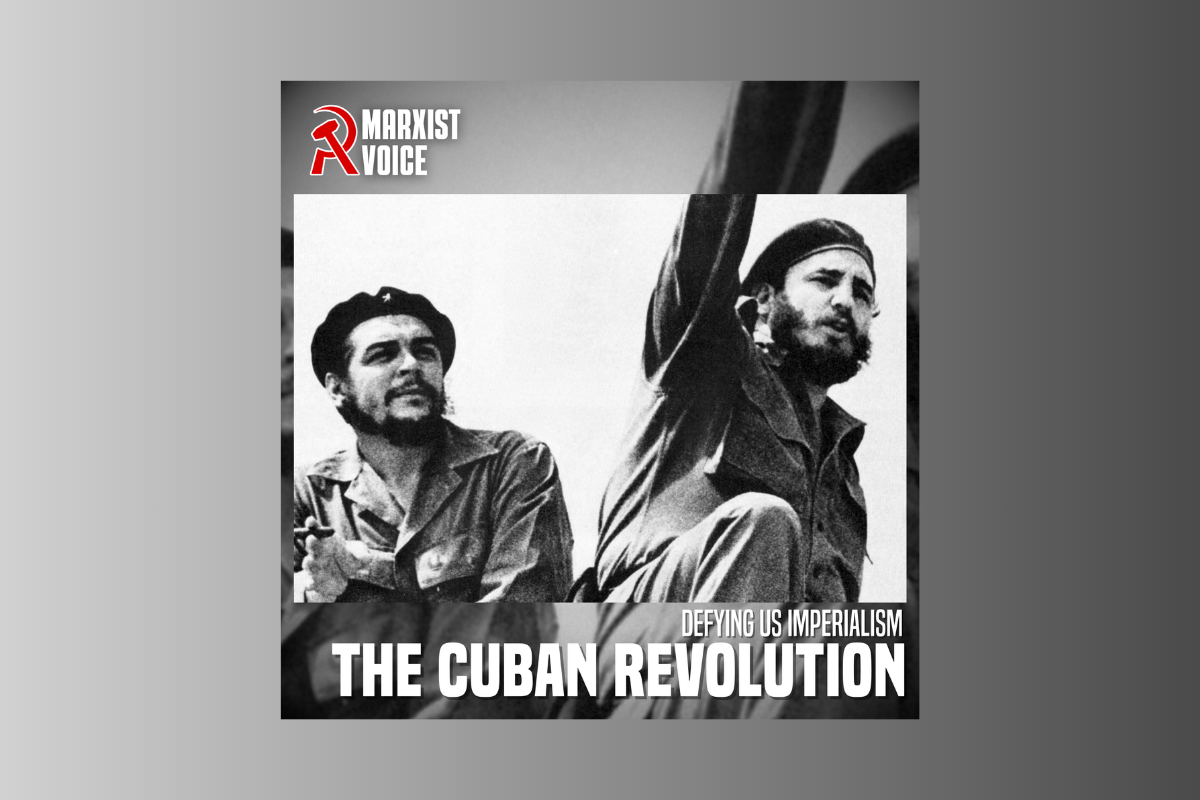
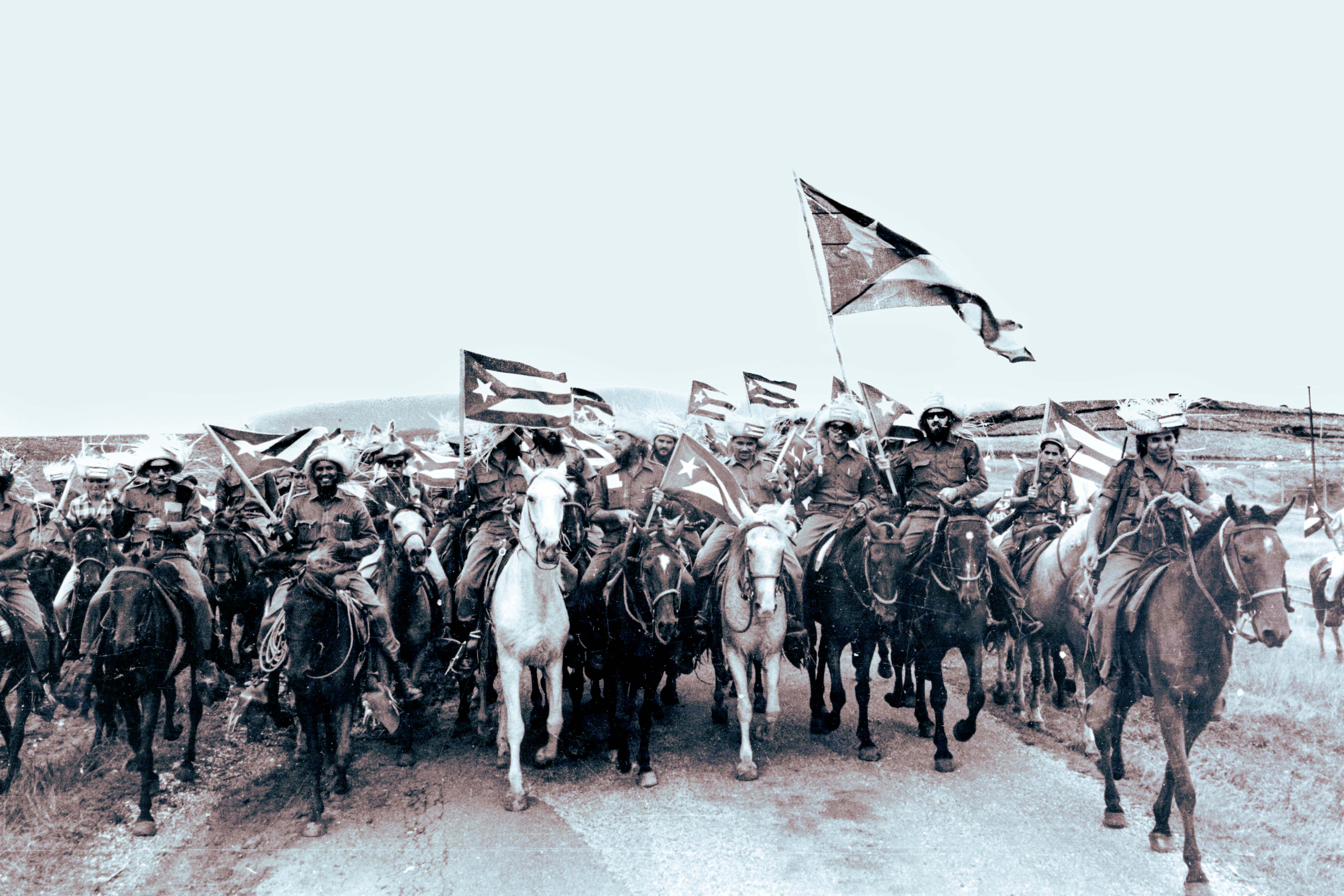
The Cuban Revolution, however, did succeed in overthrowing capitalism. By expropriating foreign capital, the big landowners and the domestic bourgeoisie, the people of this small island achieved miracles, despite six decades of relentless aggression from the world’s greatest imperialist power.
In a single year, Cuba abolished illiteracy which had stood at over 23 per cent in 1959. It achieved a life expectancy comparable to the US and lower infant mortality, while spending only a tenth of what the US spends on healthcare. Since 1963, Cuba has sent over 600,000 medical professionals to 164 countries, showing the enormous potential of the planned economy.
Crucially, Cuba carried out the most extensive land reform in Latin America. The latifundios were nationalised and redistributed as small family plots or reorganised as cooperatives and state-run farms. Rural poverty and insecurity largely disappeared, fundamentally transforming rural conditions.
However, the most vital lesson of Cuba is the danger of isolation. No Latin American nation can fully liberate itself while the rest of the region remains under capitalist rule. Following the collapse of the Soviet bloc, the island was plunged into the Special Period, an era of immense material deprivation where the Cuban people faced near-starvation.
Despite this, the revolution held on. Today, the noose is being tightened around the Cuban Revolution once again. By cutting off oil supplies from Venezuela and Mexico, Trump is pushing the Cuban economy to the verge of collapse.
The fate of the Cuban Revolution hangs in the balance. Its achievements will continue to inspire for generations. But we must learn the fundamental lesson of Cuba: to survive and flourish the revolution must spread; it must become international.
For a Socialist hemisphere
We have entered a new period of capitalist crisis and imperialist aggression, in which immense social explosions and revolutions are being prepared. They can only be successful with the overthrow of capitalism throughout Latin America.
The Latin American Revolution will find its most powerful ally in the gigantic working class of the ‘colossus’ north of the Rio Grande. Beyond the fact that a significant proportion of the US working class is of Latin American heritage and retains deep links with the region, the interests of all US workers are fundamentally identical to those of the oppressed masses to the south.
The recent battles between ordinary workers and ICE agents in Minneapolis are a mirror of the battles between the revolutionary youth and riot police during Colombia’s Paro Nacional in 2021. They are two fronts in the same struggle. United, the workers and peasants of America – the real America, stretching from the Arctic Circle to Cape Horn – are a force more mighty than even the greatest military superpower on Earth.
Together, they can build a new Socialist America, and transform the entire world. In the words of José Carlos Mariátegui:
“The Latin American revolution will be nothing more and nothing less than a stage, a phase of the world revolution. It will be, simply and purely, the socialist revolution.”[7]
Subscribe to the In Defence of Marxism magazine to read the rest of issue 53.