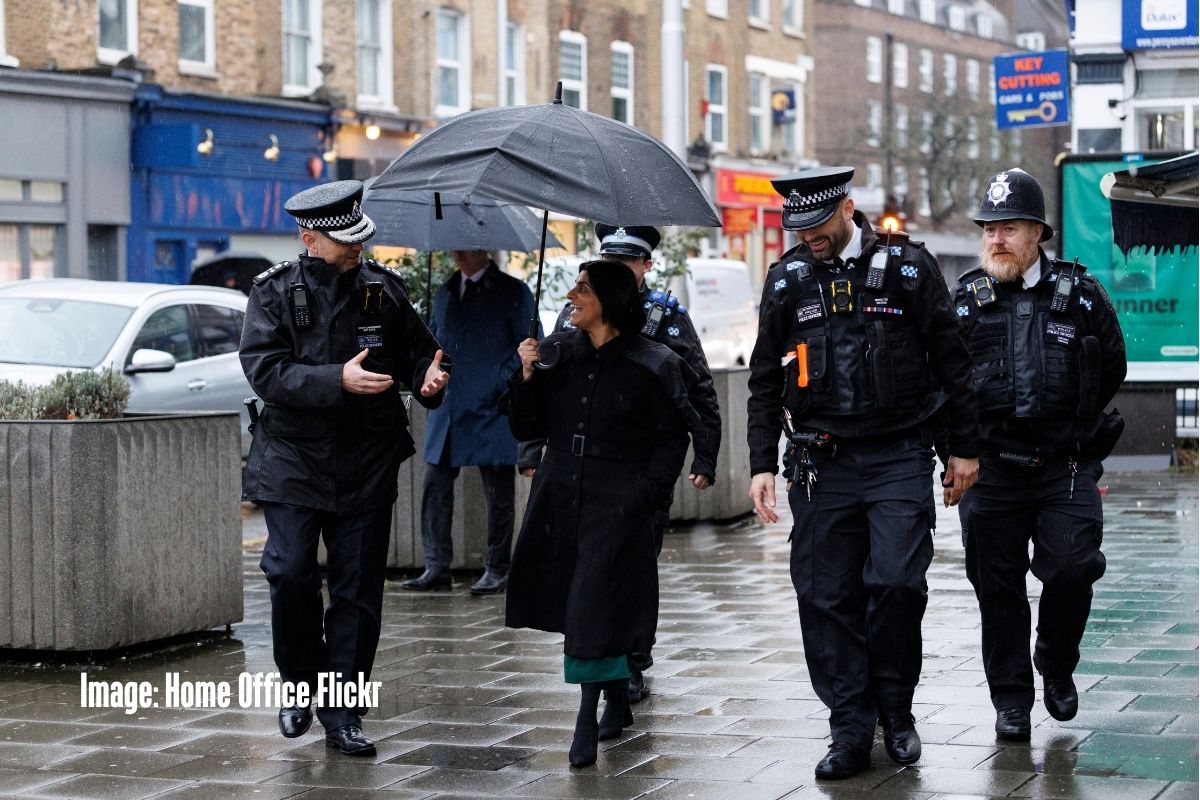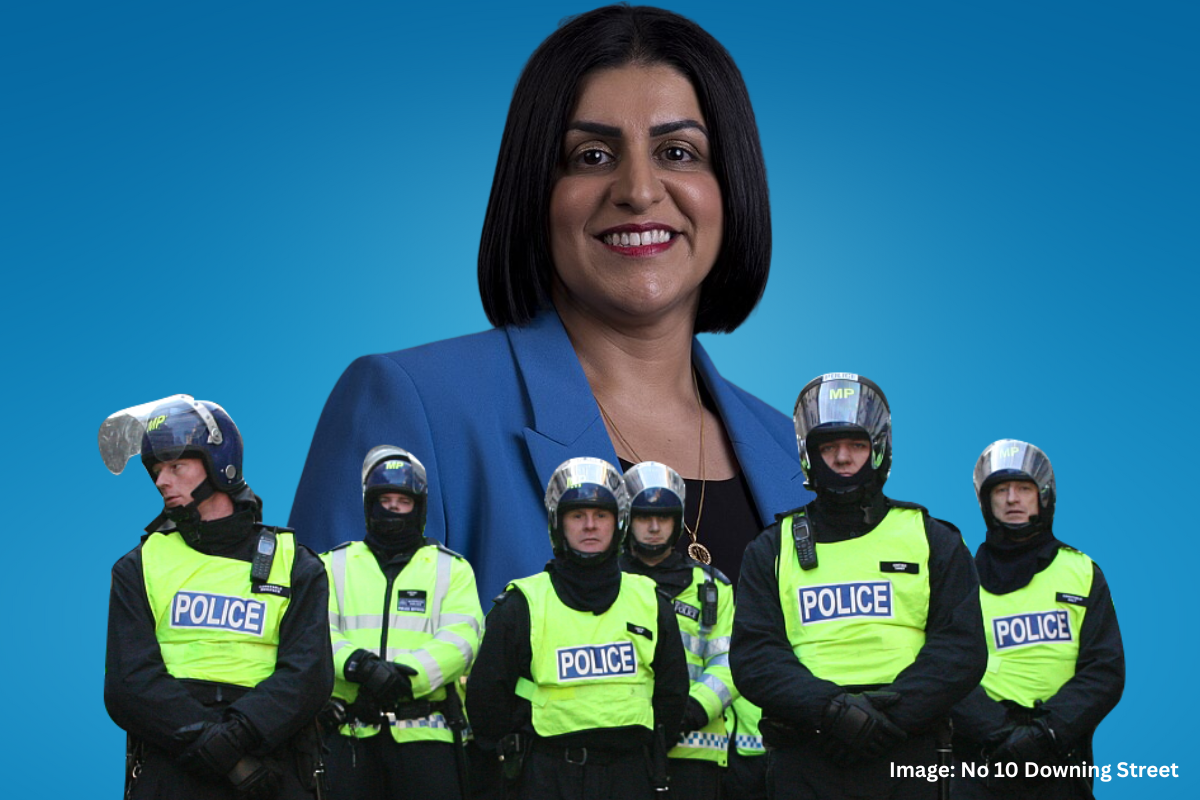

Home secretary Shabana Mahmood recently announced a swathe of policing reforms, the latest addition to Labour’s growing ‘law and order’ PR campaign. Billed as the largest switch up to British policing in almost 200 years, the plans set out to radically modernise the patchwork of local constabularies across the UK.
The centre-piece to these proposed reforms is the creation of what has been dubbed a ‘British FBI’, which will bring various national investigations like counter-terror policing together under the banner of the ‘National Police Service’.
As part of this, Labour will oversee the creation of new regional ‘mega forces’ of police, with the current 43 police forces in England and Wales cut to as few as ten by 2034.
At the top, changes include the creation of a new police commander role to lead on violent disorder and rioting, and the scrapping of police and crime commissioners.
Across the force, officers will need a “licence to practise” which must be regularly renewed, and will see officers sacked if they fail. This is outrageously not already the case, despite professions from driving instructors to professional divers requiring licenses!
These changes have been billed as the largest switch up to British policing in almost two centuries, but these are not new proposals by any means. Successive governments have tried and failed to centralise the UK’s hodge-podge of city and region-wide forces. Their failure to do so has meant that the London Met Police has had to take up national tasks and responsibilities for areas like counter-terrorism.
This announcement marks the third attempt in the last two decades to create a ‘British FBI’. In 2006, Labour introduced the Serious Organised Crime Agency, which ended up spending £15 of public money for every £1 recovered from criminal activity. This inefficiency saw it replaced with the entirely toothless National Crime Agency in 2013 – the days of which are now numbered.
Austerity
Beneath all the verbiage about modernisation and better policing, what Mahmood isn’t mentioning is what is really at the centre of these police reforms: austerity.
Already, forces have been cut to the bone. In England and Wales, police forces are collectively facing a shortfall in funding of almost £1 billion, and over 1,000 jobs in the Met alone may need to be slashed as a result.
In a pathetic attempt at penny pinching, consolidating these police forces could mean saving even more on running costs. At the moment, helmets, uniform trousers, and so on, are all ordered separately by each force – they are losing out on those important bulk-buy savings!
Like every harebrained modernisation pitch lately, Mahmood’s new plan also heavily emphasises the use of AI to cut costs.
The Home Office claims that using AI to analyse CCTV, transcribe documents, and produce and redact files before court cases will free up six million policing hours a year – equalling the time of 3,000 full-time police officers.
Policing today faces a serious recruitment crisis: they struggle to afford hiring people, and many new people aren’t interested anyway because of the forces’ tarnished reputation. Every minute they can squeeze out of who they do still have counts, and as a consequence they are turning to AI for salvation.
Online chatbots are also set to be introduced to respond to non-urgent police queries. Instead of receiving an email from a person telling you the police will not be looking into your case, you will receive the same email written by an algorithm. What a difference it will make!
The use of live facial recognition technology is set to increase fivefold too, despite campaign groups such as Liberty warning this adds to a “Big Brother” surveillance society and disproportionately flags and logs black and Asian people as potential criminals.
Political machinations
For all this big talk about revolutionising policing, the reality is that what Labour is putting forward are quite tepid, penny-pinching reforms, which may yet come to nothing.
There will be various rounds of consultations before any changes are made, many of the deadlines are pushed off into 2034, and it’s not clear yet how any of this will be funded.
It may also get blocked in Parliament, or by the Police Federation which – as with everything else that governments have carried out in previous decades – did not respond positively to the news.
In a statement, it said the changes will not address the low morale amongst the police due to low pay, understaffing, and inexperience: “Ministers have used the analogy of making police officers ‘match fit’. Policing is broken and officers are on their knees, not match fit.”
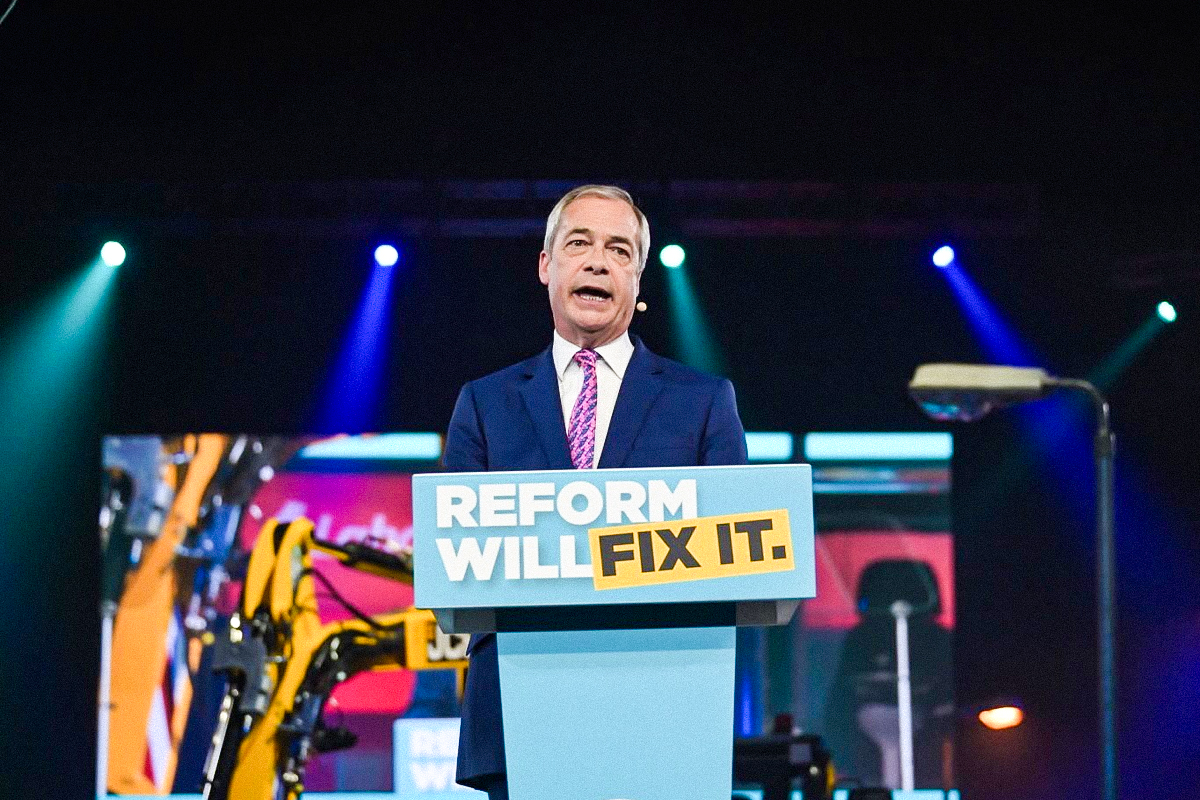
However, what this announcement does mark for certain is that Labour is set on continuing its ‘law and order’ campaign and putting its conservative ‘blue Labour’ rhetoric front and centre in order to outflank Reform to the right.
Farage has been loudly banging the ‘law and order’ drum for some time, declaring last summer that “Britain is lawless”, and that he’s the man to fix it.
By stepping into the ring to outdo Reform on what is set to be a central issue in the coming May local elections, Mahmood is firmly placing herself in the running to become the face of this ‘blue-Labour’ wing.
It’s also no coincidence that the majority of the policing plans were leaked to the press days before the official announcement took place, conveniently drawing the media’s attention away from the embarrassing drama surrounding Andy Burnham’s bid to return to Westminster and potentially challenge Starmer.
Crime and disorder
Regardless of any party political machinations behind the scenes, one of Labour’s overarching aims here is to pacify the anger brewing in Britain – on one side around a growing sense of crime and social disorder; and on the other, around police corruption and abuse. These plans, they hope, will help stem their terminal decline in the polls.
Partially, these reforms respond to falling public satisfaction with the police. There are those who look at statistics – like shop theft and street theft rising 72 and 58 percent respectively since 2010 – and say policing needs to be stricter. Labour aims to please these voters by beefing up its ‘law-and-order’ credentials, as we have explained elsewhere.
Another element is rising public distrust in the police following scandal after scandal, from institutional racism to the police sheltering rapists and abusers in its ranks.
The requirement of a “licence to practise” – along with measures to fast-track professionals from outside the force into senior police roles – no doubt tries to please those who point out the rot at the centre of police forces in Britain today. But in practice, these measures will be as toothless as all the other tweaks and promises made in past years.
Crumbling state
However, these measures are not aimed towards satisfying the different voter bases slipping out of Labour’s hands.
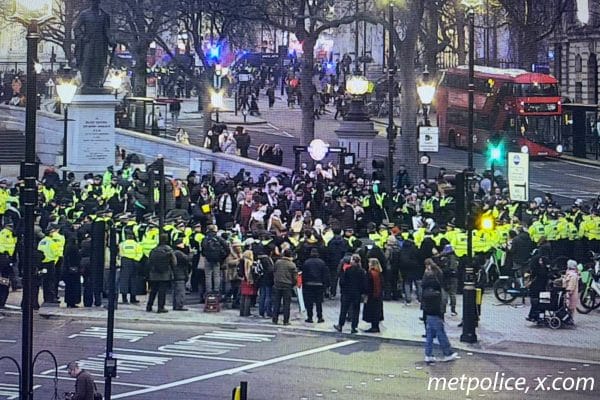
A key reason for these proposed reforms is that there has been rising concern about the inability of the police to handle unrest on the streets. The government needs the police to rapidly become ‘match fit’ because – as Labour ministers have said – many forces are wholly unequipped as it stands.
This was seen in the summer riots back in 2024, but also the massive pro-Palestine marches in London.
In 2025, protests relating to Palestine Action cost the Met Police £10 million in a single month. Non-Met forces like the Welsh police had to be dragged in to police Palestine demonstrations, exacerbating staff shortages elsewhere in the UK.
Mahmood herself even admitted that the policing model is “broken”.
These growing anxieties around the ability of the British state to enforce its order are what was also behind moves such as the introduction of the PCSC bill in 2022, the Minimum Service Levels bill in 2023, and the proscription of Palestine Action last year.
And why wouldn’t they be worried? On top of the dire state of policing, the courts are swamped with cases, and prisons are operating far over capacity. There are real, deep problems facing these institutions of the British state. And no politicians have any real idea how to fix them.
None of the causes behind this unrest and growing class anger in Britain today are going anywhere – and, unfortunately for the British ruling class, the creation of a ‘British FBI’ certainly won’t stop it either.
Every institution of the British state is cracking and crumbling under the weight of the economic and social crisis. The politicians at the helm of this dilapidated machine are powerless to prevent its continued decline.