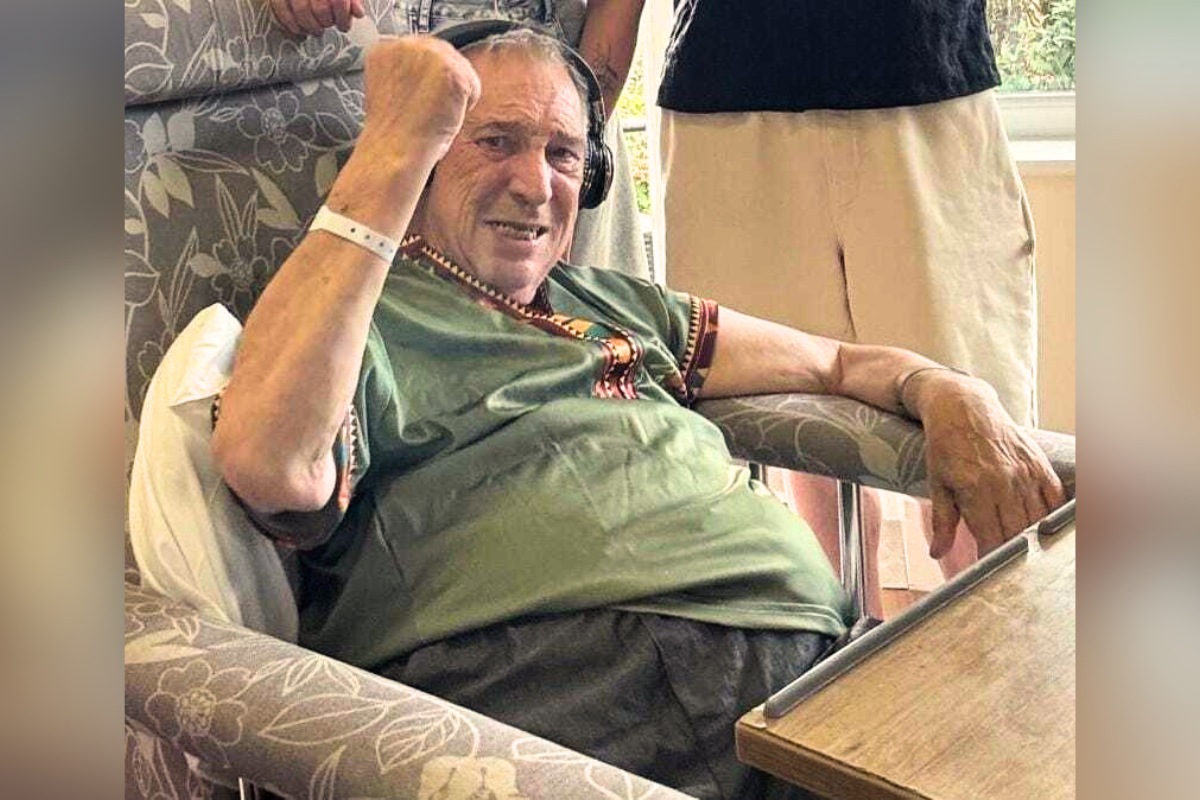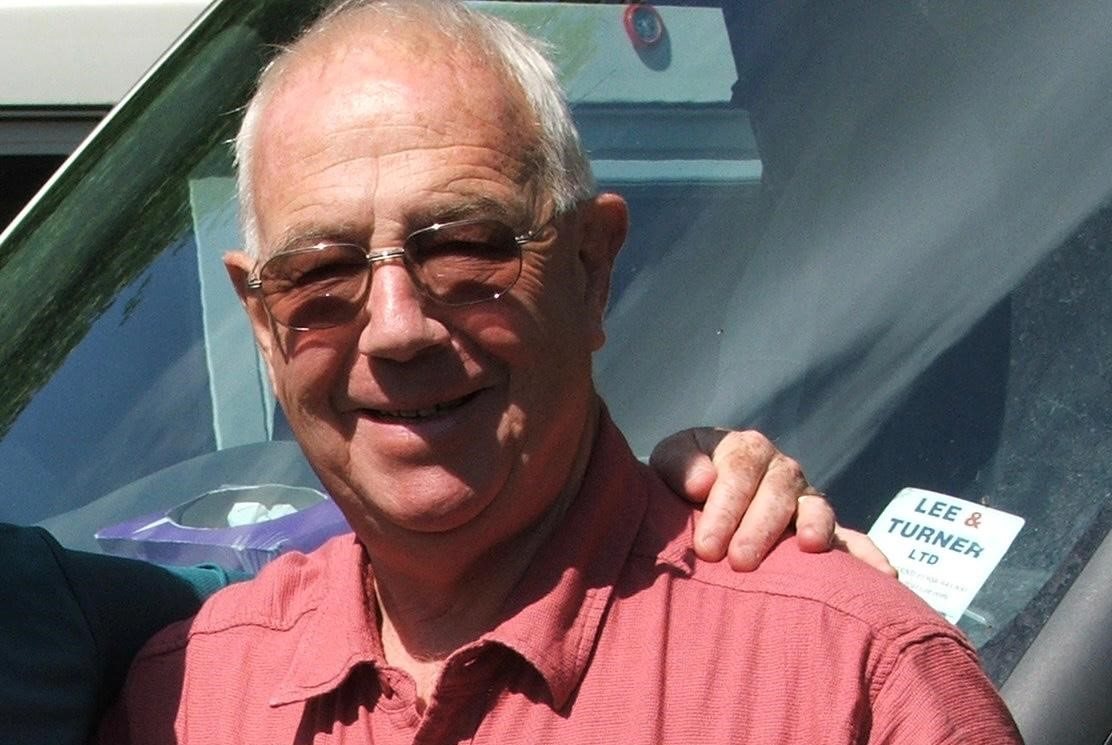
The news of the death of comrade Jim Brookshaw came as a cruel blow to all of us who knew and loved him.
Jim passed away on 6 October in a hospital bed, with his son Ben at his side. For the last period of his life, he had been suffering from a serious illness that undermined his health and finally claimed his life.
For me personally, the news of his death was particularly painful, as Jim and I had been close friends and comrades for many years – half a century, in fact.
Paradoxically, the first years of our relationship could hardly be described as friendly. In fact, we found ourselves locked in quite a sharp political conflict, as I will explain.
First however, a few words should be said about Jim’s early life.
The early years
Jim was from Sussex, a predominantly agricultural area, which had always voted Conservative in every general election up to 1964, when the first Labour MP was elected for Kemptown Labour Party in Brighton.
There were several areas like Crawley and East Grinstead where there was a strong working class. But the little village where Jim was born was not one of them.
Warnham is a small and picturesque village in the Horsham district of West Sussex. Hardly a hotbed of the class struggle.
Nevertheless, even in the most remote and conservative areas, the spirit of the class struggle remains alive, and workers and young people can develop very radical ideas, precisely rebelling against the prevailing mood of rural backwardness and conservatism.
After the Second World War, his father, Fred Brookshaw, worked at Warnham Brickworks – a very hard and unpleasant place to work in. His mother Maud was from Durham, from a mining family. This was the class background into which Jim was born in 1941, the eldest of seven children.
He had a sister, Margaret, who sadly passed away this year. Then there were Mary, David, Patricia, Jeffrey and Sally.
With such a large family and low wages, it must have been a constant struggle to survive. Yet the few times that Jim ever spoke about his childhood years, it was always of happy memories of a very warm and caring family.
These memories stayed with him all his life. They were the seedbed upon which arose a very powerful sense of class identity, something that he and I always had in common and which acted as a powerful bond between us.
It was this powerful spirit of class consciousness that drew Jim inevitably into the camp of socialism and communism from a very young age.
After leaving school, he wanted to join the navy, but his dad wouldn’t let him, insisting that he must get a trade. So he trained as a plumber, which he never liked, even though he was very good at all kinds of manual work.
Leaving home, he found jobs in industry and became involved in active trade unionism. Searching for a radical expression for his instinctive class consciousness, he first joined the Young Socialists (YS) – the youth organisation of the Labour Party.
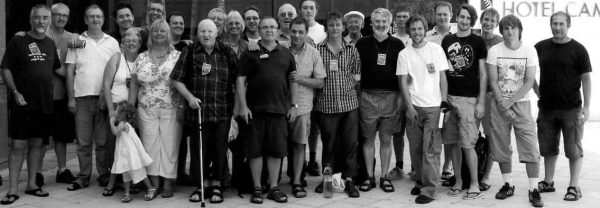
At that time, the YS was a battleground for rival sectarian groups, like the International Socialists (now the SWP) and the Socialist Labour League, or SLL as it was commonly known, the ultra-left Healyite organisation.
Alienated by the barren atmosphere of sectarianism, this young worker left the YS in disgust, eventually joining the Communist Party (CPGB) and the Young Communist League (YCL), where he soon rose to a leading position.
First meeting, first clashes
I first met Jim when I was a student at Sussex University, and when he was a leading figure in the local YCL in Brighton.
After moving from South Wales to Sussex in the autumn of 1963, I succeeded in establishing a group at the university, which soon acquired a very powerful position.
It goes without saying that we were convinced supporters of the ideas of Leon Trotsky. Jim, by contrast, could fairly be described as an equally convinced Stalinist of the hardest of hard lines.
The battle lines were therefore soon drawn up between two mutually antagonistic political lines.
The conflict became extremely sharp when a group of youngsters (the leaders were from Southampton) set up a branch of the Communist Party at Sussex University. But they proved completely incapable of answering the arguments of revolutionary Marxists. We defeated them politically at every turn, and they became increasingly demoralised.
Becoming aware of the danger, the Communist Party in Brighton instructed them not to have any dealings with us – an instruction that they followed with blind loyalty, even refusing to say ‘good morning’ to us.
But there was a problem. They participated in the University Socialist Society, which our tendency completely controlled. This meant that they had to defend the ideas of the Communist Party (which had now become completely reformist, as shown by their policy document, The British Road to Socialism).
A decisive turning point was when they got the general secretary of the CPGB, John Gollan, invited to speak at the Sussex University Socialist Society.
The university Communist members sat silently, watching with horror as the party’s leading comrade was systematically demolished by the power of our arguments. In the end, Gollan, unable to answer politically, completely lost his temper and left in a fit of rage and frustration.
This sad spectacle finally demolished any illusions the comrades had in the leadership of the CPGB.
They said nothing to us, but we learned subsequently that at the summer camp of the YCL, they were putting up posters of Trotsky in their tent.
Finally, one day, to our great surprise, they finally surrendered and came over to us en bloc.
Witch hunt
The local Communist Party officials immediately reacted by closing the university branch of the party and instructing all its members to join the Young Communist League in Brighton.
This suited us just fine. The comrades conducted very efficient work in the YCL and won over the entire branch with the exception of the chairman and one or two others.
The branch secretary was none other than Jim Brookshaw, who reacted in typical Stalinist manner, expelling practically the entire branch.
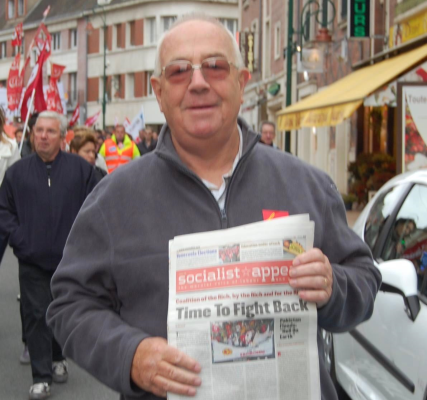
Since Jim was at that time the National Chairman of the YCL, this was a most humiliating defeat. And he held me personally responsible for it!
I had previously tried to win him over. I went to his house and argued furiously over a plate of beans on toast. But neither he could convince me, nor I him. The battle lines were therefore drawn. But despite the sharpness of the struggle, I never developed a sense of animosity towards Jim, a fact that he later recognised with gratitude.
Later on, I discovered with surprise that Jim regarded what had happened as a kind of ‘coup’. I do not know what the basis of this accusation was, but according to him our comrades behaved very badly.
I do not know how far this was true, or merely the reflection of Jim’s understandable feelings of resentment at having lost control of his branch.
Some of our comrades were at times a bit frivolous and immature in their conduct, a tendency which we always tried to rectify.
But the fact remains that they did have a majority in the branch, while Jim only had the support of his wife, Marion, and I think one other.
Jim himself admitted that his conduct was sometimes a bit ‘thuggish’. The comrades would come to me quite often, complaining bitterly about his aggressive behaviour. But I would answer, “Jim is a worker and he is loyal to his party. We must accept that fact, and try to convince him politically.”
To tell the truth, I never believed that was possible. But I was wrong.
How we came together
When I left Sussex, I lost all contact with Jim Brookshaw for a couple of years. But I learned that he was now working full-time for the YCL.
Then one day, I was surprised to see Jim on the BBC television news. At the time, there was a major conflict between Britain and Rhodesia (now Zimbabwe). The white racists who were in power had issued a unilateral declaration of independence and hoisted their flag over the embassy building in London.
On the TV screens, you could see dim pictures of a young man climbing up the side of Rhodesia House in Trafalgar Square and throwing the flag down from the top. It was a very high building and it was a very risky thing to do.
Later on, Jim, with his characteristic honesty, laughingly said that, halfway up, he had second thoughts:
“I was absolutely shitting myself. I went to the top of the civil service stores. You could walk from the top of that building to Rhodesia House.”
The flagpole was in the corner and there were ropes around it. But, having got so far, he thought it better to finish the job.
“So I slithered down this roof until I got to this wide gutter. So I just go up to the flagpole, pulled it down, cut it down, and threw it, as suggested by the Morning Star, into the street. It landed at the foot of some copper apparently.”
This act showed him to be a very courageous and determined individual. I took mental note of it, and thought no more about it.
A mysterious letter
A couple of years later, when I was working full-time for the Militant in South Wales, I was visiting our centre in London when a comrade said to me: “Alan, there is a letter for you.”
This news surprised me. A letter for me, sent to the London centre? Who could it be from?
I opened the letter and was frankly astonished to see that the sender was none other than Jim Brookshaw!
In his letter, Jim unexpectedly announced that he had broken with Stalinism and wished to discuss with me. I lost no time, and went straight to his flat in South London (I think it was in Charlton).
I remained there for two whole days, during which I had intensive discussions with Jim and his wife on just about every aspect of the international labour movement from the First International onwards.
How Jim broke with Stalinism
In the years since I lost contact with him, a lot of water had flowed under the bridge.
The world had been shaken by great events, particularly the Hungarian Revolution of 1956, which shook every Communist Party in the world to its foundations.
Many thousands of experienced communist cadres left the Party in disgust at the events in Budapest. But Jim was not among them. I am sure he had some serious doubts about it. But he remained firm in his loyalty to the Party.
When I say that I am sure he had doubts, I am basing myself on things he himself told me over the years about his personal experience.
Jim had now risen to quite a prominent position in the YCL, and as a trusted full-timer, he was sent on many delegations to the Soviet-led states in Eastern Europe. I remember that he went on official visits to Czechoslovakia and East Germany, but I cannot remember him mentioning visiting Moscow.
Two incidents that he told me about stick in my mind. On one occasion, he was invited, along with other international delegates, to an official banquet, at which every table was decorated by the national flag of the country the delegates came from.
Upon approaching the table of the British delegation, Jim was surprised and disgusted to see the Union Jack placed in a prominent position on the table. He immediately called over the official representative to complain.
The explanation came back that every delegation was assigned its own national flag. And that the Party Committee had decided that this decision must be carried out.
Outraged by this bureaucratic highhandedness, Jim raised such a scandal that the Party officials had never witnessed before:
“I don’t care who has made the decision. You tell the Committee that I refuse to sit by a table in the presence of that disgusting reactionary rag.”
Eventually the offending object had to be removed, but this little lesson was a clear indication to him that the internationalism of the so-called Communist Parties was more apparent than real.
This lesson was underlined in practice a few years later, when Soviet tanks rolled into Prague in 1968 in order to crush the attempt of CP leader Alexander Dubček to reform the government and state.
This made an even greater impact on Jim than the earlier events in Hungary in 1956, and it got him thinking seriously about the real nature of Stalinism, which up to then, he had staunchly defended.
What’s on the menu, comrade?
At these official banquets, Jim was increasingly offended by the outrageous greed of so-called ‘communist’ cadres, whose main concern appeared to be to feast and booze at the expense of the workers’ state they happen to be visiting.
He cited one incident, which I believe occurred in East Germany, where he was having lunch at a factory. International delegates were served a very nice course of the best quality steak. However, Jim (who was highly observant, and far from stupid) noticed something strange.
All the workers were coming into the canteen with plates of soup on their trays. Not a trace of steak in sight!
He called over the Party factory official and asked him to explain this apparent discrepancy. The latter immediately pointed out that there were actually not one, but two menus – one (with steak) more expensive, and the other (with soup) cheaper.
And the workers obviously preferred the latter to the former. Jim might have been satisfied with this explanation. But to his surprise, five minutes later, all the workers came in carrying the best-quality steak on their trays. Problem solved!
Growing doubts
These and other experiences gradually increased Jim’s doubts. However, he did not communicate these doubts to his colleagues, fearing their reaction.
Instead, he began visiting the Marx Memorial Library in Clerkenwell Green, London, where he began to read anything by Trotsky that was available there.
Whether the librarians (who I imagine would be veteran CP members) were suspicious of this sudden interest in Trotsky by a Party full-timer, I cannot say. But he began to read other works, particularly Lenin and Trotsky: What They Really Stood For, which made a big impression on him, and later Trotsky’s Revolution Betrayed.
By reading this ‘subversive’ material, Jim’s suspicion was confirmed: a radical gulf separated Stalinism from genuine Bolshevik-Leninism. His transition from Stalinism to Trotskyism had now reached the point of no return.
I listened with more interest than ever to everything Jim had to say. I was impressed by his obvious honesty. Nevertheless, the transformation of a former Stalinist bureaucrat – the man who had conducted a ferocious witch hunt against our comrades in the Brighton YCL – to Trotskyism seemed so unlikely, that I needed my opinion to be confirmed.
In those days, there were no mobile phones, so in order to ring the centre, I had to leave Jim’s house and make a call from a public phone box.
I asked Ted Grant to come straight away to Jim’s flat and listened to what he had to say.
Ted immediately agreed, and he was convinced – as I was – of the absolute sincerity of both Jim and his wife, Marion, who apparently took the initiative to encourage him to contact me.
The rest, as they say, is history.
Why did he join us?
One thing, however, needs to be clarified. Why did he join us? After all, there were many organisations claiming to stand for Trotskyism, and ours was by no means the largest. So why did he choose us?
He gave us the answer himself. He said the following:
“When I was breaking with Stalinism, I considered all the available options. I thought of the International Socialist group (now the SWP), but rejected them because of their obviously petty-bourgeois character.
“The Healyites were entirely ruled out because of their extreme sectarianism and hooligan tactics, which I had witnessed firsthand in the YS.
“Then I thought of you comrades, and I realised that I had treated you very badly, but that you always treated me as a comrade.”
I have always remembered those words, which have tremendous value to myself personally.
But more importantly, they contain an important lesson for all our comrades when dealing with people like Jim Brookshaw in the future.
Of course, there are some people who never change, whose minds are closed and can never be convinced. There are none so blind as those who will not see, as they say.
But usually, this is not really true. I have had experiences several times with people that I thought were dyed-in-the-wool Stalinists, who apparently would never be convinced. But on the basis of patient argument and comradely discussion, I was convinced otherwise by experience.
Winning over Jim Brookshaw was just such a case.
A new role
Once Jim had made his mind up, he threw himself vigorously into his new role as a member of our organisation.
He and his wife Marion were active in strengthening our branch in South London, which had previously lagged behind the North.
As far as the Communist Party was concerned, Ted and I initially considered the possibility of asking him to continue his work in the Party, but soon came to the conclusion that this would be a mistake.
Jim himself was not in favour of it, since he considered that there was nobody left in his circle he could hope to win over. He would have soon become a marked man, isolated and ostracised.
He continued to play a very active role as a trade union activist in the printers’ union, particularly in the important strike of print workers in the celebrated Wapping dispute.
He soon acquired a well-deserved reputation as an outstanding comrade in the Militant organisation, becoming a member of the Central Committee.
An extremely likeable and sociable person, Jim was a popular figure in the organisation. He was famous for his roguish sense of humour, which he used to its full extent when he was asked to do the collection at National Conference.
I well remember how he commenced one such appeal. Striding onto the platform, he faced the audience and pulled out a toy revolver which he brandished in the air, while bellowing out: “Close all the doors!”
But despite all the successes of Militant, there were many things wrong in that organisation.
The tensions at the top eventually exploded in an open split in the leadership, when Peter Taaffe and his clique were opposed by Ted Grant and myself.
I do not recall what role Jim played in that dispute. I believe that he had his hands full with strikes and other disputes.
Moreover, along with the great majority of the membership, he had no inkling of the problems in the leadership, and therefore the split took him – and many others – completely by surprise.
But it did not take long for Jim and his new partner Hazel to realise what was going on.
They were particularly disgusted by the scurrilous campaign of slander that the Taaffeites launched against Ted Grant and myself.
A new beginning
Jim and Hazel joined the new organisation that we had to rebuild from the wreckage left behind by the Taaffeite split.
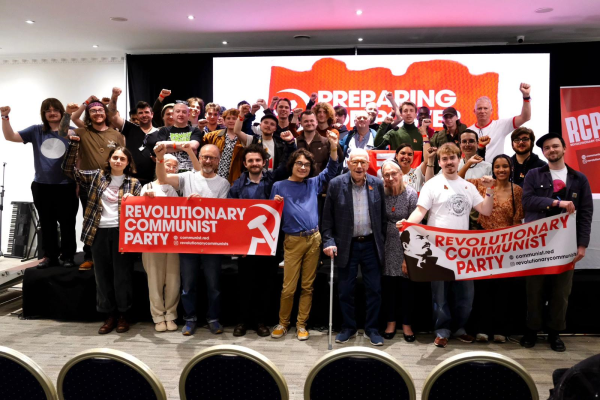
They have watched with enthusiasm how the new organisation has developed and grown in recent years. They were particularly enthusiastic about the launching of the Revolutionary Communist Party.
Many comrades will have seen them at international meetings and schools, which they attended regularly, until the onset of Jim’s illness rendered this impossible.
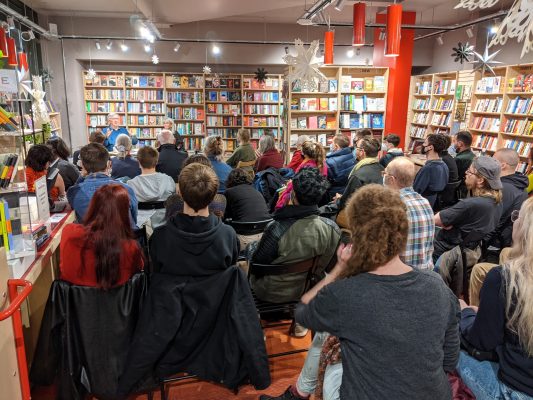
In the last period of his life, Jim played a very active role, together with his partner Hazel, in building the branch of our organisation in Bristol, which was very ably led by Kevin and his partner Jane. Kevin has very kindly sent us a very nice photo of a meeting at Bookhaus in Bristol, in Autumn 2021, at which I presented the new edition of my History of Philosophy.
The photograph shows Jim and Hazel in the front row, together with Ana.
We stayed the night at the house of Kevin and Jane (who slept on the floor!). Kevin reminded me that Jim and I “got stuck into my best whisky like two old bears!” which shows that real communists can enjoy the pleasures of life as much as anyone else, faithfully following Marx’s favourite motto: “I consider nothing human alien to me.”
That presumably includes an occasional bottle of fine whiskey!
Postscript
I recently read an interview that somebody made with Jim during the last period of his life, when he was already suffering from the early beginnings of dementia.
The interview is very interesting, containing many small details which Jim remembered, although the gaps in his memory, and even certain elements which have become confused with the passing of time, are clearly present. We will endeavour to publish that on marxist.com.
Jim Brookshaw was a big man in every respect. That fact was felt instinctively by everybody who came into contact with him.
Now Big Jim Brookshaw is no longer with us.
The Party has lost an outstanding comrade. I have lost a very dear friend. And humanity has lost a great human being. The world today is a poorer and sadder place.
But we are all the richer and happier for having known and loved this great man. And his memory will live on in our hearts and minds.
For my part, I will always remember with the utmost pleasure and gratitude the memory of the many years that we shared as comrades and friends.
To Hazel, Ben, Hannah, and all Jim’s family and friends, I extend my warmest solidarity, condolences and love.