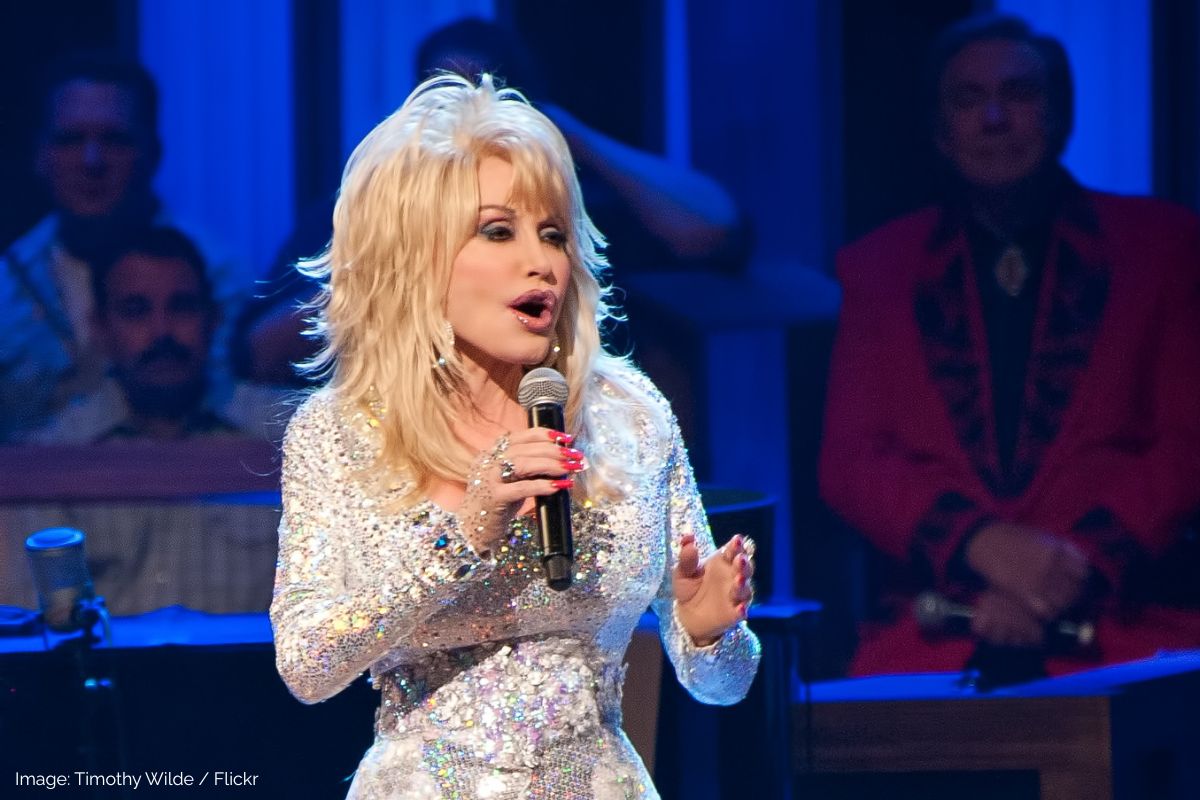
Most of us can remember exactly where we first heard Dolly Parton in the backseat of a parent’s car, at a kitchen table, on the radio. Her voice was warm, funny, aching, and entirely without pretension.
Across a career spanning more than six decades, Parton wrote thousands of songs – over 3,000 – forming a body of work so vast it’s easy to forget she was just one person. And yet each song carried her unmistakable signature: a plainness that was never simple; a sweetness that never tipped into saccharine sentimentality.
Her love songs alone are some of her most memorable. “I Will Always Love You”, written in 1973 as a farewell to her mentor Porter Wagoner, became one of the most recorded songs in American history.
“Jolene” turned plain-spoken jealousy and heartbreak into something almost mythic: a woman pleading with another woman, rather than raging at her. Few writers have handled such a subject with so little cruelty.
But her finest work may have been the songs that read like pages torn from her own life.
“Coat of Many Colors” told the true story of a coat her mother stitched together from rags. She tells young Dolly the Bible story that gave the coat its name, and of the cruelty of peers who mocked her for it – and the fierce pride Dolly held onto anyway, knowing her parents had done everything they could to provide for her.
“My Tennessee Mountain Home” was a hymn to the one-room cabin where she was born – one of twelve children, dirt poor. She channelled her experiences into her music, and in doing so gave dignity to millions of people who recognised their own upbringing in hers.
From that cabin, Dolly built herself into one of the towering figures of music, producing 49 studio albums and selling more than 100 million records.
“9 to 5”, written for the film she starred in, became an anthem belted out by workers who had never before heard their working day – their struggle against the bosses – treated as a worthy subject for a song.
She was, for decades, one of the loudest and gentlest forces in country music, a woman who broke ground without ever hardening into someone unkind, selfish, or a wealth hoarder.
Her humour was constant and self-aware (“It costs a lot of money to look this cheap,” she liked to say) alongside her genuine tenderness that radiated through her interviews. She had a warmth that stood in contrast to the chauvinism often present in the country music industry, and it made her beloved by so many oppressed groups within society.
Her 2014 set at Glastonbury remains one of the great festival moments. A hundred thousand people, many of whom would never have called themselves country fans, singing every word back to her. It’s hard to think of many artists who could do that: cross every boundary of genre and background and just be loved, plainly, by a crowd that large.
She will be remembered for the way her songs moved through families, generation to generation. That is what great art does.
Rest well, Dolly.