
Great artists are often capable of sensing a mood that is developing in society, and can profoundly reflect it in their work before events give this mood a conscious expression.
With the turn of the 20th Century, a layer of such artists began to emerge in continental Europe. Their works were the first vibrations of a forthcoming social earthquake: a period of barbaric imperialist war, social upheaval, and revolution.
The defining attribute of modern art – and the modernist movement that emerged from it – was the bold rejection of convention. Art turned upon its head every accepted preconception of what art should represent; the ideas it should champion; and the forms it should take.
This represented a rebellion against the complacency and stagnation that had set in amongst the bourgeois intelligentsia.
Accordingly, the American poet Ezra Pound devised the modernist mantra: ‘make it new!’
A riot in Paris
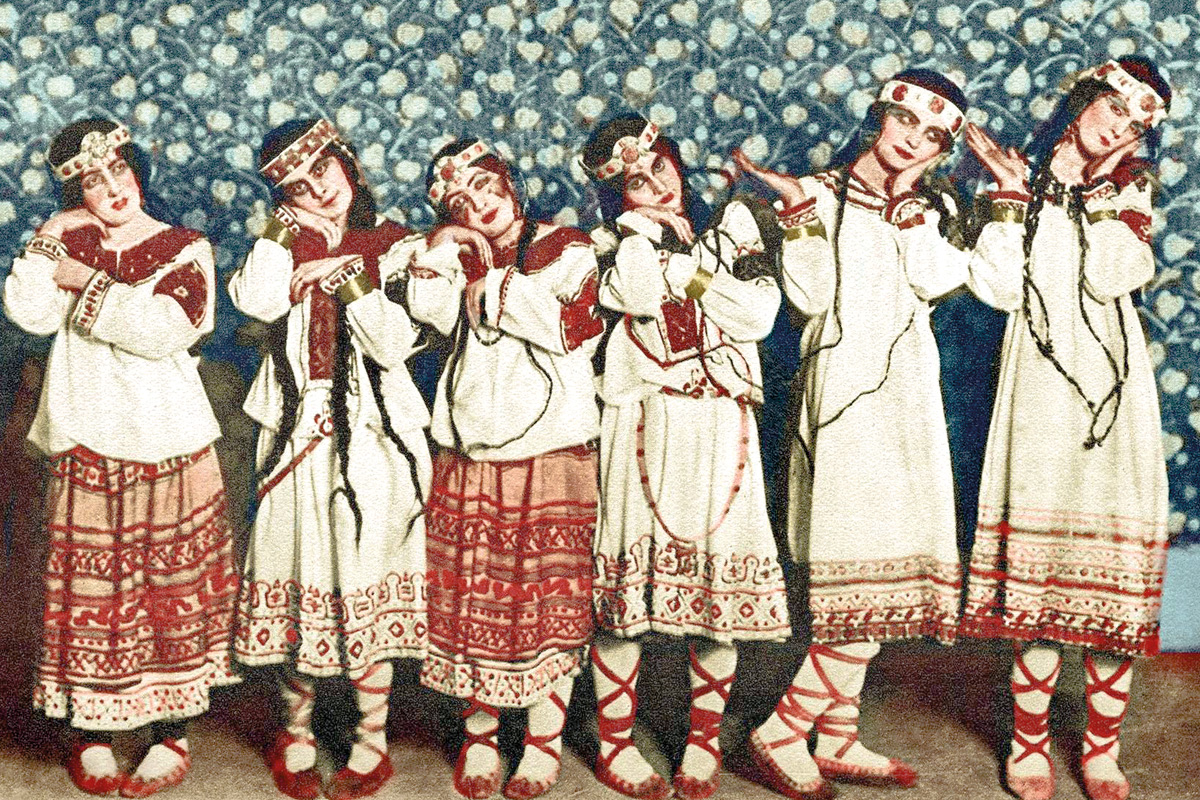
Russian composer Igor Stravinsky was one of the most influential modernists in the world of music. His infamous ballet The Rite of Spring exemplifies the modernist spirit, depicting a violent ritual – a young girl is chosen to dance herself to death to bring good fortune to her tribe with the coming of spring.
Published in 1913, only one year before the outbreak of World War One, The Rite of Spring had its premier at the Théâtre des Champs-Elysées in Paris.
This production was fiercely divisive – in fact, a riotous argument broke out amongst the audience, so loud that the dancers struggled to hear the orchestra over the shouting.
It is no surprise that the crowd was so shocked. Stravinsky’s previous collaboration with the Ballets Russes was a grand and sparkling depiction of a Russian folk tale, The Firebird. It combined western classical music with some unusual Russian folk melodies and harmony – a combination which, although experimental, was very much in vogue amongst the Parisian audience.
The Rite of Spring, on the other hand, turns sharply away from the western classical tradition in pretty much every area: from the slavic, pagan mythos that inspired the composer; to the dissonant, alien harmonies in the score.
The score was also intensely demanding for the dancers, who had to navigate complex polyrhythms, syncopation and time signatures previously unheard of in the western canon – all at a frantic pace.
In fact, both the music and dance strayed so far from the convention of the time that early rehearsals descended into chaos.
The choreographer Vaslav Nijinsky was only twenty-three years old and, though a very skilled and celebrated dancer, had little training in choreography or classical music. The collaboration between a decorated composer like Stravinsky and a young, inexperienced choreographer was unusual, to say the least.
In Nijinsky’s work, the considered poise of the western ballerina is nowhere to be seen. The ensemble move around the stage with heavy, stomping steps, in formations similar to a khorovod: a slavic dance circle that was historically performed as a pagan ritual, before the spread of Orthodox Christianity across Eastern Europe smothered much of the old religious tradition.
The lead ballerina’s solo, in particular, communicates something primal. The dancer performs bursts of frenzied jumping and flailing motions, interspersed with long pauses as the ensemble encircle the young girl. During these intervals, she presses her knees together, toes pointing inward, legs literally shaking with fear and exhaustion.
The reception amongst critics was one of outrage. One review stated that Stravinsky “mercilessly shoved [his] contempt of tradition into the faces of the unprepared audience.” Another describes it as “a laborious and childish barbarism”.
The role of the artist
What these critics failed to understand was the immense emotional and tonal foresight of this work, the ‘childish barbarity’ of which pales in comparison with the events that would take place in the coming decade.
Art is a distorted image of reality, refracted through the prism of the artist’s imagination. Trotsky described it as a “handmaiden” to the events of history – “a function of social man indissolubly tied to his life and environment.”
Revolutionary art such as this, that breaks so boldly from convention, is almost always received poorly to begin with, as it forges ahead of general consciousness.
After the fact meanwhile, bourgeois academics and art historians tend to attribute rapid developments in the world of art entirely to the inspired mind of a particular genius.
In reality, while the individual genius of such artists obviously plays a colossal role in revolutionising art, these artists do not live in a vacuum. Titanic events move them to break so dramatically from established forms.
The fact that some artists reflect these events ahead of their time – like heat lightning before a storm – is a testament to their genius.
Stravinsky’s works perfectly capture the spirit of the modernist movement, and the striving of the artist to criticise the ideals of a declining system. As he wrote in his autobiography:
“One cannot imagine a believer adopting a critical attitude towards a religious service. That would be a contradiction in terms; the believer would cease to be a believer.”
“It is high time to put an end, once and for all, to this unseemly and sacrilegious conception of art as religion and the theatre as a temple.”