This article was originally published on 12 December 2025 on communistusa.org prior to the abduction of President Nicolas Maduro by US imperialism. For the latest updates, please check marxist.com
Venezuela’s Bolivarian Revolution was a watershed moment in the history of the class struggle. It was a ray of light in the dark years following the collapse of Stalinism. Long before the 2008 crisis, Occupy, BLM, or the rise of Sanders or Mamdani, it gave credibility to anti-capitalism, anti-imperialism, and socialism.
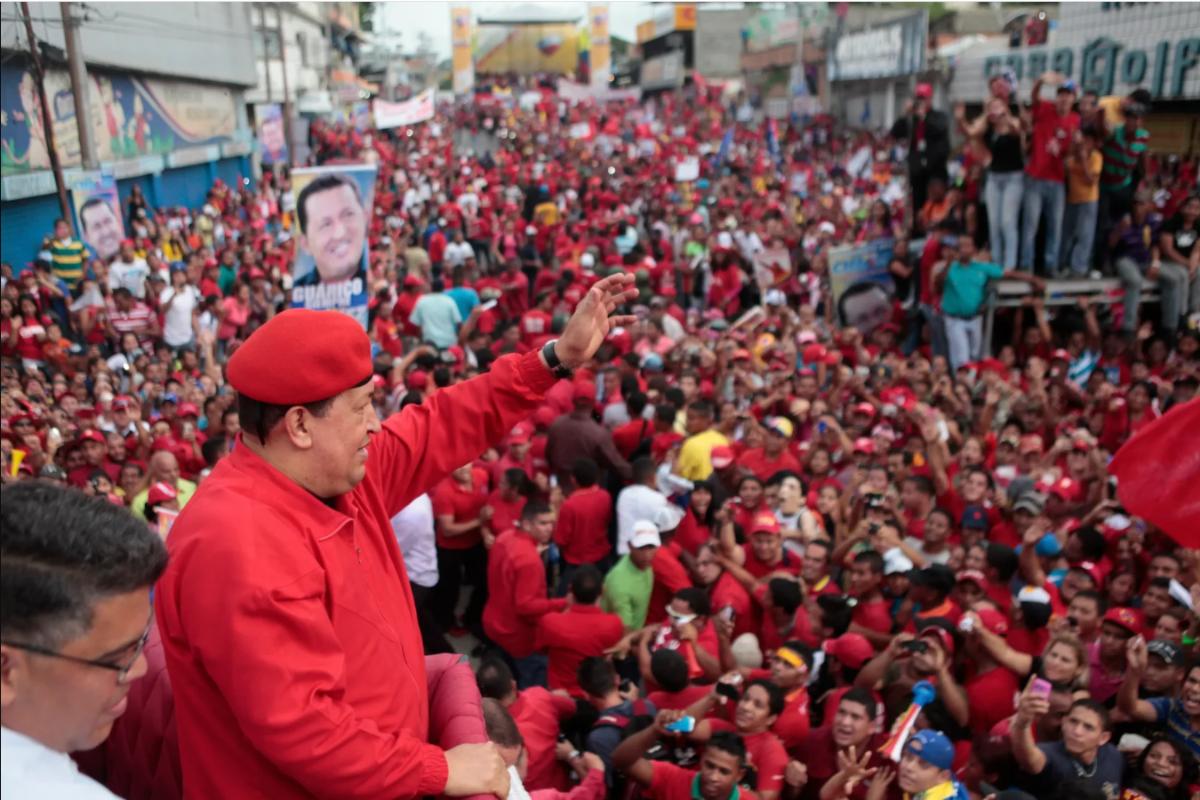
Hugo Chávez embodied the revolution and expressed the aspirations of the poor masses worldwide. The potential for a regional socialist revolution was evident. Had it succeeded, the planet would be a very different place. Instead of hundreds of thousands of desperate Venezuelan refugees fleeing into the US, the socialist revolution would have spread like wildfire across the border.
The terrible conditions and heightened imperialist bullying that Venezuelans suffer today are a direct consequence of the revolution’s failure. It is a law of history: the price for not taking the socialist revolution to its conclusion is reaction and counterrevolution.
Incredibly, many so-called Marxists claim it was never a revolution in the first place. But anyone who has watched The Revolution Will Not Be Televised will have seen the will to sacrifice and spiritual uplift expressed by the humblest layers of Venezuelan society. This is precisely what it looks like when the masses enter the stage of history, seize their destinies in their hands, and storm heaven.
Unfinished revolution
For over a decade, the Venezuelan Revolution stood at a crossroads. But eventually and inevitably, quantity was transformed into quality, and the road to revolution was closed – for now.
This is a stark reminder that even under the most exceptional circumstances, revolutionary opportunities don’t last forever. There is no third way between socialism and capitalism, and you can’t make half a revolution. As explained by The Communist Manifesto: “The working class cannot simply lay hold of the ready-made state machinery, and wield it for its own purposes.” Nor can it simply lay hold of the ready-made capitalist economy.
Tragically, that’s what Chávez and his closest associates attempted. Despite the heroic exertions of the masses, the main tasks of the revolution remained unfinished: the establishment of a democratic workers’ state, and the expropriation of the banks, industry, and landed estates, both foreign and domestic.
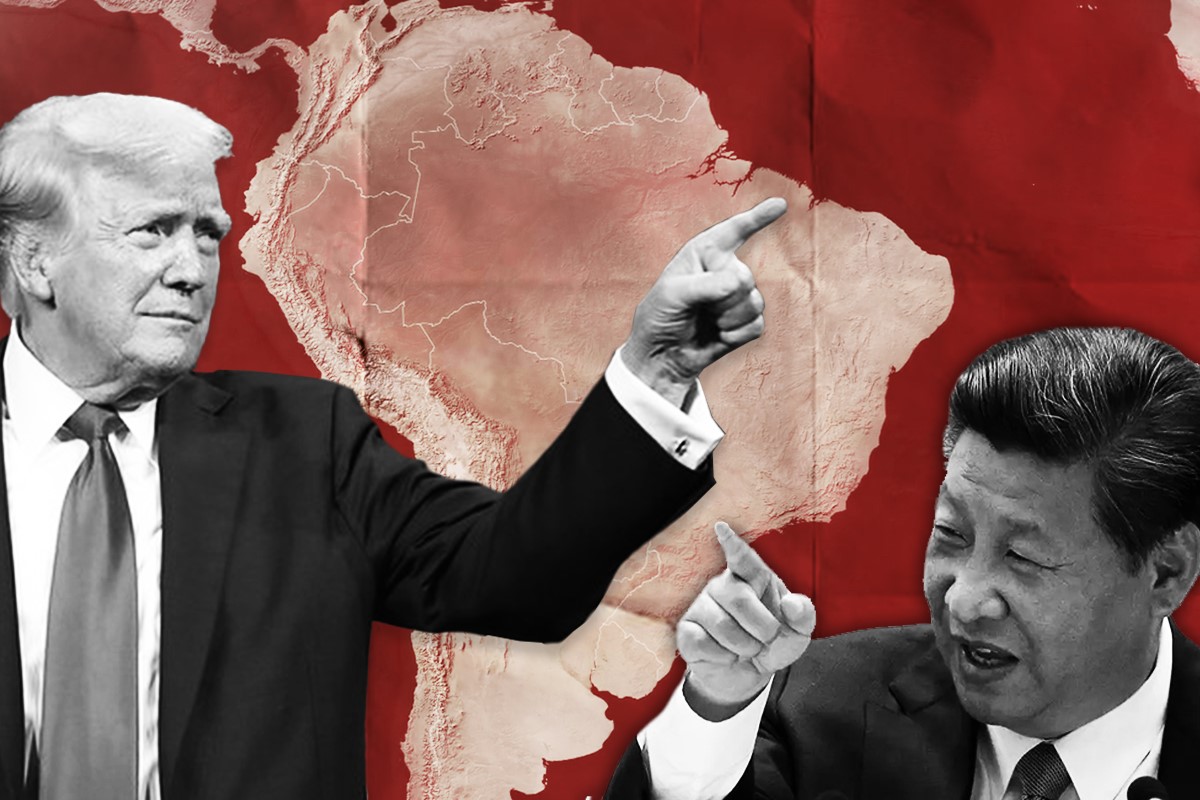
US imperialism’s openly stated goal is to seize Venezuela’s oil, the largest proven reserves in the world. It also seeks to teach the Venezuelan masses a ‘lesson’ in who the boss is, while simultaneously striking a blow against Cuba and the broader Latin American left. Above all, it aims to counter China and Russia’s rapidly rising influence as BRICS threatens American hegemony in its own hemisphere.
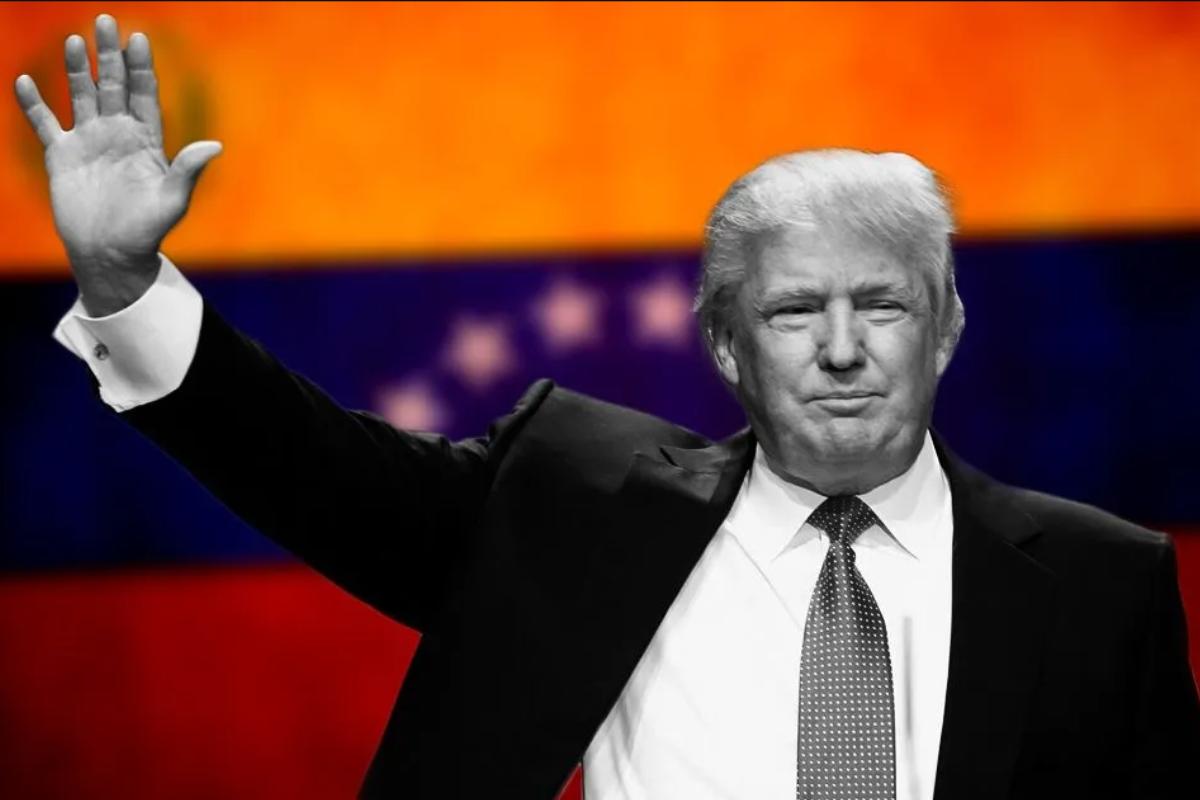
The imperialists hope intensified military bullying and sabotage of the sanction-weakened economy will lead to a Syria-like collapse of the government. However, Venezuela is not as isolated as in the past, and has prepared for asymmetrical warfare against an imperialist attack for over two decades. While they are clearly outmatched in a one-on-one fight, they may well be capable of taking out a ship or a plane or two, possibly many more.
After Vietnam, Iraq, and Afghanistan, the American public has extremely low tolerance for casualties, especially if they result from an unprovoked war and could spark an even more desperate refugee crisis.
So far, ‘Operation Southern Spear’ has been a clumsy start to Trump’s apparent attempt to retrench to the Western hemisphere. The top lawyer at the US military’s Southern Command has denounced the ‘double-tap’ strikes on alleged drug-smuggling boats as illegal, and Southcom’s top officer is stepping down to protest these extrajudicial murders. Hegseth and Trump are being openly accused of committing war crimes.
Furthermore, spending billions of dollars to send 20 percent of the US Navy to bully Venezuela isn’t quite what MAGA voters had in mind when they were promised an ‘America First’ policy.
With just 15 percent support for intervention in both the US and Venezuela, any attack could backfire badly, and the Americans could end up with a Libya-style failed state in their near abroad – or they could revive the revolution across the continent – including in the US.
Despite the relentless pressure from the neocons to attack, all of this is surely giving Trump pause for thought. Nonetheless, we shouldn’t rule out a false-flag attack in an attempt to rally Americans behind taking out Maduro – like Pearl Harbor or the Gulf of Tonkin incident.
The Caracazo
After centuries of Spanish rule, Venezuela won its independence in 1821, following a prolonged revolutionary war led by Simón Bolívar. But the country remained economically backward, undemocratic, and dependent.
After the discovery of oil in 1914, the imperialist penetration of the economy accelerated. The dictator of the day granted generous concessions to foreign oil companies, and a series of military juntas ruled Venezuela until 1958, when the particularly repressive regime of Marcos Pérez Jiménez was overthrown in a mass popular uprising.
Direct military rule was replaced by a period of limited formal democracy, known as the Pact of Punto Fijo. This was a power-sharing agreement between the two main bourgeois parties – Democratic Action (AD) and the Committee of Independent Electoral Political Organization (COPEI) – a two-party oligarchy akin to the Republicans and Democrats.
In 1976, during the global oil crisis, President Carlos Andrés Pérez (AD) nationalised the oil sector and created Petróleos de Venezuela, S.A. (PDVSA). Ostensibly a state-owned company, it was dominated by a technocratic elite, and foreign companies retained significant influence. After yet another decade of corruption and crisis, the stage was set for the Caracazo.
By 1989, Carlos Andrés Pérez had been elected president for a second time. That February, he announced an IMF-imposed ‘structural adjustment’ package that included massive austerity, privatisations, and currency devaluation. Overnight, food, fuel, and transportation costs skyrocketed as state subsidies ended.
Early on 27 February, angry crowds gathered in the shantytown barrios surrounding Caracas to protest increased bus fares. The protests quickly exploded into an all-out spontaneous uprising without an organised leadership or plan. Hungry and desperate people looted supermarkets; buses were burned; and symbols of wealth and government authority were attacked.
Pérez declared a state of emergency, suspended constitutional guarantees, and deployed the military and police. Houses were raided, and unarmed civilians were shot in the streets. As many as 3,000 people were killed or disappeared, and thousands more were beaten and arrested.
The state eventually regained control. But the Punto Fijo system was dead. A young army major named Hugo Chávez, deeply affected by these events, would later say that the blood spilled during the Caracazo watered the seeds of the Bolivarian Revolution.
The rise of Chávez
Born into rural poverty in 1954, Hugo Rafael Chávez Frías dreamed of becoming a professional baseball player, but instead entered the Venezuelan Military Academy. Influenced by Bolivar, he believed that the country’s vast natural wealth should be used to benefit ordinary Venezuelans.
After the Caracazo, he and other progressive officers formed a clandestine group called the MBR-200 and developed his ‘Bolivarian’ ideology, fusing Bolívar’s Panamericanism with anti-imperialism.
Now a colonel, Chávez launched a coup against Pérez on February 4, 1992. Unfortunately, the attempt was premature, and the coup quickly fizzled out. Chávez was brought on live TV to call on his comrades to stand down.
Instead of making excuses for the failed adventure, he took full responsibility and added that the movement’s objectives had not been achieved “por ahora” – for now. Electrified by his courage and authenticity, millions saw him as a hero of the people.
Convicted and sent to prison, he continued to educate himself and connected with the country’s popular movements. Under pressure from below, Chávez and his companions were pardoned after just two years.
Chávez entered politics and traveled across the country. Though he was a classic example of accident expressing necessity, he put his distinct stamp on events. He understood the problems faced by poor workers and peasants. He brimmed with charisma and gave them the respect and dignity they deserved.
He seamlessly blended references to Bolívar, revolution, socialism, and Jesus Christ. Nice, little old ladies fervently demanded that Chávez carry the Bible in one hand, and the sword of Bolivar in the other – to cut off the heads of the oligarchs.
In 1997, he founded the Fifth Republic Movement (MVR) and launched a presidential campaign, backed by the ‘Bolivarian circles’ that mushroomed around the country.
His platform called for a constituent assembly to rewrite the constitution, and demanded that Venezuela’s oil wealth be used to fund social programmes for the poor.
He was vastly outspent and faced vicious hostility from the media and both major parties, which endorsed a single candidate to stop him. But his grassroots campaign was unstoppable, and he was elected president on 6 December, 1998, with a decisive 56 percent of the vote.
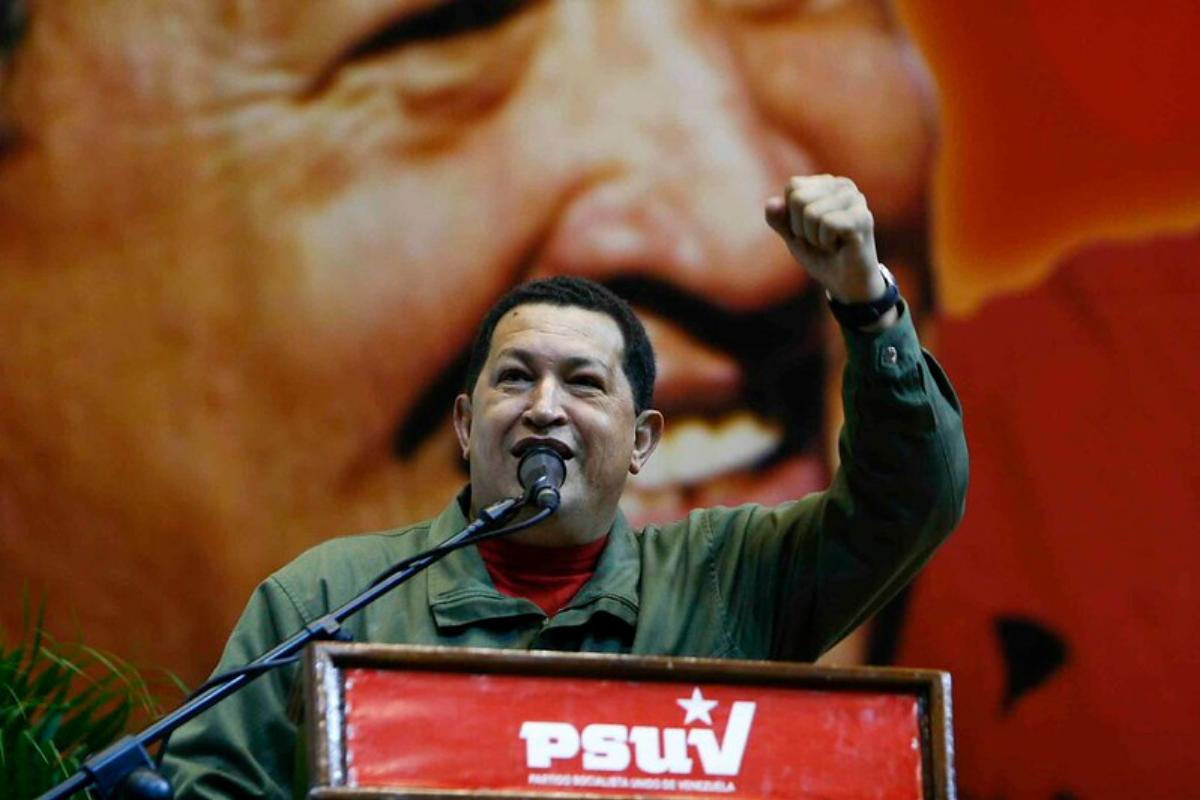
In April 1999, 87.75 percent voted in favor of convening a Constituent Assembly, and a new constitution was drafted after extensive debate and public consultation. Though its overall framework remained bourgeois, it was far more progressive than previous versions.
The country was officially named the ‘Bolivarian Republic of Venezuela’, and a new flag was adopted.
It affirmed state control over natural resources, especially oil, and prohibited the privatisation of PDVSA. It guaranteed equal rights for women and expanded mechanisms for direct democracy, including referendums and recall elections.
It guaranteed free healthcare and education as constitutional rights. It recognised the rights of indigenous and Afro-Venezuelan peoples to their lands, languages, and cultures, among other rights.
That December, the constitution was approved with 71.78 percent in favor. This was followed by the ‘mega elections’ of July 2000, to confirm the presidency and all other elected positions under the new constitution, and he increased his share of the vote to 59.76 percent. With his renewed mandate, he moved to assert genuine control over PDVSA and the oil industry.
The April 2002 Coup
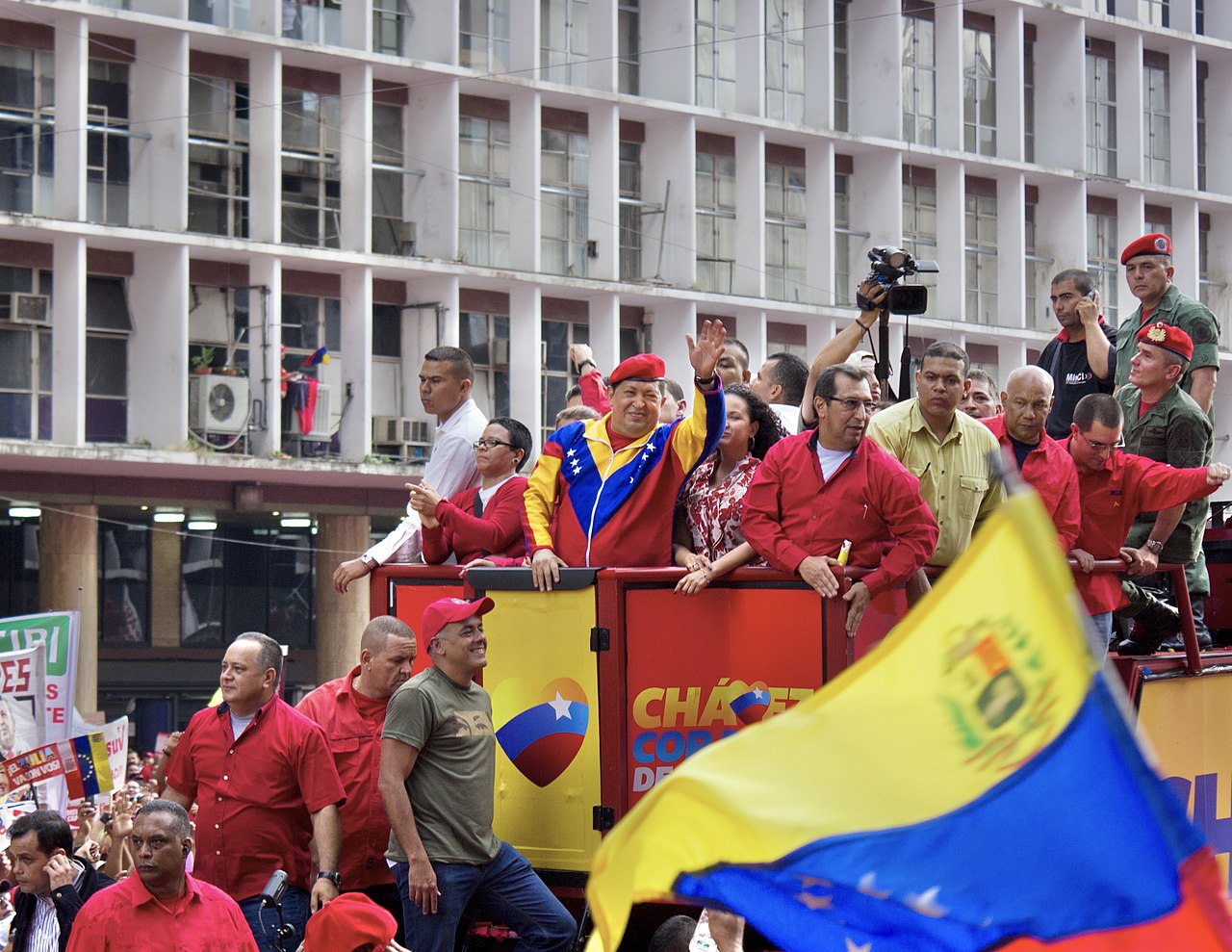
In November 2001, the National Assembly passed an Enabling Act, allowing Chávez to legislate on specific questions through executive orders for one year.
Using these powers, he passed 49 decrees, including a land redistribution law and the Hydrocarbons Law, which increased the state’s royalties from oil extraction and reasserted control over PDVSA.
Unsurprisingly, this was too much for the oligarchs and their imperialist backers. They launched a hysterical campaign, calling the decrees ‘communist’ and ‘dictatorial’. It wasn’t so much the modest reforms themselves, but the masses behind Chávez that they feared.
Fedecámaras, a consortium of the most powerful families and companies, sabotaged the economy from the get-go. They hoarded cooking oil, rice, toilet paper, and other basic goods, causing artificial shortages. They shuttered factories, moved capital out of the country, and refused to invest. They organised protests, strikes, and roadblocks to make the country ungovernable.
Needless to say, the CIA was heavily involved. The National Endowment for Democracy and USAID trained right-wing activists in methods of regime change.
They gave millions to the rabid escualido opposition, including the peace-loving Nobel Prize laureate, María Corina Machado. This great Venezuelan patriot has promised to hand her country’s vast natural resources over to corporate America, and would happily see it turned into a new Syria as long as she and her criminal pals get a cut. She has even called on Netanyahu to invade her country to liberate it.
With control of PDVSA’s riches at stake, they launched a kind of ‘colour revolution’ in April 2002. As they would do again in Ukraine in 2014, they orchestrated an armed clash between rival demonstrations, used snipers to kill people on both sides, and blamed the government.
The military high command came out in rebellion, and the forces of reaction surrounded the presidential palace. Chávez refused to sign his resignation and was whisked away to an island to be taken out of the country by the Americans.
On 12 April, Pedro Carmona – the head of Fedecámaras – was sworn in as president and was immediately recognised by the George W. Bush administration. A who’s who of the reaction gathered at the presidential palace, gloating and cheering as Carmona dissolved every democratic institution of the Bolivarian Republic – all in the name of democracy, of course.
Amid a wave of mass arrests, repression, and a vicious siege of the Cuban embassy, Chávez’s ministers were forced into hiding. The imperialists and local oligarchy thought it would be business as usual – but the masses had other ideas. As far as they were concerned, they had elected Chávez, and they would decide when he was no longer their president.
On the morning of 13 April, word spread through the barrios that Chávez hadn’t resigned and was being held captive. As in 1989, a human avalanche descended on the center of Caracas, demanding Chávez’s return. Loyalist military units, including the presidential guard, moved into action against the coup plotters.
Those who weren’t arrested escaped like rats – but only after they looted the presidential vaults. Early on 14 April, Chávez was flown back to the presidential palace and restored to the presidency.
For the first time in Latin American history, a US-instigated coup was reversed by the revolutionary action of the masses. The old state apparatus was suspended in midair. The workers and poor owned the streets, and the military rank-and-file were with the revolution.
As Alan Woods explained at the time, all Chávez had to do was lift his little finger and the revolution could have been carried out without bloodshed or civil war.
He could have called for the occupation and nationalisation of the factories and landed estates, for the expropriation of imperialism, and the repudiation of the foreign debt. H
e could have called for the formation of popular action committees – soviets – and for an armed people’s militia to defend the revolution and replace the standing army and police.
The masses were primed and ready, just waiting for the word. The entire course of human history could have changed at that moment. The floodgates of the socialist revolution would have been opened. The whole of Latin America would have followed – and many other places, too.
Instead, the moment was lost. In the wee hours of the morning, Chávez called for peace and calm and for everyone to go home. Not a single person involved in the coup was ever arrested. Even ‘Pedro the Brief’ as Carmona was nicknamed, was allowed to walk freely in the streets of Caracas and Miami.
‘Every 11th has a 13th’
It is impossible to overstate how big a missed opportunity this was. Nonetheless, the idea that ‘every 11th has a 13th’ became part of the collective memory of the Venezuelan masses. The whip of counterrevolution can be smashed by concerted revolutionary action, and April 2002 in Venezuela is the proof.
Over the next few years, the desperate struggle between revolution and counterrevolution continued to rage. The oligarchy and imperialism remained ruthless and relentless. They had lost the battle but wouldn’t concede the war. Instead of putting them out of their misery, Chávez tried to appease them. But as everyone knows, weakness only invites aggression.
Just a few months later, in December 2002, another attempt at regime change was launched, this time in the form of a bosses’ lockout of the oil industry. Computers controlling operations remotely from Houston were disconnected. Equipment was smashed, valves were destroyed, and sand was poured into the pipelines. Billions in revenues were lost.
But within days, PDVSA workers formed coordinating councils and started getting production running again – manually. Within weeks, the vast machinery of PDVSA was under workers’ control – without management – and many workers didn’t even realize the magnitude of what they had accomplished.
In the years that followed, dozens of other factories experienced lockouts or closures. In many cases, the workers responded with occupations, and the slogan, “a factory closed, is a factory occupied!” became the watchword of the day.
There was also an organic upsurge in unionisation as workers broke with the rotten CTV and formed their own democratic unions, under the umbrella of the National Union of Workers (UNT).
Chávez rolled out the famous misiones social programmes, which included subsidised grocery stores, literacy campaigns, and free education. Basic healthcare was made available to poor neighborhoods and remote villages as Cuban doctors were brought in, in exchange for oil.
Unused land was distributed to poor peasants, and a crash programme of affordable housing was launched. Misión Milagro provided free cataract and other eye surgeries so poor people could see again.
These programmes were literally life-changing for millions of people – and not only in Venezuela. Citgo, the Venezuelan state-owned energy company here in the US, provided free or cheap heating oil to Indian reservations and poor neighborhoods in Boston and the Bronx.
Over the next few years, several more attempts were made to remove Chávez. The opposition launched guarimba riots, often with the help of far-right Colombian paramilitaries. They attacked government buildings and car-bombed chavista officials.
They staged electoral boycotts in an attempt to delegitimise the democratic process, though they would have lost the elections anyway. In 2004, they organised a recall referendum after gathering enough signatures to trigger it – including from newborns and dead people. Chávez won with 59 percent of the vote. In 2005, they sabotaged the national airline, VIASA.
Based on the living experience of the revolution and the behavior of the ruling class, Chávez drew the conclusion that the only solution was socialism. As he expressed it when declaring the need for “Socialism of the 21st Century” at the World Social Forum in Porto Alegre: “Either capitalism, which is the road to hell, or socialism, for those who want to build the kingdom of heaven here on earth.”
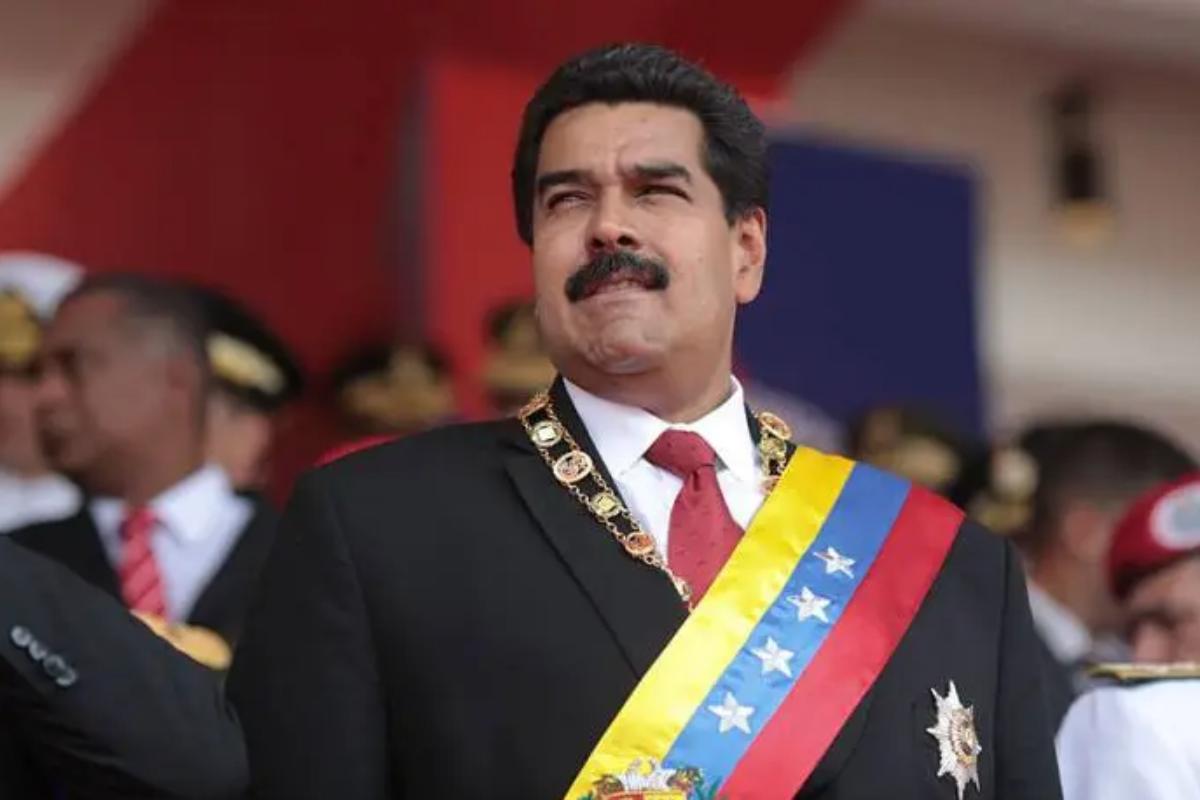
Turnout in the 2006 presidential election was 78 percent, and he won 62 percent of the vote. International observers, including Jimmy Carter, certified them as free and fair. And still, the mainstream media continues to call Chávez a dictator.
In 2007, he announced the formation of a new political party, the United Socialist Party of Venezuela (PSUV). Within weeks, 5.5 million members signed up – nearly 20 percent of the population.
Given the wave of factory occupations, he asked his minister of labour to draw up a list of idle factories to be nationalised and run under workers’ control. She came up with 1,200.
Bolivarian bureaucracy
However, very few were nationalised, and only a handful operated under workers’ control. Not only were they not integrated into a rationally planned economy, but the increasingly bloated state bureaucracy moved might and main to stifle Chávez’s boldest initiatives.
When he called for a Fifth International to replace the moribund socialist and communist parties of the past, his proposal was cynically ignored by the conservative committeemen and women around him.
Furthermore, Venezuela’s ‘petrosocialism’ was funded by redirecting oil revenues that had previously enriched the oligarchy.
During the oil-price boom of the 2000s, oil revenues reached over $90 billion annually. But when prices collapsed after 2014, chavismo had no productive base to fall back on.
Not only had they failed to expropriate capitalism and establish a workers’ democracy, but they hadn’t diversified the economy either. They depended on imports of everything from food and cars to electronics, but they no longer had the money to pay for them.
The billions in oil revenues also introduced severe inflationary distortions that would eventually have catastrophic effects. All those petrodollars also reinforced the conservative tendencies of the ‘Bolivacracy’ that grew up within the revolutionary process. This was the ‘deep state’ of the Fifth Republic, which Chávez was never able to break or control.
Hugo Chávez died on 5 March, 2013, after a prolonged battle with cancer. Like Lenin before his death, he could see the creeping bureaucratisation and urged a change of course. But the writing was already on the wall.
He was, without a doubt, an honest revolutionary and champion of his people. He both fed and fed off the revolutionary fervor and élan of the masses. He appreciated and often quoted Marx, Lenin, Trotsky, and Alan Woods. But he was never truly a Marxist – a fatal flaw when it comes to completing the socialist revolution.
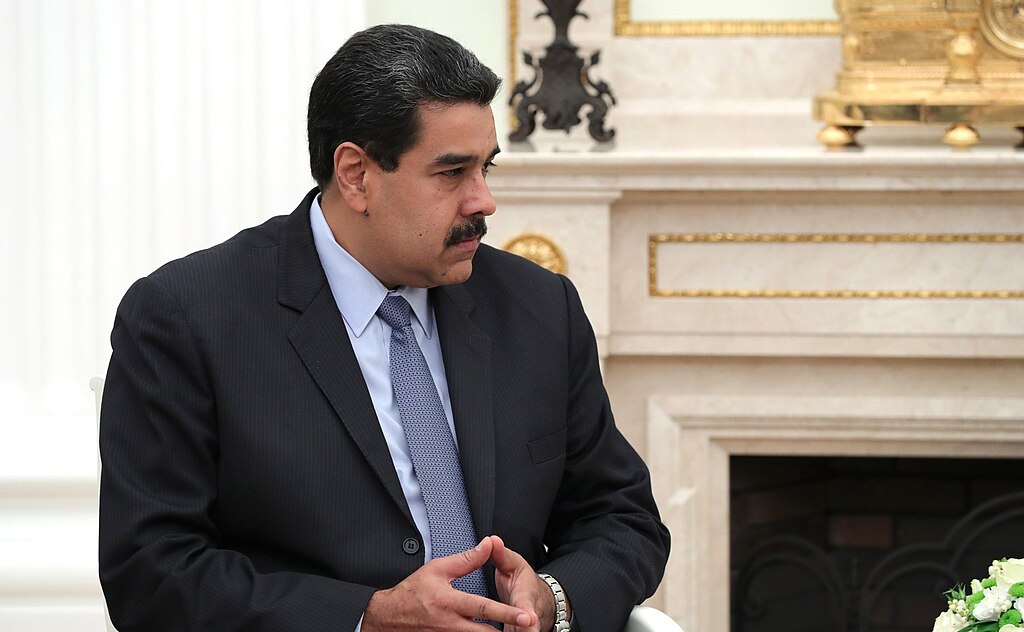
The ‘Boligarchy’ that now controls the state and PSUV has made a mockery of chavismo without Chávez.
Maduro has spearheaded a variant of the Thermidorian reaction, rolling back most of the revolution’s gains. He has privatised what was nationalised, snuffed out workers’ control, and handed the landed estates back to the landlords.
He has clamped down on the left and the critical media, and crushed any opposition to his rule, including in the unions. Despite Trump’s threats, he has tried to appease imperialism and reopened PDVSA to foreign companies like Chevron.
That being said, there are degrees of counterrevolution. If imperialism and the old guard were ever to get back in power directly, there would be a wave of retribution and bloodbath on the scale of the defeated Paris Commune.
Making sense of the revolution’s slow death comes down to this: although Chávez had won power through bourgeois elections, he never really had power. And the Venezuelan workers certainly never had it either.
This was a peculiar case of a socialist revolution attempting to go through the old channels, but the question of power was never resolved. Although the bourgeois lost direct control of their state, it remained a bourgeois state. The army and police were purged several times, but remained bourgeois in nature. A new bureaucracy crystallised around these and other remnants of the old state apparatus.
Although a few factories were nationalised and run under workers’ control, the majority were left in private hands. The capitalists used this to sabotage the revolutionary process. Instead of expropriation, Chávez imposed price and currency controls.
Sanctions imposed during Trump’s first term made things even worse. All of this led to an economic insane asylum that was neither rationally and centrally planned nor left to the irrational yet regulating hand of the market.
Hands off Venezuela!
The result was endless chaos and instability, leading to a sprawling black market and runaway inflation. Understandably, huge layers of Venezuelan society were disappointed and lost their revolutionary fervor, and the door to Maduro’s counterrevolution in Bolivarian form was opened.
However, settling accounts with Maduro is the task of Venezuelan workers. What Trump wants with the unprecedented military escalation in the Caribbean is neither to ‘restore democracy’, nor to ‘fight narcoterrorism’.
Rather, he seeks to subjugate Venezuela and tear it away from the influence of China and Russia. The American communists’ main enemy is at home. We unconditionally defend Venezuela from imperialism and say, “Hands off Venezuela!”
The key lesson is clear: a revolutionary leadership must be prepared in advance and cannot be improvised in the heat of the moment. The absence of such a leadership is the tragedy of Venezuela and every other revolution since 1917 – something the RCA (Revolutionary Communists of America) is in the process of rectifying.