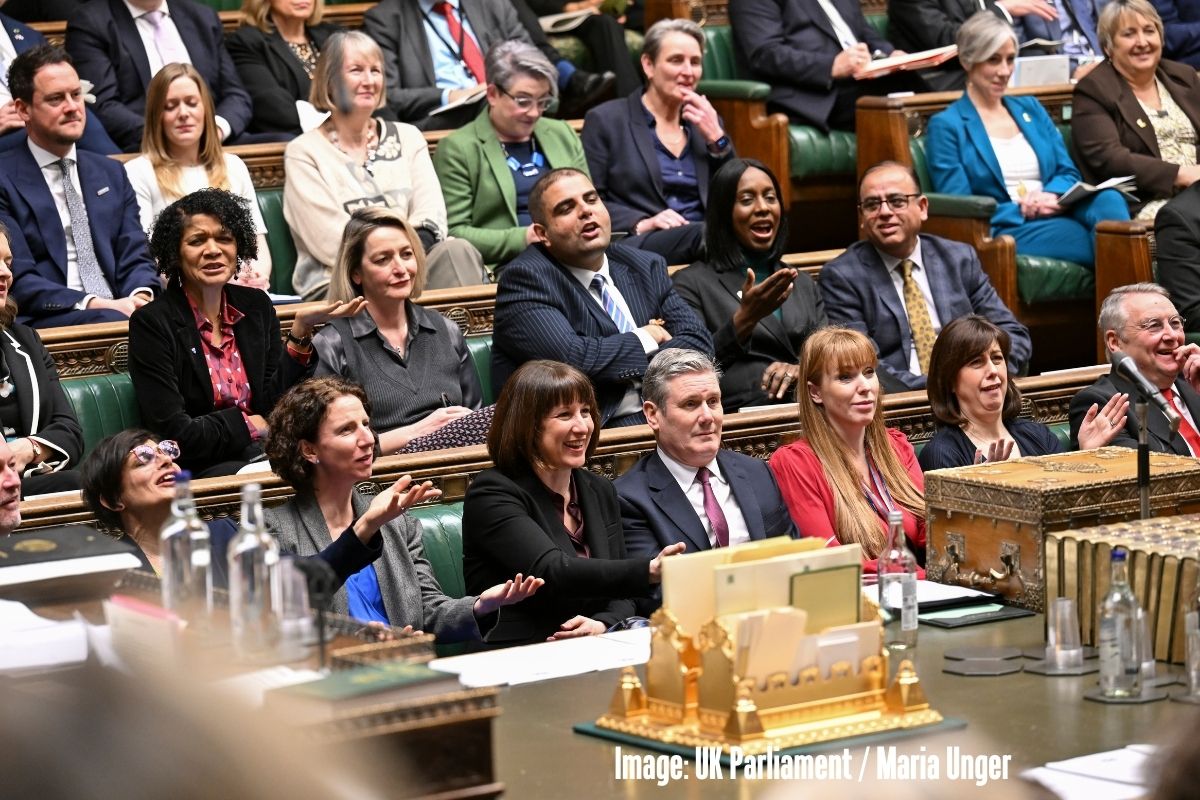

The Economist – a major propagandist for the liberal establishment – has recently sounded the alarm bells to the capitalist class it represents. The Employment Rights’ Act, which passed Parliament at the end of 2025, will be rolled out bit by bit in the coming months – and it risks hurting the bosses’ profits.
The Act, they say, will “return trade-union law to the 1970s” – containing many pro-worker reforms that apparently “slipped under the employers’ radar”, and will greatly empower unions.
These reforms include: the duty of employers to periodically tell their workers of their right to join a union; the right of unions to enter workplaces to recruit on-site; reduction of the threshold for union recognition to an insignificant proportion of the workplace, at 2 percent; abolition of the requirement for a 50 percent turnout on strike ballots; and the ability to vote electronically for strike action.
Back to the seventies?
Of course, the main aim of The Economist’s coverage of this issue is to hyperbolise the “dangers” of the Act to the bosses: namely, to “dent Britain’s attractiveness as a place to do business”.
Conversely, raising the perceived threat from the bosses’ side also shores up the Labour government’s narrative on the Act. Hoping to curb the class struggle through legislative means, ministers have grandiloquently touted the reforms as the “biggest upgrade in workers’ rights in a generation”.
This line has unfortunately been parroted by the right-wing bureaucrats of the labour movement – from Trade Union Congress general secretary Paul Nowak, to Unison ex-general secretary Christina McAnea.
Voir cette publication sur Instagram
They support Starmer, and wish to present some wins from the Labour government to their members, so that they can put a lid on the brewing anger in their ranks.
But in reality, while the reforms represent a breach that workers can and should take advantage of for militant industrial action, there remain many holes in the law.
Firstly, the Act was watered down from Labour’s manifesto pledges, once they came to power – it falls short, for instance, of a ban on zero-hour contracts.
In the second place, contrary to The Economist’s assessment that this legislation represents a “return to the 1970s”, many of the draconian anti-union laws introduced by Thatcher, Blair and assorted Tories since the 1980s will remain in place.
Hard picketing and solidarity strike action will still be banned. The two-week notice that must be given by trade unions before taking strike action has only been reduced to ten days. And strikes will still have to go through bureaucratic hoops: the rep won’t be able to call workers out to the parking lot and take a vote by show of hands for immediate action.
Voir cette publication sur Instagram
But crucially, it remains to be seen how well the provisions of the new Act will be enforced. Aspects of the Act still require secondary legislation before their implementation – in which the government will have a chance to make the reforms meaningless, under pressure from ‘terrified’ bosses.
At the same time, with a shocking backlog of over half a million cases, employment tribunals are already at breaking point. It regularly takes 18 months before final hearings to take place – a torturous process for any worker in a precarious position.
Undoubtedly, with the government’s coffers empty, an explosion of new cases will only exacerbate the issue. This could well make the new rules unactionable.
For an upsurge against the billionaires!
Nevertheless, the bosses are right to be worried about one thing. As The Economist points out, workers are itching to get organised – angry at decades of stagnant wages, precarious employment, and austerity attacks on all fronts by successive Labour and Tory governments. Any spark could ignite a blaze of unionisation and strikes.
But interestingly, The Economist is also very equivocal about its perspectives. The article concludes on the note: “where [the Act] leads is in the hands of the unions” (our emphasis).
What this bourgeois journal means is that the union leaders should act ‘responsibly’ with their newfound power: using the authority bestowed by the Act to hold back the class struggle, rather than provoke heated industrial battles, like those seen in the 1970s.
This insight reveals the understanding of the serious strategists of capital. Indeed, in the last analysis, it is not the anti-union laws that have held back the class struggle for the last four decades, but the conservative attitude of the trade union leaders.
Before, these bureaucrats hid behind the anti-union laws to justify their passivity and inaction. Today, they present the Act as a saving grace for the Labour government.
What the union leaders lack, to lead, is not laws but perspective. This is very well exemplified in recent history.
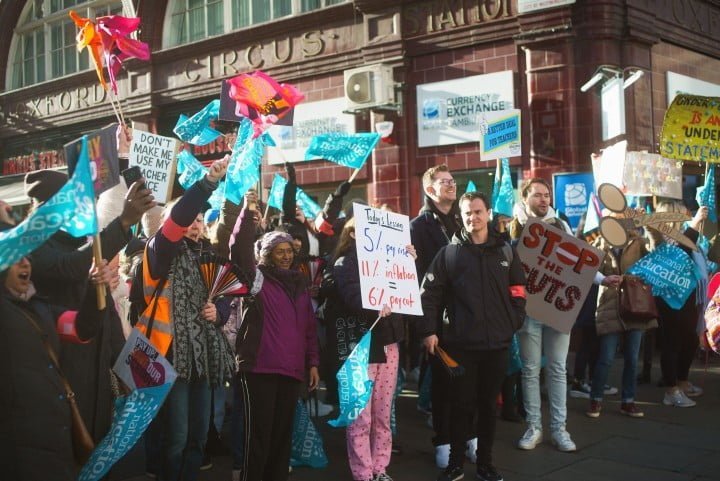
During the 2022-23 strike wave, when numerous unions had already, legally, passed national strike ballots – and the watchword coming from the ranks on every picket line was for a general strike – all the potential existed for unified, coordinated, and sustained action.
The unions could even have brought down the flailing Tory government, achieving substantial pay rises in the same sweep.
This potential, however, was squandered by the union leaders – who did not have such determined ambitions. Instead, one by one, the strikes of different sectors petered out, either in pyrrhic victories or sometimes outright betrayals.
Today, the mood for a new upsurge already exists in the ranks of the unions. The Employment Rights Act could well serve as a pretext for action. It should be seized upon. But for this potential to be realised, the trade union leaders must adopt a perspective of determined, coordinated struggle against the bosses and Starmer’s hated government.
Bring down all the anti-union laws with militant union action! Bring down Starmer’s rotten government! Fight for the expropriation of the billionaires and bankers, and for socialist planning to end the crisis!
Industrial news: Construction, rail, universities, and more…
Construction industry on shaky foundations
Typically, winters in the building trade are rough. If you’re lucky enough to be able to work, the weather is against you. If you aren’t lucky, you very often don’t get paid at all.
Since new year, the site I’m on hasn’t had a delivery of mortar. That means it’s been almost two months since I last got paid. Up and down the country, sites will shut down production if houses don’t get sold; and between the cost of living and unstable interest rates, many of those houses aren’t getting sold.
Construction firms top the charts for insolvencies nationally. Large companies collapsing leaves holes in supply chains and staff and subcontractors regularly unemployed. A third of workers are ‘self-employed’ – meaning no guaranteed pay, hours or benefits; and often weeks of outstanding wages unpaid.
The high cost of local production has meant many materials are being bought from overseas. Cement, for example, has hit its lowest UK production since 1950. Domestic consumption is now 33 percent imported from overseas – and from next year will be hit with a carbon tax.
A shortage of labour also poses its problems as retirements outstrip apprenticeships by 500 percent each year. The government has attempted to incentivise young people to take on apprenticeships by raising wages. But without any expanded subsidies, smaller firms are unable to take on the comparatively unproductive apprentices.
Large housebuilders sit on top of huge debts from buying landbanks that they are unable to build on, due to material and labour costs. They complain of ‘slim margins’ – and yet, the board members will take home millions each year in declared salaries.
Most of these problems have solutions; and most of that comes down to socialist planning – between all the industries involved, under democratic workers’ control – as opposed to the anarchy of the market.
Since the fall of the builders’ union UCATT and the 1990s building boom, workers have mainly looked out for themselves. But as the crisis gets worse it’s evident from social media that workers are realising the need for a union – and there are even steps being taken to form one.
The building sector has hit the limits of capitalism.
Joe Wilson, Newcastle
The billionaires’ decade?
If you needed any further reminder of the economic inequality between the masses and the world’s richest, here’s what last month’s annual report from Oxfam told us: last year, the global billionaires’ wealth rose by 16 percent, reaching over £13 trillion.
The number of billionaires increased too, to over 3,000 for the first time ever.

Zooming in on the UK, the richest 56 people now hold more wealth than 27 million combined – over a third. Yet 300 people die every day due to poverty.
These numbers merely confirm what everybody already feels. The rich are getting richer, while the working class and poor are hit hardest by austerity.
That austerity is demanded by the bankers, and implemented by the politicians – who see it as the only way out of a substantial global debt which has only worsened since the 2008 financial crisis, now standing at nearly £300 trillion.
In their eyes, anything that can’t immediately make a profit is thrown to the scrapheap. Colleges, councils, industries such as steel, disability benefits, and the NHS are just a handful of victims in the capitalist onslaught.
Two years ago, Birmingham City Council slashed social services by £300 million and cut 600 jobs. In the same year, UK billionaires’ wealth increased by £35 million every day, to £182 billion combined – enough to cover the city of Manchester with £10 notes 1.5 times over.
The stakes are clear. The lives of billions are declining at a steep rate, all because the billionaires – who are responsible for the debt, and have the means to pay for it – instead would place the burden on the working class.
Jack Webb, Oxford
All aboard the gravy train!
The Labour government has announced that the head of newly-formed ‘Great British Railways’ (GBR) will earn more than £300,000 a year – for the tough sacrifice of ‘working’ two-and-a-half days per week.
This newest servant of the British state would become the third most overpaid bureaucrat in the public sector.
Of course, the Department for Transport (DfT) is quick to point out that the new merged position will, eventually, save money compared with the current iterations of the role.
GBR’s transitional manager Laura Shoaf is earning a whopping £415,000 per annum. So really, she’ll be getting a pay cut if she takes the permanent position! Luckily, working part-time, she may be able to find a second job – which is still one less than the three jobs Britain’s poorest have to take to make ends meet.
Network Rail chairman Jeremy Westlake, meanwhile, is cashing in with half a million pounds going into his account every year. Sadly for him, he may soon be out of office – although, knowing the revolving doors of British industry, we are sure he will find another cosy position for himself in no time.
In fact, his predecessor Andrew Haines – after his services to crown and country for resisting the 2022-23 rail strikes – received a knighthood and became chair of Cranfield University after retiring.
You may be thinking that £300 million is an eye watering salary for half a week’s work. But rest assured, DfT has an explanation: “This is not a job… [whoever takes it] will lead a bold mission to reimagine how rail serves the nation”.
The bold future of Britain’s railways is, indeed, in safe hands. Applicants for the new position “need not have previously worked in the rail industry or public sector”; and the new chair will not be required on-site at GBR’s new Derby office.
Just like the crooks in parliament, the future chair’s individual involvement in the day-to-day work will be strictly unnecessary!
The right-wing Telegraph dubbed the new position “rail nationalisation tsar”. Despite their cynicism, the metaphor is quite apt.
Not unlike Nicholas II, the new rail tsar will be able to wander the spacious rooms of their own home, imagining a different world, commandeering from afar; and presiding over a rapidly declining system, while continuing to get a handsome remuneration for doing nothing.
We can be sure of one thing, however. When financial strain kicks in, and industrial action kicks off, the new rail tsar will be hot on their feet to take a “leadership role” in fighting workers’ demands.
George McAffrey-Williams, Elephant and Castle
Sinking ship at Southampton uni
Like many universities, Southampton sustains itself financially by charging international students exorbitant fees. This is bundled with vanity projects like a Malaysian campus, a Delhi campus, and a third international campus in the pipeline.
But even all these measures can’t stop enrolment from falling. Grade requirements to get into the university have fallen by around three grades on each course. This in turn lowers the university’s sacred league table position, driving international enrolment down further.
Voir cette publication sur Instagram
For the second year running, there is a “significant shortfall” in income. The vice-chancellor has introduced a series of cuts before promptly quitting – abandoning the sinking ship, as all good captains should.
Pay progression has frozen for senior staff, hiring has been majorly stripped back, and further cuts are on the way. Most dramatically, management offered voluntary redundancy to every member of staff in the university, throwing men overboard to try and slow the sinking.
Staff members that accepted this offer will be gone by March at the latest. Many students who signed up for their second semester modules will now find they have no lecturers to teach them.
One department has dropped from 12 to four members, and they are still expected to carry out the same work.
Not only has there been no pushback from the student union, they haven’t even told students. The local paper has been more diligent in informing students about these cuts than the university itself.
The storm has no end in sight. The parasites who marketised education all contributed to the deepening of this crisis; yet the students and staff are made to pay.
Mac Scott & Phil Carr, Southampton
Museum workers extend strike
Workers at the National Coal Mining Museum in Wakefield have been on strike since August over insufficient pay. Recently, the workers overwhelmingly voted to continue the strike until June, with 92 percent of the 86 percent turnout of unionised staff in favour of doing so.
This comes after months of dirty tactics from the museum’s chief executive, who has resorted to calling the police on striking workers, threatening workers with disciplinary action upon their return, and hiring private security to keep them under control.
Voir cette publication sur Instagram
A local councillor even alleged that the museum has spent more than £100,000 on private security since the strike began – far more than it would have cost to just pay the workers what they deserve.
He further alleged that the chief executive was approached while she was in her car and asked if she’d come back to the negotiating table. Her response: “never”; before driving off, despite publicly expressing a desire to negotiate.
Even in a so-called ‘charity’ – like the one that owns this museum – workers are fodder to be used and abused in the interests of bosses. If it wasn’t for these workers, many of whom are ex-miners themselves, the rich history of their profession and local area would go untold.
This means nothing to those in charge of the museum, who (it’s safe to assume) make a lot more money than the average worker and view the latter as expendable. These ghouls would certainly not be missed if they were stripped of their positions in favour of a museum controlled and run by its workers.
Dylan O’Connor, Leeds
I have a PhD – give me a job!
After submitting my PhD thesis back in September – and, not especially wanting to get on the endless treadmill of postgraduate positions – I decided that it was time to start applying for jobs.
Originally, I was quite optimistic since my subject – particle physics – does supposedly give me some transferable skills. But four months and hundreds of ignored applications have shown me the reality of the situation.
Recently I’ve got in touch with a job agency for STEM graduates, and had a very interesting conversation with one of their employees on the phone. He told me that the amount of jobs that they’re recruiting for has been reduced to about 30 percent of what it was two years ago.
And when I mentioned my thoughts on the AI industry (“it’s a bubble!”), he told me that most of the tech companies he works with have had similar conclusions, and are massively scaling back their investment in the technology.
In other words, the job market is in a decrepit state – and when the bubble pops it’s about to get a lot worse.
For decades, young people have been told that if they go to university, study hard, and of course get massively into debt, there’s a good job waiting for them on the other side. When capitalism can’t keep its side of the deal any more, it’s no wonder that so many are drawing revolutionary conclusions.
Stanley Adam, Preston