


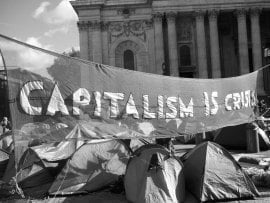
The Organic Crisis of Capitalism – Part one
In this recent article from the In Defence of Marxism magazine, Rob Sewell – editor of Socialist Appeal – looks at the current economic crisis, outlines the global economic perspectives, and explains what is meant when Marxists define this as an “organic crisis of capitalism”.
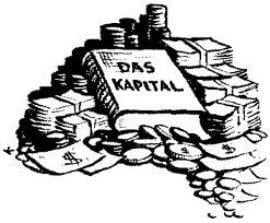
Marx’s Capital: Chapters 26-33 – The Origins of Capitalism
In the final part of his series on Marx’s Capital, Adam Booth tries to answer the question of how capitalism initially arose. In what way was an initial disparity and inequality created to allow for the laws of capitalism to set in? It is this issue of “primitive accumulation” that Marx turns to in chapters 26-33.
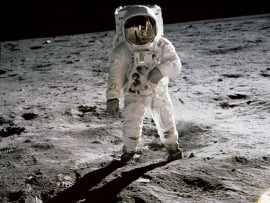
The role of the state in the space race
In April 1961, Yuri Gagarin, the Russian cosmonaught, became the first person in space. Flight, and later space travel, were once viewed as an indication of humanity’s progress and ability to overcome even the most enormous of obstacles. But the recent explosions of two private space ventures demonstrate the barrier that capitalism has become in our exploration of the stars.