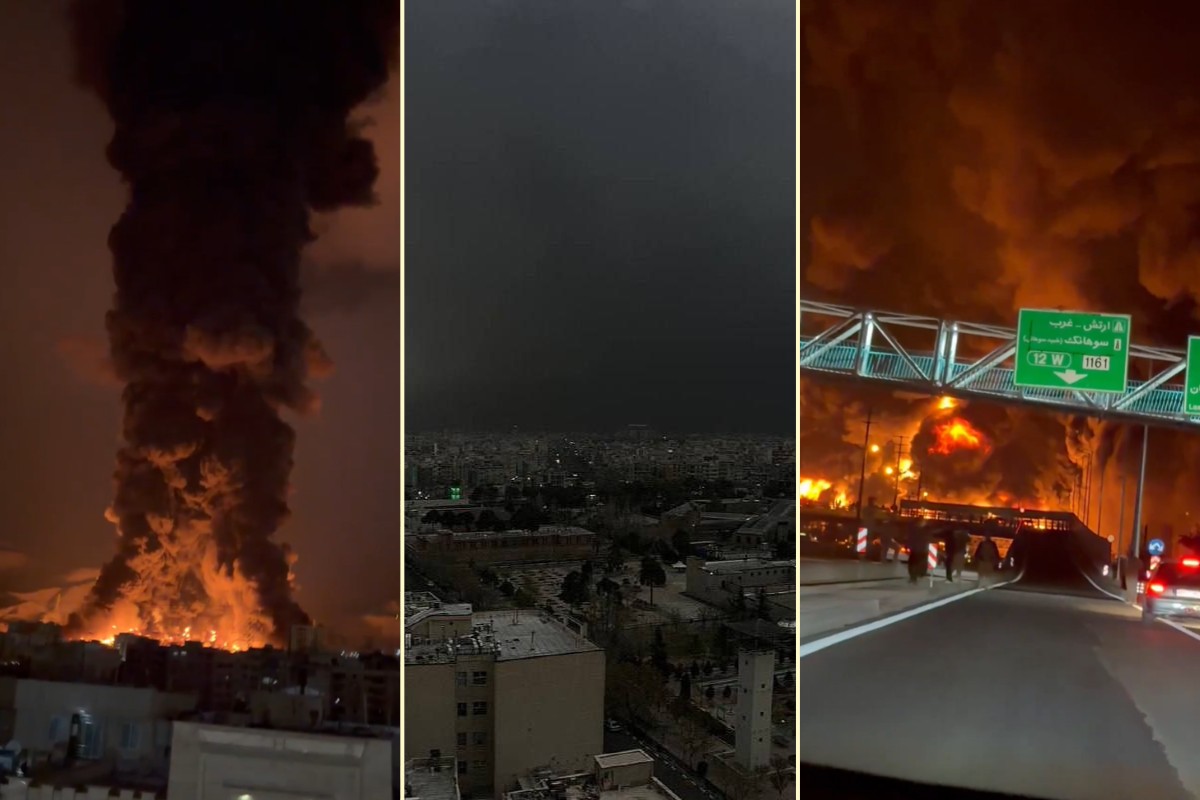

The residents of Tehran woke up last Sunday to truly horrific scenes resembling an apocalypse. Thick black smoke shrouded Iran’s capital city of nine million people, blocking out sunlight and the sky.
Soot and black gunk covered the streets, cars, and people’s houses as toxic air filled their lungs. Those who experienced this nightmare reported waking up with pain in their throat and their eyes burning.
Overnight, the US and Israel had bombed multiple oil depots in Tehran, causing huge fires and thick clouds of billowing smoke. As a result of the strikes, oil spilled onto the sewers, contaminating the water and causing fires to spread catastrophically.
This is Teheran this morning – Yes, this morning.
Thick black clouds are covering the city – oil and ashes are raining down on the streets.
War is hell.
A PH test of the water in Teheran also shows that the water has become acidic- resulting from the oil and ashes leaking… pic.twitter.com/M2LRoDXp6o
— ScharoMaroof (@ScharoMaroof) March 8, 2026
As rainfall hit the city in the morning, toxic acid black rain gave people skin burns. Local health authorities urged people to stay indoors, warning that the toxic gases and fine particulate matter could cause irritation to the eyes and airways, lead to respiratory and heart disease, and even increase the risk of cancer.
Ecologists are saying that the release of pollutants on this scale is ‘unprecedented’. No one can predict the full extent of the long-term health and environment effects – not just in Iran itself, but across the whole surrounding region.
‘آتشسوزی انبار نفت اقدسیه از فاصله نزدیک’
ویدیوی دریافتی از سوهانک، انتهای بزرگراه ارتش #تهران‘
شنبه ۱۶ اسفند #Iran #Tehran pic.twitter.com/ikqloDGwbm— Vahid Online (@Vahid) March 7, 2026
This is yet another heinous crime committed against a civilian population by the biggest terrorists in the world – US and Israeli imperialism. The scale of this depravity is almost too difficult to comprehend. As one Tehrani told The Guardian:
“What are people supposed to do under these conditions? This is truly a crime against humanity… This is no longer just a human rights violation. It is truly anti-human behaviour. If someone has a problem with the Islamic Republic government, that is one thing – but not with us, the people. You cannot attack water systems or refineries. Most of Tehran’s water comes from dams. If those become polluted, what happens then?”
And yet we are told by the western warmongers that this criminal war on Iran is somehow being waged for the liberation of the Iranian people. This is an environmental disaster which has the potential to become a humanitarian catastrophe with long-term effects on public health, including the poisoning of Iran’s already-endangered water supplies.
But it is only the latest in a long list of such crimes perpetrated by the imperialists.
A trail of destruction
Wars and militarism are killing the planet. They have a long-lasting impact on the environment, which is typically underreported.
For all their crocodile tears about the climate crisis, the ruling class have tried to sweep this under the rug in their efforts to defend the profits of the arms industry and their own predatory interests.
A recent report by the International Union of Scientists (IUS) details how militarism is a leading cause of environmental and climate crises.
The wars waged by the imperialists in pursuit of their cynical aims don’t just leave a trail of death behind them. They often have a long-lasting impact well beyond the immediate destruction.
For example, during the Vietnam War, the US military used a toxic chemical herbicide called Agent Orange to clear away dense jungle.
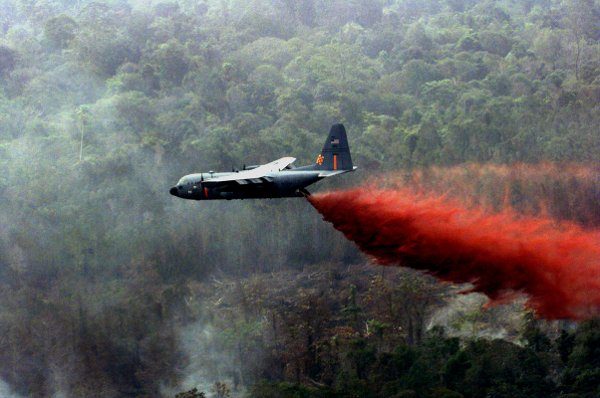
Not only did this lead to the widespread destruction of forest and farmland which the local populations depended upon, it has caused disease and birth defects ever since. The land remains contaminated to this day.
Another example is the Gulf War of 1990-91. It is well known that the marshlands of southern Iraq were deliberately drained to just 10 percent of their historical size by Saddam Hussein’s troops in order to punish the Marsh Arabs for their role in the uprising against the government.
But in addition to that, the US army used depleted uranium munitions in anti-tank shells. These release toxic particles that contaminate the air and the soil. They have been linked to a general increase in the mortality rate and in the rate of cancers and birth defects in Iraq ever since.
When Israel bombed the Jiyeh power plant in Lebanon in 2006, an estimated 10,000 to 15,000 tonnes of oil were spilled onto the Mediterranean Sea. This impacted the entire Lebanese coastline, affecting Syrian waters as well, causing severe environmental damage, killing seabirds and fish, and ruining the local fishing industries.
Gaza today is an extreme example. 75,000 tonnes of explosives have been dropped on the Strip during the course of Israel’s genocidal campaign, turning its landscape into an unrecognisable pile of debris, bombs, and human remains.
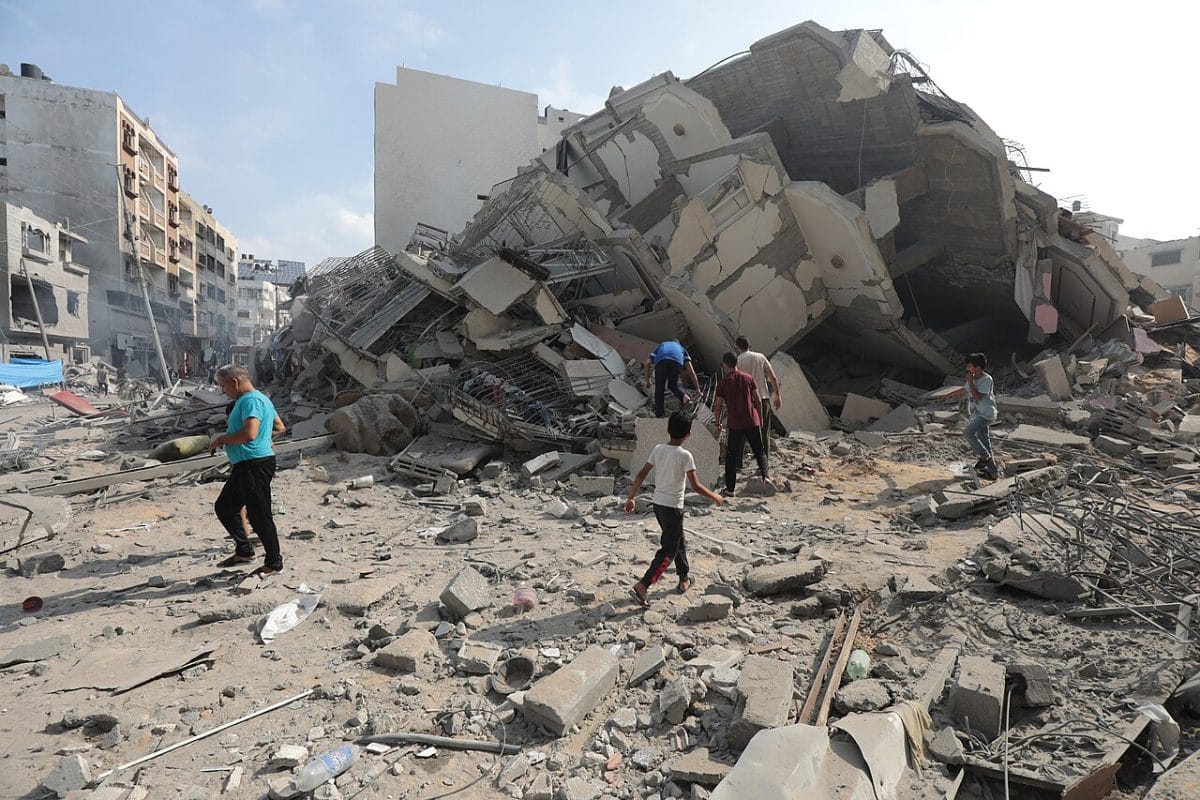
Widespread water and soil contamination – due to chemicals and other hazardous materials – have made it nearly impossible to sustain life in Gaza, with the overwhelming majority of agricultural land damaged.
The IDF has notoriously used white phosphorus on the civilian population – which is not only harmful to humans but is also an important contributor to long-term contamination.
Environmental destruction of this kind – affecting millions of people across multiple generations – is just one of many amongst the long list of crimes committed by the warmongers in London, Washington, and Brussels.
Carbon footprint
But the destruction caused by wars is not the only way in which militarism is devastating our environment. The world’s militaries are responsible for 5.5 percent of greenhouse gas emissions. If they were a single country, they would rank as the fourth largest polluter.
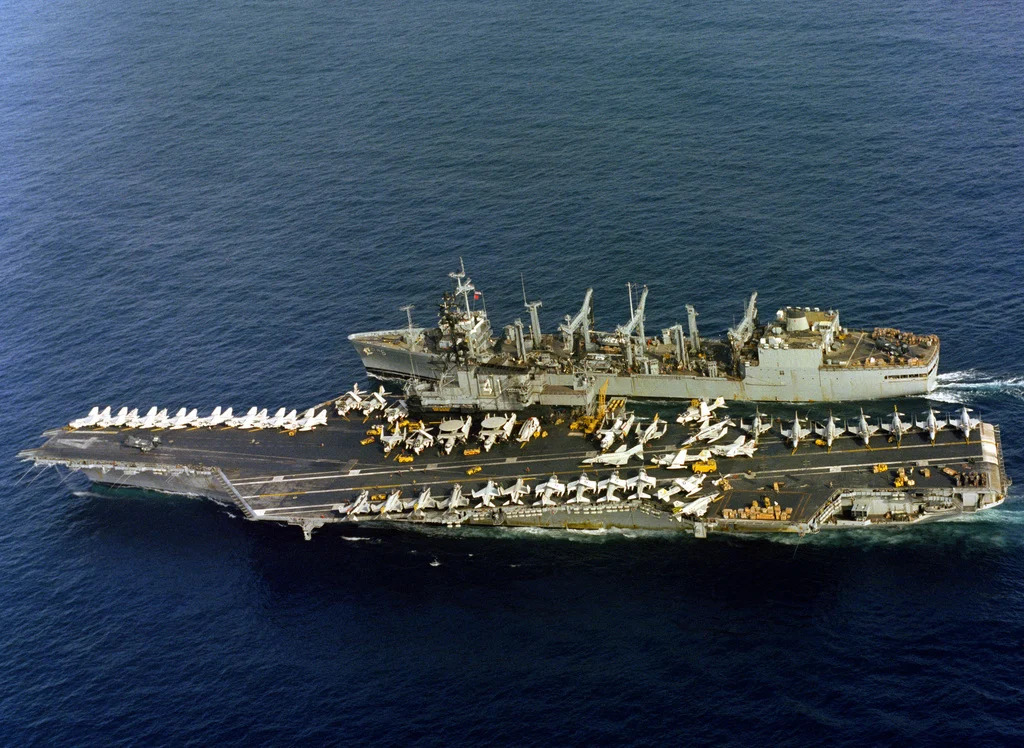
The US military alone has a higher carbon footprint than entire countries, like Portugal.
This is mostly due to the vast amounts of oil, gas, and other fossil fuels used – during both peacetime and wartime – for producing, transporting, and deploying weapons, aircrafts, and tanks. 40 percent of emissions happen during routine operations.
In Britain, the Ministry of ‘Defence’ accounts for half of all fossil fuel usage by the government. That is despite their hypocritical sermons and attempts at greenwashing the army with talk of “electrification”.
Electrifying armies would take away significant amounts of important resources needed for the climate transition. For example, the Pentagon has already taken hold of the largest stake in the only rare earth mine in the US.
In any case, this would be a tokenistic measure. The most significant sources of military emissions are tanks, fighter jets, and warships – which do not have any zero-carbon alternatives. And it’s precisely the production of these that the western imperialists are looking to ramp up in the coming years.
We must add to this the environmental costs of reconstruction after wars, which is a resource and carbon-intensive process.
Drain of resources
Militarism is a colossal waste of society’s resources – pulling raw materials, technology, labour, and expertise away from producing the things we actually need to ensure a decent world and a life of plenty for all.
It does this without increasing the material wealth of society. That’s because – at best – the output of the arms industry will be stockpiled. At worst, it will be used to mete out death and destruction – forcing society to spend more resources to rebuild infrastructure afterwards. It is a huge parasitic drain on society.
Global military spending is $2.7 trillion annually, projected to rise to $6.6 trillion by 2035. For reference, it is estimated that investing $40 billion every year – a fraction of arms spending – would be enough to end world hunger.

To solve the climate crisis, on the other hand, would require an additional investment of around $3.5 trillion per year.
But instead of investing in the industries and technologies necessary for a green transition, the ruling classes on both sides of the Atlantic are instead splurging on their war machines – which massively contribute to environmental degradation.
Britain is currently spending 2.5 percent of GDP on upgrading its outdated military, with a target of 3.5 percent of GDP by 2035.
At a time when vital material resources are needed to fix our crumbling infrastructure – from schools, to the NHS, to housing – the priorities of Starmer and Co. are instead to spend billions on so-called ‘defence’ – i.e. the defence of their profits and predatory interests.
Repurposing
The apologists of the war industry will argue that many technologies developed there have become part of everyday goods and civilian infrastructure.
This was the case with the internet (originally ARPANET), which started out as a project of the US Department of Defence for creating a communication network that could resist attacks. The GPS navigation system or satellite communications are also examples of this.
Other things, from microwaves, to nuclear power, jet engines, antibiotics, safety helmets, or even duct tape, can be traced back to military innovations which have been adapted to broader usage.
But these are all examples of planning coordinated by the state, rather than private arms companies which fleece the government for billions in public money.
And since the primary purpose of these endeavours was to wage war rather than consciously develop these things, they came at a cost many times higher than would otherwise have been necessary.
Imagine if this planning had instead gone towards the rational use of resources in the development of new technologies that could raise the material level of society.
In fact, the trend today has been reversed. Civilian technologies such as AI, and others used in communications, are making their way to the world’s militaries to be used in warfare. The IDF has infamously used its machine learning system ‘Lavender’ in order to find human targets to bomb in Gaza.
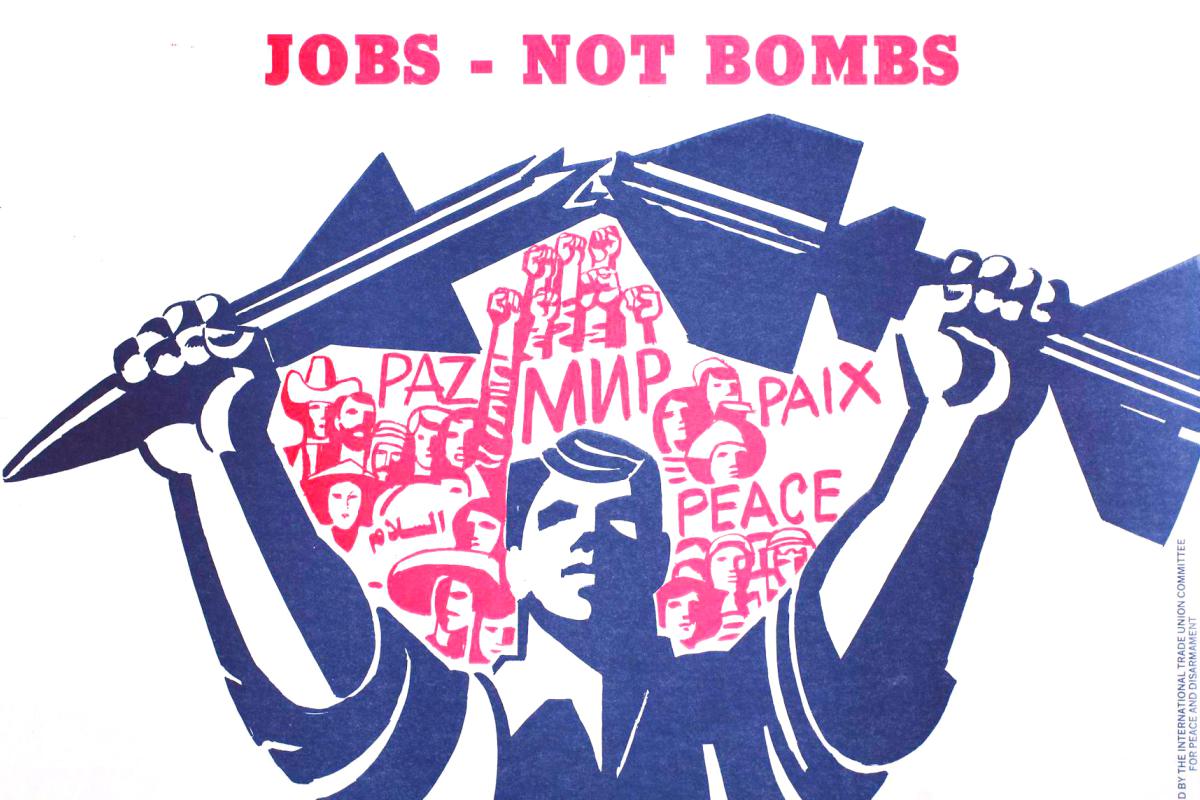
Imagine what could be achieved if – instead of wasting money, material resources, and the time, energy, expertise, and creativity of the world’s top scientists and engineers on creating better killing machines – we could mobilise these for the task of improving living standards and ensuring the further progress of humanity.
The vast resources used by the arms industry could be repurposed to address the many problems faced by society – including the climate crisis.
An anti-militarist environmental research group called the Transition Security Project proposes to “challenge militarisation through trade union organising, national politics and multilateral collaboration… by analysing the economic, climate and geopolitical risks of militarisation and developing industrial and political alternatives to militarised security.”
This is a good initiative. They point to the Lucas Plan of the 1970s as the model for how such an alternative could come to fruition.
The workers at Lucas Aerospace – which supplied arms dealer BAE Systems with components – developed a plan for repurposing their factories to produce socially useful goods, in response to the threat of layoffs by the bosses.
The Lucas Plan revealed the potential for ingenuity that the working class has when it takes control over production. The plan included detailed product plans and designs, along with proof of their commercial viability.
To this day, this remains a model of how not only arms factories, but also other socially harmful industries like the oil and gas industries, can be retooled and repurposed while retaining jobs.
But ultimately, the Lucas Plan was not successful. Because the bosses still owned the factories, they simply responded to this by pressing on with thousands of redundancies.
The solution would have been to nationalise the factories under workers’ control, without compensation. But no such programme was being offered by the leaders of the Labour Party and the trade unions, who paid lip service to the workers’ plan but were not prepared to challenge the interests of the ruling class.
The lesson for the Transitional Security Project today and similar initiatives is that no alternative to militarism can be found within the confines of the capitalist system. It is the very logic of capitalism which is producing more wars, more militarism, and increasing misery for millions of people worldwide. This system must be done away with.
What is the way forward?
It’s clear that Starmer, Macron, von der Leyen, and all the rest of the war criminals in Britain and Europe cannot be asked nicely to abandon their plans for remilitarising. In the same way, it is unlikely a tiger could be persuaded to become a vegetarian.
These scumbags will gladly sacrifice our healthcare, welfare, and education in their vain efforts to retain some relevance on the world stage.
Living conditions will keep coming under attack as the ruling class pursues its warmongering aims. Workers and students must go on the offensive with a militant class programme.
The defenders of capitalism like to attack the idea of a socialist revolution by portraying it as a chaotic, violent affair.
But what about the chaos and violence produced every day by this rotten capitalist system in decline? Instead of solving the pressing problems we face as a society, the imperialists would rather destroy our planet and plunge the world further into the barbarism of wars as they scramble over the world’s markets and resources.
They must be swept away, along with their whole system.