‘The Oresteia’: Aeschylus’ Greek tragedy modernised
Nelson Wan
The Oresteia is the only surviving trilogy by the father of Greek tragedy Aeschylus, and it’s widely considered to be his greatest work.
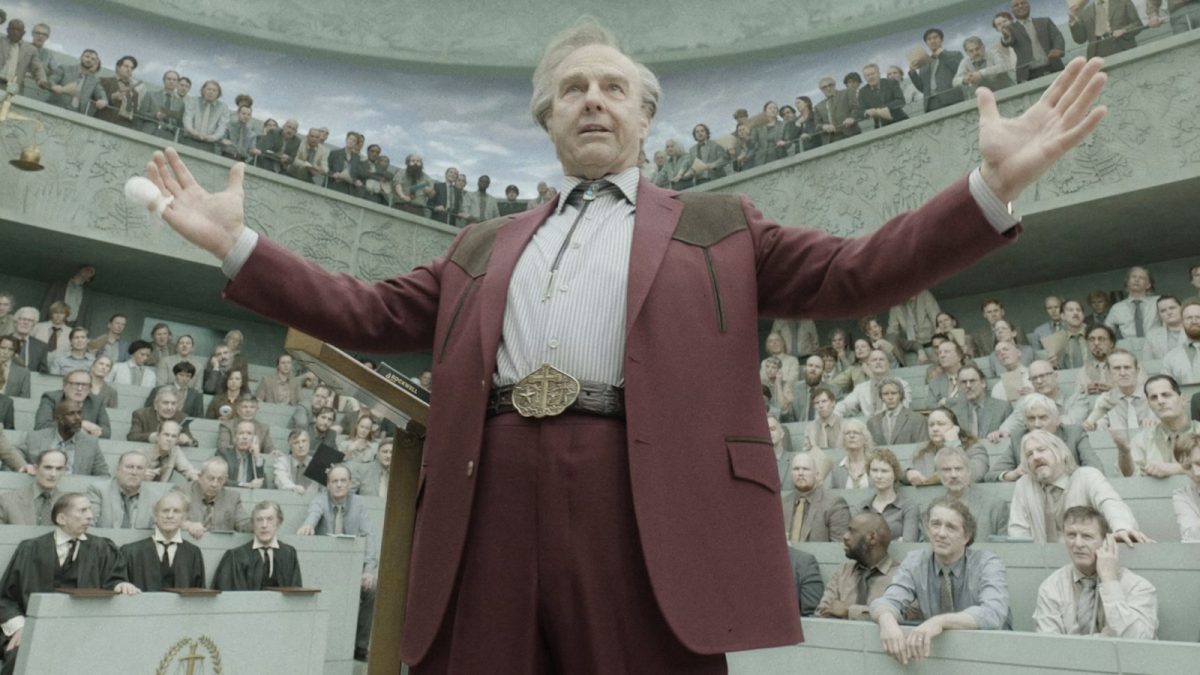
Australian director Simon Stone has modernised the text and plot into a three-act drama. It plays out in non-chronological order, like a murder mystery; we only find out by the end of the play how Iphigenia was “sacrificed” by King Agammemnon (Christopher).
Stone has made the bold but understandable choice of removing all reference to the Gods, the Furies, and the chorus. From a dramatic standpoint this makes complete sense. These elements were universally understood by contemporary Greek audiences, but have absolutely no cultural significance today. In 2015, Robert Icke’s critically acclaimed version removed the chorus for similar reasons.
View this post on Instagram
Instead, Stone opts to turn the plot points into a psychologically-driven family drama. This has no ultimate resolution, unlike the original which contains Aeschylus’ ending trial scene and the redemption of Orestes (Augie).
The original political themes encompass the establishment of Greek democracy, the rule of law, and the triumph of father right over mother right (which Engles discusses in Origins of the Family, Private Property and the State). These are replaced by contemporary references and allusions to Palestine Action protestors, the COVID pandemic, the Ukraine war, and also the constant mythologising of previous world wars.
Agamemmnon is transformed into a war-profiteer tech boss, whose company supplies weapons to Vladimir Putin. Iphiginnia becomes a political activist who breaks into her own father’s company to protest the killing of innocent civilians.
Orestes’ madness is catalysed not by the Furies, who in the original seek to avenge the killing of his mother, Clytemnestra [Monte]. Instead, his own mental health breakdown ruins him, a result of childhood trauma, guilt, and his experience in Afghanistan. Even the captured Trojan concubine, Cassandra, simply becomes Christopher’s new post-divorce partner “Chandra”.
On the one hand, these choices with the vernacular dialogue and added humour make the play immediately accessible and recognisable to a modern audience. They will likely relate to the fractured, middle-class family dynamics and the contemporary politics on display.
View this post on Instagram
The clearest political message of the play is Christopher’s choice to prioritise his blood-soaked profitmaking over his daughter and family, even if he ostensibly claims to be doing so for them. His actions lead directly to the tragic events that follow.
But on the other hand, Stone removed the will of the Olympian Gods and the Furies, who represent the new versus the old societies. This means the forces of necessity that drive Agamemmon and his family to commit a cycle of murders is dramatically reduced. And so, the motivations for Clytemnestra’s murderous rage are arguably less clearly righteous.
Nonetheless, Stone’s Oresteia is fantastically acted, and the set design of a glass-faced modernist house emphasises that this interpretation is, above all, exploring the psychological breakdown of a wealthy and privileged family.
Greek tragedies are not performed anywhere near as often as they should be, and that alone is more than enough of a reason to watch this production before the end of its run in September.
This new version of Aeschylus’ epic trilogy ‘The Oresteia’ is currently playing at the Bridge Theatre in London until 19 September 2026.
‘I Love Boosters’: Original cinema with a communist message
Rahul Lath, Birmingham
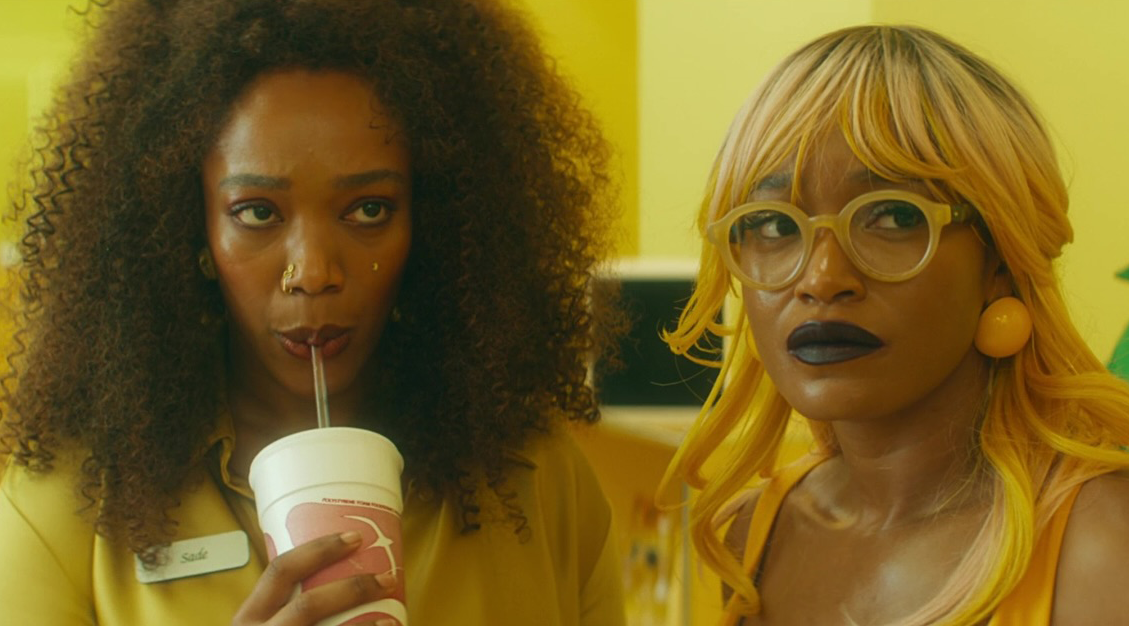
I Love Boosters is Boots Riley’s first film in the eight years since Sorry To Bother You, and it’s a jolt: something that is unmistakably original in a way cinema simply doesn’t allow itself to be anymore.
It’s a chaotic, lucid dream of a film – psychedelic and avant-garde – but always stays tethered to reality.
View this post on Instagram
It uses stop-motion sequences; a teleportation device that doubles as a course on dialectics; a Bay Area high-rise tilted at an impossible 45 degrees; alongside a sadly honest picture of a (very talented) shoplifter squatting in an abandoned fried chicken joint just to survive.
Hollywood’s output has become so homogeneous — from franchise reboots to algorithm-tested sequels — that it is rare for unique films, like those of Boots Riley, to receive mainstream releases.
Riley has said in his interviews, in his words, that capitalism itself is built on theft. He traces it back to what Marx called primitive accumulation: the theft of land, of minerals, the plunder that sets capitalism’s foundation.
That’s the real argument underneath the film’s bizarre plot. Corvette and her velvet gang aren’t the thieves. The fashion boss is, on a scale they can barely touch.
The surrealism that Riley uses in his work is intended to convey this political message, rather than just acting as stylistic decoration.
View this post on Instagram
For example, a recurring image follows Corvette down the street: a giant snowball of unpaid bills, growing as it rolls, always one push from crushing her. What better way to present debt under capitalism; rendered as a visceral, physical threat, without a clunky line of dialogue needed.
The film’s sharpest move is refusing to identify a sole villain of the story. The underpaid clerks enforcing the boss’s rules, the Chinese garment workers getting cancer while producing the stock, and the boosters themselves are all shown as links in the same chain.
And the crew doesn’t stop at the shop floor: they connect and organise directly with the workers in China making the actual clothes they are selling under horrible conditions, tying their local fight to an international one. Workers, the film says, have more in common with each other across borders than with their own bosses.
The strongest political art doesn’t declare its lesson, it lets it emerge from the story itself. And Boots Riley has successfully done this, by showing international class struggle and solidarity to a modern audience via a bizarre and hilarious film, without even needing to utter the word “communism”.
‘I Love Boosters’ is currently available to watch on streaming services such as Apple TV and Amazon Prime.