Piketty, Marx, and the Spectre of Inequality
Adam Booth contrasts the economic theories of Thomas Piketty with those of Karl Marx.

This category is for Marxist economic theory and economic history. For news and analysis of the present-day economy, head to Economy.
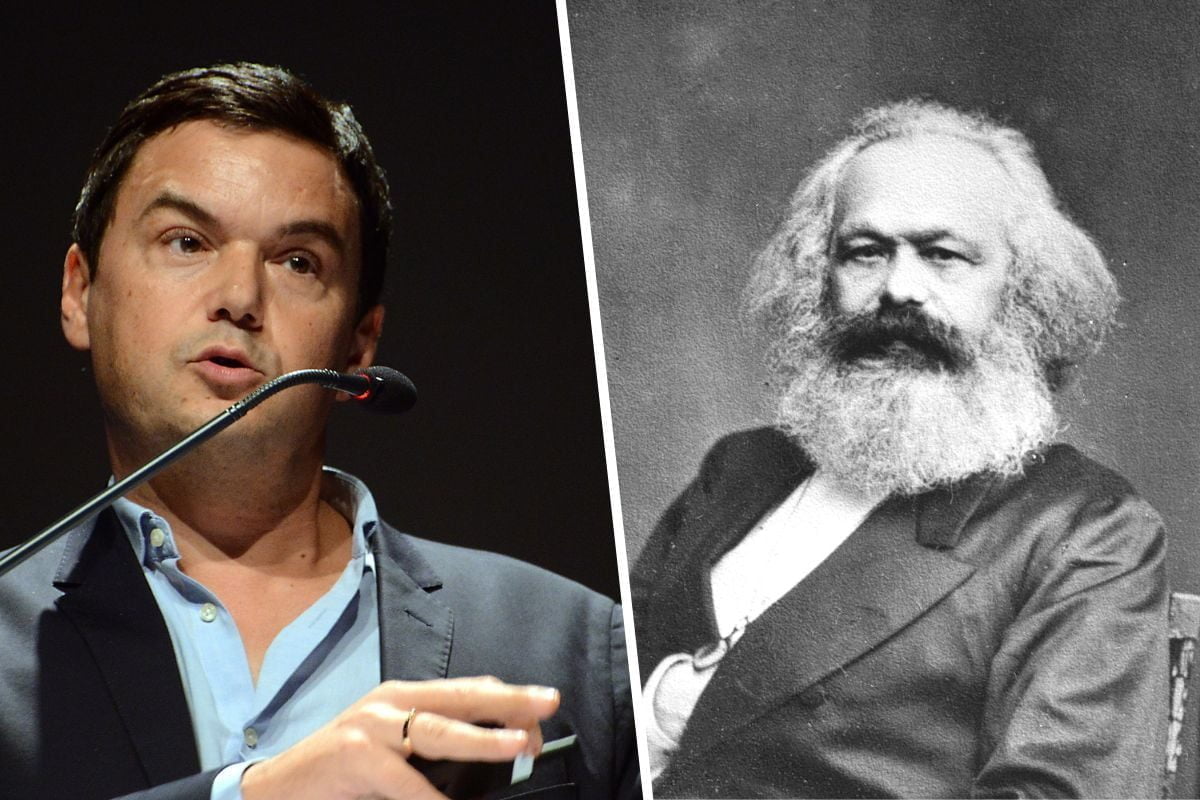
Adam Booth contrasts the economic theories of Thomas Piketty with those of Karl Marx.
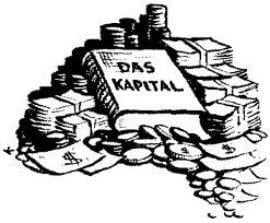
We continue here our series on Marx’s Capital, looking at the question of accumulation. Capital is dynamic. “Money never sleeps”. For capital to act as capital, it must continuously be in motion – continually seeking to create value from value. It is this overall dynamic of capital towards which Marx now turns his attention in chapters 23-25.
We continue our series looking at Marx’s Capital by discussing chapters 16-22, in which Marx delves further into the question of surplus-value and looks also at the issue of wages. The conclusion is clear: within the capitalist system – a system of wage labour and capital – the benefits of scientific, technological, and industrial progress will always overwhelmingly flow towards the capitalists.
We continue our series looking at Marx’s Capital. Having discussed how the capitalists are able to increase profits by improving productivity through the application of new organisational means within the workplace, Marx now turns his attention towards the most revolutionary of developments within capitalism: the machine.
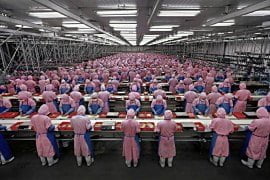
We continue our series on Marx’s Capital with an analysis of Chapters 12-14. Having demonstrated how the capitalists squeeze greater profits from workers by extending the hours of the working day, Marx now turns his attention towards how the capitalists increase their profits by increasing the productivity of workers through the division of labour and co-operation within the workplace.
In their desperate search for profitable fields of investment, the capitalist class, especially the financial oligarchy, has presided over an explosive growth of unproductive expenditure that today threatens to undermine the very edifice of capitalism. Rob Sewell examines the qualitative difference between productive and unproductive labour within capitalism.
We continue our series on Marx’s Capital by looking at Chapters 9-11, in which Marx looks at the question of exploitation and the issue of the working day, opening up the roof of the factory and peering in to examine the conditions inside. What we see when we peek behind this magician’s curtain is a brutal history of exploitation and class struggle.
We continue our series looking at Marx’s Capital. Having charted the historical development of commodity production and money in previous chapters, in chapters 4-8 Marx now turns his attention to the question that had stumped the classical economists: what is the source of profit within capitalism?
Capital in the 21st Century, by the French economist Thomas Piketty, has hit the stands and has been making waves in the national and international press, not least among economic commentators. John Pickard looks at Piketty’s work, which has caused a sensation amongst both the left and the right for its analysis of the inequalities under capitalism.
We continue our series of articles on Marx’s Capital by looking at Chapters 2-3, in which Marx turned his attention to the question of money, explaining the various roles and functions that money plays in commodity production and exchange, and the relationship between money, commodities, and value.
Karl Marx’s Capital is an undeniable masterpiece of political economy. Marx’s magnum opus, however, remains a dense and difficult book to penetrate and absorb. To help guide readers through the pages of Capital we are publishing a series of articles that give a chapter by chapter analysis of this great Marxist classic. We begin with Volume One, Chapter One, in which Marx discusses the concept of the commodity and the question of value.
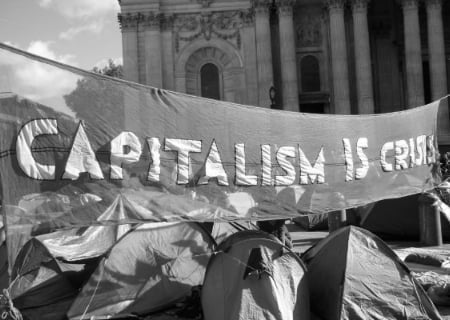
This article provides an overview of Marx’s explanation of why capitalism goes into crisis, discussing the inherent contradictions within the capitalism system, and posing the only alternative: a socialist plan of production.