A transitional programme for the environment
What would such a transitional programme look like for the environment? What set of demands should socialists make regarding the climate change? In this article, we attempt to outline such a programme.
For many people, the idea of a revolutionary change in society seems like a pipe-dream that will never be possible in their lifetime. In this respect, Trotsky developed the idea of the “Transitional Programme”: a set of demands that could take society from our current situation under capitalism, towards our final goal of international socialism. What would such a transitional programme look like for the environment? What set of demands should socialists make regarding the climate change?
‘Ethical consumption’ and other capitalist ‘solutions’ to the climate crisis are a blind alley. We need a socialist alternative.
In the previous few months, we have attempted to show how capitalist ‘solutions’ to climate change, such as market-based methods like carbon trading, are not able to combat the environmental problems facing humanity and our planet. Similarly, international treaties that attempt to operate within the confines of capitalism are also doomed to failure, as was seen in Copenhagen last year. Capitalism cannot solve these problems – capitalism is the problem.
The dramatic collapse of the talks at
the Climate Summit in Copenhagen serves to highlight one thing: the
capitalist governments of the world cannot solve burning issues, such
as damage to the environment provoked by the anarchy of the market. The
thirst for profit is in direct contradiction to the interests of the
working people of the world. Social revolution on a global scale is the
only real answer to the problem.
At 5.30am on Saturday 19th
December, after almost two weeks of negotiations, the UN Framework Convention
on Climate Change in Copenhagen
ended with an almost universal agreement that the summit had been a complete
failure.
As the climate change "summit" continues in Copenhapen, we reproduce here an English translation of a leaflet produced by Marxists in Denmark for a demonstration last Saturday
From 7th to 18th December
2009, delegates from 192 countries will be gathering in Copenhagen, Denmark,
in order to create a new, “legally-binding”, global treaty on climate change.
The UN Climate Conference in Copenhagen (known
as COP15) marks the culmination of two-years of negotiation to try and generate
a replacement for the Kyoto
protocol, which is due to expire in 2012.
At a recent meeting of a local Labour Party
Branch in Worcester,
a slick high tech presentation was given by a group called Transition Worcester,
who said they had the answer to the environmental crisis. It is to turn the
clock back 200 years to a mythical age where all trade was local and people
enjoyed the benefit of locally grown meat, fruit & veg. Within this presentation were ideas such as we
should no longer trade with developing countries and we should therefore export
our unemployment to the third world.
We are constantly bombarded with the myth that capitalism drives innovation, technology, and scientific advancement. But in fact, the precise opposite is true. Capitalism is holding back every aspect of human development, and science and technology is no exception.
Earlier this year, Energy Secretary Ed Miliband ended years of silence
from the Government as to how they are going to address the issue of
climate change, and how they plan to replace Britain’s aging power
plants, many of which are nearing the end of their lifetime,
threatening to plunge the country into darkness due to a lack of
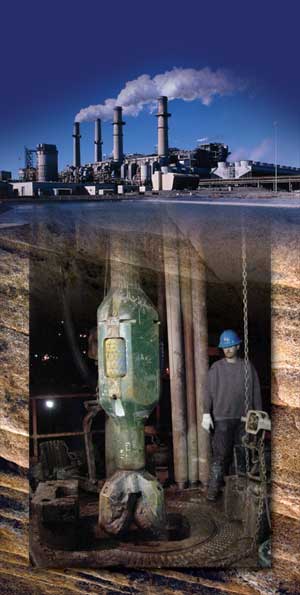
electricity. The Government’s answer lies in a technology called
"Carbon Capture and Storage", or CCS, which they claim will be the
silver bullet that simultaneously kills the problems of global warming
and national energy supply.
This article raises some concerns about CCS as part of the ongoing discussion inside the Labour movement about socialism and our natural resources.We welcome any comments on this contribution and the issues it raises.

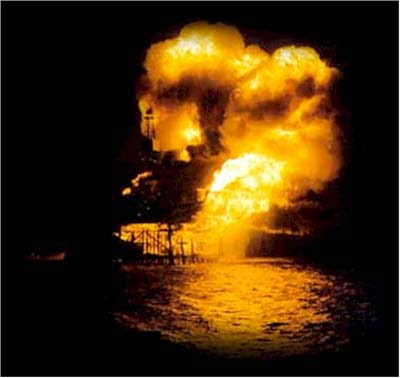
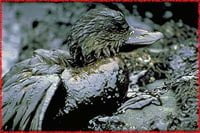
On 23rd March 1989 the oil tanker Exxon Valdez left normal shipping lanes and smashed into the Bligh Reef in Prince William Sound, Alaska. Within hours, the once mighty vessel had spilled over ten million gallons of oil into the icy waters: the largest oil spill in ever recorded in US waters.Over the coming months, around eleven thousand square miles of open sea became contaminated. Local wildlife – many species of which were rare or endangered elsewhere – perished in vast quantities. News reports brought back footage of over 1,300 miles of shoreline turned black and scattered with dead or dying fish, birds, and seals.