Britain
Why John Lennon stood out from the rest
Twenty-five years ago today John Lennon was killed in New York. There was a mass outpouring of grief all over the world. This was because he symbolised something different from the mainstream music industry. He gave expression in the words of some of his songs the genuine feeling of disgust of many workers and youth at what capitalist society stands for.
“War on terror” used as an excuse to whittle away elementary civil liberties in Britain
The right to demonstrate, to strike, to trial by jury in Britain are all elementary civil liberties, yet most of them have already been whittled away. Now the so-called “war on terror” is being used to destroy what little is left. This assault on our democratic rights is not a secondary matter. The democracy afforded us by capitalism is restricted, but we can no more ignore the attacks launched on our political rights than we can attacks on our jobs, wages and conditions.
Britain: Shoot-to Kill and the “War on Terror” – A threat to civil liberties and the labour movement
The British government and the Metropolitan Police are now trying to
sweep under the carpet the brutal execution of Jean Charles de Menezes
on July 22. We must not allow this to happen. This young, innocent,
Brazilian man – an electrician by trade, just 27 years of age – is the
latest victim of the so-called “war on terror”, but also of the
undermining of civil liberties and the strengthening of the powers of
the capitalist state.
Labour Left Rally in London
Despite clashing with both the RISE festival and the traditional
Tollpuddle Rally, the main hall at the TUC’s Congress House was largely
full for this year’s AGM and rally of the Labour Representation
Committee (LRC), the main new umbrella grouping for Left activists
inside the Labour Party. Amongst others, a number of the platform
speakers from the trade union movement, including Jeremy Dear (NUJ),
Mark Serwotka (PCS) and Paul Mackney (NATFHE) took time to outline the
ongoing process of attacks against the public sector being carried out
by the government.
Volatile mood after London killings
Radical changes in consciousness often spring from arbitrary collective
experiences. Last week’s bombings in London are no exception. On the
surface, the story being broadcast and repeated by the journalists,
politicians, and purveyors of “objective information” appears to be
true. But there is more to it than that.
In the aftermath of the London bombings – “Business as usual”
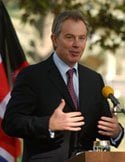
The recurring theme of today’s mass media coverage can be summed up in three words: “Business as usual.” After all, life goes on for most Londoners. This indomitable spirit of the ordinary people is something that Tony Blair and the Establishment are seeking to exploit. One thing is clear: if the imperialist bullying continues, the epidemic of terrorism will continue to spread uncontrollably, a terrible expression of the impasse of the capitalist system on a global scale.
Messages from the United States and Pakistan to the people of London
We received messages from the Dadu Sindh branch of the PTUDC and the
American Workers’ International League addressed to the people of
London.
Terrorist atrocity in London
Whoever was responsible for today’s terrorist attacks in Central London
showed no mercy to the innocent victims of their actions. Such
activities are utterly repugnant to anybody who defends the cause of
socialism and the working class. This kind of action serves only to
bolster the forces of reaction. It must be condemned outright.
United against profiteers wrecking football
The
establishment of the Premier League in Britain, a renaming of the old
First Division, in the early 1990s opened up a period of naked
commercial exploitation of football. The new league exists to maximise
the profits and commercial potential of the richest clubs at the
expense of the rest. Central to this are clubs like Manchester United,
the world’s richest club which has now been virtually bought up by US
tycoon Malcolm Glazier, who has grabbed control of over 75% of the
club’s shares.
The General Election of 2005: Results and Prospects
As a postscript to British Perspectives 2005 (What is happening in Britain)
Phil Mitchinson analyses the results of the recent general election in
the context of mounting insecurity in the British economy, politics and
society as a whole. Labour won the election with the smallest share of
the vote of any victorious party in history. With the government's
majority severely reduced how much longer can Blair last? 'New' Labour
has set off on a collision course with its own backbenches and with the
trade unions and the working class.
Resolution in support of Pakistani journalists
This resolution was unanimously passed by the Central London Branch of
the National Union of Journalists in a meeting held on May 12.