The crisis of capitalism
In this video Alan Woods explains the roots of the crisis from a Marxist perspective and the revolutionary way out of the impasse.
This category is for Marxist economic theory and economic history. For news and analysis of the present-day economy, head to Economy.
In this video Alan Woods explains the roots of the crisis from a Marxist perspective and the revolutionary way out of the impasse.
To celebrate the centenary of Ted Grant, founder of the Militant Tendency and Socialist Appeal, we are re-publishing Ted’s article entitled “Will There Be a Slump?”. Written in 1960 in the middle of the post-war boom, when many others on the Left had accepted Keynesian economic ideas, Ted explained the fundamental causes behind the boom and how these would eventually lead to crisis. For more information on this topic, come along to the Marxist Summer School, where Adam Booth will be speaking on the subject.
The following article was originally published in the summer issue of our theoretical magazine In Defence of Marxism. In a previous article from the IDOM magazine, we polemicised against the theory of “under-consumption” as an explanation of capitalist crisis. In this article, we wish to look at Marx’s law of the tendency of the rate of profit to fall and explore the wider question of how to approach economics in a dialectical manner.
There is a tendency amongst the leaders of the labour movement to draw a distinction between the ‘parasitic’, ‘irresponsible’ financial sector of the economy and ‘productive’, ‘responsible’ manufacturing. But is it useful to draw this distinction between financial and industrial capitalism? In this history of finance capital, Luke Wilson discusses how such a distinction is artificial: the growth of industrial capitalism was intimately bound up with the growth of finance capital.
We will deal with the tendency of the rate of profit to fall in a future article, but for now it is sufficient to observe that the views expressed in Anti-Dühring represent the standpoint of both Marx and Engels, which, despite all the efforts of the revisionists to misrepresent them, was identical.
“What did Marx mean by the contradictions of capitalism?” asks Samuel Brittan, the right-wing economist writing in the Financial Times. “Basically, that the system produced an ever-expanding flow of goods and services, which an impoverished proletarianised population could not afford to buy. Some 20 years ago, following the crumbling of the Soviet system, this would have seemed outmoded. But it needs another look, following the increase in the concentration of wealth and income.”
The crisis of capitalism is
accompanied by a crisis of bourgeois thought: philosophy, economics,
morality – all are in a state of ferment. In place of the earlier
optimism that stated confidently that capitalism had solved all its
problems, there is an all-pervading mood of gloom. Not so long ago,
Gordon Brown confidently proclaimed “the end of boom and bust”. After
the crash of 2008 he was forced to eat his words.
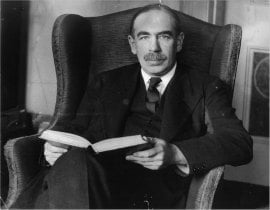
“We are all Keynesians now.” So said Richard Nixon, the Republican and former President of the USA, in 1971. Forty years later, it seems that John Maynard Keynes is back in fashion, especially amongst the leaders of the British Labour movement. The reformist leaderships of the Labour Party and the trade unions cling to the Keynesian idea that the economy can simply be “stimulated” back in growing. But as the Marxists have explained before, the current economic crisis is not just part of some boom-and-slump, but is an organic crisis of capitalism, and growth cannot simply be created at will.

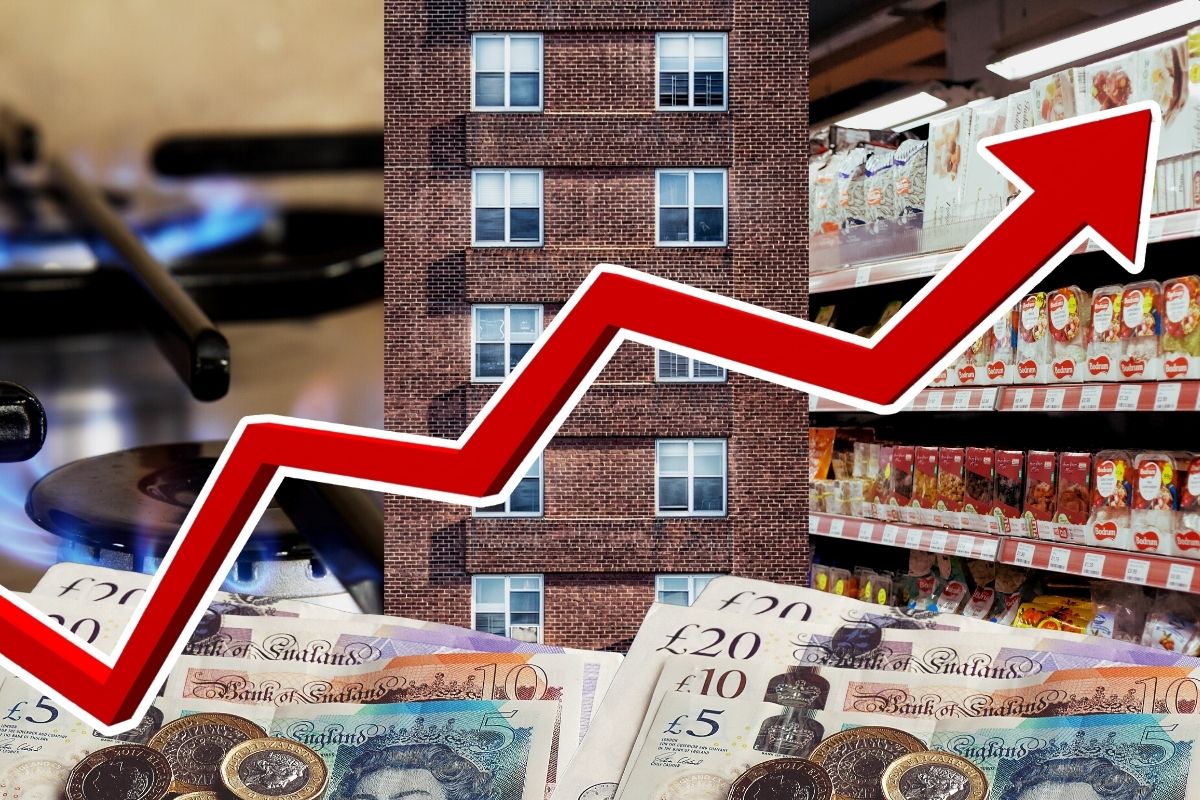
Earlier this year, it was announced by the Office of National Statistics (ONS) that inflation had risen from November to December, with the Consumer Prices Index going up from 3.3% to 3.7% and the Retail Prices Index (PRI) – which includes housing costs such as mortgage interest payments and council tax – rising from 4.7% to 4.8%. Inflation was persistently high throughout 2010, with an average RPI of 4.6% – the highest since 1991.
Monopolisation of big
business is endemic to the capitalist system. Big business has become
wealthier and more powerful today than ever before.The revolving doors between government and industry has ensured the
continued domination of big business over parliament and state. Capitalist economists constantly argue that
privately run industry driven by pursuit of profit is the best way for
an economy to function. But, even a cursory look at the world around us
tells a very different story. Far from being efficient, capitalism is
riddled with contradictions and crisis. You could write multiple
volumes, as Karl Marx did, on the inadequacies of capitalism, but here,
in this limited space, we shall deal with just a few.
Marxists have
long since been conscious of the nature of the state, its industrious defence
of the capitalist class, and its prejudice against working people. But much of
the public are unaware of just how incestuous the capitalists and governments
really are. Read part two of Will Roche’s study of monopoly capitalism.
There has
been no levelling off of the global economy, as economists predicted. Although
industrialisation has expanded to lesser-developed countries, it has generally
been along lines determined by global corporations based in advanced capitalist
countries. From colonialism, we have moved into the age of multinational
corporate domination. Will Roche looks at the rise of monopoly capitalism.