Marxism vs anarchism
Andrea Patane explains the differences between Marxism and anarchism, and how we can fight against our common enemy in the form of capitalism and the capitalist state.

Andrea Patane explains the differences between Marxism and anarchism, and how we can fight against our common enemy in the form of capitalism and the capitalist state.
We publish here the fourth part in a series by Alan Woods looking at the theoretical differences between Marxism and anarchism. In this fourth and final part, Alan discusses the question of revolutionary violence and looks at the inspiring example of the Russian Revolution as historical proof of the need for a workers’ state.
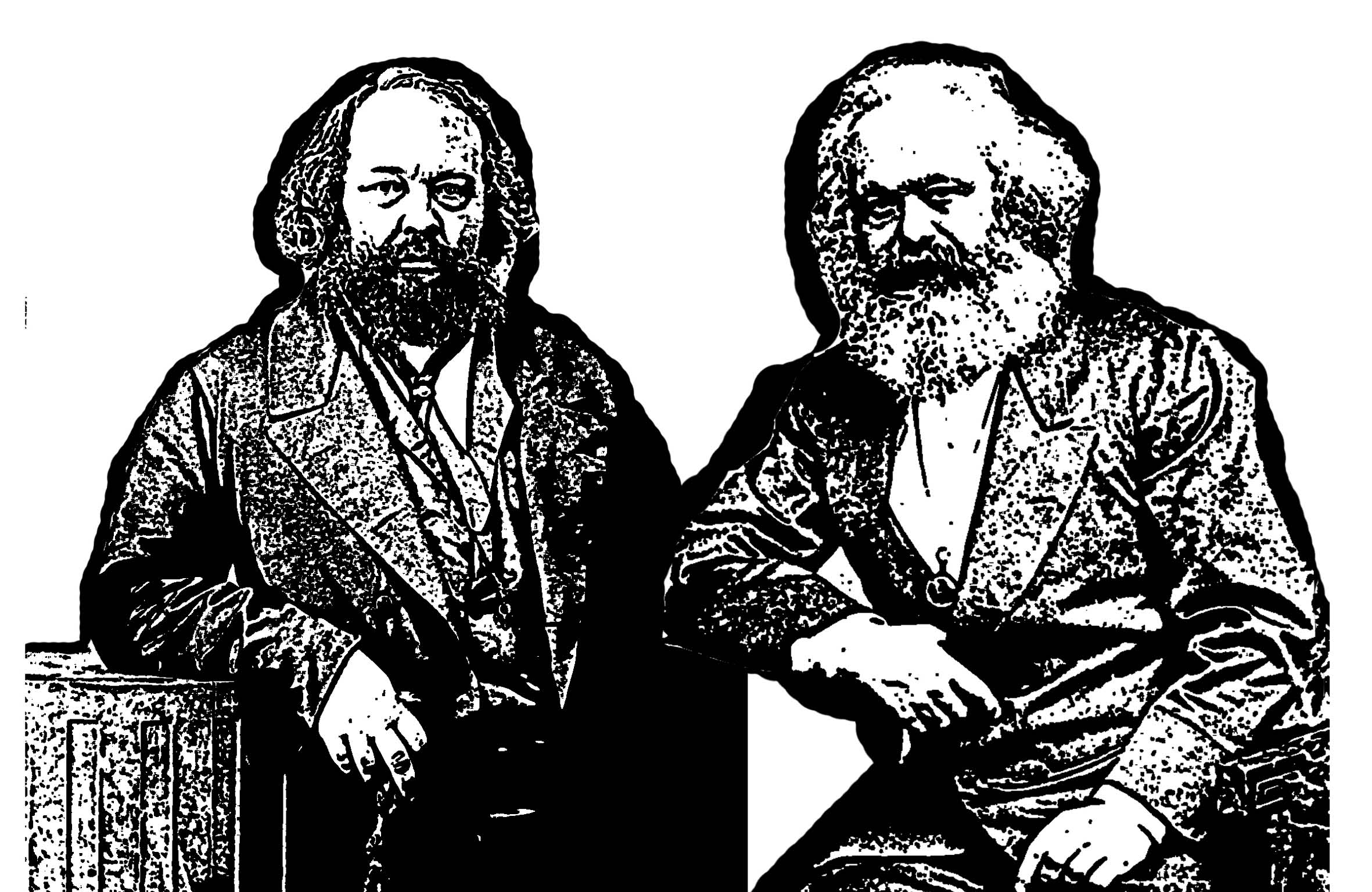
We publish here the third part in a series by Alan Woods looking at the theoretical differences between Marxism and anarchism. In this part, Alan discusses the role of the state within class society and examines the historical limitations of anarchism and spontaneity, as shown by the Spanish Revolution and Egyptian Revolution respectively.
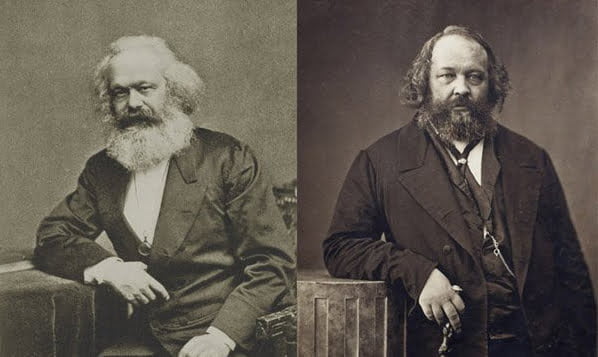
We continue here Alan Woods’ series looking at the theoretical differences between Marxism and anarchism. In this second part, Alan examines the role of leadership, the relationship between Marxists and the mass organisations, the origins of bureaucracy, and how political consciousness develops and changes.
We publish here a series by Alan Woods looking at the theoretical differences between Marxism and anarchism. In this first part, Alan explores the vital questions of “spontaneity vs organisation” and “reform or revolution”, looking at the role of the revolutionary party and its relationship to the end goal of a communist society.
Alan Woods contrasts the ideas and methods of Marxism with those of anarchism, focussing on questions like revolutionary leadership, spontaneity, and the state.
In this article, Daniel Morley contrasts the ideas of Marxism and anarchism. Though sharing the same goal of a classless and stateless society, these two competing philosophies have vital differences, which must be understood by revolutionaries.
Standing between the working class and the socialist transformation of society is a colossal state machine. In order to carry out this transformation, we must have a clear understanding of what the state is, and what must replace it.

Anarchism is a confused political creed. In fact some anarchists
take pride in the fact that it is difficult to pin their ideas down
almost as a point of principle. But their watchword has always been a
struggle against ‘authority.’ Some may find this slogan attractive,
but Engels’ brilliant essay shows that some class always wields
authority in society – the question is which one.
After the defeat of the Paris Commune
different ultra-left and
opportunist tendencies emerged within the First International, who
intrigued against the General Council and attempted to use the name of
the International for their own ends. This was finally resolved with the
expulsion of these elements with strict powers established for the
General Council and clear rules on how the International was to be run.
After the defeat of the Paris Commune
different ultra-left and
opportunist tendencies emerged within the First International, who
intrigued against the General Council and attempted to use the name of
the International for their own ends. This was finally resolved with the
expulsion of these elements with strict powers established for the
General Council and clear rules on how the International was to be run.
In 1872 in response to the intrigues
of Bakunin and his secret
society, the Hague conference of the First International adopted a
resolution prohibiting any organization with an independent programme to
function within the body of the International and proceeded to expel
Bakunin and his supporters, putting an end to the internal diatribe and
intrigues and establishing the principles upon which the organisation
would function.