Burnham’s ‘Number 10 North’: A delusional distraction
Callum Parkinson, Preston
Although the crisis of British capitalism deeply affects all areas of the country, a feeling of being left behind in favour of the South has existed in the North of England for a long time – and not without reason.
Northern communities were destroyed over the course of decades by deindustrialisation from the 1970s onwards, and particularly during Thatcher’s war on the working class in the 1980s, resulting in poverty and unemployment.
This was compounded by Tory austerity in the 2010s, which hit many parts of the North especially hard. For example, from 2010-2017, funding to councils such as South Tyneside, Salford, and Gateshead was cut by upwards of 40 percent compared with an average of 24 percent across England.
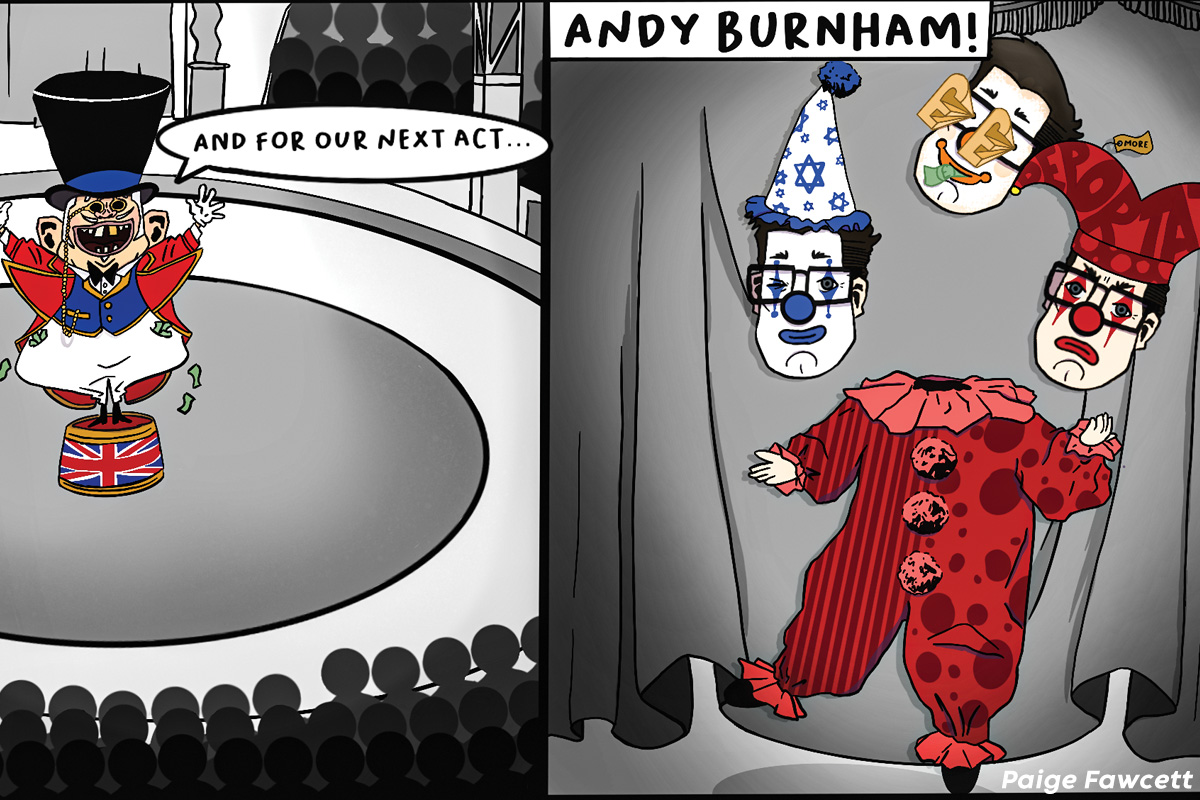
Prime Minister-in-waiting Andy Burnham has been desperately trying to tap into this feeling by flexing his Northern credentials (did someone say ‘Everton’?) , speaking on behalf of communities left behind by the Westminster establishment, and bigging up the idea of political devolution to England’s regions.
View this post on Instagram
By doing so, he is hoping to cultivate at least a scrap of popular support – which is otherwise out of the question given Labour’s complete discrediting in the eyes of the public.
Trying to dress himself up as a friend of the working class, this former Blairite minister chose Manchester’s People’s History Museum as the location for his bombshell announcement of plans for a ‘Number 10 North’.
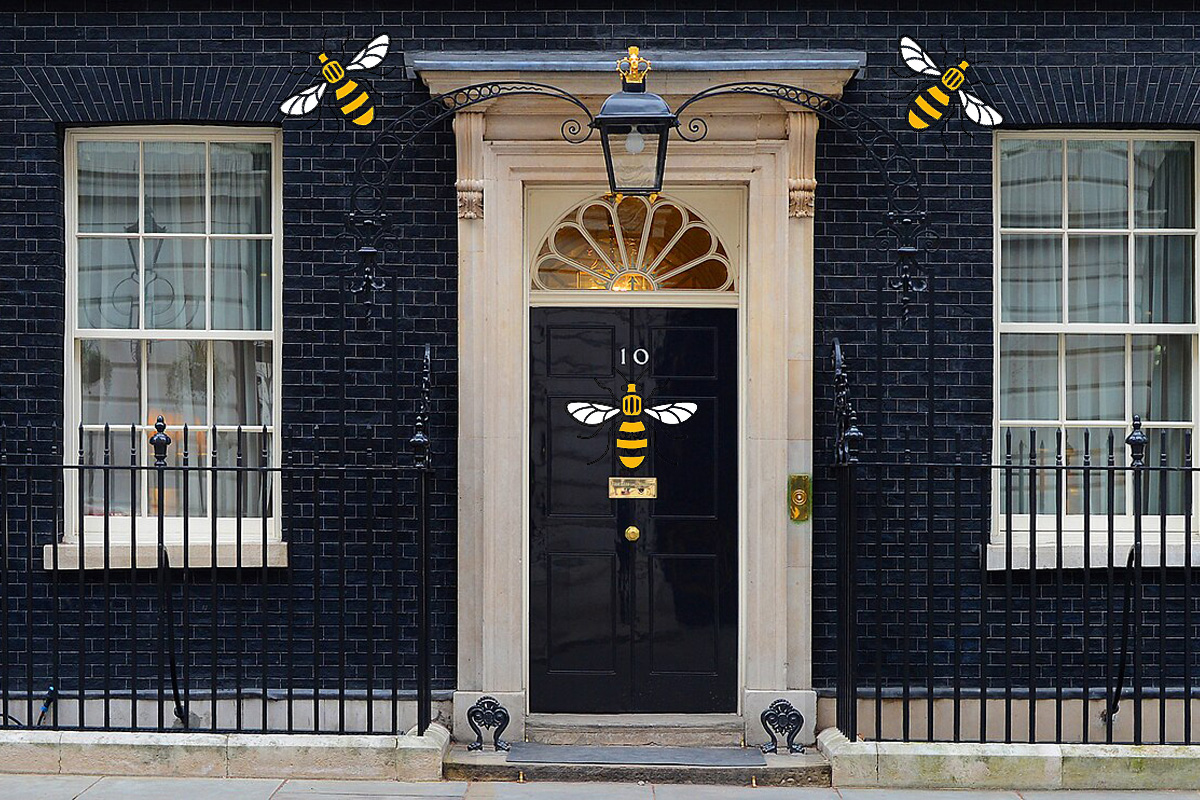
This proposed project would see an extension of the Prime Minister’s Downing Street offices, to be based in Manchester, where Burnham promised to spend at least one day a week – perhaps so he can sit around with other Northern blokes like himself, talking about how much they love drinking craft beer, and listening to Oasis and The Smiths.
Devolution
On the agenda for the rest of the week would be the introduction of further devolution across the country, supporting three key goals: reindustrialisation, regeneration, and the improvement of essential utilities. All of this will somehow be achieved alongside Burnham’s promises of ‘fiscal responsibility’ and increased arms spending.
On the face of it, giving regions more of a say in how their areas are run sounds like a great idea. But when you look at the disappointing track records of devolved assemblies such as Holyrood in Scotland and the Senedd in Wales, you can see that devolution isn’t all that it’s chalked up to be.
On the basis of a crisis-ridden capitalist system, devolution has just meant passing the buck for carrying out austerity, from a Westminster clique to an Edinburgh, Cardiff, or Belfast clique. And let’s remember that devolution was the pet project of Burnham’s mentor, Tony Blair, as a political manoeuvre to undercut the rise of Scottish nationalism and shore up Labour’s support.
Similarly, expanding the powers of England’s local authorities does absolutely nothing to address the cuts to welfare and social services carried out nationally by successive Tory and Labour governments. And more devolved powers will do nothing to address the long-term stagnation and decline of British industry.
The idea that we can reverse Britain’s crumbling infrastructure and hollowed-out town centres just by changing where certain decisions are made is a fairytale fantasy.
Regional inequality is not a consequence of Southern hubris and oversight, or geographical distance. It has an objective basis in Britain’s long-term decline as an industrial power, which left London, with its powerful banks and financial services sector, as one of the only centres of economic growth in the country. Constitutional and administrative tweaks can’t alter this reality.
View this post on Instagram
This is all assuming, by the way, that Burnham – a slippery opportunist who will say anything to get support – even sticks to his pledges. Let’s not forget that Starmer also promised sweeping constitutional reforms which were completely dropped as soon as he entered 10 Downing Street.
Insulting gimmick
The example of Manchester, which suffered the largest fall in living standards of any major city in England while under Burnham’s mayorship, proves precisely that. Far from having proven himself in Greater Manchester as someone who can turn the ship around, Burnham is due to become Prime Minister with a net negative approval rating.
Ordinary workers across the North (and the rest of Britain) see through the insulting gimmicks and the frantic playing up of the North-South divide. A feeling of alienation based on geography certainly exists, but it’s secondary compared with the real alienation every single worker – regardless of their accent or football team – feels towards the billionaires, bosses, and bankers.
The solution to Britain’s decline isn’t ‘Manchesterism’ (Starmerism 2.0 with a dash of devolution), but the radical transformation of society through revolution, and the reindustrialisation and economic revival of Britain’s regions through socialist economic planning.
Whether the ruling class makes its decisions in a boardroom in Westminster or a boardroom in Ancoats is completely irrelevant. All decisions affecting the lives of the working class – healthcare, education, public infrastructure, jobs, etc. – must be made democratically in the workplaces, schools, universities, and neighbourhoods of those who really run society.
The myth behind ‘Manchesterism’
Dane Yates, Manchester
Andy Burnham’s supporters increasingly speak of ‘Manchesterism’ as a new political model: devolution, civic pride, and so-called ‘good growth’, presented as an alternative to the failures of Westminster.
Yet people from Greater Manchester may be forgiven for being totally perplexed hearing those around Burnham speak of ‘growth’ and ‘record investment’ in Manchester.
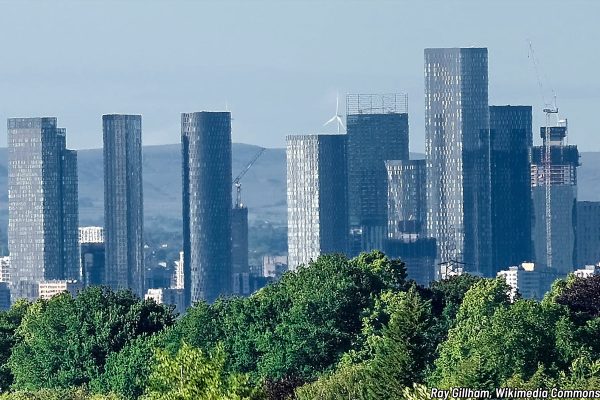
This is because the much-vaunted ‘Manchester boom’ is in large part based on property speculation, with handsome returns for property developers and investors. For example, a single property tycoon received £800 million in taxpayer loans to build predominantly high-rise luxury apartments.
Glass skyscrapers and fashionable districts make for impressive publicity photographs, but they do little to address decades of industrial decline, insecure work, and underinvestment across the wider city-region.
People living further out in boroughs outside of central Manchester and parts of Salford often wonder if Burnham even knows that they’re part of the same Greater Manchester. And those who grew up in these areas have been priced out and forced to move to areas like Leigh, Radcliffe, and Ashton.
Poverty and deprivation
Indeed, Oldham and Rochdale are often amongst lists of local authorities with the highest concentration of deprivation. Living standards across Greater Manchester continue to lag behind much of the country, while the cost of housing, rents, and everyday life continues to rise.
A recent study showed how, despite the 3.1 percent ‘growth’, ordinary Mancunians’ real disposable income is still lower than Sheffield, Newcastle, and Liverpool, as well as 41 percent lower than London.
The gleaming skyline of luxury apartment towers tells us less about prosperity, than it does about the priorities of a political establishment eager to attract global capital while pricing working-class Mancunians out of their own city.
Burnham’s vision is overwhelmingly centred on Manchester city centre, while communities in Bolton, Oldham, Rochdale, Tameside, Wigan, and elsewhere are left wondering what exactly further devolution has delivered for them.
The Manchester bee
Perhaps the greatest ‘achievement’ of Manchesterism has been to transform Manchester itself into a municipal brand. The worker bee – once a proud symbol of the city’s industrial working class – has been stripped of its historical meaning and repackaged as civic marketing, stamped onto buses, street furniture, and souvenirs alike.
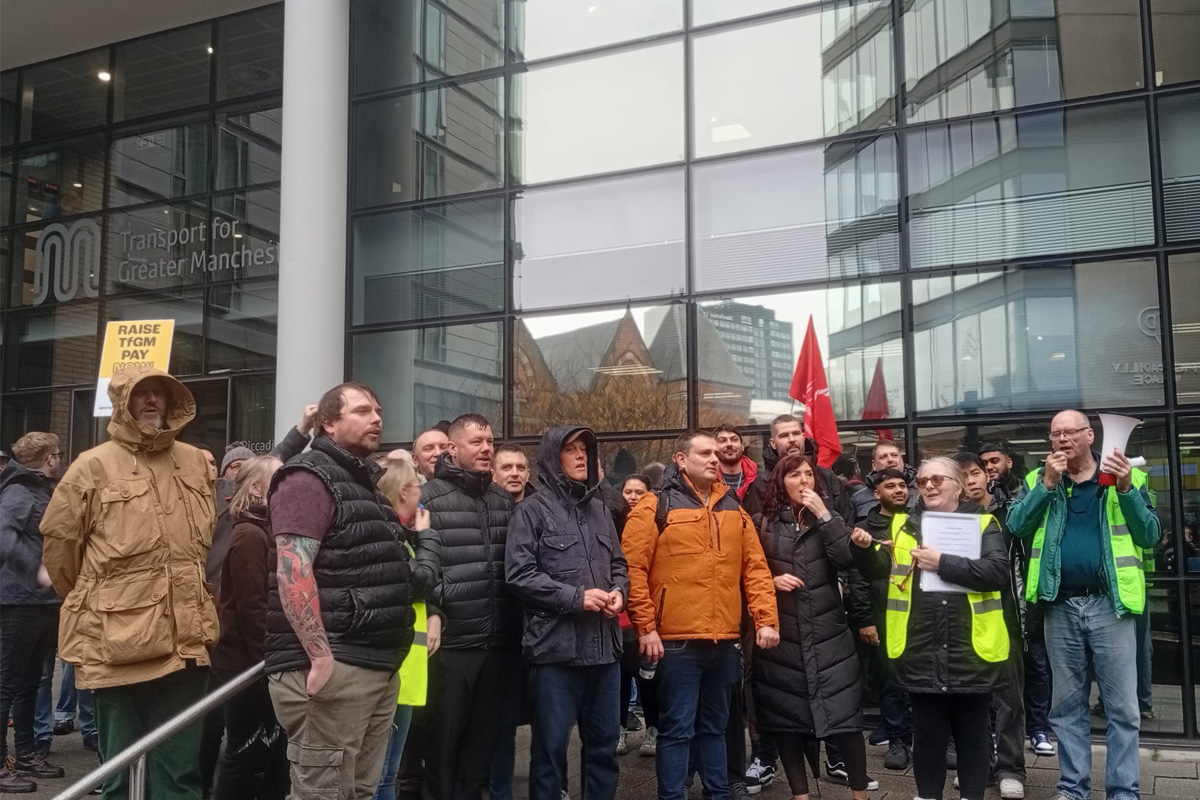
Even Burnham’s flagship transport ‘Bee Network’ exposes the illusion. It is presented as public ownership, yet private companies continue to operate services, while public funds shoulder much of the financial risk, and workers are forced to go on strike for better pay and conditions. A bee on the side of a bus does not constitute socialism.
Likewise, his 2017 Burnham mayoral election promise to “end rough sleeping by 2020” soon collided with the reality that no regional mayor can resolve a housing crisis rooted in decades of austerity, speculation, and the commodification of land. In his time as mayor, rough sleeping has doubled in the city centre.
Devolution supposedly changes where decisions are made, but it leaves untouched the power of landlords, developers and finance capital. In fact, it’s these leeches and parasites that ‘Manchesterism’ looks to attract.
Manchesterism is not an alternative for ordinary people – it simply repackages the harsh realities of decaying British capitalism, but with a regional accent, worker-bee branding, and a nostalgia-tinged Haçienda soundtrack.
Manchester council bosses living it large at our expense
Rel and Sam, Manchester
A recent article in the Manchester Evening News has revealed that over 170 council bosses in Manchester earn over £100,000 a year. This is a dramatic increase over the 2021 report compiled by the Taxpayers Alliance, which pegged this number at 97.
Worse still, several of the councillors names and job titles are “undisclosed”, meaning their constituents have no way of knowing whether their councillor is on this list.
This comes at a time where Manchester ranks as the fourth most deprived area in the UK, with 40 percent of the city classed as a ‘LSOA’, or Low Super Output Area. Council tax across the whole city-region is set to rise by 4.99 percent (the maximum amount allowed in most cases), which has risen at the same rate since 2023.
Massive national cuts to the NHS has left Greater Manchester with severe budget issues, making them reliant on unplanned cash handouts to prop up balance sheets. Ambulances take 25 minutes to arrive to medical emergencies such as heart attacks – which is, shockingly, still above the national average!
And since 2010 the council has been stripping services to the bone, slashing their workforce by over 3,500. In 2016 they made cuts of over £59 million to youth and mental health services, snatching vital support from the city’s most vulnerable residents.
All of this paints a picture of a heavily impoverished city, one with crumbling social services, rising bills and a stagnant economy – at least for ordinary workers. For the politicians and their developer pals, however, they get to live large on cushy salaries, funded on the backs of workers who have to bear the brunt of this crushing austerity.
Despite a massive increase to the council’s budget this year, the total of £460 million in cuts over the past 15 years has not been reversed, and instead these bloated paychecks have been inflated further. Around £20 million spent on the bosses and the bureaucrats, in a city that desperately needs that money. We say it’s time for these fat cats to go!
View this post on Instagram