
To the backdrop of bombs raining down in the Middle East, Chancellor Rachel Reeves recently reassured Parliament that “stability” is the “single most important precondition for economic growth”.
This is not good news for the British ruling class. Due to long-term underinvestment in infrastructure and industry, British capitalism is not in a strong position to weather this storm.
Even before the war in Iran, the UK economy failed to grow at all in January. And things are only set to get worse for British capitalism and its hapless helmsmen.
Britain’s fragility
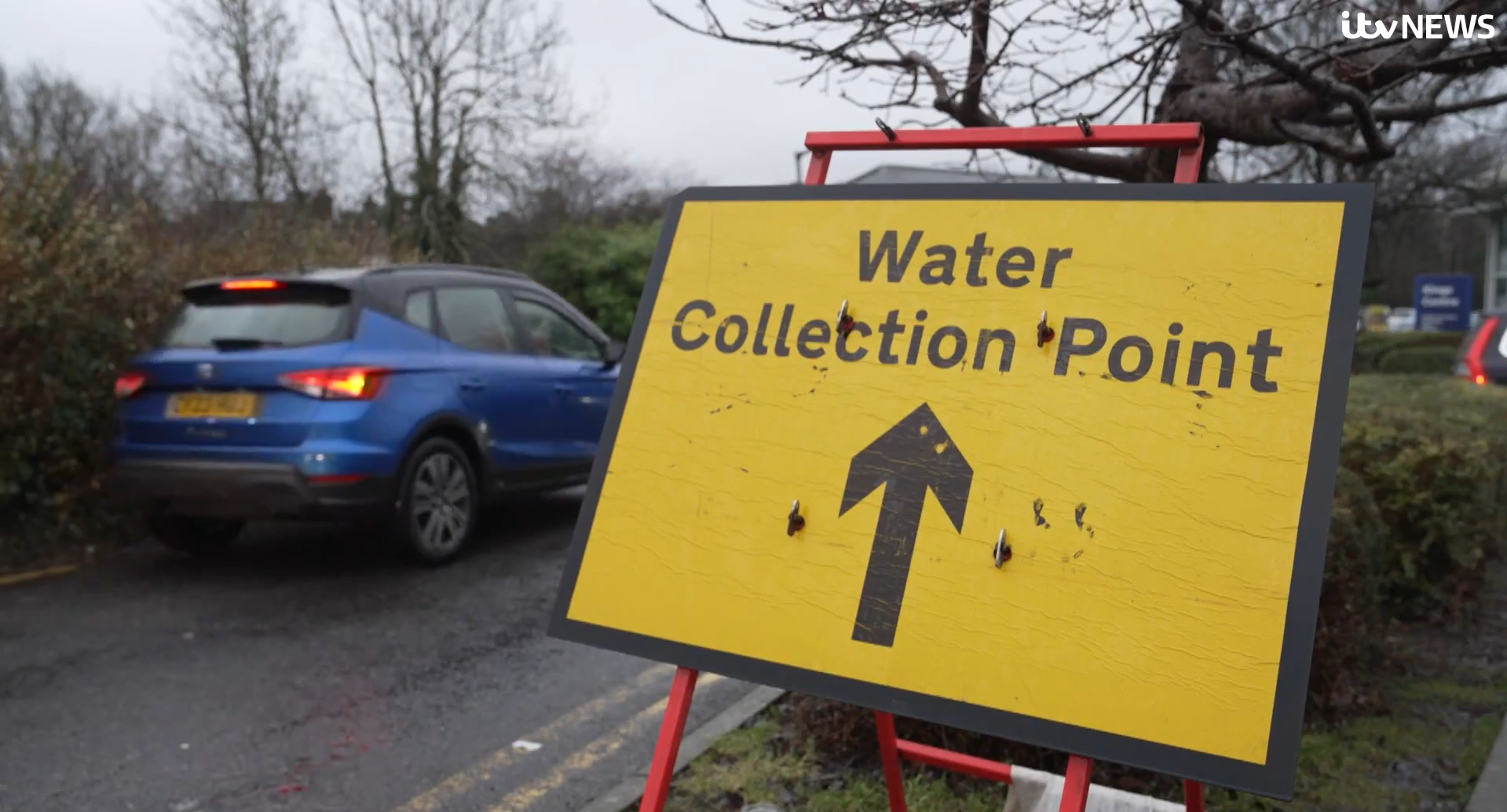
Already, the war in Iran has sent oil, gas, and fertiliser prices through the roof.
Britain relies heavily on imports of these key resources to fuel its economy. The UK imports 50 percent of its natural gas, over 50 percent of its oil, 40 percent of the food consumed, and an estimated 80 percent of its artificial fertiliser.
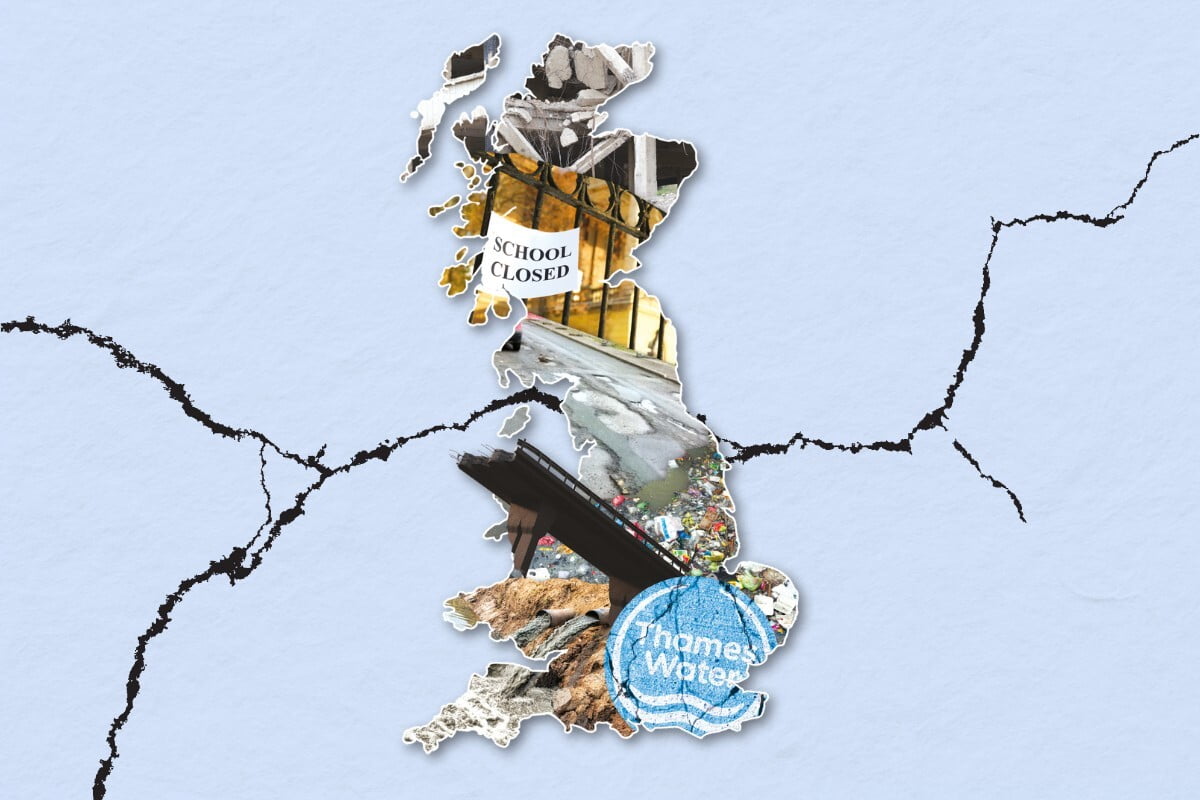
The UK, then, is overly exposed to external shocks like the Iran war. This has the capacity to both raise prices – meaning inflation – and bankrupt businesses, sending the economy into a new slump.
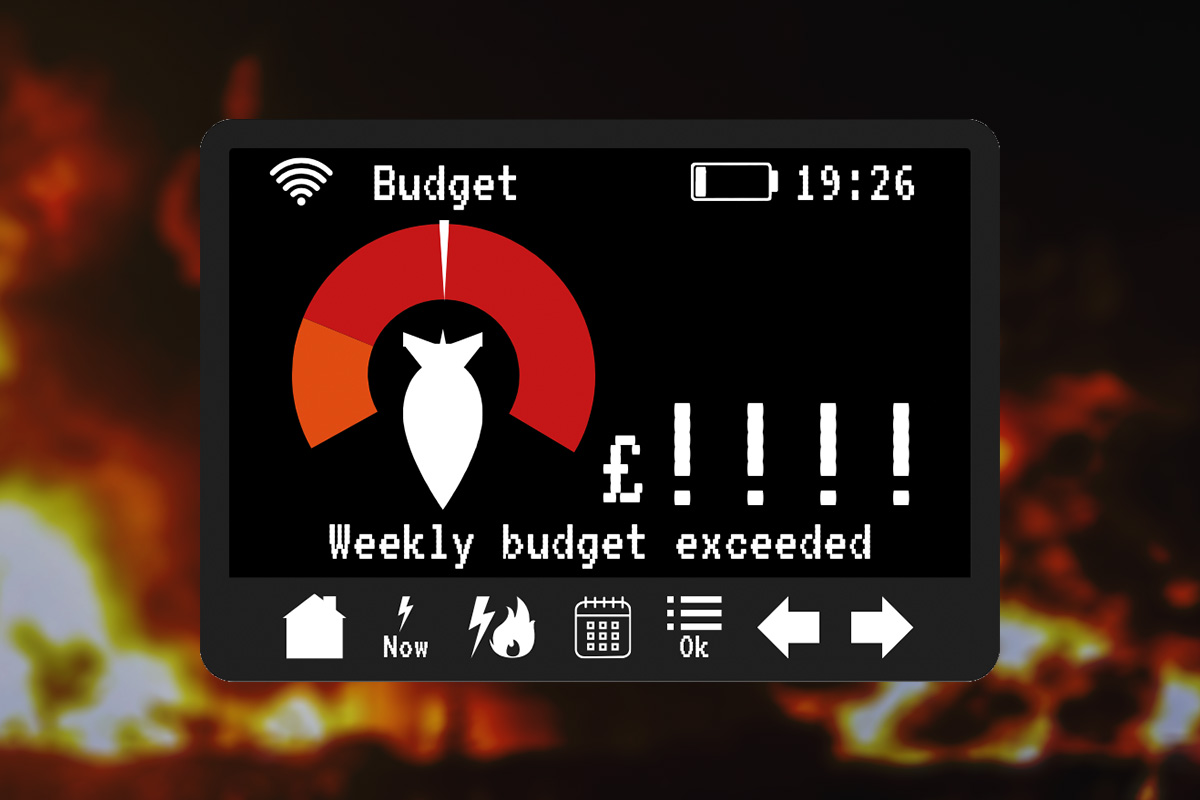
Any sustained price increases in these key resources will be passed onto consumers, meaning higher energy and grocery bills, transport costs, etc.
The same was seen in the early years of the Ukraine war, following the pandemic: an inflationary crisis that we are still feeling the effects of today.
Iran today will pile up even more inflationary pressure in the economy, alongside existing pressures like protectionism, increased military spending, deficit spending, and more.
Investment and infrastructure
If the economy was under a socialist plan, building up resilience to such shocks would be far easier. Investment could be diverted away from the parasitic finance and ‘defence’ sectors, and instead put it into developing green energy, sustainable agriculture, and decent infrastructure.
Under capitalism, however, the bosses and billionaires only invest if they can make bigger profits.
Decades of underinvestment, privatisation, and profiteering, in this respect, have left infrastructure and utilities in Britain crumbling – leading to the precarious position that the UK economy finds itself in today, in the face of supply-chain disruptions and energy market chaos.
At the same time, dilapidated industry, decaying infrastructure, skilled-labour shortages, and prohibitively-expensive energy costs mean that Britain is just not very attractive when it comes to investment in general – for example, in fields such as data centre construction.
This is why Starmer and Reeves have struggled to ‘get Britain growing’.
Added global instability and uncertainty, in turn, will only reduce the likelihood of risky long-term investments by the capitalists. The incentive for the government and for businesses will instead be to rely on debt to keep their heads above the water.
This, in turn, will louden the demands of the bond markets, bosses, and billionaires for severe cuts – to welfare and living standards – in order to pay off this debt and attract investors.
Debt and stagflation
Since the 2008 economic crisis, what little growth has materialised in Britain has been fueled by an unsustainable accumulation of public and private debt. The limits of this process are now being reached, however.
UK government debt is around 96 percent of GDP. Britain’s liabilities to other countries work out at an almost unbelievable figure of 550 percent of GDP, meanwhile, which is by far the highest of the G7 countries.
Within the confines of capitalism, Starmer’s government faces an impossible situation. They are faced with the prospect of inflation in a stagnant economy, which could be tipped into a recession by a whole number of factors – factors that they are powerless to control.
The result could well be a ‘stagflationary’ crisis, or even a ‘slumpflationary’ crisis. The government, however, has very blunt instruments to deal with such a situation.
Bubbles and bankruptcies
On the one hand, they can look to temper inflation and disincentivise borrowing, in order to stabilise the debt burden. This would mean raising interest rates, alongside carrying out austerity cuts and tax increases.
This, however, would cut into demand and cut off affordable credit, which is vital for borrowing by businesses and households.
Already, lenders are raising mortgage rates in response to the inflationary pressures of the Iran war. This will mean more household income being spent on servicing debts, rather than on consumer goods.
Furthermore, this has the potential to decrease demand for house purchases, causing property prices to fall – as can already be seen in areas like inner-city London, where speculation is most rife.
A sustained drop in house prices would have knock-on effects, meanwhile, hitting housing, construction, and finance. This could burst the bubbles in such sectors, adding to the instability in both the financial system and the wider economy.
The effects of a slump would be catastrophic: bankruptcies, mass unemployment, and destitution. Given all the existing anger and discontent against the system, this could spark mighty social explosions – something that the ruling class are desperate to avoid.
Inflation and crisis
On the other hand, therefore, the ruling class and its representatives could look to ‘run the economy hot’, in order to stave off a slump and prevent a massive drop in living standards.
This means lowering interest rates and encouraging borrowing; taking on more debt to prop up failing companies, save jobs, and stimulate investment.
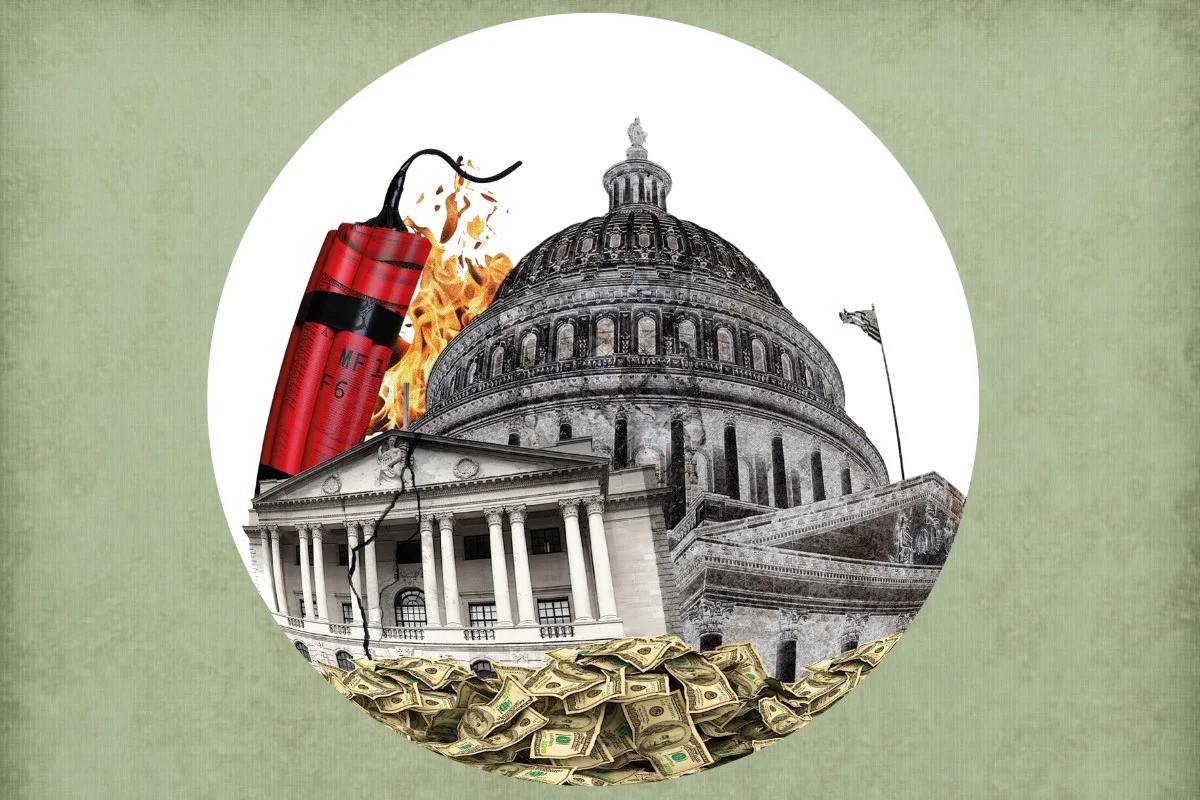
This would further exacerbate inflation, however, which will in turn heighten the cost-of-living crisis. Inflationary shocks like the war in the Middle East, therefore, make this path even more difficult for the government to pursue.
Furthermore, any new debt taken on – by the government – will be on top of the already unsustainable mountain of public debt.
This could well trigger a debt crisis, leading to a mass selling off of government bonds, increased borrowing costs, and a collapse of the pound.
Precarious position
This is what Liz Truss experienced, when her government tried to push through a budget of unfunded borrowing and tax cuts. The ensuing panic on the bond markets wiped off £30bn from the government’s finances!
Starmer’s government is in an even more difficult position. On the one hand, the Labour leaders have less room to manoeuvre economically, with British capitalism in an even more precarious state.
On the other hand, they are worried about the social – and electoral – consequences if millions of people are unable to pay their bills.
Already, therefore, government ministers have floated the idea of subsidies to bring down household energy prices and take the edge off the crisis for ordinary families.
Yet this would have to be funded by more state debt. And too much borrowing, and not enough austerity, could cause more panic on the bond markets. The stakes are therefore much higher than in Truss’ tenure.
The consequence of such a crisis could be a deadly debt spiral, where borrowing costs soar to such a point that the government cannot afford to even meet its interest payments to Britain’s creditors.
This would force the government to embark on a brutal programme of austerity and interest rate hikes.
Worst of both worlds
Despite Reeves’ hopes and assurances, then, the general outlook for the foreseeable future, is one of heightened instability at every level: geopolitically and militarily; in the global economy; for British capitalism; and socially and politically, at home and internationally.
This presents a nightmare scenario for the ruling class in Britain. Whatever the government does in such a situation will be wrong. In reality, Starmer and co. are likely to get the worst of both worlds.
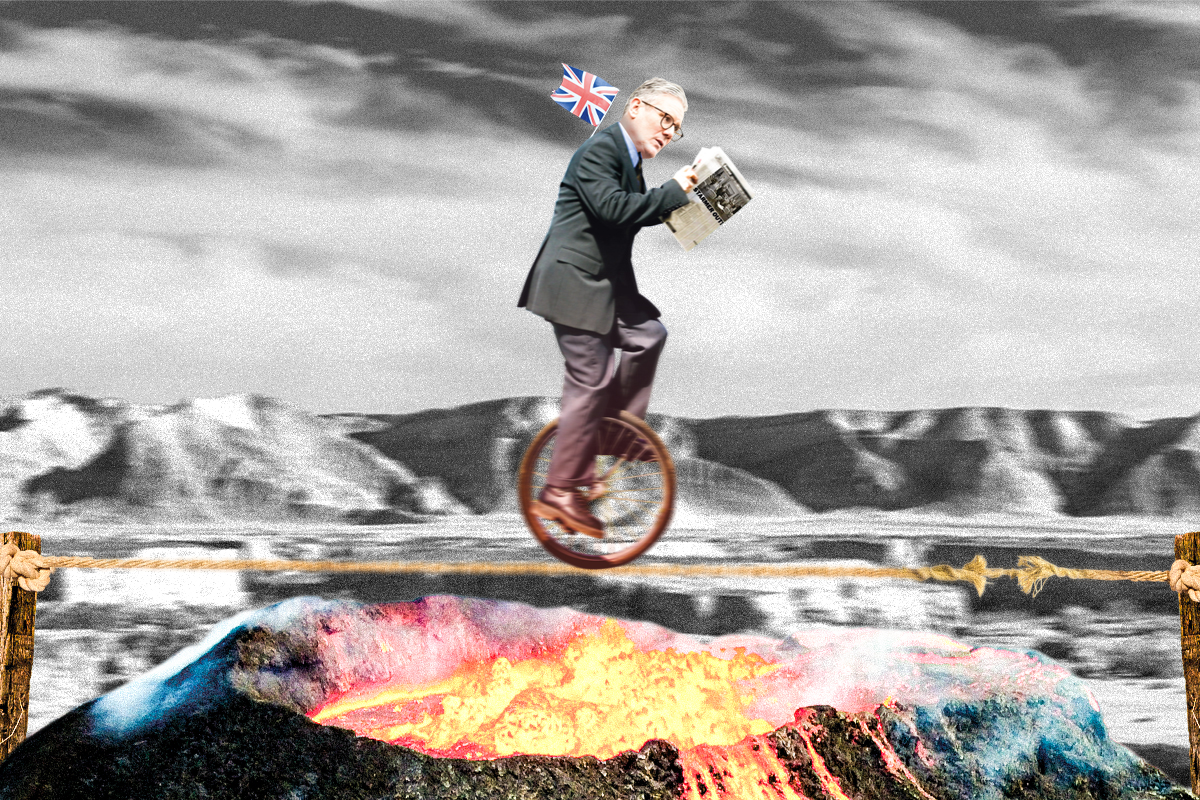
The Prime Minister and his government are walking on a narrow tightrope, with increasingly turbulent winds blowing at them from all sides.
On the one hand, the bankers and billionaires are demanding austerity and attacks on the working class. Meanwhile, Trump and US imperialism are demanding greater militarism and subservience from Starmer.
On the other hand, workers and youth in Britain are demanding an end to the ruling class’ wars, cuts, and repression.
This is setting the stage for a mighty clash; for a sharpening and intensification of the class struggle, with Starmer’s government caught in the middle.
Out of ammo
No amount of economic tweaks by Starmer and Reeves can solve what is ultimately an organic crisis of the entire capitalist system – with all the additional contradictions of Trump’s war on Iran, and the particular vulnerability of British capitalism, added on top.
As was seen in the wake of the 2008 crisis, any attempts to restore the economic ‘equilibrium’ – through austerity and deflationary measures – will only lead to even greater social and political instability.
The difference is that, today, the ruling class has run out of ammo. The measures once available to get capitalism out of its crises – such as debt and cheap credit – have now reached their limits.
Instead, therefore, a new slump would require even greater attacks on workers’ living standards, like nothing we have seen before.
This would provoke a huge backlash. Mass industrial closures could lead to workplace occupations and sit-in strikes. Cuts to public services, meanwhile, could trigger a surge in street protests, and even riots.
Revolutionary implications
In 2022, a spike in inflation provoked the biggest strike wave in Britain since 1989. Rather than wage a militant struggle, however, the trade union leaders appealed for workers to ‘wait for Labour’.
A lot has happened since then.
The Labour government have discredited themselves, perhaps beyond repair. Trump has torn up the old liberal world order. Millions have taken to the streets in protest against the imperialists’ genocide in Palestine. The criminal war on Iran, along with the global Epstein scandal, have provoked an unprecedented crisis of legitimacy for every pillar of the British establishment – from Parliament, to the monarchy, to the police.
Workers entering into struggle in this period, therefore, will not be fighting only over economic questions such as pay and conditions, but will also be drawing radical political conclusions.
In other words, the fight for bread-and-butter demands will be linked more readily in ordinary people’s minds to a struggle against imperialist war, against the corruption of the elites and the state, and against the whole capitalist system.
Titanic upheavals and militant struggles are therefore being prepared, in Britain and beyond. And as the turbulence and crisis intensifies, the situation will be crying out for a revolutionary leadership that can take these events to their logical conclusion.